ITGA4 genetic variants as a predictor of therapeutic responsivity to autoimmune diseases
Matheus D. De Matos, Bárbara D. Guimenes, Giovanni K. Pavani, Gabriel Gripp Fernandes, Guilherme C. Montes, Fabrícia L. Fontes-Dantas

TL;DR
This paper explores how genetic variations in the ITGA4 gene may predict how well patients respond to autoimmune disease treatments.
Contribution
The paper provides a comprehensive review of ITGA4 genetic variants and their role in therapeutic response and disease outcomes in autoimmune disorders.
Findings
ITGA4 genetic variants are linked to disease susceptibility and progression in autoimmune and neuroinflammatory disorders.
Variability in response to α4 integrin inhibitors like natalizumab suggests a role for ITGA4 pharmacogenetics.
Multi-omic and in silico approaches are proposed to translate ITGA4 variants into predictive biomarkers for personalized therapy.
Abstract
Integrins are pivotal adhesion receptors that mediate dynamic communication between cells and their surrounding environment. Through bidirectional signaling, they regulate key physiological processes such as cell migration, inflammation, and tissue organization. Among them, the α4 integrin subunit, encoded by the ITGA4 gene, forms α4β1 (VLA-4) and α4β7 heterodimers, both essential for leukocyte adhesion and migration across inflamed tissues and blood–brain barrier. Variability in therapeutic response to α4 integrin inhibitors, such natalizumab, highlights the need to clarify the genetic and molecular determinants that regulate ITGA4 function. This mini review provides an updated overview of ITGA4 from historical, biological, and pharmacogenetic perspectives. We summarize current evidence linking ITGA4 genetic variants with disease susceptibility, progression, and therapeutic outcomes in…
Genes, proteins, chemicals, diseases, species, mutations and cell lines named across the full text — each resolved to its canonical identifier and authoritative record.
Click any figure to enlarge with its caption.
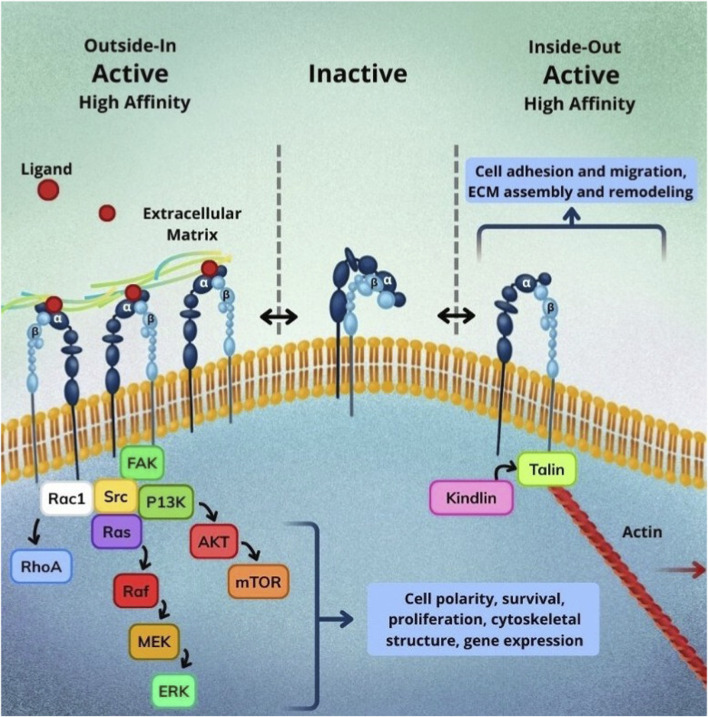 Figure 1
Peer Reviews
No public reviews on file for this paper yet. If you reviewed it on a platform where reviews are public (OpenReview, ICLR, NeurIPS, ICML), you can paste yours below so the community can read it here.
Videos
No videos yet. Explain this paper in a talk, walkthrough, or lecture? Add one.
Taxonomy
TopicsCell Adhesion Molecules Research · Biochemical and Structural Characterization · HER2/EGFR in Cancer Research