A fundamental relationship between TCR diversity, repertoire size and systemic clonal expansion: insights from 30,000 TCRβ repertoires
H. Jabran Zahid, Damon May, Harlan Robins, Julia Greissl

TL;DR
This study reveals that T cell receptor diversity is mainly shaped by repertoire size and the frequency of top clones, not just aging or infections.
Contribution
The discovery of intrinsic clonality as a fundamental property of the immune system that shapes TCR diversity.
Findings
Repertoire size and top 1,000 clone frequencies explain 96% of TCRβ diversity variance.
Intrinsic clonality persists even during strong immune challenges like Cytomegalovirus infection.
TCR diversity is a system-level property influenced by homeostatic regulation, not passive decline.
Abstract
T cell receptor (TCR) diversity is essential for immune defense, yet the mechanisms underlying its decline with age and its variation among individuals remain poorly understood. These patterns are typically attributed to passive processes such as thymic atrophy and cumulative immune exposures. However, this view does not account for the systematic and highly structured variation in TCR diversity observed across large populations. We analyze TCRβ repertoires from approximately 30,000 adults using high throughput sequencing. We quantify repertoire size and the contribution of the most expanded clones and evaluate their ability to predict TCRβ diversity across age, sex and Cytomegalovirus exposure using machine learning and linear modeling approaches. We show that TCRβ diversity is almost entirely determined by two measurable repertoire features: repertoire size and the frequency of the…
Genes, proteins, chemicals, diseases, species, mutations and cell lines named across the full text — each resolved to its canonical identifier and authoritative record.
Click any figure to enlarge with its caption.
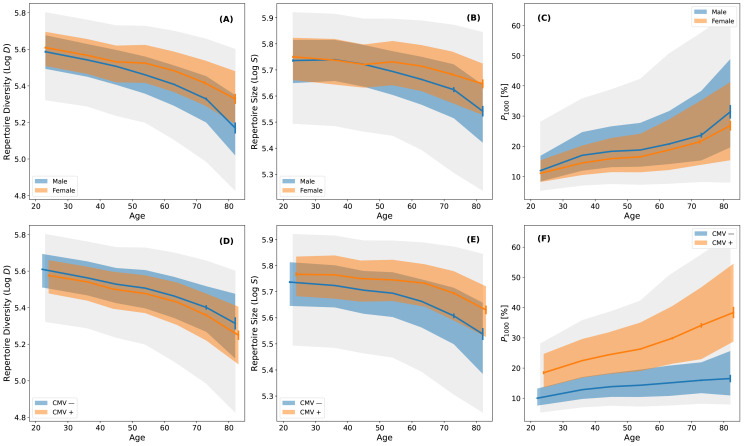 Figure 1
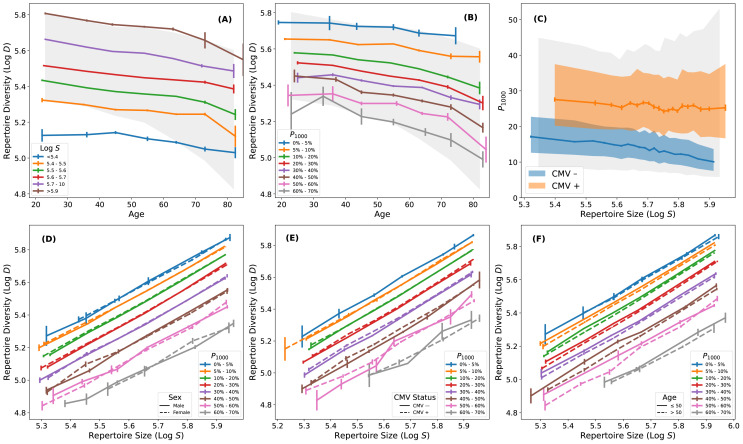 Figure 2
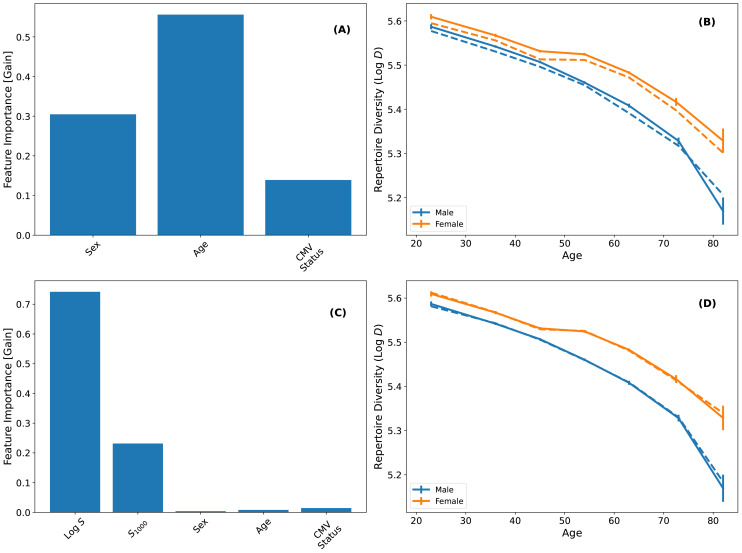 Figure 3
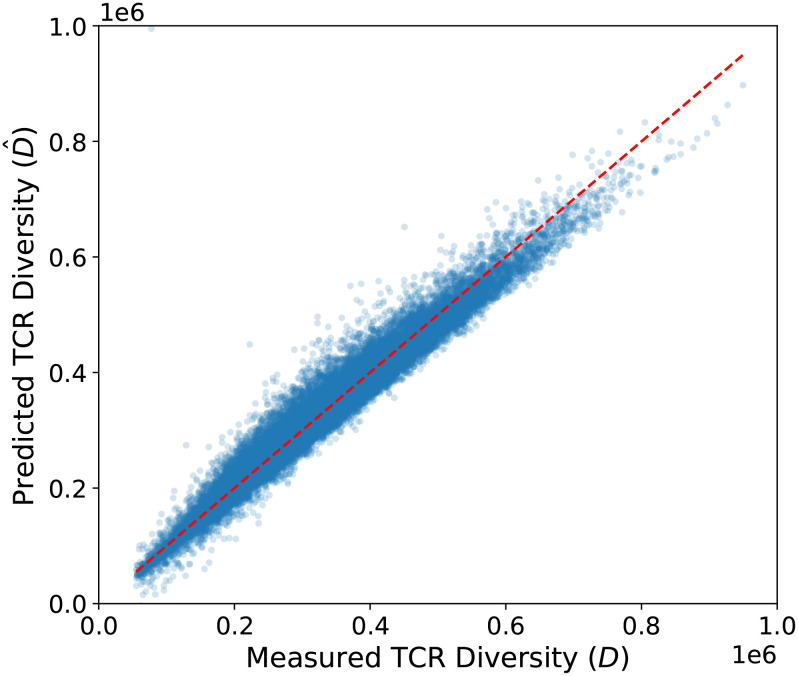 Figure 4
Peer Reviews
No public reviews on file for this paper yet. If you reviewed it on a platform where reviews are public (OpenReview, ICLR, NeurIPS, ICML), you can paste yours below so the community can read it here.
Videos
No videos yet. Explain this paper in a talk, walkthrough, or lecture? Add one.
Taxonomy
TopicsT-cell and B-cell Immunology · Diabetes and associated disorders · vaccines and immunoinformatics approaches