Acute blood biomarker responses to consensual sexual choking/strangulation in young adult women: a randomized crossover study
Sage H. Sweeney, Grace O. Recht, Giselle Lima-Cooper, Dibyadyuti Datta, Claire V. Buddenbaum, Harper Day, Bella Buehler, Megan E. Huibregtse, Debby Herbenick, Keisuke Kawata

TL;DR
This study found that consensual sexual choking in young women temporarily increases blood markers linked to brain injury and inflammation.
Contribution
The study is the first to show acute biomarker changes in humans after consensual sexual strangulation.
Findings
Neurofilament light (NfL) increased significantly after choking-involved sex.
CCL-2 and VEGF-A also showed acute increases after choking, suggesting hypoxia-related inflammation.
Other neural and inflammatory markers remained unchanged between conditions.
Abstract
Sexual strangulation, commonly referred to as “choking”, has become increasingly common among young adults, yet its neurobiological consequences remain poorly understood. Preclinical and clinical evidence suggests strangulation may trigger axonal injury, neuroinflammation, and blood–brain barrier dysfunction. Blood biomarkers of neural injury and inflammation provide a sensitive means to detect subtle effects. To examine whether consensual sexual choking/strangulation acutely alters blood biomarkers of neural injury and inflammation compared to non-choking sexual activity in young adult women. In a randomized crossover study, 29 women (mean age 21.5 ± 2.7) completed three laboratory visits: baseline (≥24 h abstinence), post-choking sex, and post-non-choking sex. Blood was collected within 24 h of sexual events. Neural injury biomarkers (NfL, tau, GFAP, UCH-L1, S100B) and inflammatory…
Genes, proteins, chemicals, diseases, species, mutations and cell lines named across the full text — each resolved to its canonical identifier and authoritative record.
Click any figure to enlarge with its caption.
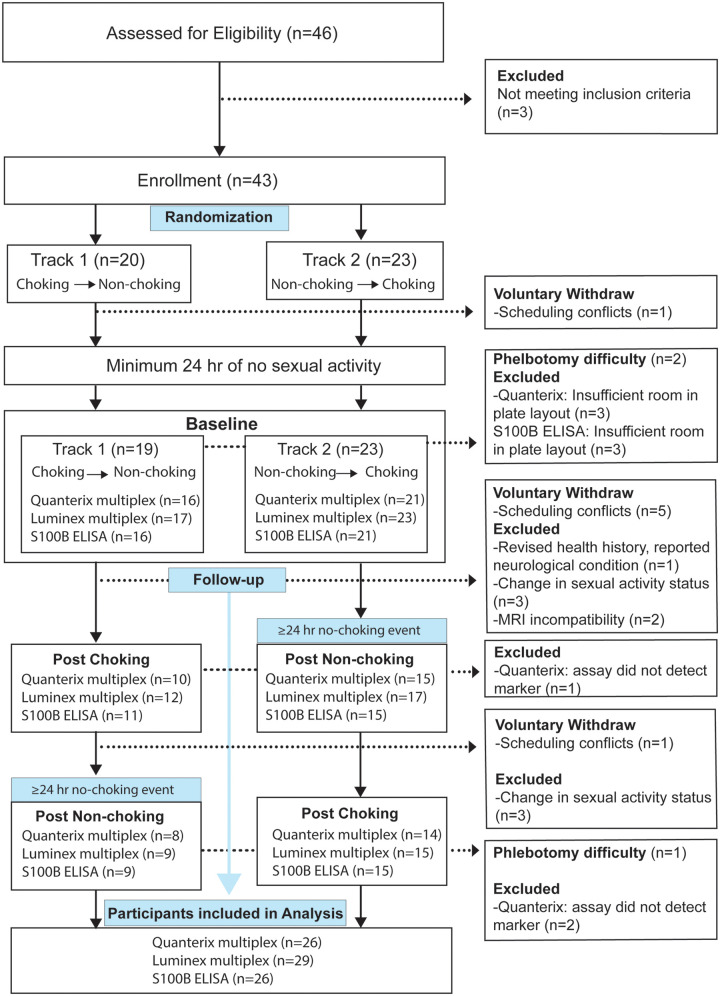 Figure 1
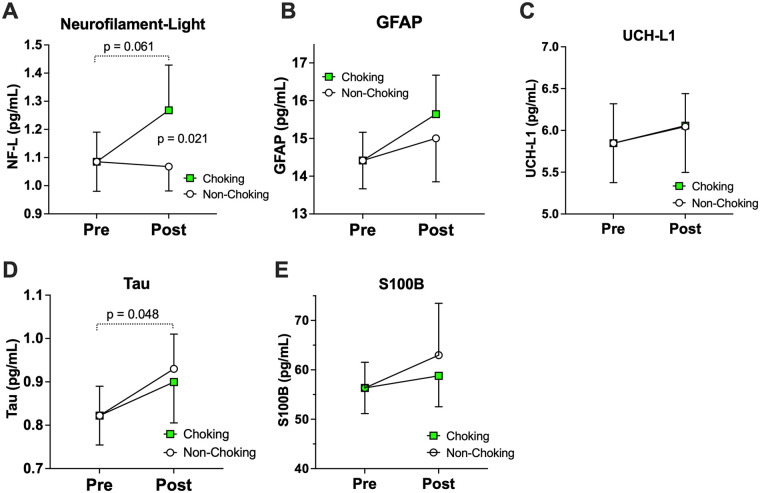 Figure 2
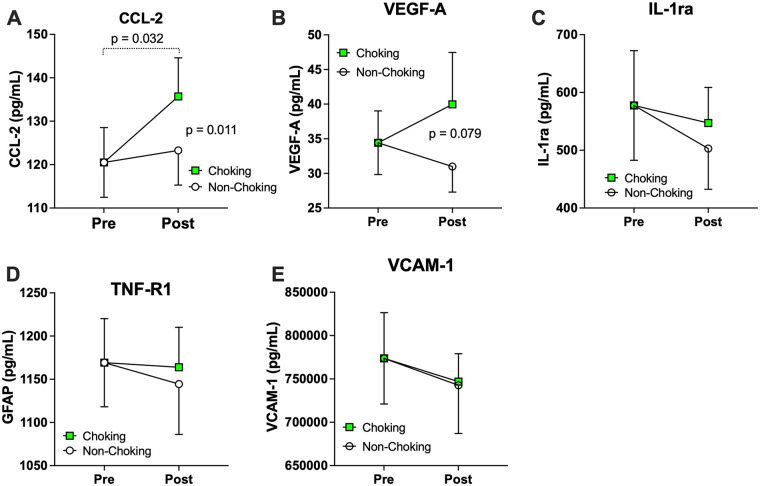 Figure 3
Peer Reviews
No public reviews on file for this paper yet. If you reviewed it on a platform where reviews are public (OpenReview, ICLR, NeurIPS, ICML), you can paste yours below so the community can read it here.
Videos
No videos yet. Explain this paper in a talk, walkthrough, or lecture? Add one.
Taxonomy
TopicsRestraint-Related Deaths · Sexuality, Behavior, and Technology · Sexual function and dysfunction studies