Ruptured solid pseudopapillary neoplasm in children: a 20-year single-center experience
Suhyeon Ha, Soo-Min Jeong, Hyunhee Kwon, Jung-Man Namgoong

TL;DR
This study examines ruptured pancreatic tumors in children, finding that tumor size and spread may increase recurrence risk, though more research is needed.
Contribution
The paper provides the first detailed single-center analysis of ruptured solid pseudopapillary neoplasms in children over 20 years.
Findings
Ruptured SPN in children had a 28.6% confirmed recurrence rate, primarily due to peritoneal dissemination.
Tumor size over 10 cm and peripancreatic extension were associated with confirmed recurrence.
Radiologic findings may overestimate recurrence compared to histologic confirmation.
Abstract
Solid pseudopapillary neoplasm (SPN) is a rare pancreatic tumor with an excellent prognosis after resection. Tumor rupture is uncommon and may increase the risk of peritoneal spread, but data in children are extremely limited. This study evaluated clinicopathologic features, operative outcomes, and recurrence patterns in ruptured SPN in children over 20 years. We retrospectively reviewed seven children (<18 years) with histologically confirmed ruptured SPN who underwent resection at a tertiary center between 2004 and 2024. Clinicopathologic, operative, and follow-up data were analyzed. Recurrence was categorized as suspected (radiologic) or confirmed (histologic). All patients were female (median age 12 years). Median tumor size was 7.4 cm, mostly arising from the pancreatic body or tail. Rupture was spontaneous in 42.9% and trauma-related in 57.1%; no iatrogenic rupture events…
Genes, proteins, chemicals, diseases, species, mutations and cell lines named across the full text — each resolved to its canonical identifier and authoritative record.
Click any figure to enlarge with its caption.
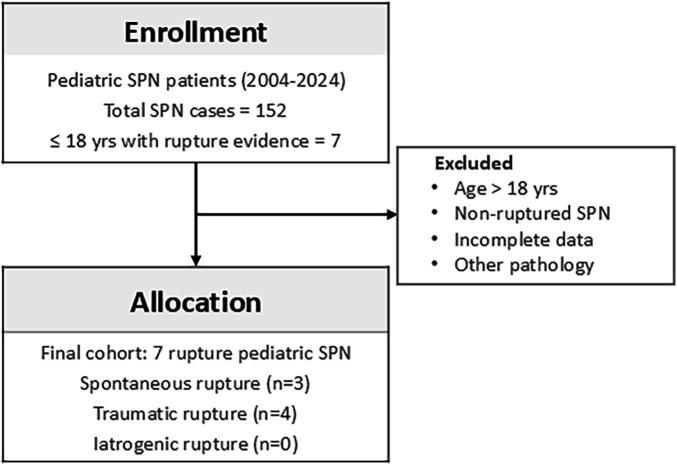 Figure 1
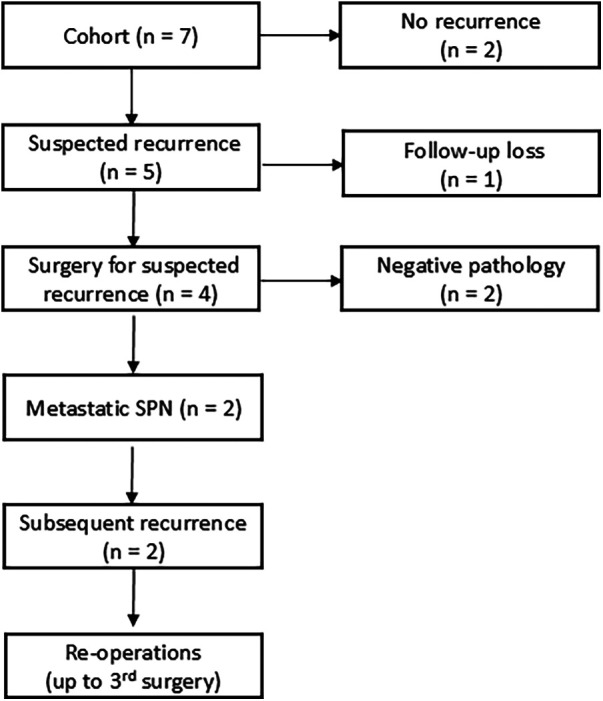 Figure 2
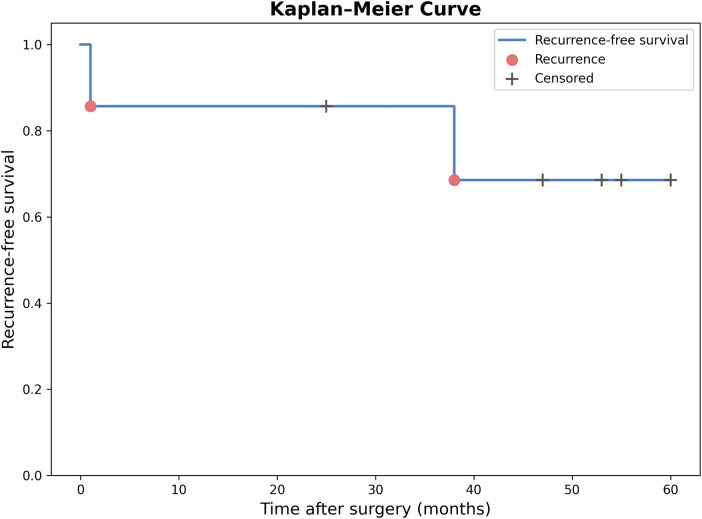 Figure 3
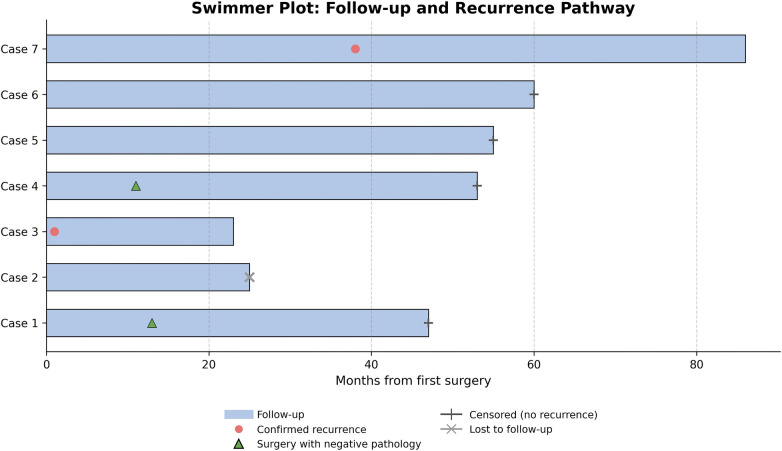 Figure 4
Peer Reviews
No public reviews on file for this paper yet. If you reviewed it on a platform where reviews are public (OpenReview, ICLR, NeurIPS, ICML), you can paste yours below so the community can read it here.
Videos
No videos yet. Explain this paper in a talk, walkthrough, or lecture? Add one.
Taxonomy
TopicsPancreatic and Hepatic Oncology Research · Pancreatitis Pathology and Treatment · Gallbladder and Bile Duct Disorders