Activated PI3Kδ syndrome in inborn errors of immunity: diagnostic strategies and clinical challenges
Selcen Bozkurt, Necmiye Ozturk, Melek Yorgun Altunbas, Salim Can, Razin Amirov, Ramin Mahmudov, Burkay Cagan Colak, Esra Karabiber, Manuela Baronio, Vassilios Lougaris, Giulio Tessarin, Sevgi Bilgic-Eltan, Ahmet Ozen, Safa Baris, Elif Karakoc-Aydiner

TL;DR
This study presents a diagnostic algorithm for APDS, a rare immune disorder, to help clinicians identify it early and improve patient outcomes.
Contribution
The study introduces a practical diagnostic algorithm for APDS based on real-world data and genetic analysis.
Findings
A diagnostic algorithm identified 1,138 patients with potential APDS features out of 6,458.
Genetic analysis confirmed APDS type 2 in one patient and revealed novel variants in five others.
Timely genetic testing is crucial due to APDS's overlapping symptoms and risk of severe complications.
Abstract
This study aims to present in a large real-world cohort a diagnostic algorithm developed to facilitate the early recognition of Activated Phosphoinositide 3-Kinase Delta Syndrome (APDS), a rare disease with targeted treatment options, and to provide clinicians with a practical roadmap for navigating diagnostic challenges. The study was conducted as a retroactive cross-sectional observational study. We reviewed the medical records of 6,458 pediatric and adult patients who were referred to our clinic between 2018 and 2025. A medical algorithm was generated based on major clinical and laboratory features of APDS. Next-generation sequencing analyses were performed on patients who were appropriate for further evaluation. Variant analysis using in silico predictors and S6 phosphorylation analysis in patients carrying previously undescribed variants were conducted accordingly. In this cohort…
Genes, proteins, chemicals, diseases, species, mutations and cell lines named across the full text — each resolved to its canonical identifier and authoritative record.
Click any figure to enlarge with its caption.
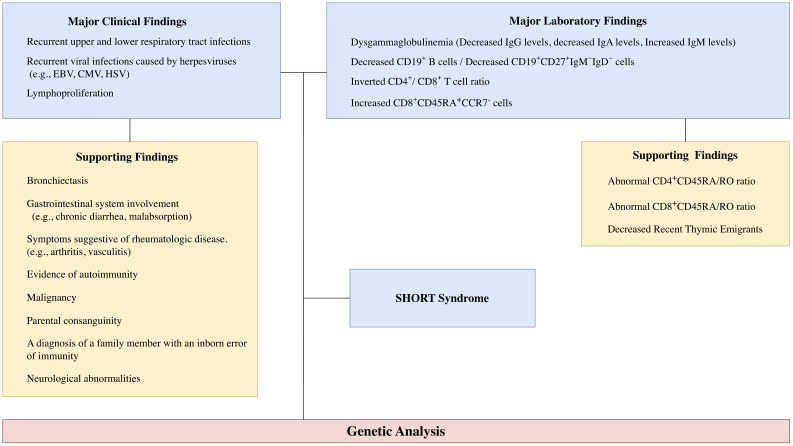 Figure 1
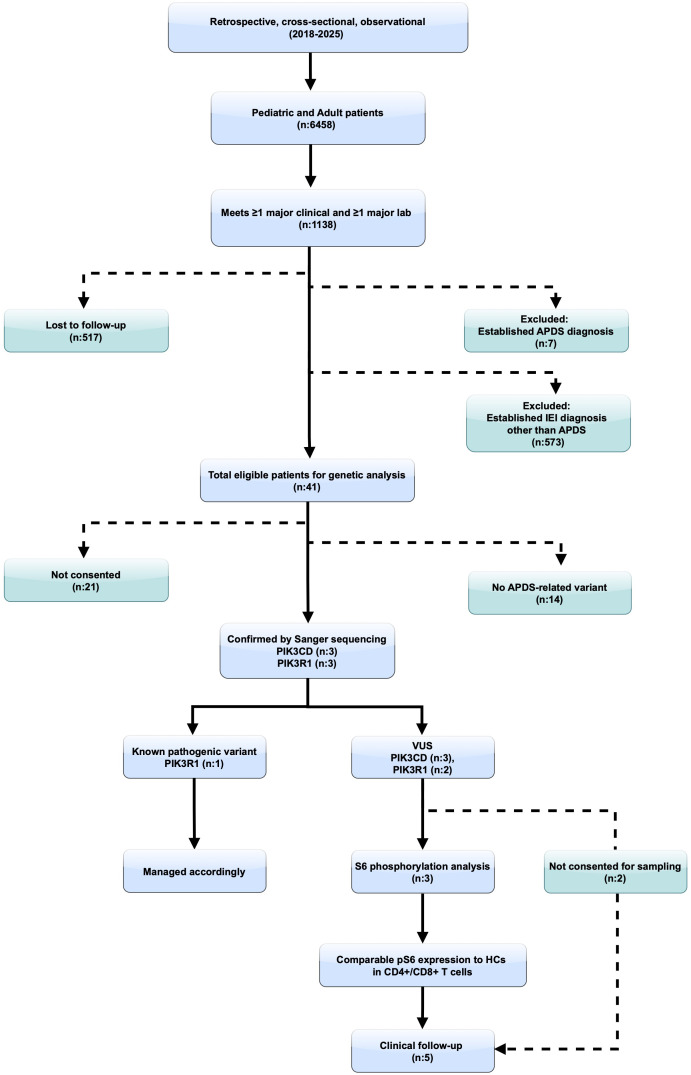 Figure 2
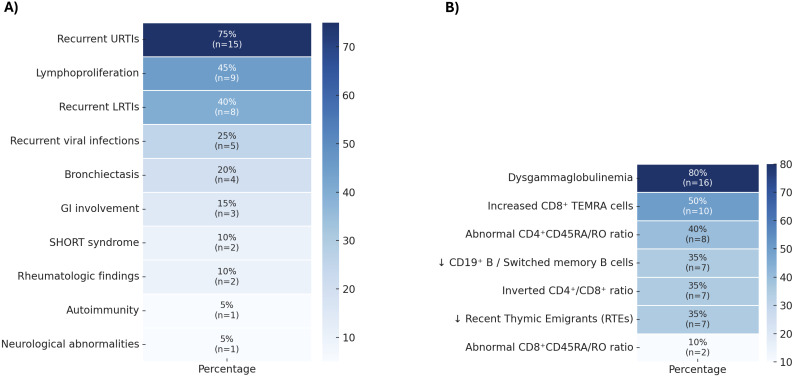 Figure 3
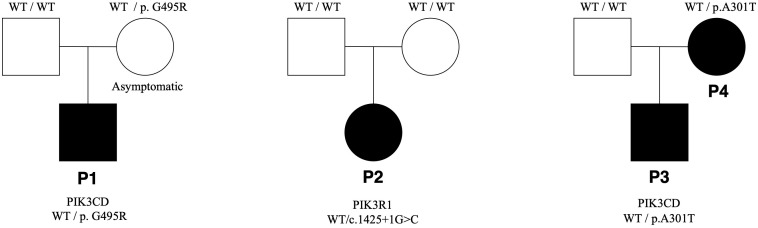 Figure 4
Peer Reviews
No public reviews on file for this paper yet. If you reviewed it on a platform where reviews are public (OpenReview, ICLR, NeurIPS, ICML), you can paste yours below so the community can read it here.
Videos
No videos yet. Explain this paper in a talk, walkthrough, or lecture? Add one.
Taxonomy
TopicsImmunodeficiency and Autoimmune Disorders · Blood disorders and treatments · Autoimmune and Inflammatory Disorders Research