Erythrosine-induced hepatic biomarkers and histopathological changes in male rats: protective effects of lycopene and anthocyanin
Safa H. Qahl, Fatimah A. Alqahtani, Haleema Al-Nahari, Fawzyah A. Alghamdi, Fatimah H. Khouja, Amna H. Khouja

TL;DR
This study shows that the food dye erythrosine harms rat livers, but lycopene and anthocyanin can reduce these harmful effects.
Contribution
The study demonstrates the protective effects of lycopene and anthocyanin against erythrosine-induced liver damage in rats.
Findings
Erythrosine caused significant reductions in total protein and albumin levels in rats.
Lycopene and anthocyanin co-administration reduced liver injury markers like ALT, AST, and GGT.
Histological improvements were observed in rats treated with lycopene or anthocyanin alongside erythrosine.
Abstract
This study aimed to explore and reassess the safety and efficacy of the synthetic food dye erythrosine (ERY) with respect to the hepatic biomarkers and histological changes in male adult rats as well as possibly alleviate the effects of ERY through administration of lycopene (LYC) and anthocyanin (ANC). Sixty adult male rats were randomly distributed into six experimental groups as follows: control, LYC (5 mg/kg), ANC (200 mg/kg), ERY (20 mg/kg), ERY + LYC, and ERY + ANC. After 3 and 6 weeks of treatment, ERY (20 mg/kg) produced marked biochemical and hepatic injuries. ERY significantly reduced the total protein (from 6.93 g/dL in control to 5.33 g/dL) and albumin (from 2.65 to 1.77 g/dL, p < 0.050), whereas LYC and ANC co-administration improved these values compared to ERY alone (p < 0.050). ERY was also found to elevate the total cholesterol, triglycerides (TG), and low-density…
Genes, proteins, chemicals, diseases, species, mutations and cell lines named across the full text — each resolved to its canonical identifier and authoritative record.
Click any figure to enlarge with its caption.
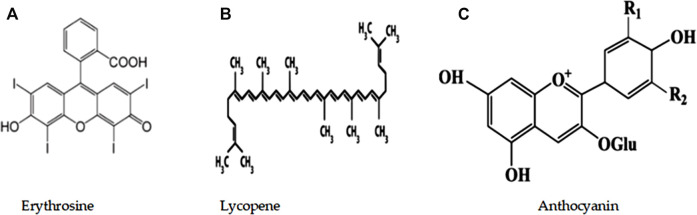 Figure 1
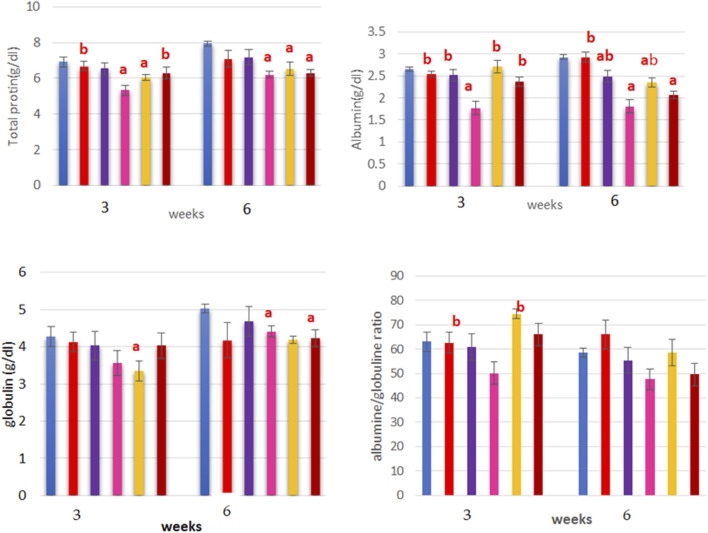 Figure 2
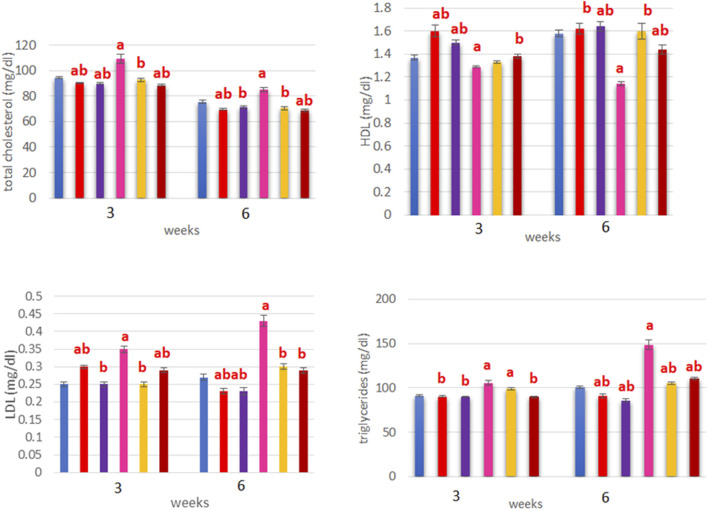 Figure 3
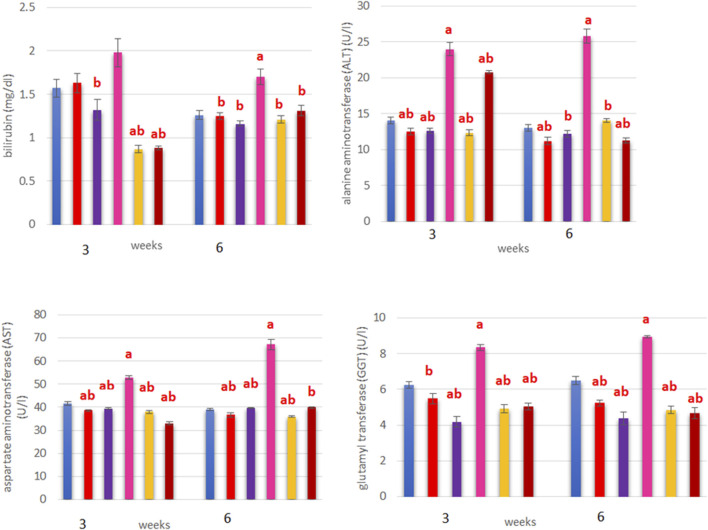 Figure 4
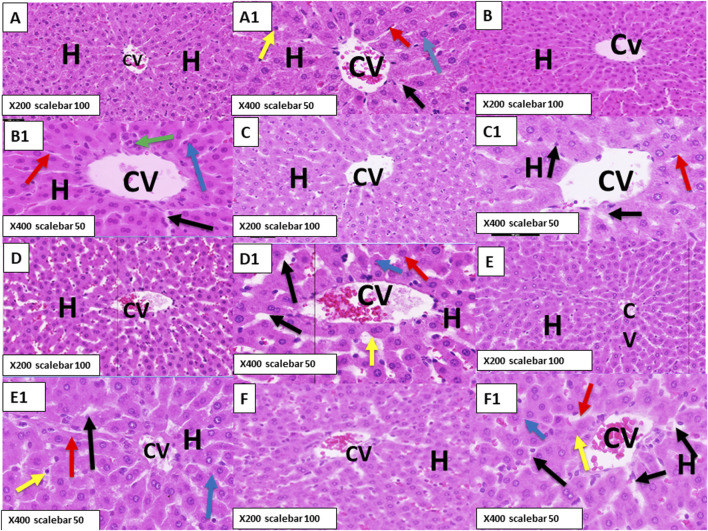 Figure 5
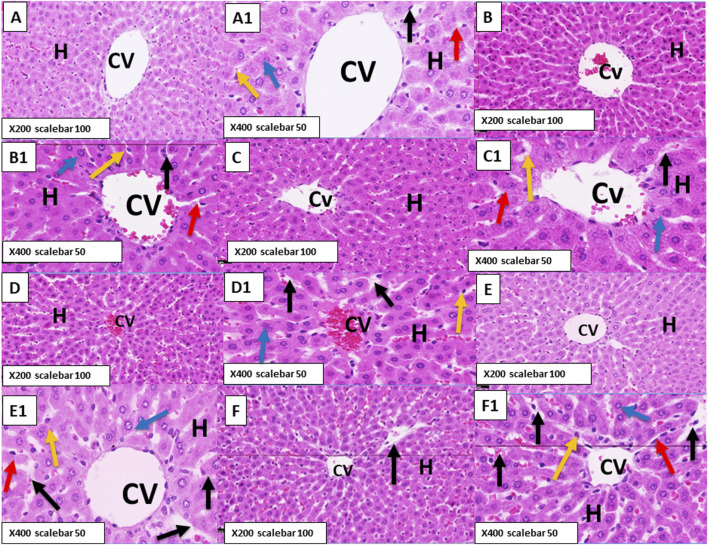 Figure 6
Peer Reviews
No public reviews on file for this paper yet. If you reviewed it on a platform where reviews are public (OpenReview, ICLR, NeurIPS, ICML), you can paste yours below so the community can read it here.
Videos
No videos yet. Explain this paper in a talk, walkthrough, or lecture? Add one.
Taxonomy
TopicsDye analysis and toxicity · Antioxidant Activity and Oxidative Stress · Biochemical Analysis and Sensing Techniques