Predicting adolescent depressive symptoms using teacher-reported textual descriptions of abnormal behaviors: a study based on machine learning
Nigela Wumaierjiang, Guoli Yan, Lidan Yuan, Jianan Song, Xiaofei Hou, Minghui Li, Ling Sun, Jiansong Zhou, Huifang Yin, Guangming Xu

TL;DR
This study uses machine learning to predict adolescent depression from teacher reports of student behavior, showing high accuracy with Random Forest models.
Contribution
A novel application of machine learning models, particularly Random Forest, to detect depressive symptoms in adolescents using teacher-reported text data.
Findings
Random Forest achieved 97% recall in predicting depressive symptoms from teacher reports.
Teacher-reported text can effectively identify adolescents with clinically significant depressive symptoms.
Machine learning models offer a practical tool for early detection of depression in school settings.
Abstract
This study aimed to develop and compare machine learning (ML) models for predicting depressive symptoms in adolescents, based on teacher-reported textual descriptions of student behaviors. Participants were 441 adolescents from Tianjin, China. Their teachers provided written reports on behavioral or emotional concerns, while the students completed the Patient Health Questionnaire-9 (PHQ-9). Text data from reports were processed using Term Frequency-Inverse Document Frequency (TF-IDF). Four ML models—Random Forest (RF), Support Vector Machine (SVM), eXtreme Gradient Boosting (XGBoost), and Least Absolute Shrinkage and Selection Operator (LASSO)—were trained and evaluated using a 80/20 data split and 5-fold cross-validation. PHQ-9 screening identified 71.7% (n = 316) of adolescents with clinically significant depressive symptoms (score ≥10). The Random Forest (RF) model demonstrated…
Genes, proteins, chemicals, diseases, species, mutations and cell lines named across the full text — each resolved to its canonical identifier and authoritative record.
Click any figure to enlarge with its caption.
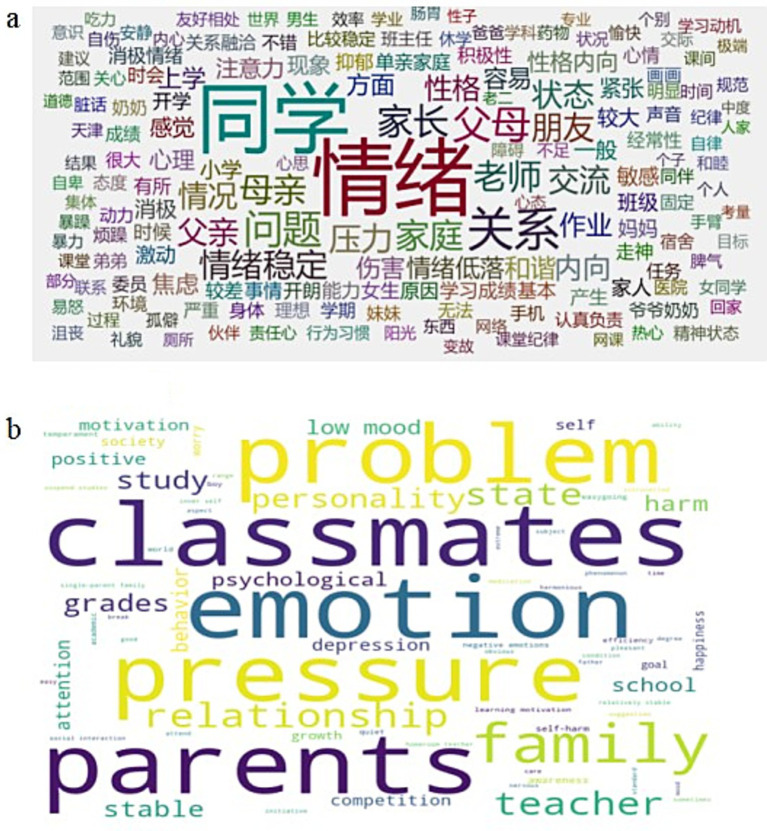 Figure 1
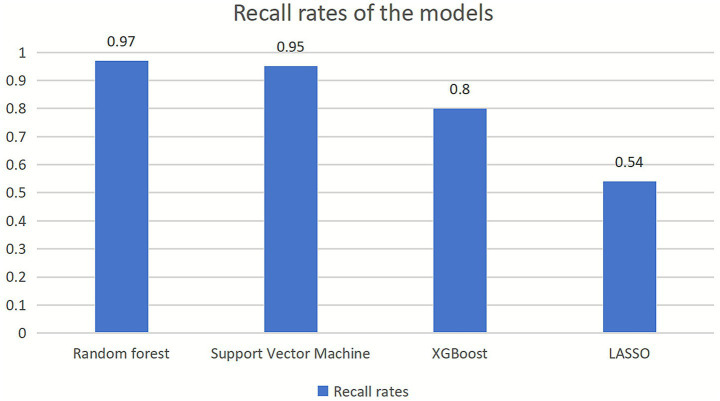 Figure 2
Peer Reviews
No public reviews on file for this paper yet. If you reviewed it on a platform where reviews are public (OpenReview, ICLR, NeurIPS, ICML), you can paste yours below so the community can read it here.
Videos
No videos yet. Explain this paper in a talk, walkthrough, or lecture? Add one.
Taxonomy
TopicsMental Health via Writing · Digital Mental Health Interventions · Child and Adolescent Psychosocial and Emotional Development