A transparent four-feature speech model for depression screening applicable across clinical and community settings, including assisted-living environments
Kevin Mekulu, Faisal Aqlan, Hui Yang

TL;DR
This paper introduces a simple AI model that detects depression using speech, suitable for use in various settings including assisted-living environments.
Contribution
A transparent, four-feature AI model for depression screening that is lightweight and applicable across diverse populations.
Findings
The model achieved 92% sensitivity and moderate discriminative performance (AUC = 0.760) using four linguistic features from speech.
A semantic feature (emb_1) captures emotional or cognitive tension not directly expressed through negative words.
The model outperforms more complex models in the literature while being suitable for real-time, on-device use.
Abstract
Depression in older adults, often underrecognized and frequently conflated with cognitive symptoms, remains a major challenge in settings such as assisted-living communities. However, the need for scalable, speech-based screening tools extends across diverse populations and is not restricted to older adults or residential care. Depression in older adults is both common and frequently underdiagnosed, and while assisted-living environments represent a high-need deployment context, the present model is population-agnostic and can be validated across multiple real-world settings. Depression often co-occurs with mild cognitive impairment, creating a complex and vulnerable clinical landscape. Despite this urgency, scalable, interpretable, and easy-to-administer tools for early screening remain scarce. In this study, we introduce a transparent and lightweight AI-driven screening model that…
Genes, proteins, chemicals, diseases, species, mutations and cell lines named across the full text — each resolved to its canonical identifier and authoritative record.
Click any figure to enlarge with its caption.
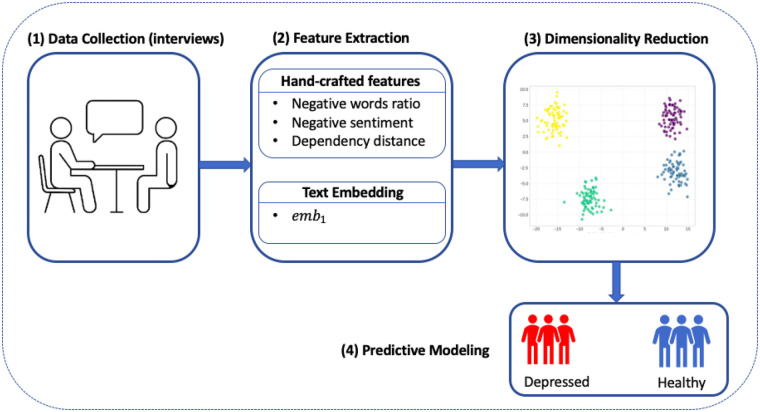 Figure 1
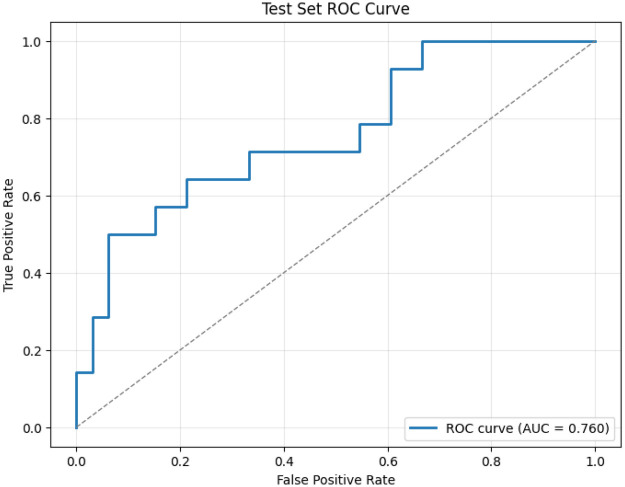 Figure 2
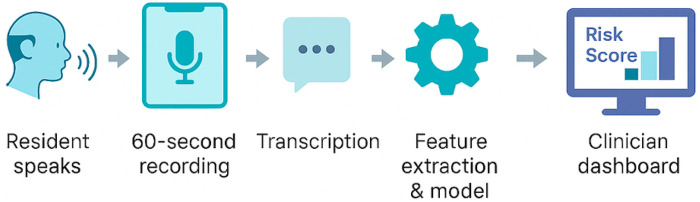 Figure 3
Peer Reviews
No public reviews on file for this paper yet. If you reviewed it on a platform where reviews are public (OpenReview, ICLR, NeurIPS, ICML), you can paste yours below so the community can read it here.
Videos
No videos yet. Explain this paper in a talk, walkthrough, or lecture? Add one.
Taxonomy
TopicsMental Health via Writing · Digital Mental Health Interventions · Emotion and Mood Recognition