Long‐Term Outcome of Complex Regional Pain Syndrome versus Limb Pain of Other Origin: Results From a Telephone Survey With up to 5‐year Follow‐Up
Kübra Arslan, Andrea Westermann, Andreas Schwarzer, Christoph Maier, Lionel Butry, Johannes Forsting, Elena Enax-Krumova

TL;DR
This study compares long-term outcomes of complex regional pain syndrome with other limb pain conditions, finding that CRPS patients often report severe disability despite similar pain levels.
Contribution
The study provides new insights into the long-term disability and functional outcomes of CRPS compared to other chronic limb pain conditions.
Findings
CRPS patients showed the highest rate of severe impairment (71%) compared to other groups.
PN patients reported higher pain intensity and severe disability (70%) compared to CRPS and NLP.
CRPS patients treated with corticosteroids had more positive baseline signs but poorer outcomes.
Abstract
Complex regional pain syndrome (CRPS) is a disabling condition requiring long‐term treatment. This study evaluated long‐term outcomes in CRPS patients compared to posttraumatic neuralgia (PN) and nociceptive limb pain (NLP) 1–5 years after diagnosis and treatment initiation in a tertiary clinic. Patients with CRPS lasting more than 1 year (n = 116), PN (n = 68), or NLP (n = 75) participated in a standardized telephone interview assessing pain intensity, functional impairment, neglect‐like symptoms, and disability in daily life and work. PN patients had higher pain intensity compared to CRPS (NRS 5.7 ± 2.1 vs. 4.5 ± 2.6; main effect: p = 0.005; post hoc test: p = 0.003). Functional outcomes varied significantly between groups (p < 0.001). CRPS patients showed the highest rate of severe impairment (71%), especially in those with ≥ 3 clinical signs, while outcome was better in NLP (p ≤…
Genes, proteins, chemicals, diseases, species, mutations and cell lines named across the full text — each resolved to its canonical identifier and authoritative record.
Click any figure to enlarge with its caption.
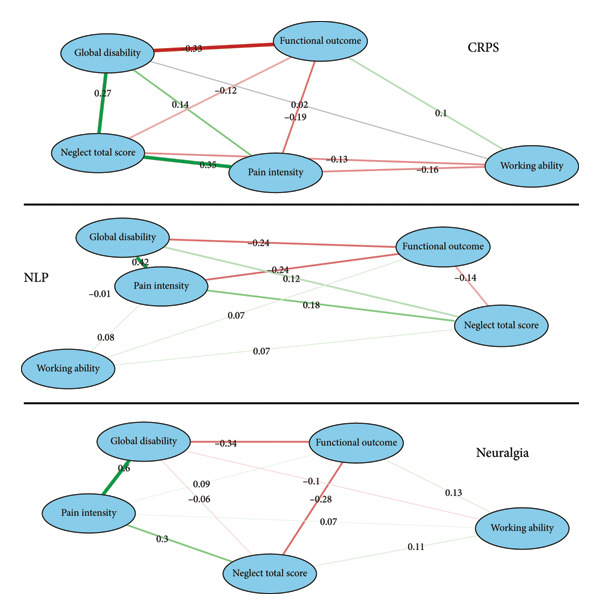 Figure 1
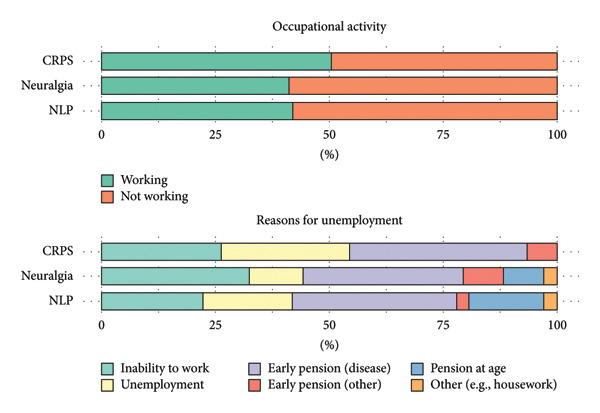 Figure 2
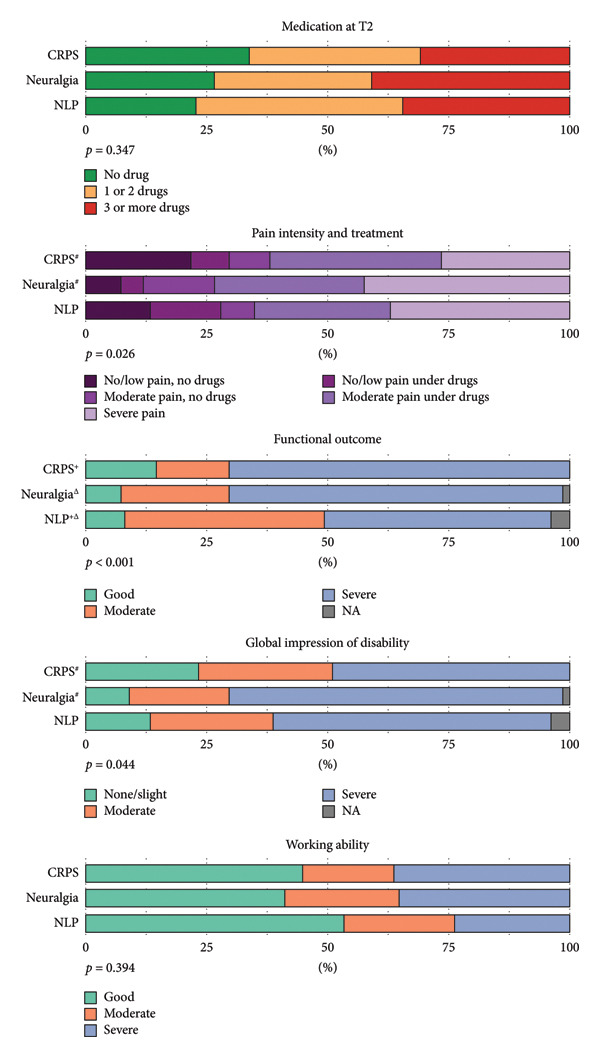 Figure 3
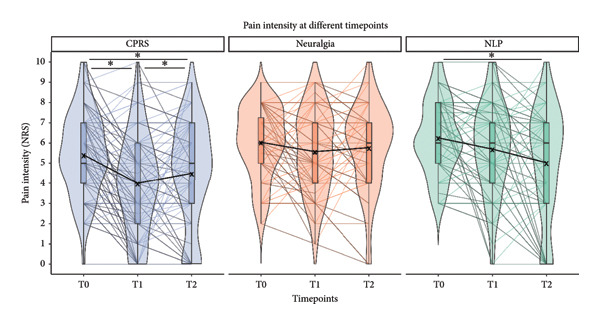 Figure 4
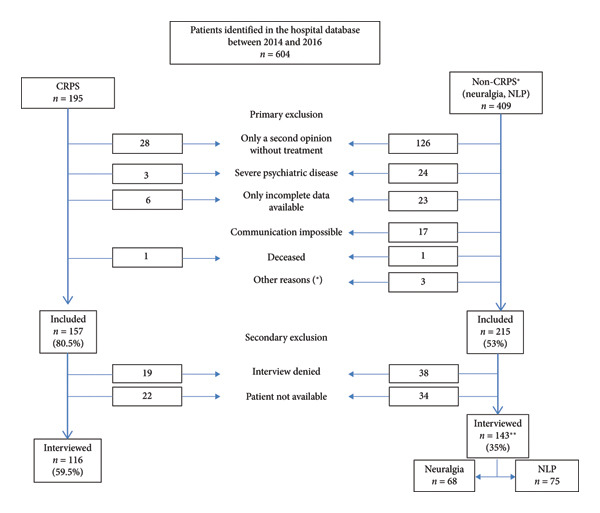 Figure 5
Peer Reviews
No public reviews on file for this paper yet. If you reviewed it on a platform where reviews are public (OpenReview, ICLR, NeurIPS, ICML), you can paste yours below so the community can read it here.
Videos
No videos yet. Explain this paper in a talk, walkthrough, or lecture? Add one.
Taxonomy
TopicsPain Management and Treatment · Pain Mechanisms and Treatments · Myofascial pain diagnosis and treatment