Experimental Analysis of Automatic Discrimination Performance Between Simulated Bruxism and Non‐Bruxism Under Conscious Conditions Using Electromyography and Machine Learning
Hajime Minakuchi, Mitsuhiro Nagasaki, Lộc Hoàng Đình, Haruna Miki, Ko Omori, Tazuko Nishimura, Takuo Kuboki, Nobuaki Minematsu

TL;DR
This study explores using machine learning and EMG data to distinguish simulated bruxism movements with and without tooth contact from non-bruxism movements.
Contribution
A novel machine learning approach using EMG and sound data to classify simulated bruxism behaviors under conscious conditions is proposed.
Findings
Masseter EMG showed significantly higher discrimination accuracy in single-stream models.
Multi-stream models did not show significant improvement over single-stream models.
BMwoTC classification accuracy was below 0.5, indicating poor discrimination.
Abstract
This study aimed to evaluate the potential use of machine learning to automatically classify electromyography (EMG) data into bruxism simulated movement with tooth contact (BMwTC), bruxism simulated movement without tooth contact (BMwoTC), and non‐bruxism movement (non‐BM). Twelve eligible healthy participants (female/male: 2/10, mean age: 35.3 ± 8.4 years) were asked to perform the simulated movements (all the tasks were performed five times for 5 s each with a 30‐s rest interval). The electrodes were placed on the masseter, infrahyoid, inframandibular, and chin muscles. A sound sensor was placed adjacent to the masseter. The EMG and sound data were sampled at 1 and 44.1 kHz, respectively. Single‐ and multi‐stream hidden Markov models (HMMs) were used to automatically discriminate the tested behavior from the others using a hamming window with 100 ms and shift length of 50 ms. The…
Genes, proteins, chemicals, diseases, species, mutations and cell lines named across the full text — each resolved to its canonical identifier and authoritative record.
Click any figure to enlarge with its caption.
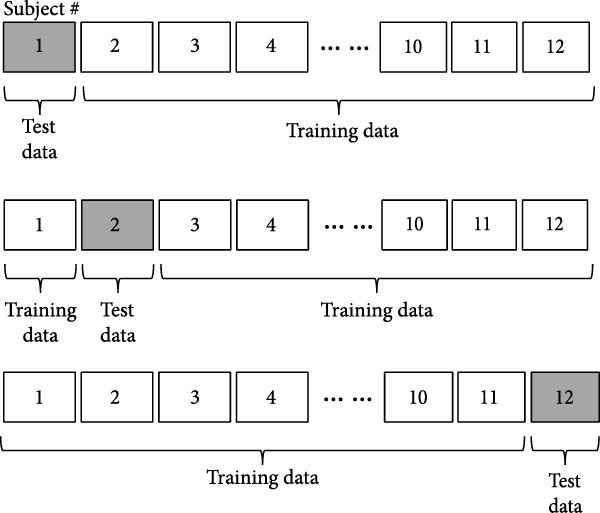 Figure 1
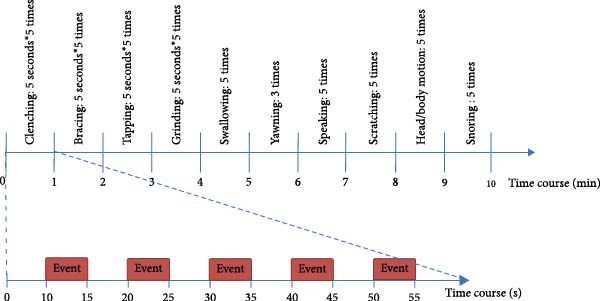 Figure 2
Peer Reviews
No public reviews on file for this paper yet. If you reviewed it on a platform where reviews are public (OpenReview, ICLR, NeurIPS, ICML), you can paste yours below so the community can read it here.
Videos
No videos yet. Explain this paper in a talk, walkthrough, or lecture? Add one.
Taxonomy
TopicsTemporomandibular Joint Disorders · Muscle activation and electromyography studies · Musicians’ Health and Performance