Oxygen Saturation Sample Entropy, a Novel Diagnostic Tool in Sleep Disordered Breathing
Amar J. Shah, Nawal Alotaibi, Maggie Cheung, Rodanthe Nixon, Eshrina Gosal, Anita Saigal, John R. Hurst, Ali R. Mani, Swapna Mandal

TL;DR
This study introduces a new method using oxygen saturation signal complexity to diagnose sleep apnea and differentiate types of sleep disordered breathing.
Contribution
The novel use of Sample Entropy and Transfer Entropy in analyzing oxygen saturation data for sleep disorder classification.
Findings
Oxygen saturation Sample Entropy significantly differs in sleep disordered breathing versus normal cases.
High sensitivity (100%) and moderate specificity (60%) for diagnosing obstructive sleep apnea using oxygen saturation Sample Entropy.
Transfer Entropy patterns show distinct directional relationships between heart rate, respiratory rate, nasal flow, and oxygen saturation in sleep apnea patients.
Abstract
To assess whether a Network Physiology approach using Sample Entropy and Transfer Entropy can be applied to simple physiological signals obtained during sleep studies, to accurately distinguish between different types of sleep disordered breathing (SDB) and streamline the diagnostic process. Retrospective study on patients who underwent a sleep study between January 2017 and December 2021. The training dataset, used for algorithm development, included four clinically important groups: normal, obstructive sleep apnoea alone, sustained nocturnal hypoxemia with a high AHI (≥ 30/hr) and sustained nocturnal hypoxemia with a low AHI (< 30/hr). Mean, standard deviation, Sample Entropy and Transfer Entropy was calculated for heart rate, respiratory rate, oxygen saturation and nasal flow for each patient. Sample entropy is a measure of signal complexity. This was validated in a separate test…
Genes, proteins, chemicals, diseases, species, mutations and cell lines named across the full text — each resolved to its canonical identifier and authoritative record.
Click any figure to enlarge with its caption.
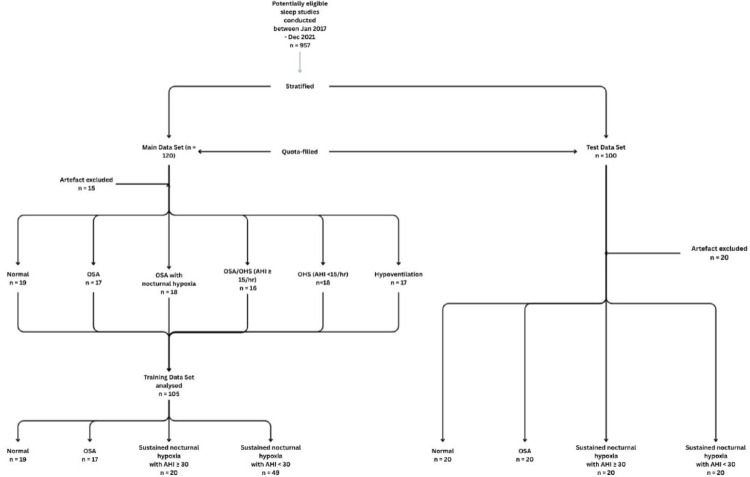 Figure 1
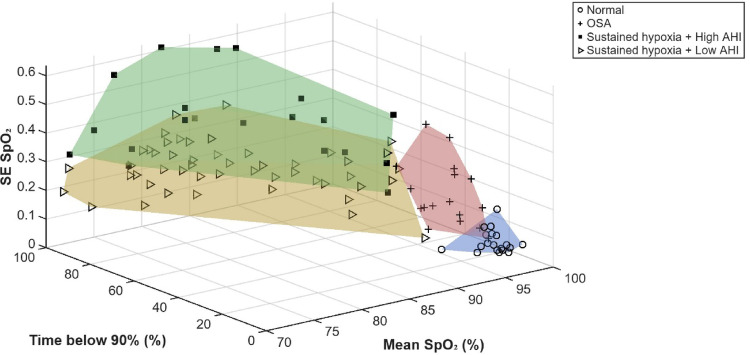 Figure 2
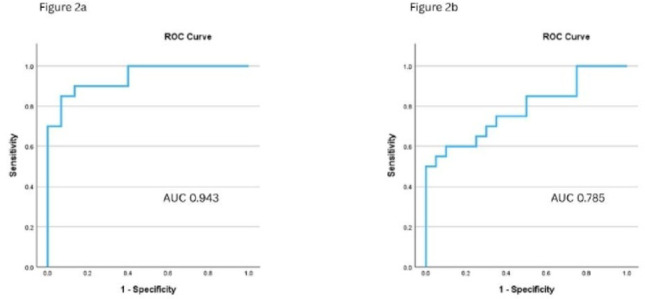 Figure 3
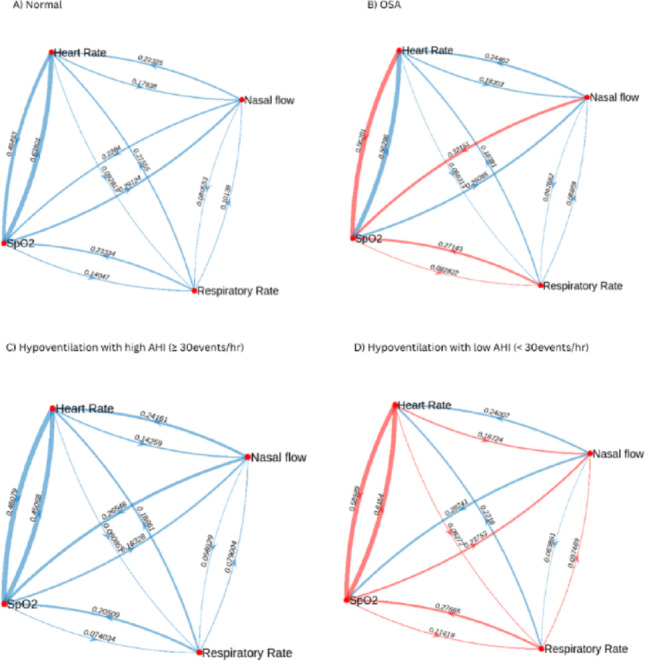 Figure 4
Peer Reviews
No public reviews on file for this paper yet. If you reviewed it on a platform where reviews are public (OpenReview, ICLR, NeurIPS, ICML), you can paste yours below so the community can read it here.
Videos
No videos yet. Explain this paper in a talk, walkthrough, or lecture? Add one.
Taxonomy
TopicsObstructive Sleep Apnea Research · Non-Invasive Vital Sign Monitoring · Heart Rate Variability and Autonomic Control