Clinical outcomes of three-fraction versus five-fraction stereotactic radiosurgery for resected brain metastases
Giuseppe Minniti, Paolo Tini, Piera Navarria, Giorgio Raza, Giuseppe Maria Della Pepa, Silvia Chiesa, Francesca De Felice, Lucy Zaccaro, Luca Capone, Miriam Tomaciello, Gaetano Lanzetta, Martina Giraffa, Ivana Russo, Francesco Marampon, Antonio Bruno, Sergio Paolini

TL;DR
This study compares the effectiveness of three and five radiation doses after brain tumor surgery, finding both are similarly effective with low risk of complications.
Contribution
The study provides new evidence on the clinical outcomes of different stereotactic radiosurgery fractionation regimens for brain metastases.
Findings
Both three-fraction and five-fraction SRS regimens showed high local control rates with no significant difference.
Symptomatic radionecrosis rates were comparable between the two treatment groups.
Leptomeningeal disease occurred in similar proportions in both treatment groups.
Abstract
To investigate the clinical outcomes of patients with brain metastases undergoing surgery followed by postoperative three-fraction or five-fraction radiosurgery (SRS) to the resection cavity. Factors associated with local failure and symptomatic radionecrosis were evaluated. One hundred and ninety consecutive patients with 202 brain metastases who received surgery followed by three- or five-fraction SRS to the surgical bed were analyzed. All cavities included in the study received either 27 Gy in 3 fractions or 30 Gy in 5 fractions given daily on consecutive days. Cumulative incidence analysis was used to compare local control and symptomatic radionecrosis between groups from the time of SRS. Ten cavities after 3-fraction and 14 lesions after 5-fraction SRS group recurred (p = 0.38) with a median time to progression of 12 months. Cumulative LC rates were 93% (87–97) and 90.2%…
Genes, proteins, chemicals, diseases, species, mutations and cell lines named across the full text — each resolved to its canonical identifier and authoritative record.
Click any figure to enlarge with its caption.
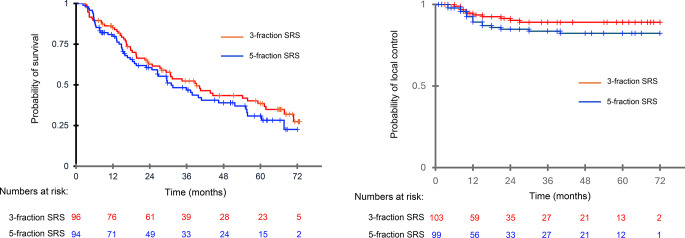 Figure 1
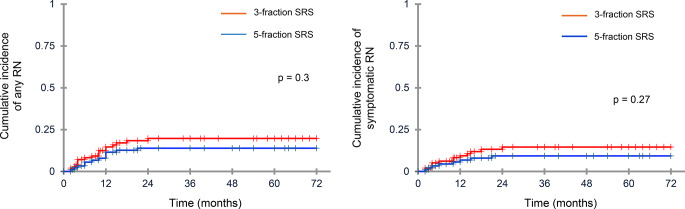 Figure 2
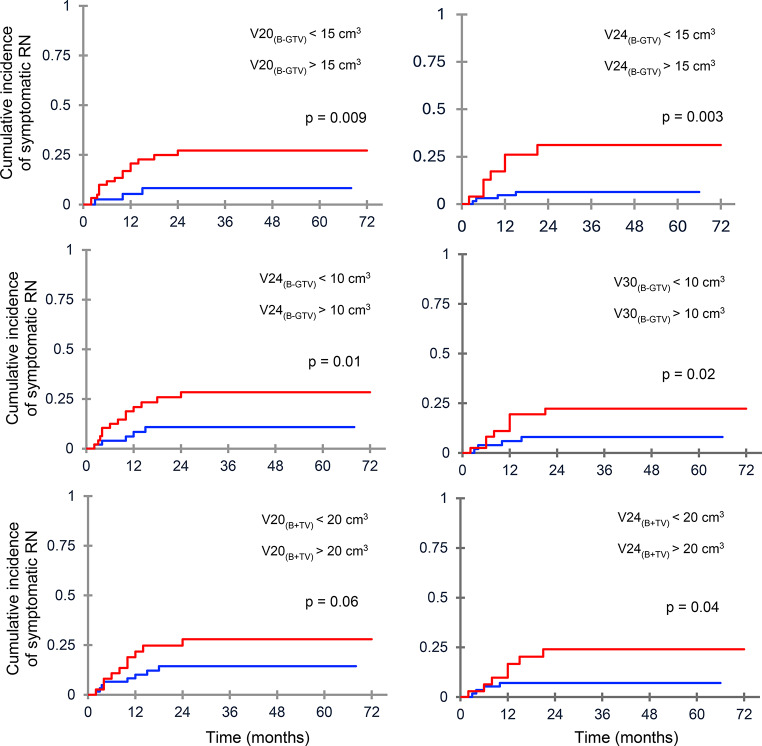 Figure 3
Peer Reviews
No public reviews on file for this paper yet. If you reviewed it on a platform where reviews are public (OpenReview, ICLR, NeurIPS, ICML), you can paste yours below so the community can read it here.
Videos
No videos yet. Explain this paper in a talk, walkthrough, or lecture? Add one.
Taxonomy
TopicsBrain Metastases and Treatment · Management of metastatic bone disease · Lung Cancer Research Studies