Assessment of long-read strategies for the enrichment of clinically relevant breakpoints in lymphomas: towards a diagnostic implementation
Filip Pardy, Kamila Reblova, Hana Svozilova, Boris Tichy, Sarka Pospisilova, Jana Kotaskova, Veronika Navrkalova

TL;DR
The study compares different long-read sequencing methods to detect genetic breakpoints in lymphomas, aiming to improve diagnostic accuracy and treatment.
Contribution
A Cas9-based enrichment panel and decision algorithm are proposed for optimal breakpoint detection in clinical lymphoma diagnostics.
Findings
Cas9-mediated enrichment provides superior on-target coverage for densely targeted regions like the IGH locus.
Adaptive sampling offers higher throughput and flexibility but has limited breakpoint detection capabilities.
Cas9 excision is a fast and reliable method for detecting canonical translocation partners in clinical samples.
Abstract
Recurrent chromosomal translocations are hallmarks of many hematological malignancies, including lymphomas and leukemias. Accurate breakpoint detection is essential for diagnostics, treatment optimization, and disease monitoring. Long-read sequencing (Oxford Nanopore Technologies) enables unambiguous mapping and translocation identification. We designed a Cas9-based enrichment panel targeting common translocations in lymphoid malignancies. To accommodate both well-defined and promiscuous translocation partners, we employed single-side and dual-side sequencing strategies. Using well-established lymphoid cell lines, we benchmarked three enrichment approaches: (i) Cas9 read-out, (ii) Cas9 excision with multiplexing, and (iii) adaptive sampling. Cas9-mediated enrichment achieved superior on-target coverage, particularly in densely targeted regions (such as the IGH locus), while single-probe…
Genes, proteins, chemicals, diseases, species, mutations and cell lines named across the full text — each resolved to its canonical identifier and authoritative record.
Click any figure to enlarge with its caption.
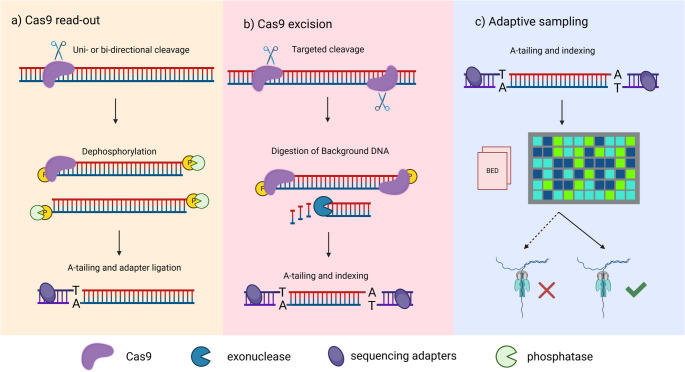 Figure 1
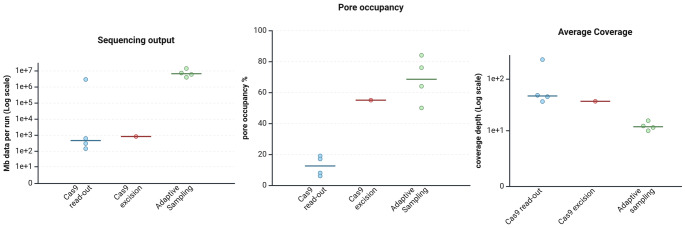 Figure 2
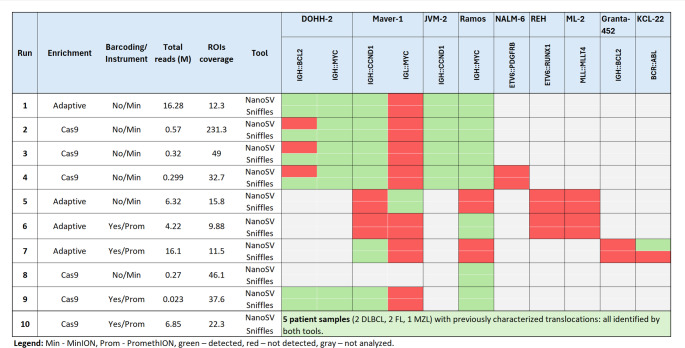 Figure 3
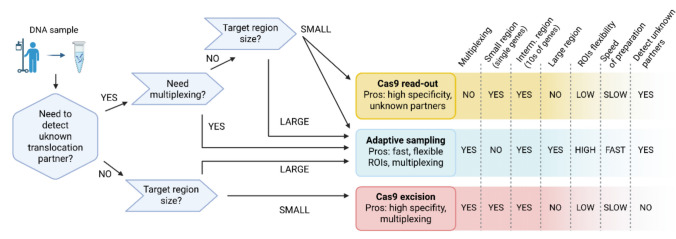 Figure 4
Peer Reviews
No public reviews on file for this paper yet. If you reviewed it on a platform where reviews are public (OpenReview, ICLR, NeurIPS, ICML), you can paste yours below so the community can read it here.
Videos
No videos yet. Explain this paper in a talk, walkthrough, or lecture? Add one.
Taxonomy
TopicsAcute Lymphoblastic Leukemia research · Genomic variations and chromosomal abnormalities · Lymphoma Diagnosis and Treatment