Treatment persistence, lipid lowering, and 3-year clinical outcomes in patients at very high cardiovascular risk on PCSK9 monoclonal antibodies
Klaus G. Parhofer, David Pittrow, Andreas L. Birkenfeld, Uwe Fraass, Bernd Hohenstein, Carsten Siegert, Jens Klotsche, Elisabeth Steinhagen-Thiessen, Stefan Dexl, Volker J. J. Schettler, Ulrich Laufs

TL;DR
This study shows that PCSK9 monoclonal antibodies help patients with high cardiovascular risk achieve better cholesterol control and fewer hospitalizations over three years.
Contribution
The study provides real-world evidence on the long-term effectiveness and persistence of PCSK9-mAb therapy in high-risk patients.
Findings
PCSK9-mAb users achieved lower LDL-C levels and higher target attainment compared to non-users.
Patients on PCSK9-mAb had significantly lower hospitalization rates for cardiovascular events.
Persistence with PCSK9-mAb therapy was high, with statin intolerance linked to higher discontinuation rates.
Abstract
In a cohort of patients with dyslipidemia at very high cardiovascular risk, we investigated differences in LDL-C lipid target achievement, clinical outcomes, and persistence rates between users and non-users of PCSK9 monoclonal antibodies (PCSK9-mAb) over a 3-year observation period. The prospective, multi-center observational study included 1695 patients with dyslipidemia. Eligible patients were adults with familial or non-familial hypercholesterolemia, mixed dyslipidemia, or other therapy-refractory lipid disorders in line with the G-BA reimbursement regulations. Treatment decisions, including PCSK9-mAb administration, were made at the discretion of the treating physician. At baseline, 804 (47.4%) patients received PCSK9-mAb therapy, and 891 (52.5%) did not. There were 42 (4.7%) new PCSK9-mAb receivers during the follow-up. Median propensity-score adjusted LDL-C levels in PCSK9-mAb…
Genes, proteins, chemicals, diseases, species, mutations and cell lines named across the full text — each resolved to its canonical identifier and authoritative record.
Click any figure to enlarge with its caption.
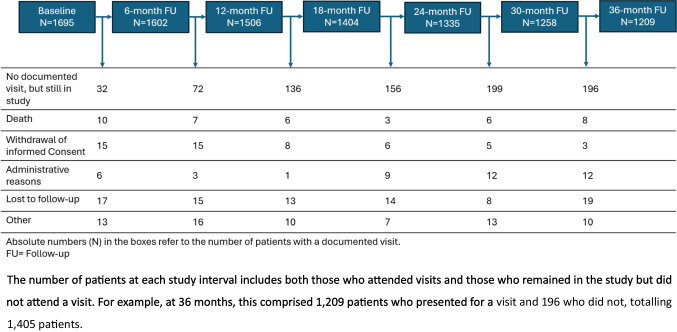 Figure 1
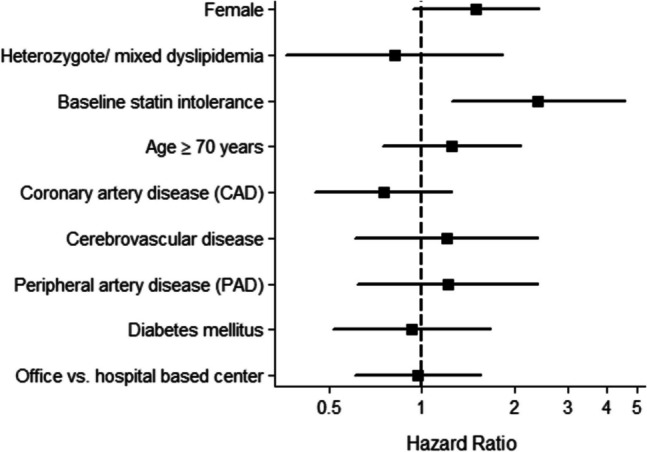 Figure 2
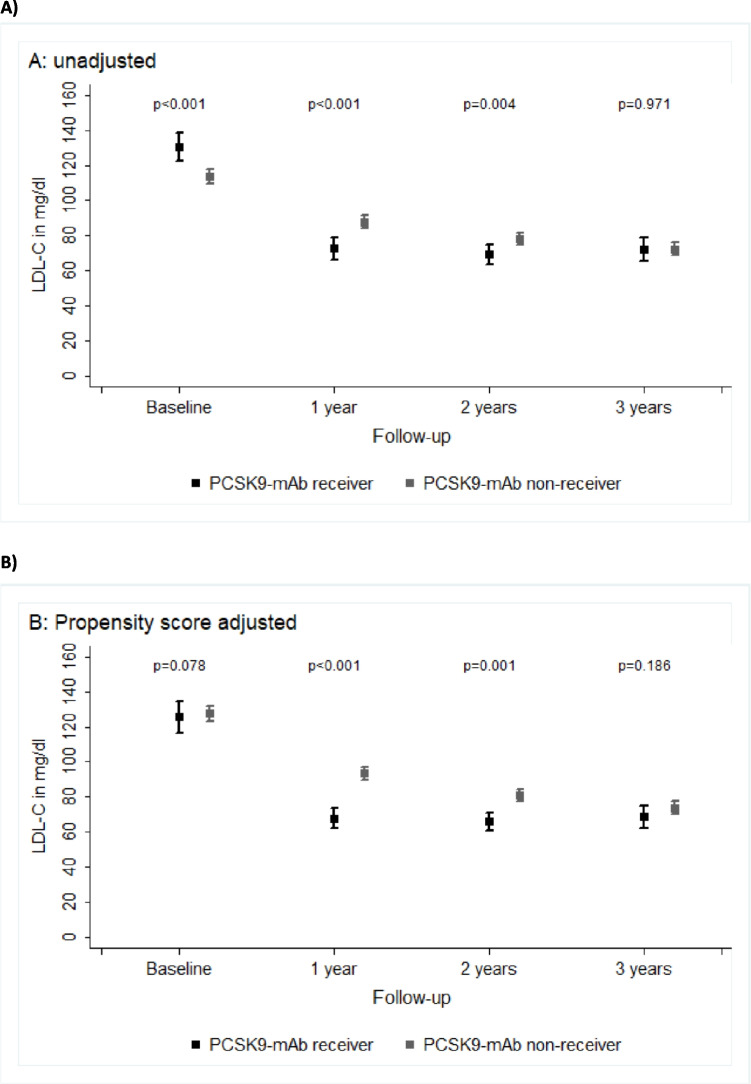 Figure 3
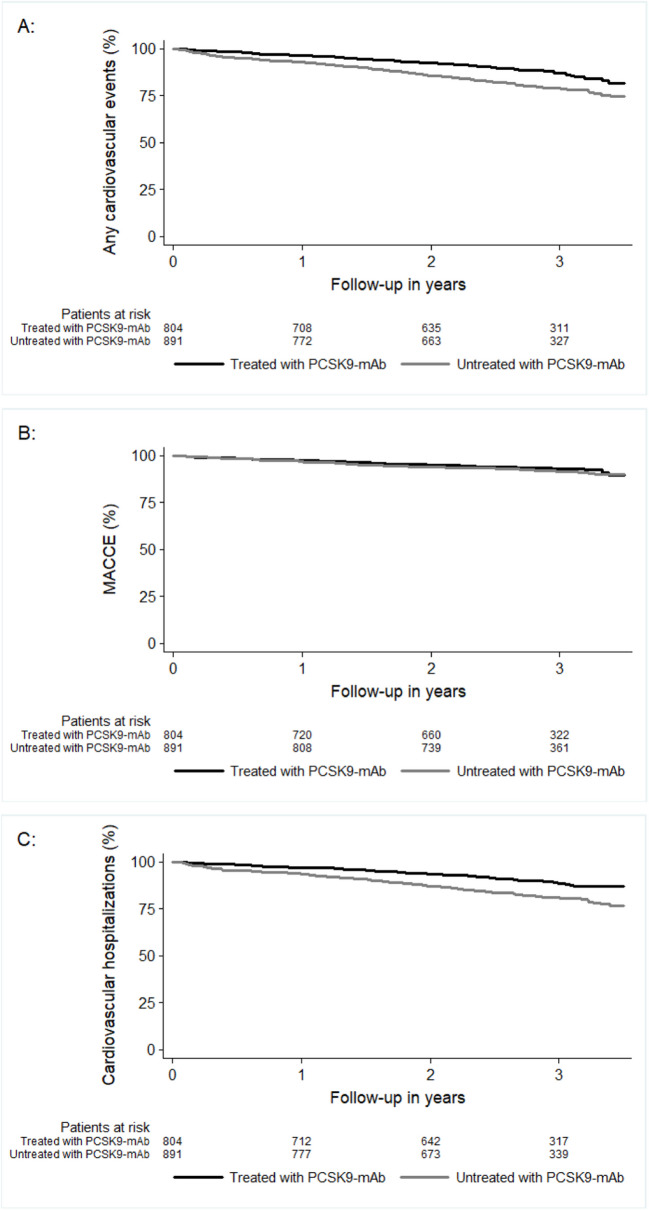 Figure 4
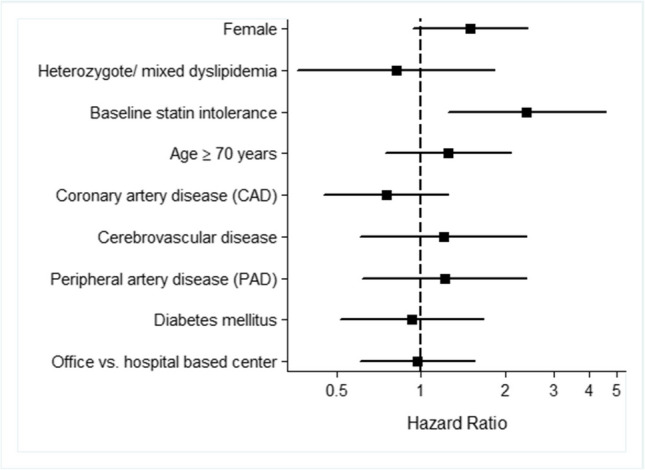 Figure 5
Peer Reviews
No public reviews on file for this paper yet. If you reviewed it on a platform where reviews are public (OpenReview, ICLR, NeurIPS, ICML), you can paste yours below so the community can read it here.
Videos
No videos yet. Explain this paper in a talk, walkthrough, or lecture? Add one.
Taxonomy
TopicsLipoproteins and Cardiovascular Health · Atherosclerosis and Cardiovascular Diseases · Biosimilars and Bioanalytical Methods