Identifying key outcome domains with underlying specific patient-reported outcomes for psychomotor therapy in mental health care in the Netherlands: a multi-phased qualitative study
Albertine de Haan, Janet Moeijes, Mia Scheffers, Philip van der Wees

TL;DR
This study identifies five key outcome domains for evaluating psychomotor therapy in mental health care, based on input from professionals and patients in the Netherlands.
Contribution
The study systematically identifies and synthesizes patient and professional perspectives on key outcome domains for psychomotor therapy.
Findings
Professionals prioritized body experience, movement experience, emotion regulation, stress regulation, and sensory awareness.
Patients emphasized body experience, social interaction, movement experience, emotion regulation, and integration of thinking, feeling, and behavior.
The synthesized outcome domains include body experience, movement experience, emotion regulation, social interaction, and stress regulation.
Abstract
Psychomotor therapy is an experiential therapy using movement- and body-oriented interventions to diminish psychiatric symptoms and improve psychosocial functioning. However, routine evaluation of patient-reported outcomes (PROs) and standardisation of patient-reported outcome measures (PROMs) in psychomotor therapy research and practice in adult mental healthcare are lacking, resulting in a gap in systematic research and evaluation of psychomotor interventions. This study aims to select the five most relevant outcome domains with underlying PROs for psychomotor therapy from the perspective of psychomotor professionals and patients. A multi-phased qualitative study was conducted in the Netherlands, consisting of three sub-studies: (i) the selection of the five most relevant outcome domains with underlying PROs from the perspective of psychomotor professionals (N = 53), using a modified…
Genes, proteins, chemicals, diseases, species, mutations and cell lines named across the full text — each resolved to its canonical identifier and authoritative record.
Click any figure to enlarge with its caption.
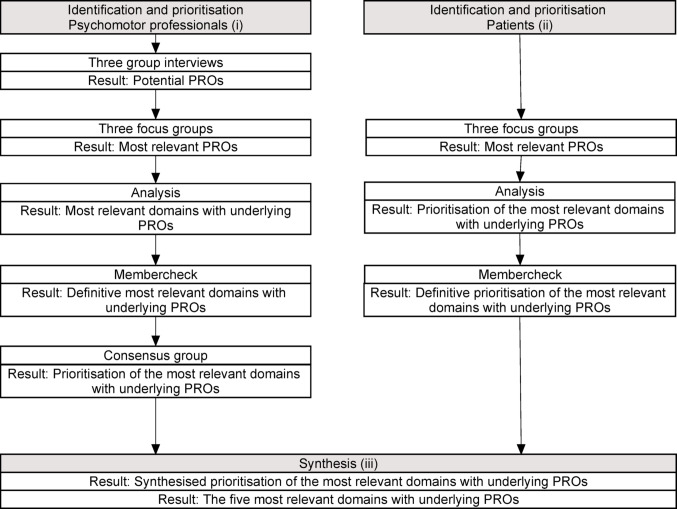 Figure 1
Peer Reviews
No public reviews on file for this paper yet. If you reviewed it on a platform where reviews are public (OpenReview, ICLR, NeurIPS, ICML), you can paste yours below so the community can read it here.
Videos
No videos yet. Explain this paper in a talk, walkthrough, or lecture? Add one.
Taxonomy
TopicsPsychotherapy Techniques and Applications · Schizophrenia research and treatment · Occupational Therapy Practice and Research