Decoding surgical proficiency and complexity: a machine learning framework for robotic herniorrhaphy
Thomas H. Shin, Abeselom Fanta, Fahri Gokcal, Mallory Shields, Cigdem Benlice, O. Yusef Kudsi

TL;DR
This paper introduces a machine learning framework to assess surgical complexity and skill development in robotic hernia repair using performance indicators.
Contribution
A novel machine learning approach is proposed to decode surgical proficiency and complexity using objective performance indicators in robotic herniorrhaphy.
Findings
Gradient boosting models combining clinical and OPI data achieved an F1 score of 0.87 for predicting case complexity.
OPIs alone had a lower predictive accuracy (F1 score of 0.58) for case complexity.
Skill acquisition is reflected in the stabilization of OPI variability within 10 months despite increasing case complexity.
Abstract
To evaluate the predictive value of objective performance indicators (OPIs) for case complexity assessment and explore their role in quantifying skill acquisition during robotic ventral herniorrhaphy. Despite advances in herniorrhaphy techniques, unclear metrics of case complexity have significant implications for operative planning, resource allocation, and patient outcomes. While existing complexity definitions rely primarily on clinical factors external to operator behavior, the expanding adoption of robotic platforms in ventral hernia repair provides unprecedented access to quantifiable surgical performance metrics. However, the relationship between these objective performance indicators and both case complexity and skill development remains incompletely understood, representing a gap that machine learning approaches may help address. OPI and clinical data from 561 consecutive…
Genes, proteins, chemicals, diseases, species, mutations and cell lines named across the full text — each resolved to its canonical identifier and authoritative record.
Click any figure to enlarge with its caption.
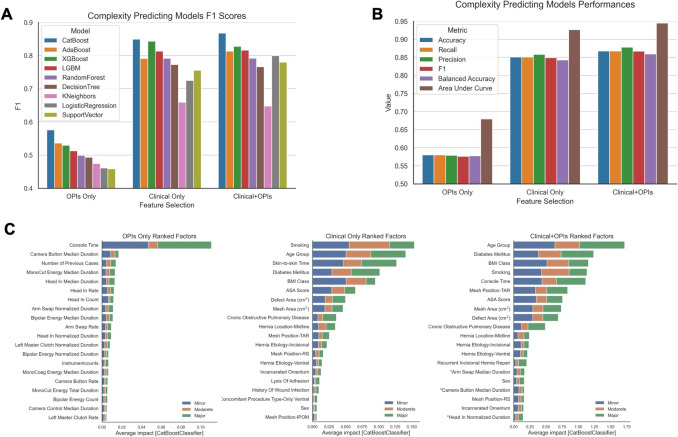 Figure 1
 Figure 2
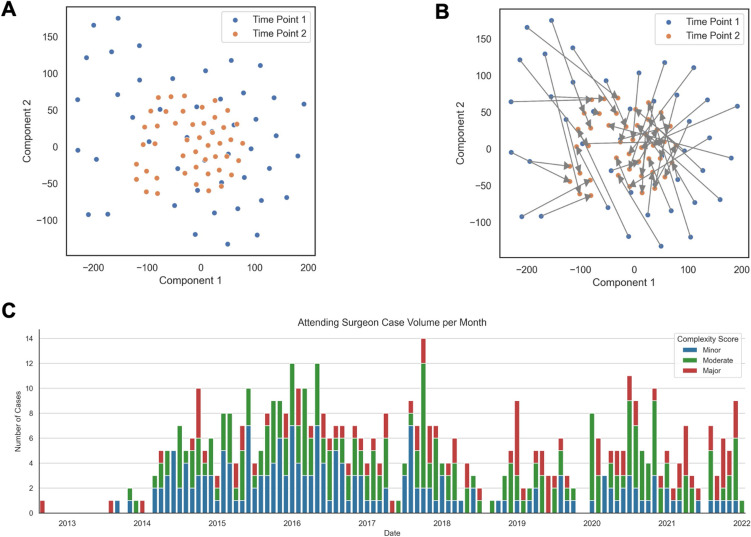 Figure 3
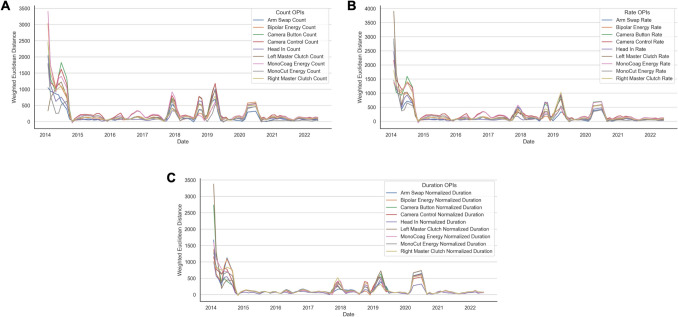 Figure 4
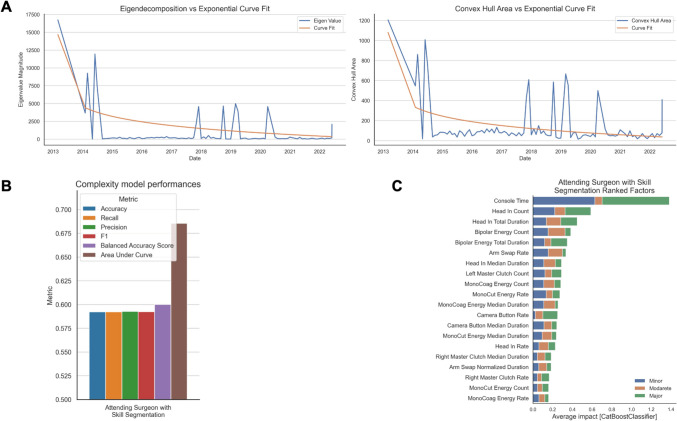 Figure 5
Peer Reviews
No public reviews on file for this paper yet. If you reviewed it on a platform where reviews are public (OpenReview, ICLR, NeurIPS, ICML), you can paste yours below so the community can read it here.
Videos
No videos yet. Explain this paper in a talk, walkthrough, or lecture? Add one.
Taxonomy
TopicsSurgical Simulation and Training · Hernia repair and management · Artificial Intelligence in Healthcare and Education