Learning curve estimation and insertion depth in Veress needle insertion using a conventional Veress needle and the VeressPlus™ needle
Tim Horeman-Franse, Roelf Postema, David Cefai, Sem Frederik Hardon, Predrag Andrejevic, Jenny Dankelman, Jean Calleja-Agius, Christian Camenzuli

TL;DR
A new Veress needle design, VeressPlus, shows significantly safer and more consistent insertion depths for beginners compared to the conventional Veress needle.
Contribution
The study introduces a novel safety improvement in laparoscopic surgery tools by evaluating a new Veress needle design for reduced learning curve and safer insertion.
Findings
The VeressPlus needle showed no learning curve, unlike the conventional Veress needle which required 8 trials to reach a plateau.
At the 8th trial, the VeressPlus needle had significantly lower average insertion depth (5.4 mm) compared to the conventional needle (12.7 mm).
Only 8% of VeressPlus users exceeded the safe insertion depth, compared to 46% for the conventional needle.
Abstract
The Veress Needle (VN) is commonly used in establishing pneumoperitoneum in laparoscopic surgery. However, severe vascular and/or visceral complications can occur due to overshoot at the insertion of the VN in the abdominal cavity. In order to investigate whether the new VeressPLUS needle (VN+) could improve safety, the learning curve of this needle was compared to that of a conventional VN, under standardized conditions. In total, 26 residents and med students, without prior Veress needle experience, were recruited and randomly assigned to VN or the VN+ group. A learning curve plateau phase recognition model was developed and used to determine the learning curve of the participants who used either the VN or the VN+ needle on two Thiel-embalmed human cadavers. Insertion of the needles was done in a systematic way in the upper abdomen and insertion depth was measured under direct…
Genes, proteins, chemicals, diseases, species, mutations and cell lines named across the full text — each resolved to its canonical identifier and authoritative record.
Click any figure to enlarge with its caption.
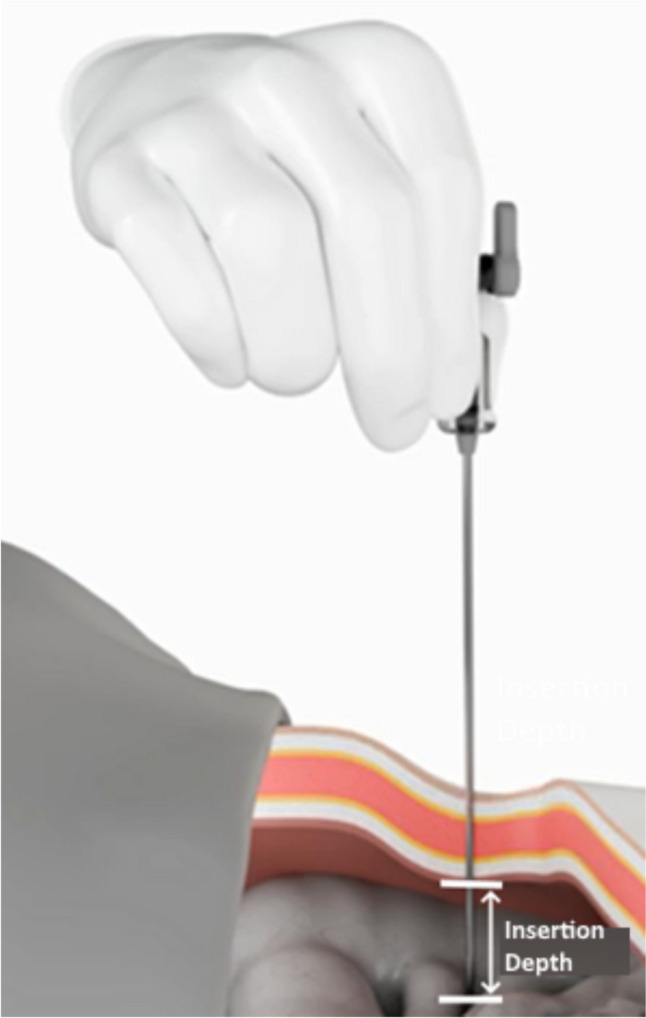 Figure 1
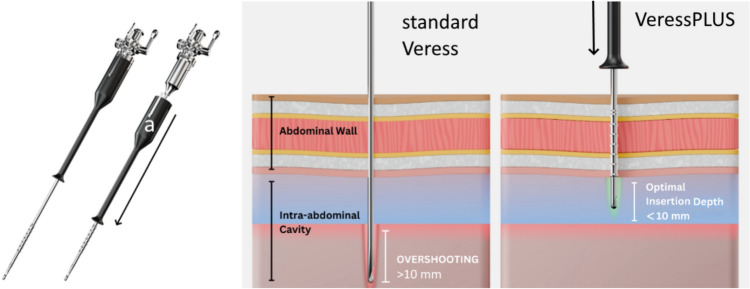 Figure 2
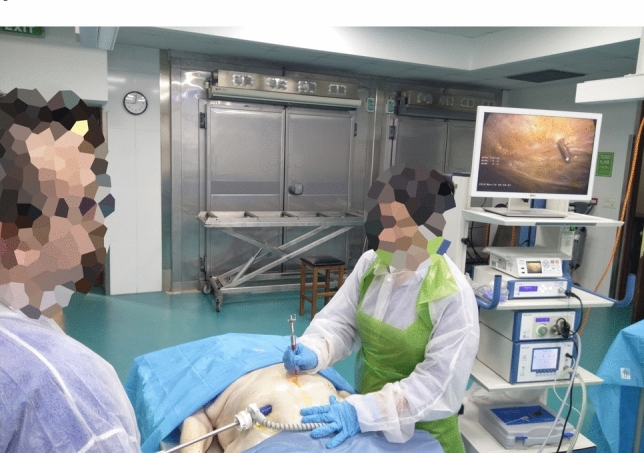 Figure 3
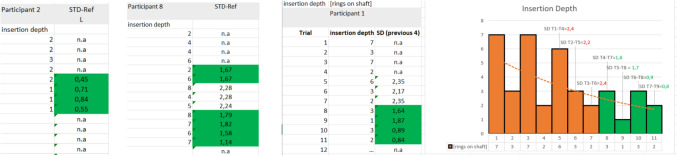 Figure 4
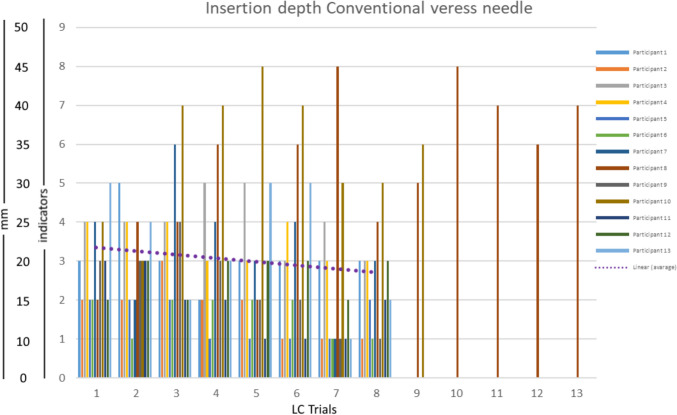 Figure 5
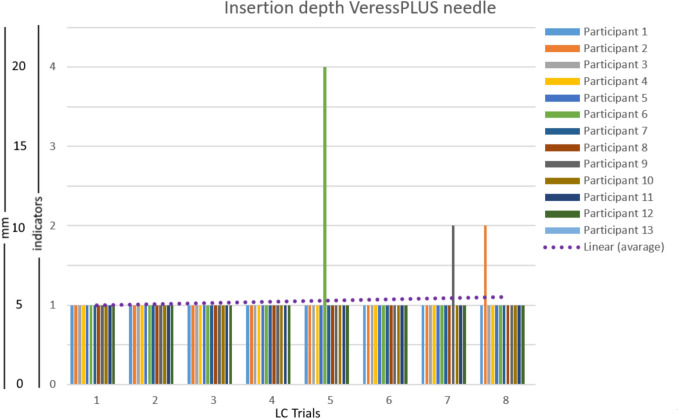 Figure 6
Peer Reviews
No public reviews on file for this paper yet. If you reviewed it on a platform where reviews are public (OpenReview, ICLR, NeurIPS, ICML), you can paste yours below so the community can read it here.
Videos
No videos yet. Explain this paper in a talk, walkthrough, or lecture? Add one.
Taxonomy
TopicsMinimally Invasive Surgical Techniques · Surgical Simulation and Training · Gallbladder and Bile Duct Disorders