Lenvatinib plus transarterial chemoembolization and PD-1 inhibitors as conversion therapies for unresectable intermediate-advanced hepatocellular carcinoma: a phase 2 trial and exploratory biomolecular study
Xiaoyun Zhang, Haozheng Cai, Wei Peng, Haiqing Wang, JiaYi Wu, Xinrui Zhu, Weixin Guo, Fei Xie, Yu Zhang, Ming Wang, Yu Yu, Yongjie Zhou, Chuan Li, Junyi Shen, Chang Liu, Yu Yang, Xiaozhong Jiang, Qiu Li, Weixia Chen, Yujun Shi, Wusheng Lu, Xin Sun, Xielin Feng, Maolin Yan

TL;DR
A new treatment combining lenvatinib, chemoembolization, and PD-1 inhibitors significantly improves outcomes for patients with advanced liver cancer.
Contribution
The study introduces a novel combination therapy (LEN-TAP) and identifies a potential biomarker for treatment response in hepatocellular carcinoma.
Findings
LEN-TAP significantly increased the salvage liver resection rate and objective response rate compared to chemoembolization alone.
Patients receiving LEN-TAP had prolonged overall survival, event-free survival, and recurrence-free survival.
Higher levels of HLA-DR+CD38+CD8+ T cells correlated with better treatment response, suggesting a potential biomarker.
Abstract
Conversion therapy remains an uncommon strategy for managing unresectable hepatocellular carcinoma (uHCC) due to limited evidence supporting its efficacy. To address this gap, we initiated a prospective phase 2 multicenter trial (NCT04997850) comparing the LEN-TAP regimen, combining lenvatinib, transarterial chemoembolization (TACE), and PD-1 inhibitors, against TACE alone in uHCC patients. The study’s primary outcome was salvage liver resection (SLR) rate; secondary measures included objective response rate (ORR), overall survival (OS), event-free survival (EFS), recurrence-free survival (RFS), and safety profile. From October 2020 to November 2021, 142 eligible participants were assigned to LEN-TAP (n = 71) or TACE monotherapy (n = 71). At a median follow-up of 24.2 months, the LEN-TAP cohort exhibited a significantly higher SLR rate (59.2% vs. 18.3%, P < 0.001) and ORR (78.9% vs.…
Genes, proteins, chemicals, diseases, species, mutations and cell lines named across the full text — each resolved to its canonical identifier and authoritative record.
Click any figure to enlarge with its caption.
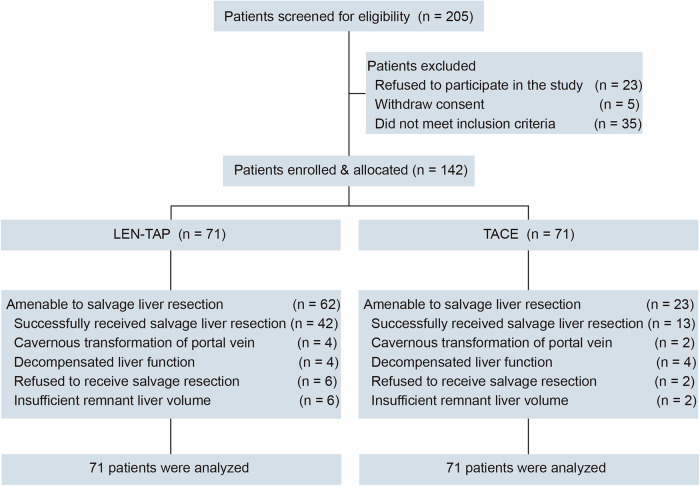 Figure 1
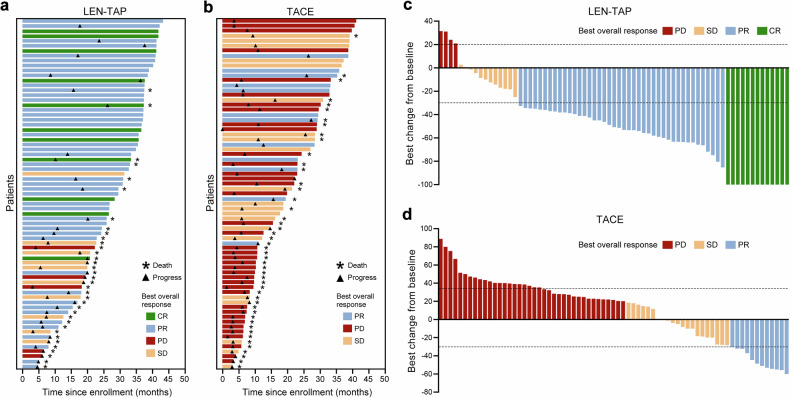 Figure 2
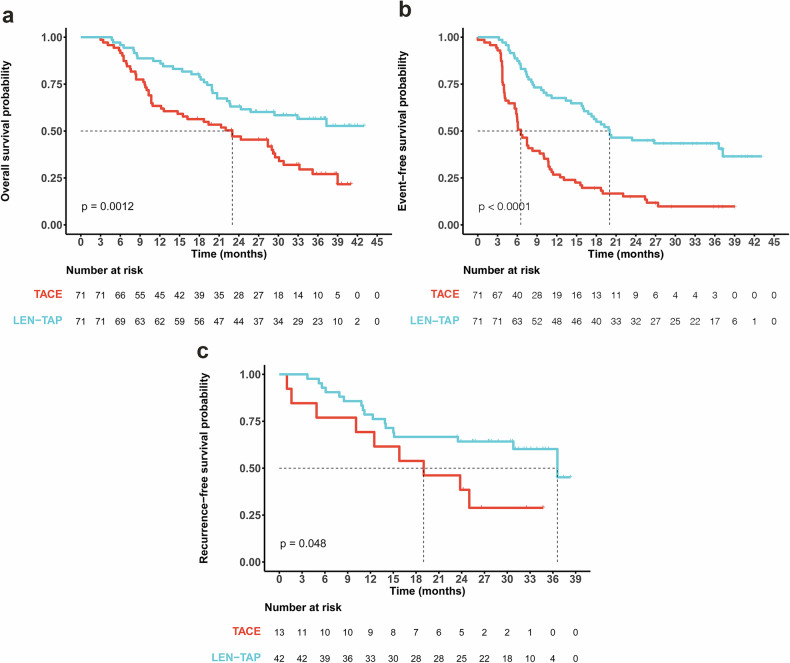 Figure 3
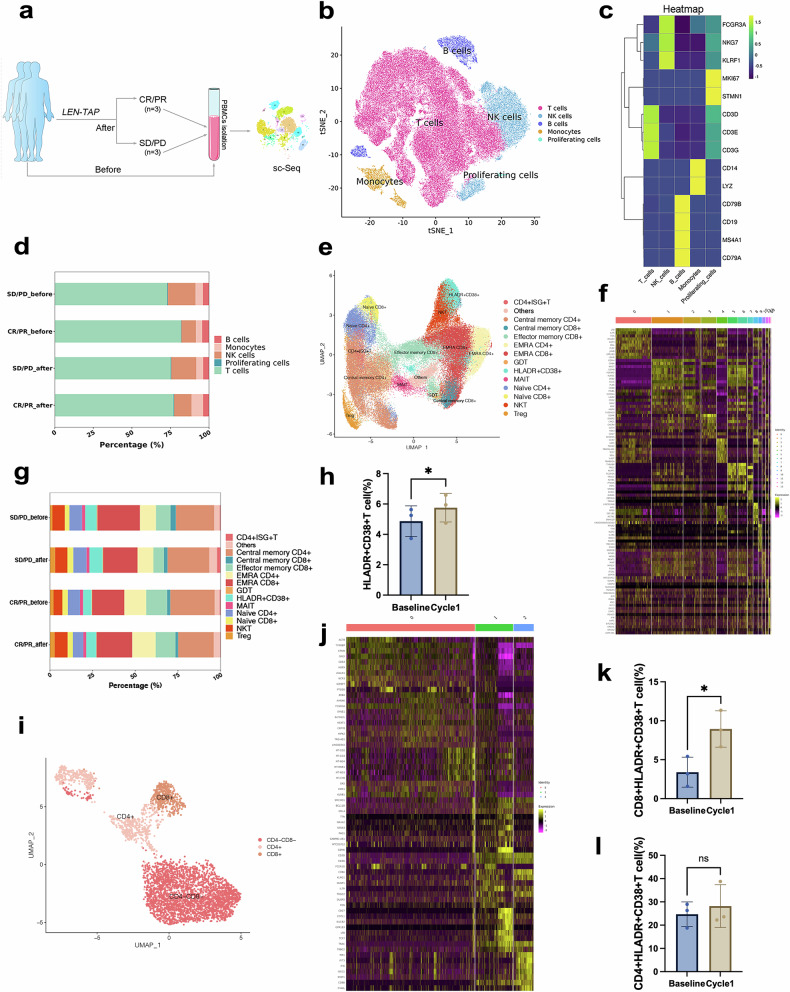 Figure 4
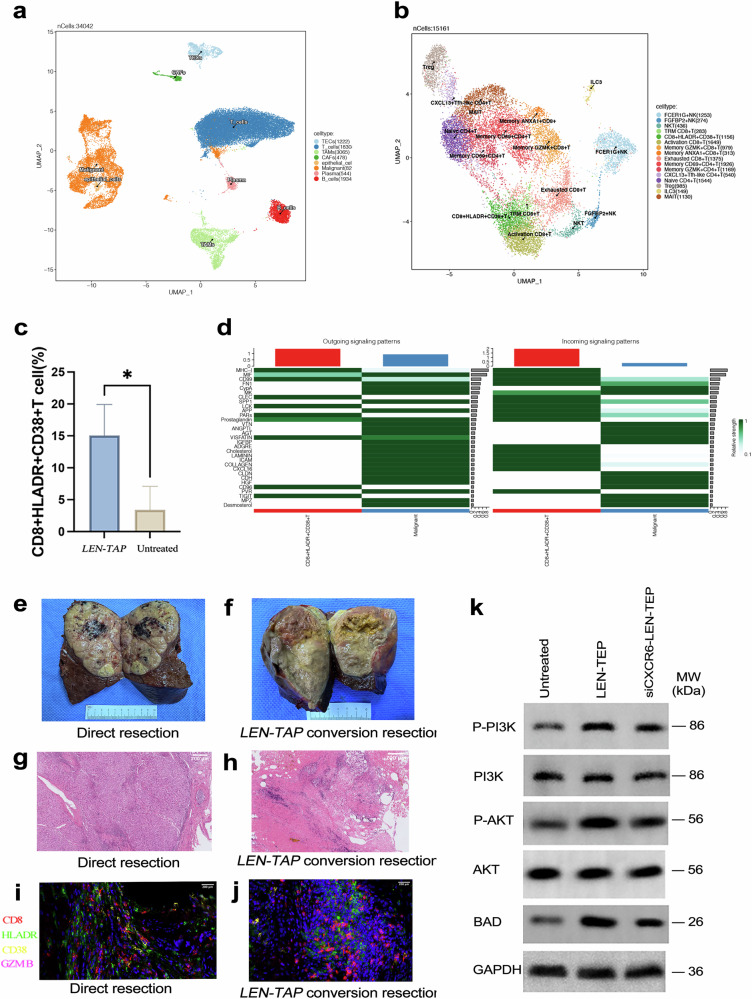 Figure 5
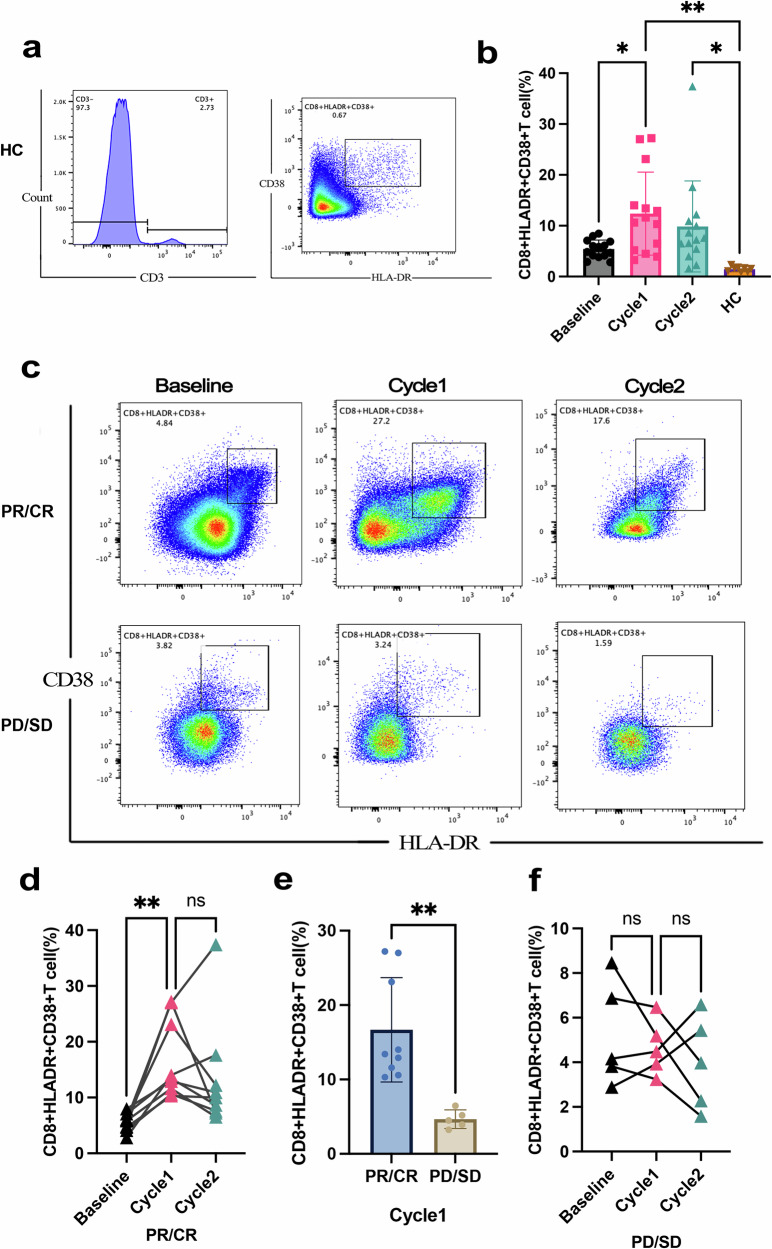 Figure 6
Peer Reviews
No public reviews on file for this paper yet. If you reviewed it on a platform where reviews are public (OpenReview, ICLR, NeurIPS, ICML), you can paste yours below so the community can read it here.
Videos
No videos yet. Explain this paper in a talk, walkthrough, or lecture? Add one.
Taxonomy
TopicsHepatocellular Carcinoma Treatment and Prognosis · Cholangiocarcinoma and Gallbladder Cancer Studies · Cancer Mechanisms and Therapy