Computational study of metal doped coronene quantum dots for formaldehyde sensing and adsorption in medical and environmental applications
Khaled Almansour, Hashem O. Alsaab, Mahboubeh Pishnamazi

TL;DR
This study explores how metal-doped coronene quantum dots can detect and absorb formaldehyde, a harmful chemical, for use in medical and environmental applications.
Contribution
The novel contribution is the computational identification of aluminum-doped coronene as a superior formaldehyde sensor and adsorbent compared to zinc-doped coronene.
Findings
Aluminum-doped coronene shows the highest adsorption energy and electrical conductivity for formaldehyde detection.
Zinc-doped coronene is suitable for rapid-response reusable sensors due to its fast recovery time.
Aluminum-doped coronene exhibits significant spectral shifts, indicating strong colorimetric detection potential.
Abstract
In this study, the ability of pure and aluminum- and zinc-doped coronene as dual-purpose adsorbent/sensor platforms for formaldehyde (FA) detection in environmental and biomedical applications was computationally studied. All molecular structures were optimized individually and in combination with FA using density functional theory (DFT) at the B97D/6-311 + G(d) level of theory in the gas and water phases, and validated using WB97XD calculations. Analyses included geometric optimization, coherence energy, IR and UV spectra (TD-DFT), MEP mapping, HOMO-LUMO distributions, DOS plots, reactivity descriptors, dipole moment and polarizability, adsorption energy, recovery time, and electrical conductivity. Intermolecular interactions were analyzed using the theory of atoms in molecules (QTAIM) and non-covalent interaction (NCI) analyses. Among all structures, Al.Coronene@FA exhibited the…
Genes, proteins, chemicals, diseases, species, mutations and cell lines named across the full text — each resolved to its canonical identifier and authoritative record.
Click any figure to enlarge with its caption.
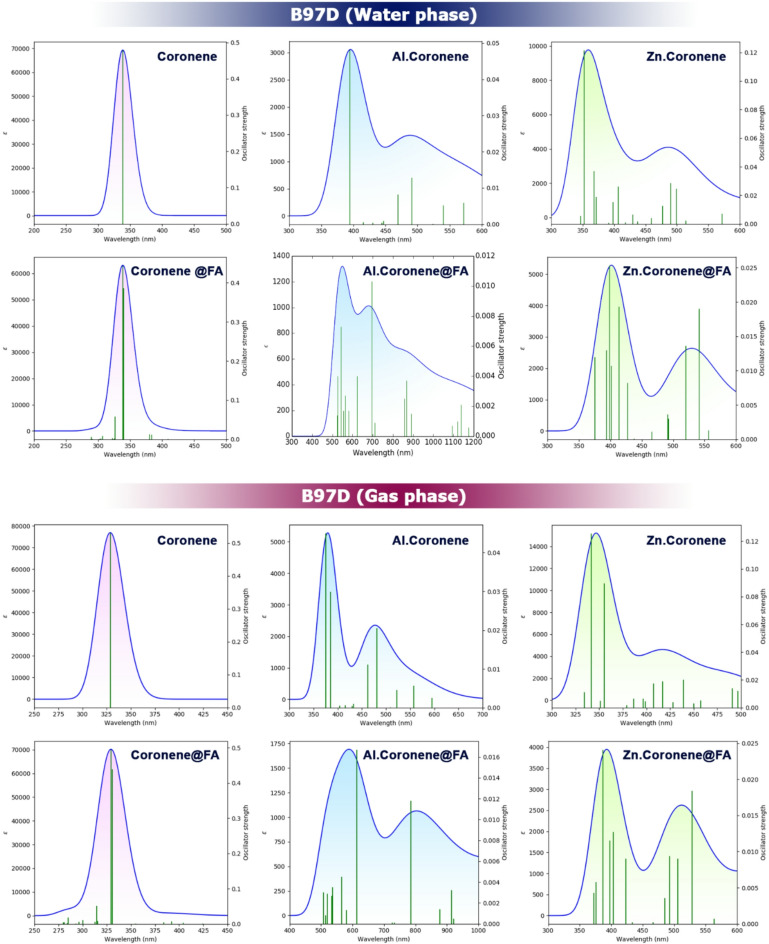 Figure 10
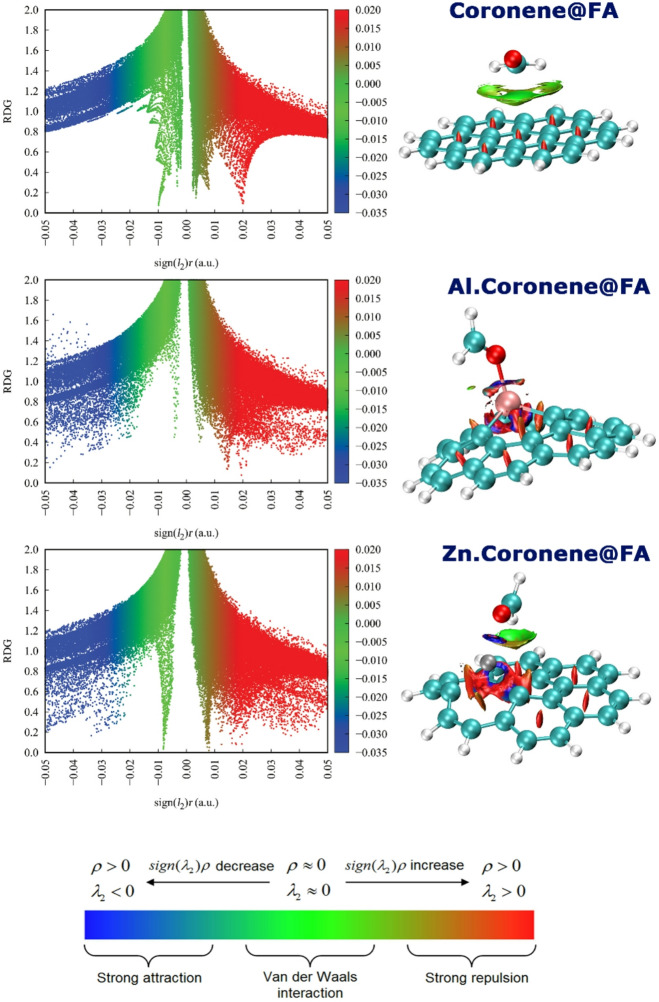 Figure 11
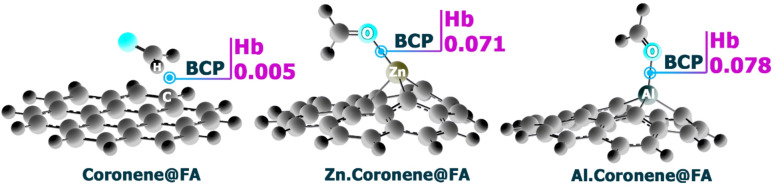 Figure 12
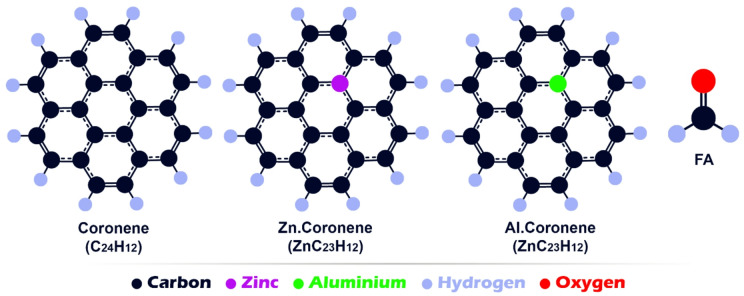 Figure 1
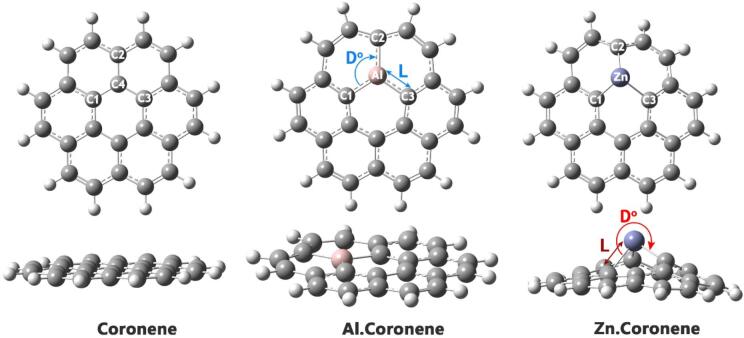 Figure 2
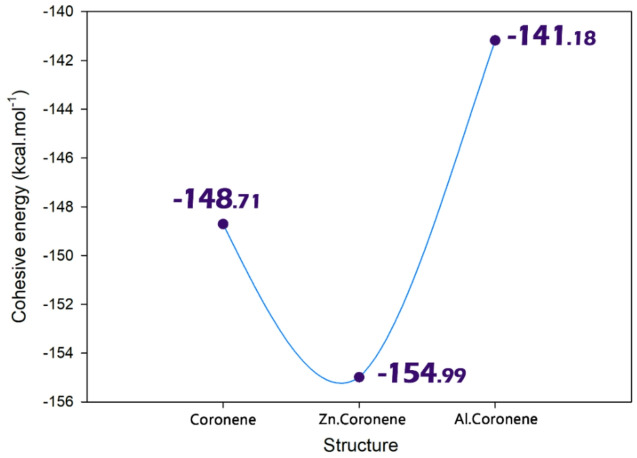 Figure 3
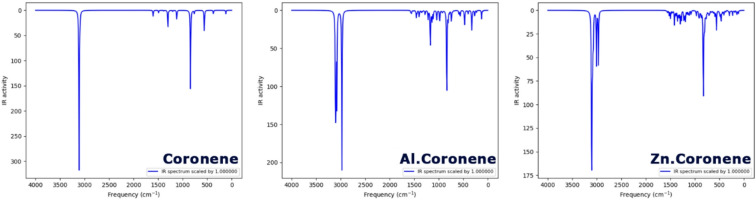 Figure 4
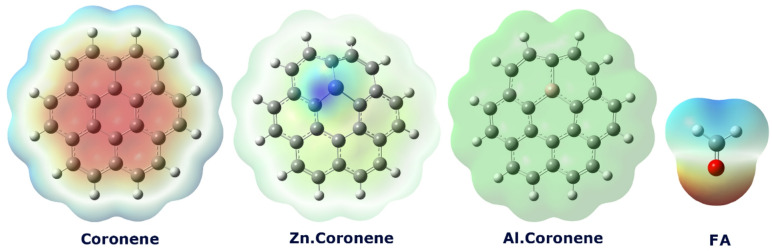 Figure 5
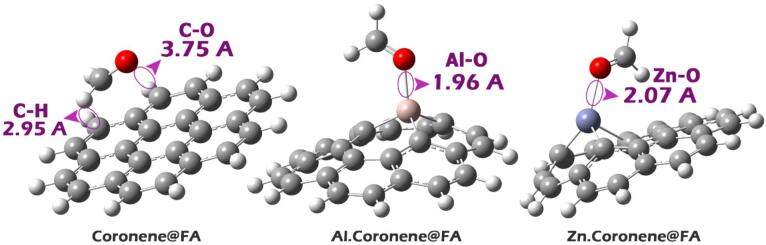 Figure 6
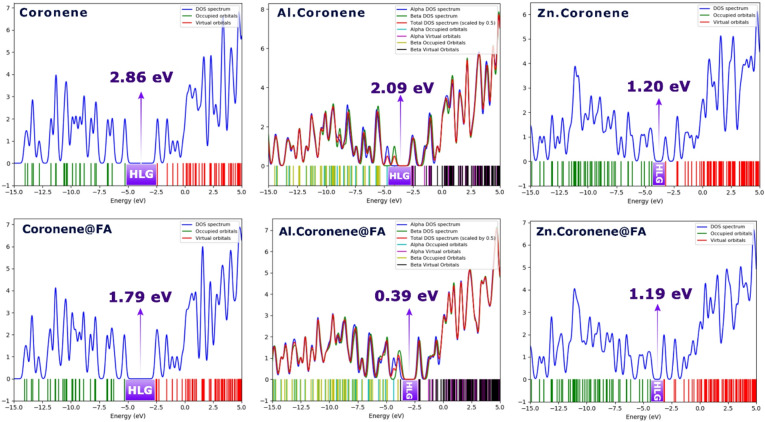 Figure 7
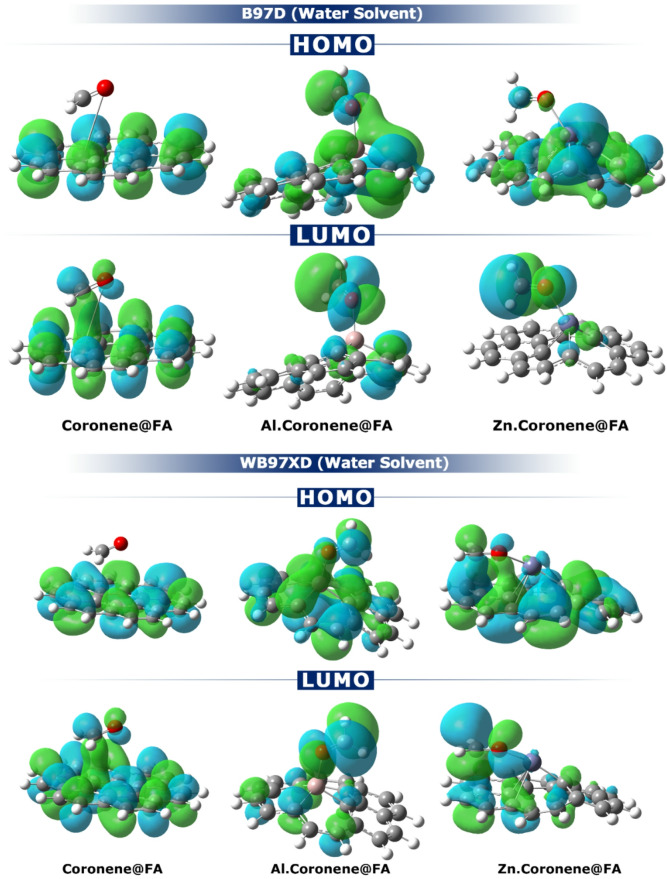 Figure 8
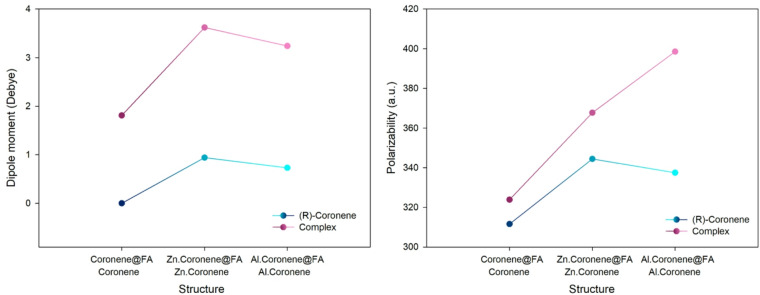 Figure 9
Peer Reviews
No public reviews on file for this paper yet. If you reviewed it on a platform where reviews are public (OpenReview, ICLR, NeurIPS, ICML), you can paste yours below so the community can read it here.
Videos
No videos yet. Explain this paper in a talk, walkthrough, or lecture? Add one.
Taxonomy
TopicsIndoor Air Quality and Microbial Exposure · Gas Sensing Nanomaterials and Sensors · Advanced Chemical Sensor Technologies