Immunoassays for the detection and differentiation of Paenibacillus larvae, the etiological agent of American foulbrood (AFB) in honey bees
Antonia Reinecke, Josefine Göbel, Elke Genersch

TL;DR
This paper presents a new rapid test to detect and differentiate harmful bacteria causing a deadly bee disease, helping control outbreaks more effectively.
Contribution
A novel lateral flow immunoassay for rapid detection and differentiation of Paenibacillus larvae genotypes ERIC I and II.
Findings
A duplex lateral flow assay was developed with high specificity and sensitivity for P. larvae detection.
The assay enables on-site diagnosis of American foulbrood in honey bee larvae.
The test differentiates between clinically relevant genotypes ERIC I and II of P. larvae.
Abstract
The Western honey bee (Apis mellifera) is among the most important commercial pollinators in agriculture, but also plays a central role as pollinator in natural ecosystems. The globally occurring brood disease American foulbrood (AFB), caused by the gram-positive, spore-forming bacterium Paenibacillus larvae, poses a serious threat to colony health and productivity. Early and accurate diagnosis is therefore essential to effectively contain disease outbreaks. This study aimed to develop a rapid, sensitive point-of-care test in lateral flow format for the simultaneous detection and differentiation of the clinically relevant P. larvae genotypes ERIC I and II. To achieve this aim, two target antigens were selected, produced recombinantly or purified, and used to generate monoclonal antibodies. These antibodies formed the basis for the development of two sandwich ELISAs and, building on…
Genes, proteins, chemicals, diseases, species, mutations and cell lines named across the full text — each resolved to its canonical identifier and authoritative record.
Click any figure to enlarge with its caption.
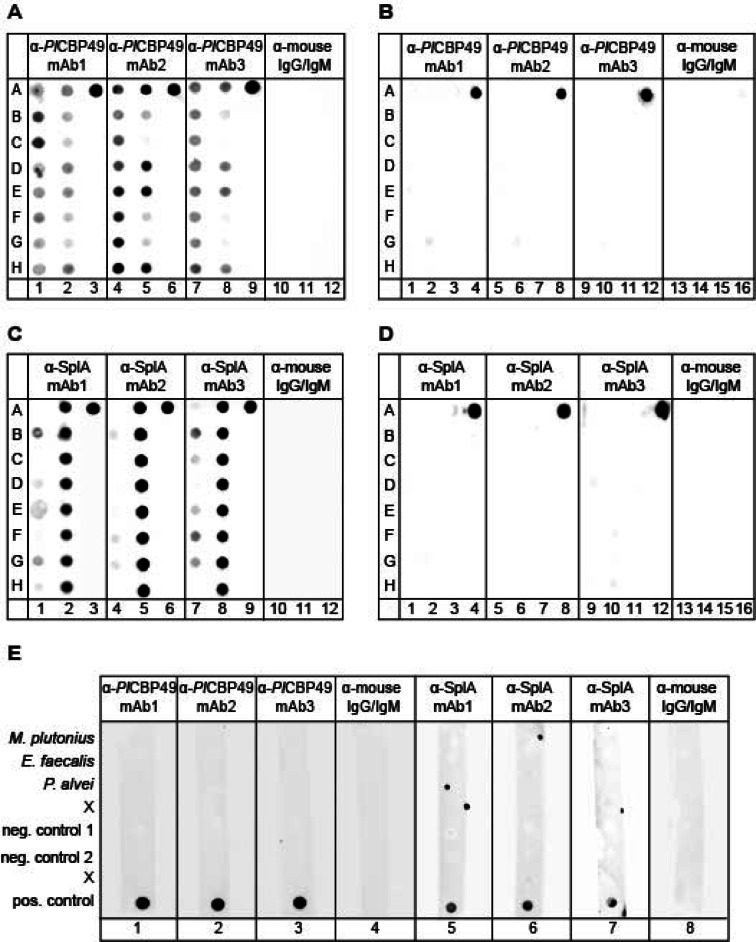 Figure 1
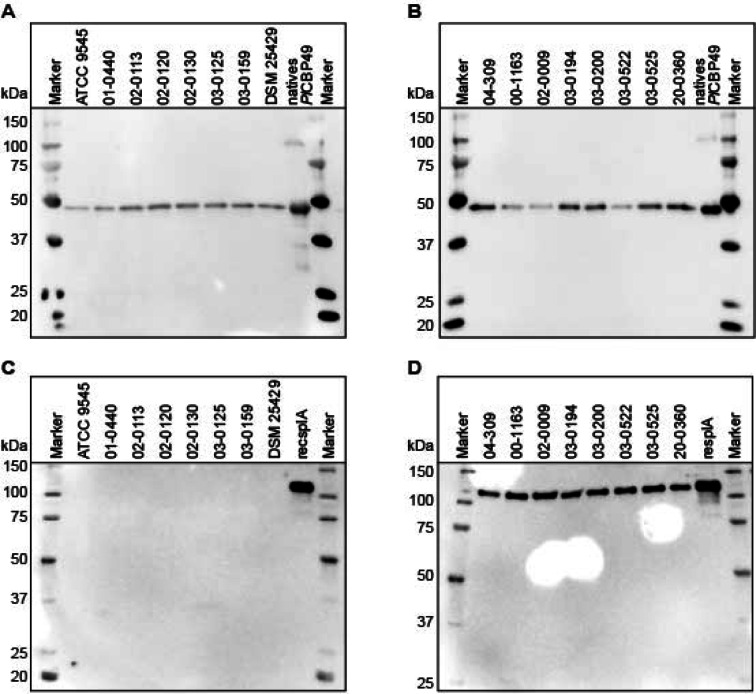 Figure 2
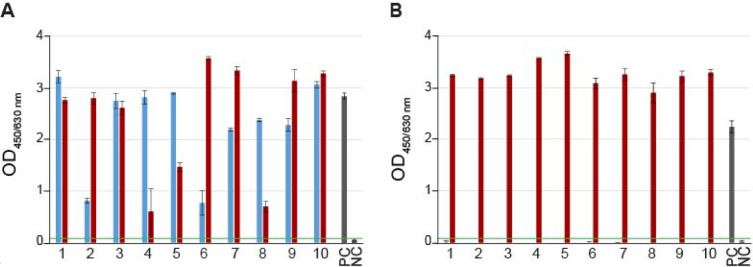 Figure 3
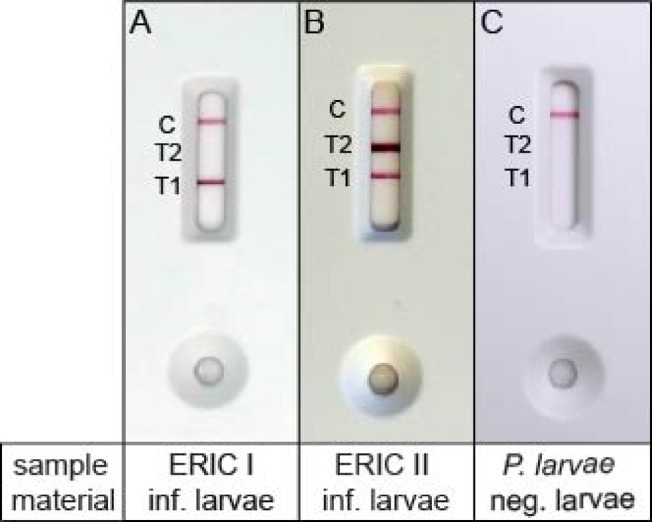 Figure 4
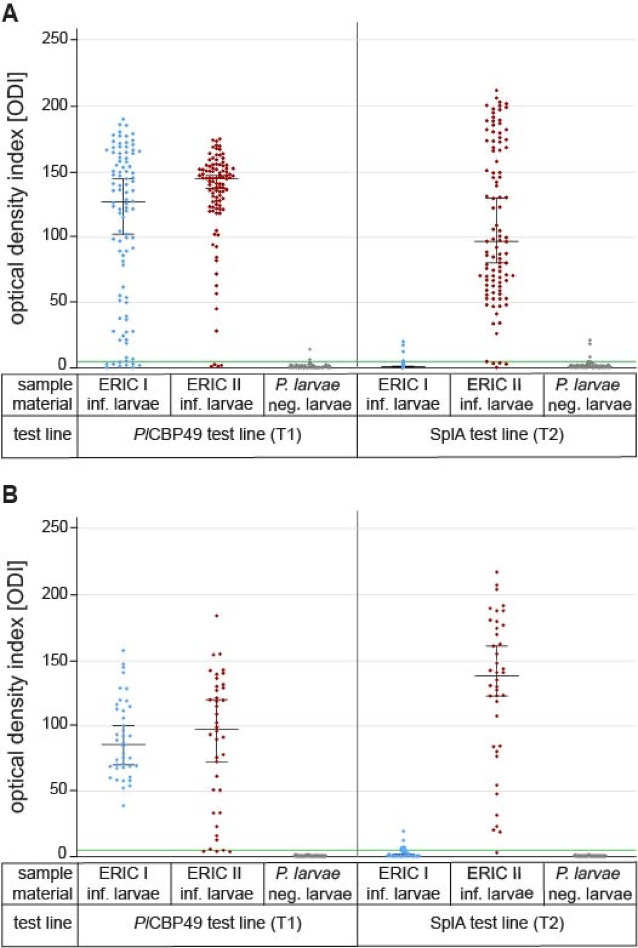 Figure 5
Peer Reviews
No public reviews on file for this paper yet. If you reviewed it on a platform where reviews are public (OpenReview, ICLR, NeurIPS, ICML), you can paste yours below so the community can read it here.
Videos
No videos yet. Explain this paper in a talk, walkthrough, or lecture? Add one.
Taxonomy
TopicsInsect and Pesticide Research · Insect and Arachnid Ecology and Behavior · Healthcare and Venom Research