Preferences for Decision-Making Style and Knowledge of and Attitudes To Recovery in Mental Health Professionals Working in Inpatient and Outpatient Settings in Routine Mental Health Practice: An Exploratory Cross-Sectional Study in the Danish Mental Health Services
Lisa Korsbek, Stine Bjerrum Moeller, Marie Bonde, Rikke Amalie Agergaard Jensen

TL;DR
This study explores how mental health professionals in Denmark prefer to make decisions and how their preferences relate to their understanding and attitudes toward recovery.
Contribution
The study identifies associations between decision-making style preferences and recovery knowledge/attitudes among mental health professionals.
Findings
Most professionals preferred shared decision-making, but preferences varied by profession, experience, and setting.
Those preferring shared or active styles scored higher on recovery knowledge compared to those preferring passive styles.
Few professionals reported receiving SDM training or having access to decision-support tools.
Abstract
In mental health care, shared decision making (SDM) is a central part of the recovery paradigm. However, implementing SDM can be challenging, and professionals may prefer different decision-making styles. This study explored preferences for decision-making style and examined their association with knowledge of and attitudes to recovery among mental health professionals in routine hospital-based services. An exploratory cross-sectional survey was conducted among mental health professionals (N = 552) in hospital-based services in one of Denmark’s five regions. Preferences for decision-making style were measured using the Clinical Decision Making Style Scale – Staff Questionnaire, while professionals’ knowledge of and attitudes to recovery were assessed using the Recovery Knowledge Inventory. Although the majority of participants (72.4%) preferred a shared decision-making style, there were…
Genes, proteins, chemicals, diseases, species, mutations and cell lines named across the full text — each resolved to its canonical identifier and authoritative record.
Click any figure to enlarge with its caption.
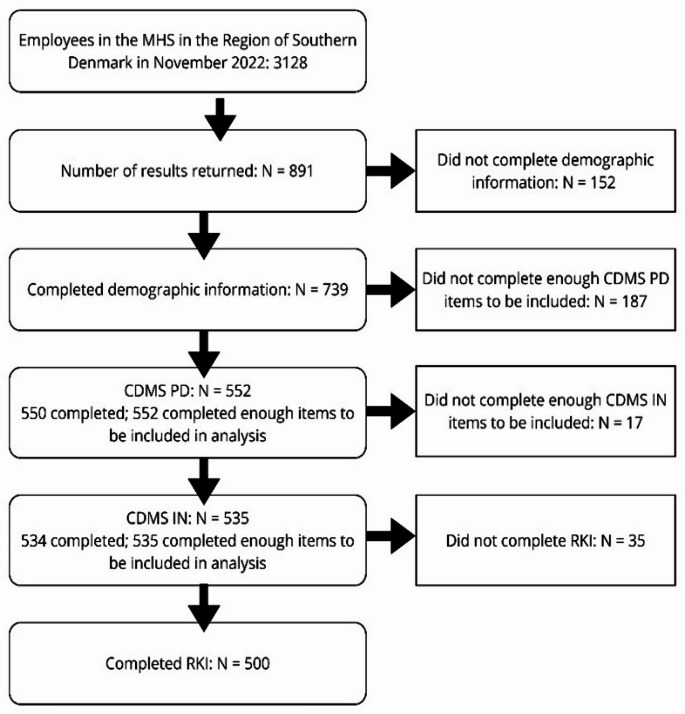 Figure 1
Peer Reviews
No public reviews on file for this paper yet. If you reviewed it on a platform where reviews are public (OpenReview, ICLR, NeurIPS, ICML), you can paste yours below so the community can read it here.
Videos
No videos yet. Explain this paper in a talk, walkthrough, or lecture? Add one.
Taxonomy
TopicsPatient-Provider Communication in Healthcare · Mental Health and Patient Involvement · Healthcare Decision-Making and Restraints