Real life use of ravulizumab in Italian patients with paroxysmal nocturnal hemoglobinuria: evidence from the REACTION observational study
Anna Paola Iori, Antonio De Vivo, Eros Di Bona, Giovanni Caocci, Francesca Fioritoni, Fabio Ciceri, Eloise Beggiato, Davide Rapezzi, Angela Amendola, Amalia Figuera, Carmine Selleri, Francesco Longu, Bruno Fattizzo, Alessandra Tucci, Alessandro Cignetti, Valeria Amico

TL;DR
This study shows that ravulizumab is effective and well-tolerated in Italian patients with paroxysmal nocturnal hemoglobinuria, improving disease control and quality of life.
Contribution
The study provides real-world evidence of ravulizumab's effectiveness and safety in PNH patients previously treated with eculizumab.
Findings
92.3% of patients had LDH levels within or below 1.5 × ULN after 52 weeks of ravulizumab treatment.
Transfusion requirements decreased from 25.0% during eculizumab to 18.8% during ravulizumab.
Breakthrough hemolysis events were reduced during ravulizumab treatment compared to eculizumab.
Abstract
Ravulizumab is a second-generation C5i engineered from eculizumab to achieve immediate, complete, and sustained inhibition of terminal complement activity in PNH. The REACTION observational cohort study describes the effectiveness and tolerability of ravulizumab in Italian patients who were previously treated with eculizumab. Eighty-one PNH patients were enrolled in this study. The primary endpoint was the percentage change in lactate dehydrogenase (LDH) from baseline to the end of observation (52 weeks follow-up). Among secondary endpoints, transfusion avoidance, breakthrough hemolysis (BTH) and patients’ quality of life (QoL) were evaluated. The median (25–75 percentiles) percentage change in LDH at 52 weeks follow-up was -2.6 (-11.5–13.4) U/L, with 92.3% of the patients presenting LDH within or < 1.5 × upper limit of normal (ULN). Overall, 20 (25.0%) patients required transfusion…
Genes, proteins, chemicals, diseases, species, mutations and cell lines named across the full text — each resolved to its canonical identifier and authoritative record.
Click any figure to enlarge with its caption.
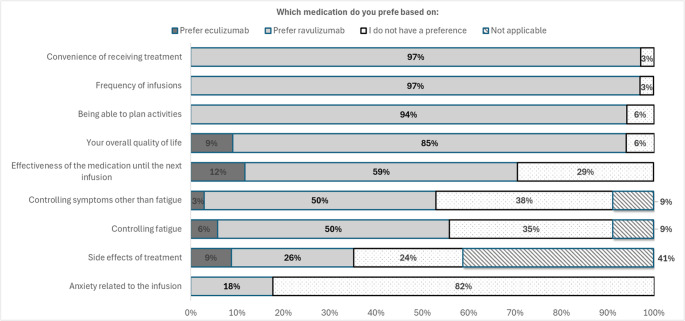 Figure 1
Peer Reviews
No public reviews on file for this paper yet. If you reviewed it on a platform where reviews are public (OpenReview, ICLR, NeurIPS, ICML), you can paste yours below so the community can read it here.
Videos
No videos yet. Explain this paper in a talk, walkthrough, or lecture? Add one.
Taxonomy
TopicsComplement system in diseases · Monoclonal and Polyclonal Antibodies Research · Coagulation, Bradykinin, Polyphosphates, and Angioedema