Room of horrors: impact on attitudes towards resident safety—A pre-post study
Graciana-Virginye Versteeg, Theresa A. Forbrig, Johannes Gräske

TL;DR
A simulation-based intervention improved staff attitudes toward resident safety in long-term care.
Contribution
This study evaluates the impact of the Room-of-Horrors intervention on staff safety attitudes in long-term care.
Findings
The G-APSQshort score improved significantly after the intervention.
Care staff showed the most benefit from the Room-of-Horrors method.
Most participants recommended the intervention and wanted it repeated regularly.
Abstract
Sicherheitsrisiken in der stationären Langzeitpflege entstehen durch komplexe Pflegesituationen und die Vulnerabilität der Bewohner*innen. Simulationsbasierte Methoden wie die Room-of-Horrors(RoH)-Intervention können das Bewusstsein der Mitarbeitenden für solche Risiken stärken. Übergeordnetes Ziel der Arbeit war es zu untersuchen, wie sich eine RoH-Intervention auf die Haltung der Mitarbeitenden bezüglich der Bewohner*innensicherheit in der Langzeitpflege auswirkt. Eine schriftlich standardisierte Prä-post-Erhebung mit 176 Teilnehmenden erfasste die Haltung gegenüber Sicherheitsrisiken mithilfe des „German short Version of the Attitudes to Patient Safety Questionnaire“ (G-APSQshort). Der G‑APSQshort-Score stieg signifikant von 5,4 auf 5,6 Punkte (p < 0,001). Besonders Betreuungskräfte profitierten von der Intervention (p < 0,001). Von allen Teilnehmenden würden 77,3 % das RoH-Konzept…
Genes, proteins, chemicals, diseases, species, mutations and cell lines named across the full text — each resolved to its canonical identifier and authoritative record.
Click any figure to enlarge with its caption.
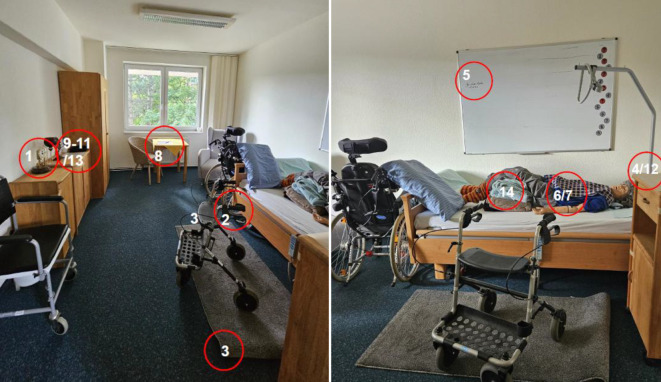 Figure 1
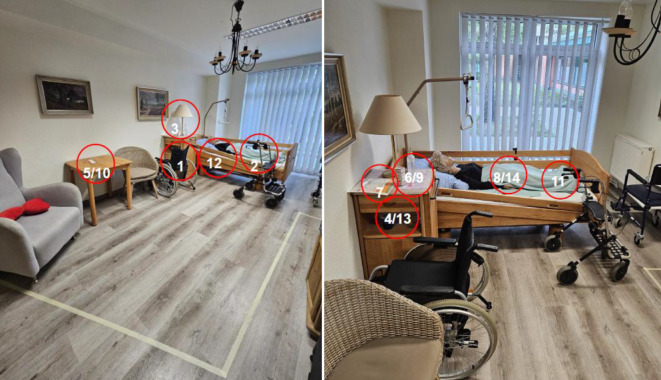 Figure 2
 Figure 3
Peer Reviews
No public reviews on file for this paper yet. If you reviewed it on a platform where reviews are public (OpenReview, ICLR, NeurIPS, ICML), you can paste yours below so the community can read it here.
Videos
No videos yet. Explain this paper in a talk, walkthrough, or lecture? Add one.
Taxonomy
TopicsSimulation-Based Education in Healthcare · Workplace Health and Well-being · Geriatric Care and Nursing Homes