“Let’s Talk Stigma”: A Pharmacy-Based Program for Opioid Use Disorder Anti-Stigma Education in Pennsylvania
Joni C. Carroll, Sophia M. C. Herbert, Kim C. Coley, Thai Q. Nguyen, Melissa A. Somma McGivney, Kelsey L. Hake, Jennifer Padden Elliott, Elizabeth Bunk Barton

TL;DR
This paper describes a pharmacy-based program in Pennsylvania that reduces stigma around opioid use disorder through education and outreach, reaching thousands of healthcare professionals and students.
Contribution
The novel contribution is a collaborative, multi-component anti-stigma program for opioid use disorder that includes lived experience input and was successfully integrated into pharmacy education.
Findings
The anti-stigma podcast reached nearly 22,000 listeners globally.
Over 5000 individuals engaged with local program sessions.
Participants reported increased awareness and improved attitudes toward opioid use disorder.
Abstract
Opioid overdoses in the United States remain a significant public health concern. Opioid use disorder (OUD) is stigmatized, exacerbating negative health outcomes. Reducing stigma in healthcare, including in pharmacies, is critical. The “Let’s Talk Stigma” program was collaboratively developed with two schools of pharmacy, a local health department, and individuals with lived drug use experience. It aimed to reduce OUD-related stigma among pharmacists, pharmacy technicians, student pharmacists, and other allied health professionals. The program included six core components: a podcast, continuing education, a standardized curriculum for student pharmacists, training for pharmacy technicians and medical assistants, pharmacy outreach by student pharmacists, and partnerships with chain pharmacies. The anti-stigma podcast reached a global audience with nearly 22,000 listens, while local…
Genes, proteins, chemicals, diseases, species, mutations and cell lines named across the full text — each resolved to its canonical identifier and authoritative record.
Click any figure to enlarge with its caption.
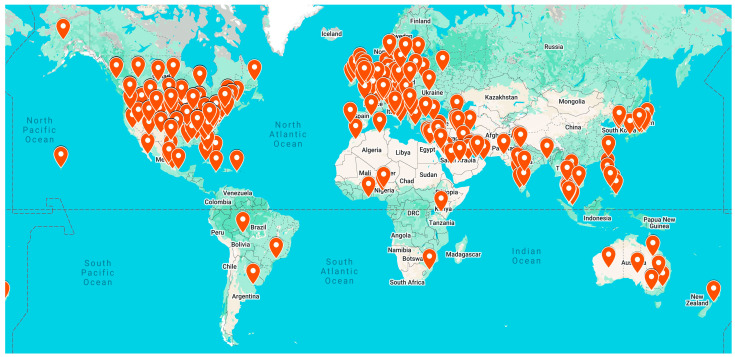 Figure 1
- —Centers for Disease Control and Prevention Overdose Data to Action grant through the Allegheny County Health Department
Peer Reviews
No public reviews on file for this paper yet. If you reviewed it on a platform where reviews are public (OpenReview, ICLR, NeurIPS, ICML), you can paste yours below so the community can read it here.
Videos
No videos yet. Explain this paper in a talk, walkthrough, or lecture? Add one.
Taxonomy
TopicsOpioid Use Disorder Treatment · Substance Abuse Treatment and Outcomes · HIV, Drug Use, Sexual Risk
1. Introduction
It is estimated that 73.6 million, or 1 in 4 people aged 12 and older, used illicit substances in the United States in 2024. In 2024, approximately 7.8 million people misused opioids, and 16.8% of Americans were identified as having a substance use disorder in the past year [1]. This continues to be a critical public health concern [2]. These data demonstrate a broader need to support individuals with opioid use disorder (OUD) through harm reduction approaches, including reducing stigma surrounding drug use, as OUD and other substance use disorders are highly stigmatized [3,4]. Harm reduction, as it relates to drug use, is a philosophy of care and public health strategy rooted in social justice principles that aims to reduce drug-related harm (e.g., prevent mortality from accidental overdose, prevent spread of infectious diseases through sterile needle access, decrease stigma, etc.). Stigma negatively impacts health outcomes and leads to lack of retention in patient care, discontinuing treatment, overdoses, and infections [4,5,6,7,8,9,10,11,12,13,14,15]. People who use drugs frequently encounter negative attitudes within healthcare settings, as healthcare providers often express either a lack of readiness or satisfaction when caring for this population [5,16]. Stigma is also found among pharmacy teams, even among those who may provide harm reduction services such as naloxone for reversal of opioid-induced respiratory depression or over-the-counter syringe access [9]. Stigma is a frequent barrier that people who use drugs may encounter in communities [9]. If stigma can be reduced in healthcare settings, individuals who use drugs may be more likely to engage in services for treatment or safer use [10]. Development of educational outreach and training programs to address stigma surrounding substance use disorders among pharmacists and other healthcare team members could improve familiarity with OUD and comfort in engaging with this patient population [4]. These discussions can lead to changes in workplace culture and improve care for individuals with OUD [9]. Reducing experiences of substance use stigma in healthcare settings, including in community health settings like pharmacies, is a key step to improving health outcomes for individuals with OUD [17].
Pharmacists are medication experts who can collaborate with other members of the healthcare team to help patients manage their opioid medication use and treat OUD. Pharmacists are present and accessible in communities across the country, and people visit their pharmacies more frequently than their primary care providers [18]. Frequent interactions with community pharmacy teams can help build patient rapport and trust, which is essential to improving individual and community health. These interactions can allow pharmacy teams to influence patients’ care experiences and address stigma related to OUD, either perpetuating or alleviating it. Pharmacists now offer more OUD-focused services, furthering the need for additional anti-stigma training, such as pharmacy teams may encounter this patient population more often [9,19]. Given their roles as medication experts, their accessibility, and their frequent contact with the community, there is a great need to further educate pharmacists, pharmacy technicians, and student pharmacists to recognize and address OUD-related stigma.
Reducing OUD-related stigma among pharmacy teams and other allied health professionals is a priority in Allegheny County, Pennsylvania, given the high rates of fatal and non-fatal opioid overdoses. Allegheny County consists of 130 municipalities in the greater Pittsburgh, Pennsylvania area. In 2020, 689 overdoses were reported, which was a 22% increase from 2019 [20]. In 2019, the local health department partnered with the University of Pittsburgh and Duquesne University Schools of Pharmacy to implement strategies to address stigma surrounding OUD among healthcare providers. Together, they designed a program to reduce OUD-related stigma locally and beyond.
Objective
We aimed to evaluate the reach and impact of an anti-stigma education and dissemination program designed to reduce stigma associated with opioid use disorder among pharmacists, pharmacy technicians, student pharmacists, and allied health professionals.
2. Materials and Methods
2.1. Program Design
The University of Pittsburgh and Duquesne University Schools of Pharmacy in Pittsburgh, Pennsylvania, created a program titled “Let’s Talk Stigma” that utilized a mix of educational, dissemination, and pharmacy outreach tactics aimed to reduce stigma among pharmacy teams and other allied health professionals. We define pharmacy teams as pharmacists and student pharmacists and other allied health professionals as pharmacy technicians or those who help perform clinical or administrative tasks in healthcare settings (e.g., medical assistants). This program consisted of six initiatives: (1) “Let’s Talk Stigma” Podcast; (2) Continuing Education for Practicing Pharmacy Teams; (3) Standardized Curriculum for Student Pharmacists; (4) Training Program for Future Pharmacy Technicians and Medical Assistants; (5) Pharmacy Outreach; and (6) Partnership with Chain Pharmacy for Pharmacy Team Education. Program development began in 2019, and all six initiatives were deployed by 2022. Program initiatives were informed by individuals with lived drug use experience who consulted on the initial educational content development. Details of these six initiatives are described below.
2.1.1. “Let’s Talk Stigma” Podcast
We partnered with the Pharmacy Podcast Network to develop and distribute a 7-episode “Let’s Talk Stigma” podcast mini-series designed to address the stigma surrounding OUD [21]. The Pharmacy Podcast Network (PPN) is a podcast platform dedicated to the pharmacy profession, with over 5 million downloads, 4000+ episodes, and more than 30 unique shows since its launch in 2009. The PPN delivers content on clinical care, public health, mental health, business, and pharmacy education. PPN partners with academic institutions and industry leaders to elevate pharmacy voices, reduce stigma, and promote meaningful conversations in healthcare. Its purpose is to serve as an educational, advocacy and professional growth resource for pharmacy. The “Let’s Talk Stigma” podcast included voices of individuals with lived drug use experience and their loved ones, harm reduction experts, and addiction medicine healthcare professionals. Each episode was brief (<24 min each) so busy healthcare professionals could easily listen to the episodes. Episode topics included: (1) the historical context of why stigma exists; (2) treating OUD as a chronic health condition; (3) inter- and intrapersonal stigma; (4) harm reduction and naloxone; (5) medications for opioid use disorder and their associated stigma; (6) the intersection of stimulant use, OUD, and people who experience incarceration; and (7) the intersection of polysubstance use and the unhoused population. The podcast was distributed through Spotify, Apple Podcasts, other podcast RSS feeds, and social media. The project team also disseminated the podcast to student pharmacists at both the University of Pittsburgh and Duquesne University Schools of Pharmacy, through continuing education sessions with pharmacists, to medical assistants and pharmacy technician trainees, and it was promoted by the state pharmacy association on their website and newsletters.
2.1.2. Continuing Education for Practicing Pharmacy Teams
The University of Pittsburgh Duquesne University Schools of Pharmacy disseminated OUD and anti-stigma education to pharmacists through the “Let’s Talk Stigma” podcast, live virtual continuing education programs, webinars with local pharmacy networks, and live professional pharmacy organization events. We partnered with the state pharmacy association to provide pharmacist and pharmacy technician continuing education credits for the previously mentioned 7-episode podcast and virtual educational programming. Live virtual continuing education programs titled “Let’s Talk Stigma: The Opioid Epidemic, Naloxone, and Barriers to Care” reviewed the types of stigma, implicit bias, how stigma can impact individual wellbeing, and how people who use drugs receive healthcare. These sessions included panel discussions with pharmacists from various practice sites. Webinars with a local pharmacy network consisted of training on safe drug disposal and tips for pharmacists on how to reduce stigmatizing language. The webinar recording and additional resources were sent through the pharmacy network newsletters [22]. Live pharmacy organization events included brief discussions on terms to use and avoid when referring to substance use disorder.
2.1.3. Standardized Curriculum for Student Pharmacists
A standardized curriculum with consistent learning objectives was developed for student pharmacists and deployed at both schools of pharmacy within their Doctor of Pharmacy (PharmD) programs. The PharmD programs prepare students to become licensed pharmacists, and PharmD experiential learning involves hands-on experience in clinical pharmacy settings. The curricular learning activities and didactic lessons were embedded within experiential learning or a professional development PharmD course. Standardized learning activities included: (1) Facilitated discussions about OUD as a chronic health condition; (2) Hearing from individuals with lived experiences who shared their personal stories; (3) Discussion about the importance of using person-first language; (4) Review of local treatment, harm reduction, and recovery resources available; and (5) Participation in online discussion boards about these topics, including self-reflection of key takeaways. Students also completed the Pennsylvania Department of Health and Pennsylvania Department of Drug and Alcohol Programs Online Naloxone Training Self-Study Video [23]. These activities were completed by either second- or third-year student pharmacists at the University of Pittsburgh or Duquesne University, respectively.
2.1.4. Training Program for Future Pharmacy Technicians and Medical Assistants
We also partnered with a career training and academic enrichment center in Pittsburgh, PA, that prepares individuals to become medical assistants and pharmacy technicians. These students were given class time to listen to the “Let’s Talk Stigma” podcast during the first of two sessions. Students shared their written reflections on why stigma exists, their biggest learning points from the podcast, and the roles they may have as future pharmacy technicians and medical assistants in reducing OUD-related stigma. At the second session, trained pharmacist instructors presented additional introductory OUD and stigma content, facilitated an open discussion on the topics, and deployed the state health department’s official naloxone training [23]. Naloxone provided by the local health department was available to hand out to trainees. All lesson plans, presentations, reflection worksheets, podcast MP3s, and handouts were packaged together and provided to program directors for future use, using a train-the-trainer approach.
2.1.5. Pharmacy Outreach by Student Pharmacists
We assembled “Let’s Talk Stigma Kits” that included print materials about OUD, stigma reduction, and local community resources for harm reduction and treatment. Examples included an overview of local overdose trends and statistics, a Words Matter flyer from the National Institute on Drug Abuse [24], and an Allegheny County Steps of Recovery brochure [25]. Student pharmacists at both schools of pharmacy distributed these kits to pharmacist preceptors at pharmacies in Allegheny County, Pennsylvania. The kits provided pharmacists with materials they could pass along to patients to connect them to existing community resources, and they were also used to spark conversations between student pharmacists and pharmacists about how pharmacy teams can reduce stigma around OUD. Students shared their learnings on OUD and stigma from class (Initiative 3) with their pharmacist preceptors, using the kit materials as a reference for discussion. Additional details of this initiative are published separately [26].
2.1.6. Partnership with Chain Pharmacy for Pharmacy Team Education
The program team partnered with a regional supermarket chain pharmacy to provide educational resources for pharmacy team leaders to conduct anti-stigma training with pharmacy team members. The training highlighted the importance of specific language to use and avoid when talking about addiction and served as an additional venue to distribute the “Let’s Talk Stigma” Podcast. Resources provided to pharmacy teams included a newsletter on the negative impact of stigmatizing language and how to use person-first language to mitigate stigma, as well as resources regarding naloxone and virtual recovery programs that pharmacy teams could refer patients to.
2.2. Program Evaluation
We utilized a mixed-methods approach and the CDC’s Framework for Evaluation in Public Health as a guide for programmatic evaluation [27]. Qualitative and quantitative data sources were used to measure program implementation, reach, engagement, and effectiveness (Table 1). Data sources included podcast analytics (listener counts and locations), educational session attendance records, post-educational program questionnaires and written reflections, and the number of pharmacies and individuals reached. Descriptive statistics were used to characterize quantitative data. Qualitative data was available for Initiatives 1–5. An inductive, rapid thematic approach was used to identify themes from qualitative data sources. Three investigators met 10 times to identify themes through consensus discussions. Investigators triangulated participants’ written responses from the qualitative data sources. This project was reviewed by the University’s Institutional Review Board, and it was determined that it did not meet the criteria for human subjects research.
3. Results
All six “Let’s Talk Stigma” initiatives were implemented from 2020 to 2023 according to original plans, with some shifts in the timeline and delivery mechanisms due to the COVID-19 pandemic (e.g., some programs were deployed virtually instead of in-person). This program reached over 5000 individuals locally in four years (Table 2). Additionally, the Let’s Talk Sigma Podcast alone had nearly 22,000 listens as of August 2023. The podcast reached people from 66 countries and had listeners in all 50 U.S. states and the District of Columbia (Figure 1). This podcast is still broadly available to the public. An evaluation of the podcast effectiveness [21] (Initiative 1) and additional details about the Pharmacy Outreach by Student Pharmacists (Initiative 5) are reported elsewhere [26].
Program participants reported an increased awareness of stigma, the need for compassion and empathy, changes in attitudes, and a professional responsibility to reduce stigma. Results of our thematic analysis are found in Table 3. Additionally, participants reported they enjoyed the format of the podcast, live discussions, and content within each initiative. For example, one pharmacist stated they “really enjoyed the format of this continuing education—was able to listen to podcasts during my commute and gain a valuable perspective on this topic.” A medical assistant trainee also stated, “I wish this [training] was more public and everyone should take it.” Both the University of Pittsburgh and Duquesne University Schools of Pharmacy continue to incorporate “Let’s Talk Stigma” programming into their PharmD curricula for student pharmacists.
4. Discussion
4.1. Lessons Learned
We developed and deployed a comprehensive “Let’s Talk Stigma” anti-stigma program for pharmacists, student pharmacists, and allied health professional trainees with the goal of addressing the stigma surrounding OUD in Allegheny County, PA. Our program was novel because it was designed to reach both practicing clinicians and learners still in training with anti-stigma education. The evaluation of this program demonstrates the program’s substantial reach both locally in Pennsylvania and globally through the podcast dissemination, engagement of partners and participants, and the positive impact on learners. We believe this program was successful because of the extensive collaboration between multiple partners and the involvement of individuals with lived drug use experience. There were several key lessons learned over the four years of program implementation. It is common to present “lessons learned” as part of traditional public health program evaluation, so others can replicate key aspects of our program. These lessons included involving people with lived drug use experience in the design of the program, partnering with various organizations to amplify program reach, and utilizing the existing infrastructure of Schools of Pharmacy experiential learning programs to engage pharmacists in the program.
Most importantly, we involved individuals with lived drug use experience from the beginning of the program design to ensure our content and materials were relevant and culturally appropriate. Involving people with drug use experience in the development or delivery of healthcare services has the potential to reduce stigma [28]. Storytelling by individuals with lived drug use experience within the podcast was noted by program participants as being an effective strategy to bring experiences of stigma “to life.” Storytelling as an approach to reducing stigma is supported within the literature [29,30], though it may not be as effective in every setting [31]. The use of a podcast emerged as an innovative mechanism to circulate anti-stigma messages to healthcare personnel and could be used with multiple audiences and levels of learners. Draft audio files of the podcast were shared with interviewees to ensure the content met key learning objectives. We feel this was a critical step to ensure the educational messaging was accurate and appropriate for the audience. Including stories from individuals with lived drug use experience was also emphasized by student learners as meaningful to their learning and was highlighted in our program evaluation data. The use of podcasts for training health sciences professionals and learners continues to expand and may be an efficient way to expose various learners to individuals with lived/living drug use experience [32,33].
Second, partnerships played a crucial role in the program’s success. Collaboration between a health department and two Schools of Pharmacy amplified this program’s reach and impact, as evidenced by the large number of individuals engaged across the six program initiatives. Academic health departments, which represent mutually beneficial collaborative working relationships between health departments and academia, continue to grow [34]. These relationships enhance student learning in public health, reinforce implementation of evidence-based public health practices, and address real-world issues [35]. Schools/colleges of pharmacy in particular can offer numerous resources to support health departments with implementation of public health programs like “Let’s Talk Stigma.” The Schools of Pharmacy engaged in this program had pre-existing practice relationships with clinically integrated networks of community pharmacies, hundreds of experiential learning sites and preceptors, the Pharmacy Podcast Network, the state pharmacy association, and health plans. Schools/colleges of pharmacy can also engage personnel like student pharmacists, faculty, staff, other health professionals, and post-graduate learners for program dissemination and outreach efforts. Globally, most pharmacy-based education includes some experiential or “on-the-job” training experiences, which can be leveraged when developing anti-stigma training programs for OUD or other stigmatized disease states.
Connecting with pharmacists in practice through experiential learning programs (e.g., student clinical rotations at pharmacies) can help distribute public health information into communities. The “Let’s Talk Stigma” program initiatives served as both educational activities for learners and rapid dissemination strategies for our local public health department. We integrated educational programming alongside student outreach into real-world pharmacy settings. This approach utilized established partner connections, avoiding the need to recreate public health systems of outreach from scratch. Students can gain knowledge from their participation in these hands-on learning experiences as well. An additional benefit of working with health professions learners is reaching them with anti-stigma education before they enter practice [36]. This is critical so they may be informed before becoming influenced by existing attitudes and stigma among people who did not receive this education within their formal training programs [5,8,36].
There are several limitations to our program design and evaluation. Most of our programming occurred during the COVID-19 pandemic, when pharmacy teams were busy providing vaccinations to the public. This may have limited attendance at continuing education sessions and influenced the number of responses on post-education questionnaires from pharmacists. The medical assistant and pharmacy technician student classes were blended together, and some pre-and post-program questionnaires did not ask the students to differentiate their discipline, which limited our ability to compare differences between students in the two fields. Additionally, it is difficult to measure stigma reduction; however, we feel our participant quotations and engagement with program initiatives demonstrate movement towards decreasing stigma. There may be new tools to measure stigma among pharmacy teams [37]. Despite the “Let’s Talk Stigma” program’s success, it is important to recognize that stigma surrounding OUD persists and will require sustained anti-stigma educational efforts over time [36].
4.2. Implications for Policy and Practice
Incorporating individuals with lived drug use experience into the initial design of anti-stigma educational programming is important to ensure program content is culturally appropriate.Partnerships between Schools/Colleges of Pharmacy and local health departments can maximize the reach and impact of anti-stigma educational programs for pharmacy teams and allied health professionals.Anti-stigma programs around OUD and drug use should continue to be developed and funded on an ongoing basis in the United States. These programs should include pharmacists and other health professionals in their development and deployment.
5. Conclusions
While our program was successful, anti-stigma educational efforts directed towards healthcare professionals need to continue to be prioritized and funded. It is imperative that schools/colleges of health sciences embed anti-stigma education within curricula. Additionally, we recommend that state and local health departments continue to partner with schools/colleges of health sciences to further publicize anti-stigma education.
The reference list from the paper itself. Each links out to its DOI / PubMed record.
- 1Substance Abuse and Mental Health Services Administration 2024 Companion infographic report: Results from the 2021 to 2024 National Surveys on Drug Use and Health (SAMHSA Publication No. PEP 25-07-006). Center for Behavioral Health Statistics and Quality, Substance Abuse and Mental Health Services Administration 2025 Available online: https://www.samhsa.gov/data/sites/default/files/reports/rpt 56462/2024-nsduh-companion-report.pdf(accessed on 2 December 2025)
- 2Ahmad F.B. Cisewski J.A. Rossen L.M. Sutton P. Provisional Drug Overdose Death Counts 2025 Available online: https://www.cdc.gov/nchs/nvss/vsrr/drug-overdose-data.htm#citation(accessed on 2 December 2025)
- 3Hatzenbuehler M.L. Phelan J.C. Link B.G. Stigma as a Fundamental Cause of Population Health Inequalities Am. J. Public. Health 201310381382110.2105/AJPH.2012.30106923488505 PMC 3682466 · doi ↗ · pubmed ↗
- 4Magnan E. Weyrich M. Miller M. Melnikow J. Moulin A. Servis M. Chadha P. Spivack S. Henry S.G. Stigma Against Patients With Substance Use Disorders Among Health Care Professionals and Trainees and Stigma-Reducing Interventions: A Systematic Review Acad. Med.20249922123110.1097/ACM.000000000000546737801599 · doi ↗ · pubmed ↗
- 5van Boekel L.C. Brouwers E.P. van Weeghel J. Garretsen H.F. Stigma among health professionals towards patients with substance use disorders and its consequences for healthcare delivery: Systematic review Drug Alcohol Depend.2013131233510.1016/j.drugalcdep.2013.02.01823490450 · doi ↗ · pubmed ↗
- 6Bennett A.S. Freeman R. Des Jarlais D.C. Aronson I.D. Reasons people who use opioids do not accept or carry no-cost naloxone: Qualitative interview study JMIR Form. Res.20204 e 2241110.2196/2241133355094 PMC 7787889 · doi ↗ · pubmed ↗
- 7Gunn A. Guarino H. “Not human, dead already”: Perceptions and experiences of drug-related stigma among opioid-using young adults from the former Soviet Union living in the U.S Int. J. Drug Policy 201638637210.1016/j.drugpo.2016.10.01227855325 PMC 5302021 · doi ↗ · pubmed ↗
- 8Paquette C.E. Syvertsen J.L. Pollini R.A. Stigma at every turn: Health services experiences among people who inject drugs Int. J. Drug Policy 20185710411010.1016/j.drugpo.2018.04.00429715589 PMC 5994194 · doi ↗ · pubmed ↗