Natural talc: a basic, cost-effective, and available catalyst for the one-pot synthesis of dihydropyranochromenes and pyranopyrazoles, along with related DFT calculations
Abolfazl Dehghanizadeh, Bi Bi Fatemeh Mirjalili, Hadi Basharnavaz

TL;DR
This paper presents a green and efficient method for synthesizing two heterocyclic compounds using natural talc as a catalyst, achieving high yields and environmental benefits.
Contribution
The use of natural talc as a cost-effective and non-toxic catalyst for synthesizing dihydropyranochromenes and pyranopyrazoles is introduced.
Findings
Dihydropyranochromenes and pyranopyrazoles were synthesized with high yields of 95% and 97%, respectively.
Talc was confirmed as an effective catalyst through analytical techniques like FTIR and NMR.
DFT calculations showed talc's potential for enhancing organic synthesis sustainably.
Abstract
This study investigates environmentally friendly and efficient protocols for synthesizing two distinct heterocyclic scaffolds: pyranopyrazoles and dihydropyranochromenes. Dihydropyranochromenes were synthesized using talc in refluxing ethanol, while pyranopyrazoles were obtained from solvent-free under mixing conditions. The advantages of these methods include high yields, operability, and the use of an accessible, inexpensive, and non-toxic basic catalyst. The reaction conditions, including reaction time, molar ratios of reactants, and catalyst amount, were optimized for the synthesis of products, resulting in high yields of 97% for pyranopyrazoles and 95% for dihydropyranochromenes. The synthesized products were characterized using analytical techniques, including FTIR and NMR, which confirmed the successful synthesis. In this study, total energy and band gap energy calculations were…
Genes, proteins, chemicals, diseases, species, mutations and cell lines named across the full text — each resolved to its canonical identifier and authoritative record.
Click any figure to enlarge with its caption.
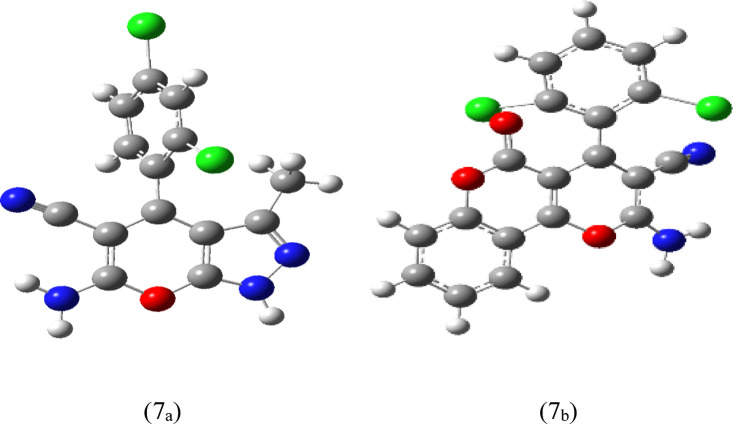 Figure 10
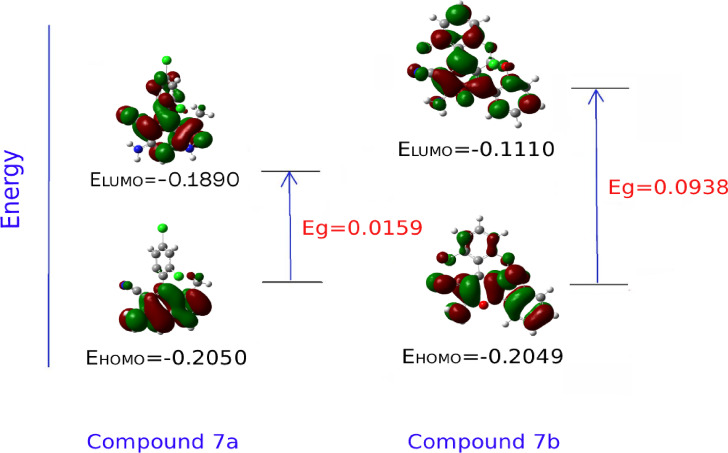 Figure 11
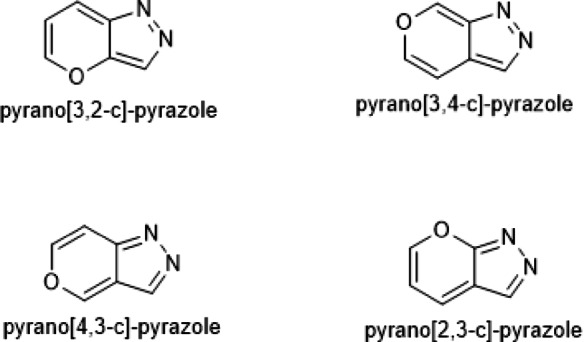 Figure 1
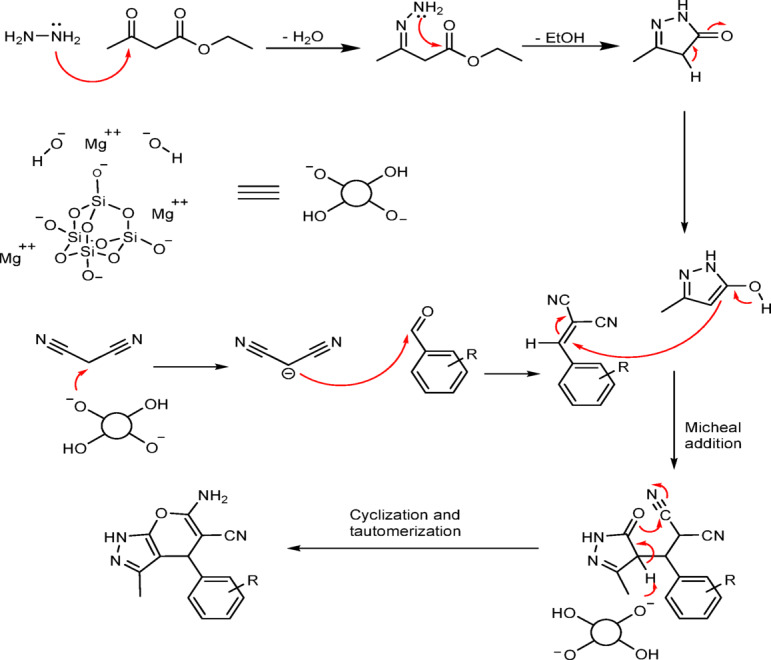 Figure 2
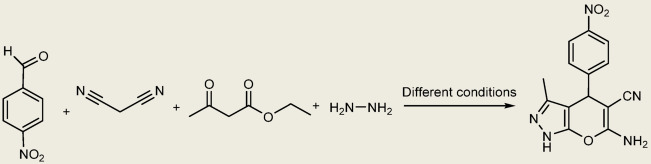 Figure 3
 Figure 4
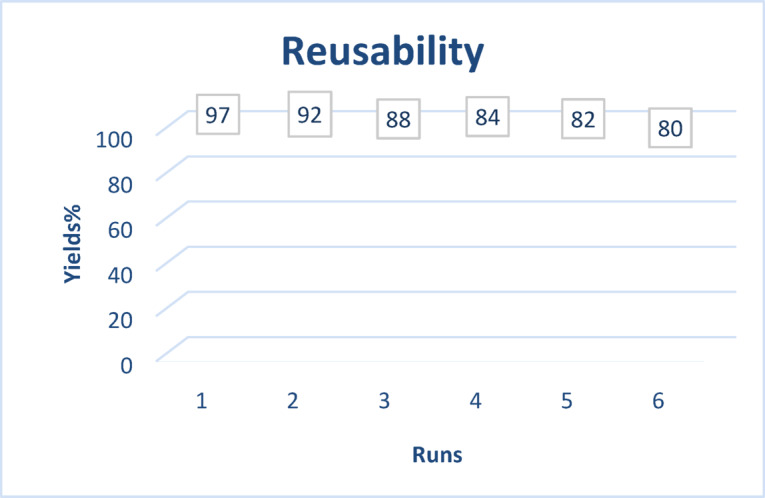 Figure 5
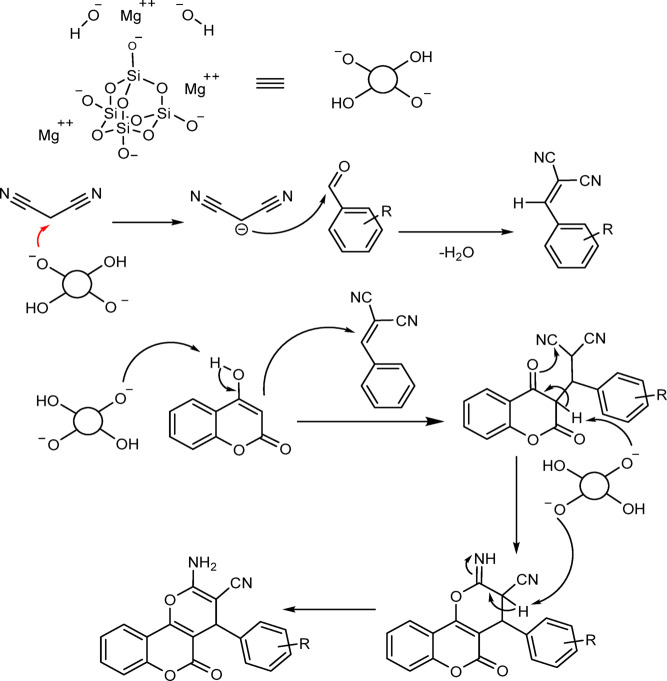 Figure 6
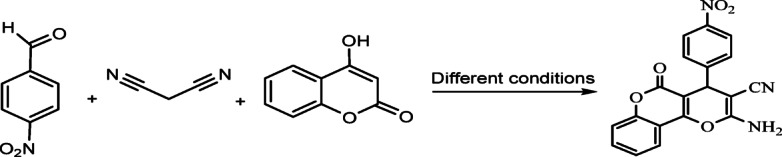 Figure 7
 Figure 8
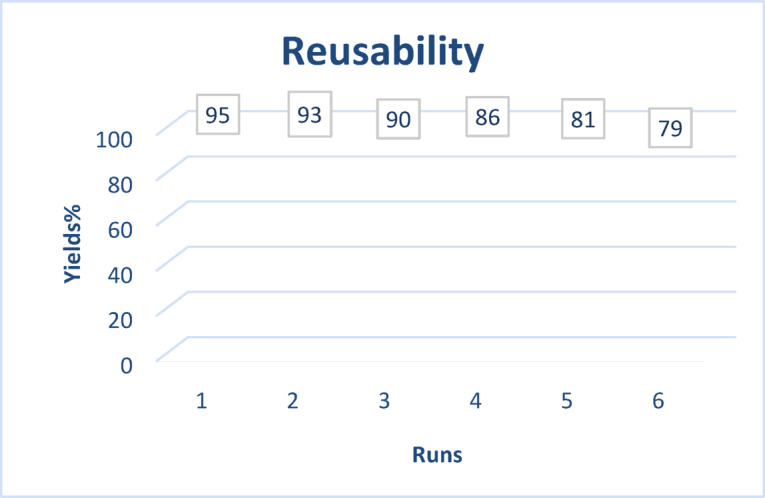 Figure 9
Peer Reviews
No public reviews on file for this paper yet. If you reviewed it on a platform where reviews are public (OpenReview, ICLR, NeurIPS, ICML), you can paste yours below so the community can read it here.
Videos
No videos yet. Explain this paper in a talk, walkthrough, or lecture? Add one.
Taxonomy
TopicsMulticomponent Synthesis of Heterocycles · Synthesis of heterocyclic compounds · Chemistry and Chemical Engineering
Introduction
Heterocyclic compounds form the backbone of many pharmaceuticals, agrochemicals, and functional materials^1,2^. The development of efficient and sustainable synthetic routes for these compounds is of great interest. Multicomponent reactions (MCRs) have emerged as powerful tools in organic synthesis due to their atom economy, high efficiency, and the formation of complex molecules in a single step^3,4^. This study focuses on the synthesis of two important heterocyclic systems: dihydropyranochromenes and pyranopyrazoles, using talc as a catalyst under both solvent-and solvent-free conditions.
Dihydropyranochromenes are heterocyclic scaffolds with diverse biological activities in terms of their anticancer^5^, anti-inflammatory^6^, and antioxidant^7^ properties. Pyranopyrazoles are another class of heterocyclic compounds with biological activities^8^ and drug enhancers^9^ and have been used as antibacterial^10,11^, anticancer^12^, analgesic^13^, and antipyretic agents^14^. Given their importance, the development of efficient and environmentally friendly methods for their synthesis has become a vital research area.
Traditional methods for synthesizing pyranopyrazoles typically involve the use of solvents, extreme reaction conditions (such as high temperatures and pressures), and complex, costly catalysts, which contribute to significant environmental pollution^15–17^. These challenges underscore the necessity for sustainable and cost-effective alternatives that minimize environmental impacts while achieving high product yields. In response, a mechanochemical process using a mixer mill has been introduced as a green and efficient method for synthesizing pyranopyrazoles. This approach eliminates the need for organic solvents, allows the reactions to occur at ambient temperature and atmospheric pressure, reduces energy consumption, and facilitates easy control over the reaction conditions.
Pyranopyrazole is a synthetic heterocyclic framework composed of pyran and pyrazole moieties. Pyranopyrazoles exist in four isomeric forms (Fig. 1). Among the four isomers, 4H-pyrano [2, 3-c]-pyrazole is the most privileged structuredue to its versatile biological profile.
Fig. 1. Four pyranopyrazole isomers.
Previously, several catalysts have been applied for the synthesis of pyranopyrazol such as, Fe_3_O_4_@SiO_2_@(CH_2_)3_NH@CC@Imidazole@SO_3_H^18^, CaO@SiO_2-SO_3_H^19^, Ru^III^@CMC/Fe_3_O_4_^20^, NiFe_2_O_4_@SiO_2_-H_14_[NaP_5_W_30_O_110_]^21^, Fe_3_O_4_@GO^22^, Fe_3_O_4_@THAM-SO_3_H^23^, H_14_ [NaP_5_W_30_O_110_]^24^.
Dihydropyranochromenes have been synthesized previously in the presence of sodium acetate^25^, DABCO^26^, zinc chloride^27^, SB-DABCO@eosin^28^, rGO@ Fe_3_O_4_^29^ and Silica-Bonded N-Propylpiperazine Sodium n-Propionate^30^.
Talс (Mg_3_Si_4_O_10_(OH)2)^31^, with Lewis base sites, is a green, available, low-cost catalyst. Talc can be used to promote base-catalyzed organic reactions such as tetrahydrobenzo[b]pyrans and benzo[f]chromen^31^. This study investigates the one-pot multicomponent synthesis of dihydropyranochromenes and pyranopyrazoles using talc powder as the catalyst. The objective of this study is to develop efficient, environmentally friendly, and economically viable synthesis routes for these significant heterocyclic compounds.
Results and discussion
Characterization of talk powder
FESEM shows the average particle size of the catalyst (506–759 nm).TGA analysis prove that talk is in thermally stable state. The percentage composition of O, Si, Mg, elements in talk is 54.10, 25.38 and 18.85 respectively which determined by EDX. a_s, BET_, V_p_ and pore diameter were 5.9994 m^2^ g^− 1^, 0.026818 cm^3^ g^− 1^, and 17.686 nm respectively^31^.
Synthesis and characterization of Pyranopyrazoles under mixer milling condition
To evaluate the catalytic role of talc powder in the synthesis of pyranopyrazoles, the reaction was carried out in ethanol under reflux conditions as well as using a mixer mill at room temperature, both with and without the catalyst. The yield of pyranopyrazoles was 19% after 20 min for the reaction without a catalyst, while the talc powder-catalyzed experiment using a mixer mill achieved a 97% yield after just 5 min. This significant difference indicates the importance of a catalyst in the reaction steps. The proposed roles of the talc powder catalyst in the reaction mechanism are shown in Fig. 2.
Fig. 2. Proposed mechanism for the talc powder-catalyzed synthesis of pyranopyrazoles.
After the characterization of the basic talc powder, it was used for the synthesis of pyranopyrazoles. To optimize the reaction conditions, 4-nitrobenzaldehyde, hydrazine hydrate, ethyl acetoacetate, and malononitrile were used under different conditions, such as catalyst amount, temperature, and solvents (Fig. 3; Table 1).
Also, the model reaction was carried out in a stainless-steel vial and was conducted with two stainless-steel balls with a diameter of 0.8 mm at frequencies of 10, 15, and 20 Hz at room temperature using a mixer mill. At the end of the reaction, hot ethanol was added, and the entire reaction mixture was scraped; then the catalyst was separated. The progress of the reaction was monitored using thin-layer chromatography (TLC) and n-hexane, ethyl acetate (4:1) eluent. With the optimized reaction conditions (Table 1, entry 11), the best result was obtained using a mixer mill (frequency 20 Hz) and 0.04 g of catalyst without any solvent. The reaction conditions, including the molar ratio of the reactants, amount of catalyst, and milling time, were optimized to achieve the maximum yields (Fig. 4; Table 2).
Fig. 3. Synthesis of 6-Amino-3-methyl-4-(4-nitrophenyl)−1,4-dihydropyrano[2,3-c]pyrazole-5-carbonitrile under various condition (model reaction).
Table 1. Comparative performances of the Talc catalyst for the synthesis of Pyranopyrazoles under different conditions.EntrySolvent/catalyst (g)ConditionTime (min)Yield (%)^a^1–/–R.T.120Trace2H_2_O/–R.T.120Trace3C_2_H_5_OH/–R.T.120Trace4C_2_H_5_OH/–Reflux90175H_2_O/–Reflux9056C_2_H_5_OH/Talc (0.01)Reflux80437C_2_H_5_OH/Talc (0.02)Reflux80518C_2_H_5_OH/Talc (0.04)Reflux60669C_2_H_5_OH: H_2_O/Talc (0.04)Reflux604410–/Talc (0.04)R.T.607111–/Talc (0.04)Mixer Mil 20 Hz59712–/–Mixer Mil 20 Hz201913–/Talc (0.04)Mixer Mil 15 Hz157114–/Talc (0.04)Mixer Mil 10 Hz305215–/NaOH (0.04)Mixer Mil 20 Hz1095^b^16–/K_2_CO_3_ (0.04)Mixer Mil 20 Hz1590^b^17–/MgO (0.04)Mixer Mil 20 Hz1095^b^18–/Hydrotalcite (0.04)Mixer Mil 20 Hz1898^b^The molar ratio of 4-nitrobenzaldehyde: malononitrile: ethylacetoacetate: hydrazine hydrate is 1 mmol:1.2 mmol: 1 mmol: 1.2 mmol.^a^Isolated yield.^b^Conversion yield.
Fig. 4. Synthesis of pyranopyrazoles under mixer milling condition.
Table 2. Synthesis of Pyranopyrazoles using mixer mill in the presence of Talc powder.Compd.ArProductTime (min)Yield (%)^b^A.E.^c^ (%)E.F.^d^M.P. (°C)M.P. (°C) (rep.)^Ref^.1_a_4-NO_2_-Ph
597780.31243–245246–248^32^2_a_4-OH-Ph
1091800.43221–224222–224^32^3_a_4-Cl-Ph
592770.4236–238235–237^33^4_a_2-OCH_3_-Ph
593770.39209–211208–209^33^5_a_4-CH_3_-Ph
1087760.5171–173170–173^33^6_a_3,4-(OH)2-Ph
2083810.55222–225220–222^32^7_a_2,4-(Cl)2-Ph
1585830.41223–226223–225^33^8_a_3-OH,4-OCH_3_-Ph
1588780.45233–235234–236^32^9_a_2-Furyl
594750.42231–234233–235^34^^a^The molar ratio of aldehyde: malononitrile: hydrazine hydrate: ethylacetoacetate is 1mmol:1.2 mmol: 1.2 mmol:1 mmol.^b^Isolated yield.^c^Atomic Economy.^d^E-Factor.
The reusability of catalyst for synthesis of pyranopyrazole, was investigated in model reaction for six runs. After each run, the catalyst was separated from the reaction mixture and washed with ethanol, dried in room temperature and reused in another run (Fig. 5).
Fig. 5. Reusability of Talc powder for the synthesis of pyranopyrazoles.
Synthesis and characterization of dihydropyrano[3,2-c]chromenes
To evaluate the catalytic role of talc powder in the synthesis of dihydropyranochromanes, the reaction was conducted in ethanol under reflux conditions, both with and without the catalyst. The results showed a yield of only 10% for dihydropyranochromanes after 90 min without the catalyst, whereas a remarkable 95% yield was achieved in the presence of talc powder after the same duration. These findings underscore the necessity of a catalyst in the reaction. The proposed roles of talc powder as a catalyst in the reaction mechanism are illustrated in Fig. 6.
The talc catalyst was employed under various conditions for the synthesis of the dihydropyranochromenes (Fig. 7). To optimize the reaction parameters, 4-nitrobenzaldehyde (1 mmol), 4-hydroxy coumarin (1 mmol), and malononitrile (1 mmol) were subjected to different experimental conditions, including varying amounts of catalyst and the usage of a mixer mill operating at frequencies of 10, 15, and 20 Hz at room temperature (Table 3). In addition, the reactions were conducted using a thermal stirrer with various solvents. The progress of the reaction was monitored using TLC in a solvent system of n-hexane and ethyl acetate (4:1). At the conclusion of the reaction, the catalyst was separated, and the product was worked up by adding water. Under the optimized reaction conditions (as detailed in Table 3, entry 11), the best results were achieved using ethanol as the solvent and 0.06 g of catalyst (Fig. 8; Table 4).
Fig. 6. Proposed mechanism for the talc powder catalyzed synthesis of dihydropyranochromenes.
Fig. 7. Synthesis of 2-Amino-4-(4-nitrophenyl)−5-oxo-4,5-dihydropyrano[3,2-c]chromene-3-carbonitrile under different conditions.
Table 3. Comparative performances of the Talc catalyst for the synthesis of dihydropyranochromene in different conditions.EntryCondition solvent/catalyst (g)ConditionTime (min)Yield (%)^a^1–/Talc (0.04)Mixer Mil 10 Hz20Trace2–/Talc (0.04)Mixer Mil 15 Hz20Trace3–/Talc (0.04)Mixer Mil 20 Hz20Trace4–/Talc (0.06)Mixer Mil 20 Hz20Trace5–/-Reflux90Trace6H_2_O/-Reflux90Trace7C_2_H_5_OH/-Reflux90108C_2_H_5_OH/Talc (0.01)Reflux90439C_2_H_5_OH/Talc (0.02)Reflux906110C_2_H_5_OH/Talc (0.04)Reflux907811C_2_H_5_OH/Talc (0.06)Reflux909512C_2_H_5_OH: H_2_O/Talc (0.04)R.T.1205713C_2_H_5_OH/NaOH (0.04)Reflux2050^b^14C_2_H_5_OH/K_2_CO_3_ (0.04)Reflux18095^b^15C_2_H_5_OH/MgO (0.04)Reflux12098^b^16C_2_H_5_OH/Hydrotalcite (0.04)Reflux15095^b^The ratio of 4-nitrobenzaldehyde: malononitrile:4-hydroxycoumarine is 1 mmol: 1.2 mmol: 1 mmol.^a^Isolated Yield, ^b^Conversion yield.
Fig. 8. Synthesis of dihydropyranochromenes in the presence of Talc powder under reflux condition in ethanol.
Table 4. Synthesis of dihydropyranochromene derivatives in the presence of Talc powder.Comp.ArCHOProductTime (min)Yield (%)^a^A.E^b^(%)E.F^c^M.P. (˚C)M.P. (˚C)(rep.)^ref^.1_b_4-NO_2_-Ph
9095950.1256–259258–260^35^2_b_4-OH-Ph
12087940.2266–268265–267^36^3_b_3-NO_2_-Ph
12089950.18260–263261–263^36^4_b_2-NO_2_-Ph
9092950.14241–243242–245^35^5_b_2-Cl-Ph
9088950.19262–264264–266^35^6_b_4-MeO-Ph
9087950.2247–250246–248^36^7_b_2,6-Cl_2_-Ph
158595.50.23253–256256–258^36^8_b_Ph
128394.50.27256–258256–258^35^9_b_4-Cl-Ph
591950.15262–265263–265^35^^a^The ratio of aldehyde: malononitreile: 4-hydroxycoumarine: talc powder is 1 mmol:1.2 mmol:1 mmol:0.06 g.^b^Isolated Yield.^c^Atomic Economy.^d^E-Factor.
The reusability of catalyst in synthesis of dihydropyranochromene was studied in model reaction for six runs. After each run, the catalyst was separated from the reaction mixture by filtration and washed with ethanol, dried at room temperature and reused in next run (Fig. 9).
Fig. 9. Reusability of Talc powder for the synthesis of dihydropyranochromene.
Computational methods
In this article, we computed the stability of pyranopyrazoles and dihydropyranochromene derivatives using density functional theory (DFT). The simulations were carried out using the Becke-3-Lee–Yang–Parr (B3LYP) method, with a 6–311 G (d, p) basis set, in the Gaussian 09 software^37–43^. The HOMO-LUMO energy simulations were performed to evaluate the energetic behaviour of the compounds. The optimization and visualization of the charge distribution in the compounds were carried out with the GaussView 05 software.
The calculations of E_LUMO,_ E_HOMO_, band gap (E_g_=E_LUMO_-E_HOMO_) and the total energy for all dihydro pyranochromene derivatives and pyranopyrazoles are illustrated in Tables 5 and 6. The results of these tables indicate that the stability of compounds 7_a_ and 7_b_ is greater than that of the other reported compounds, which is consistent with the experimental data^44^.
Table 5. The calculations of E_LUMO,_ E_HOMO_, band gap (E_g_=E_LUMO_-E_HOMO_) and the total energy for Pyrano pyrazoles.Comp.E_tot_ (a.u)E_HOMO_E_LUMO_E_g_=E_LUMO_-E_HOMO_1_a_− 1001.333758− 0.2208− 0.20520.0155952_a_− 872.1065607− 0.2055− 0.18990.0155483_a_− 1256.4913548− 0.2129− 0.19710.0157464_a_− 911.3989460− 0.2114− 0.19580.0155805_a_− 836.2259554− 0.2051− 0.18980.0152626_a_− 747.2975442− 0.2070− 0.19630.0106907_a_− 1716.0609398− 0.2050− 0.18900.0159708_a_− 786.5830975− 0.2070− 0.19190.0150109_a_− 895.3630129− 0.2056− 0.19000.015555
Table 6. The calculations of E_LUMO,_ E_HOMO_, band gap (E_g_=E_LUMO_-E_HOMO_) and the total energy for Dihydropyrano chromenes.Comp.E_tot_ (a.u)E_HOMO_E_LUMO_E_g_=E_LUMO_-E_HOMO_1_b_− 1320.1750075− 0.2081− 0.16560.042462_b_− 1140.0236481− 0.2055− 0.16600.039503_b_− 1269.2527338− 0.2129− 0.17260.040224_b_− 1269.2635701− 0.2014− 0.15960.041755_b_− 1524.39483219− 0.2051− 0.16120.043886_b_− 1179.3177055− 0.2070− 0.16690.040107_b_− 1948.61395248− 0.2049− 0.11100.093878_b_− 1064.8363025− 0.2070− 0.16770.039309_b_− 1524.4098279− 0.2056− 0.15560.04996
Additionally, Figs. 10 and 11 showcase the optimized structures and the frontier molecular orbital diagram related to compounds 7_a_ and 7_b_, respectively.
Fig. 10. The relaxed structures for compound 7_a_ and 7_b_.
Fig. 11. Frontier molecular orbital diagram for 7_a_ and 7_b_ compounds.
Experimental
Materials and methods
All chemicals were purchased from Merck and Sigma-Aldrich without further purification. We have used the exact same talc material from our earlier publication^31^ without any modification. All yields refer to isolated products, which were characterized by spectral data. FT-IR spectra were run on a Bruker Equinox 55 spectrometer. The nuclear magnetic resonance (NMR) spectra were recorded in CDCl_3_ or DMSO-d_6_ on a Bruker Avance NMR 400 MHz. The melting points were determined on a Buchi B-540 apparatus. A mixer mill model Retsch MM 400, which consisted of two stainless steel vials, was used.
Synthesis of pyranopyrazole in the presence of talc powder
In a stainless-steel mixer mill vessel, a mixture of ethylacetoacetate (1 mmol), hydrazine hydrate (1.5 mmol), aldehydes (1 mmol), malononitrile (1 mmol), and talc powder (0.04 g) was milled at 20 Hz. The reaction progress was monitored by TLC (n-hexane: ethyl acetate [4:1]). After completion of the reaction, hot ethanol was added, and the products were easily separated from the catalyst and purified using recrystallization in ethanol.
Synthesis of dihydropyranochromene in the presence of talc powder
For synthesis of the dihydropyranochromene derivatives after determining the optimal conditions, a mixture of malononitrile (1 mmol), 4-hydroxycoumarin (1 mmol), benzaldehyde derivative (1 mmol), and talc (0.06 g) in ethanol (10 mL) was refluxed for an appropriate time. After completion of the reaction (monitored by TLC), the mixture was cooled to room temperature, and the catalyst was filtered. Then, separation was carried out by adding water to obtain the desired dihydropyranochromene derivatives.
Hot filtration for synthesis of dihydropyranochromene
A mixture of malononitrile (1 mmol), 4-hydroxycoumarin (1 mmol), 4-nitrobenzaldehyde derivative (1 mmol), and talc (0.06 g) in ethanol (10 mL) was refluxed for 45 min. The progress of reaction was monitored by TLC. The conversion yield was 60–65%. In this step, the catalyst was removed from reaction mixture by filtration. The filtrate was refluxed for another 45 min. The conversion yield was 65–70%. This evidence shows that the catalyst is heterogeneous ones with no any leaching in reaction m.
edium.
Conclusions
This paper has demonstrated the versatility of talc powder as a catalyst in multicomponent reactions for the synthesis of pyranopyrazoles and dihydropyranochromanes. The use of talc powder in both solution phase and solvent-free mixer milling conditions has provided efficient, environmentally friendly, and economically viable routes for the synthesis of these important heterocyclic compounds. This suggests that talc powder, as a natural catalyst, can enhance organic synthesis and offer a sustainable and environmentally friendly catalyst for modern organic chemistry. The DFT simulations indicate that compound 7 is more stable for both dihydropyranochromenes and pyranopyrazoles than the other reported compounds, aligning with the experimental data.
Supplementary Information
Below is the link to the electronic supplementary material.
Supplementary Material 1
The reference list from the paper itself. Each links out to its DOI / PubMed record.
- 1Farooq, S. & Ngaini, Z. Recent synthesis of mono-& bis‐pyranopyrazole derivatives. Chemistry Select 9, e 202400028 (2024).
- 2Bayzidi, M. & Zeynizadeh, B. The immobilized zirconocene chloride on magnetite-reduced graphene oxide: a highly efficient and reusable heterogeneous nanocatalyst for one‐pot three‐component synthesis of tetrahydrobenzo [b] pyrans and dihydropyrano [3, 2‐c] chromenes. Chemistry Select 7, e 202202708 (2022).