An integrative review of the physical, mental, and socioeconomic benefits of outdoor hiking
Tianhang Peng, Zike Zhang, Jiayi Zhang, Wanyuan Liang, Xiuqi Tang

TL;DR
Outdoor hiking improves physical and mental health and boosts the economy, but better policies and planning are needed to maximize its benefits.
Contribution
This paper provides a comprehensive review of the physical, mental, and socioeconomic benefits of outdoor hiking and suggests policy and planning improvements.
Findings
Outdoor hiking improves cardiovascular function and reduces chronic disease risk.
Hiking alleviates stress, improves mood, and reduces depression symptoms.
Hiking promotes social interaction and stimulates tourism and related industries.
Abstract
In recent years, outdoor hiking has garnered global attention as an effective health promotion activity. This review synthesizes relevant literature from various databases up to October 2025, assessing the physiological, psychological, and socio-economic impacts of outdoor hiking on individuals. The findings indicate that outdoor hiking significantly improves cardiovascular function, reduces the risk of chronic diseases, and enhances immune function. Additionally, it alleviates stress, improves mood, and helps reduce symptoms of depression. Furthermore, hiking contributes to increased social interaction and community cohesion, while also stimulating tourism and related industries. Existing policies and management measures still have limitations. This paper suggests incorporating trail development into national infrastructure planning, promoting “green social prescribing,” and…
Genes, proteins, chemicals, diseases, species, mutations and cell lines named across the full text — each resolved to its canonical identifier and authoritative record.
Click any figure to enlarge with its caption.
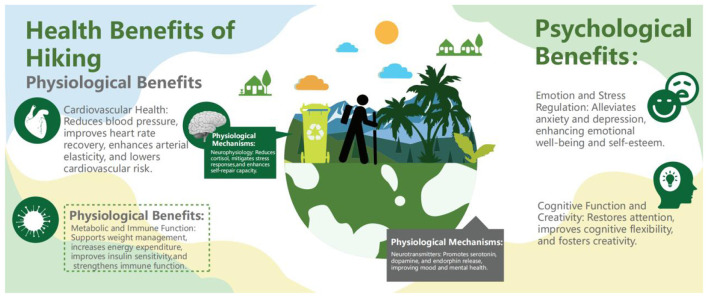 Figure 1
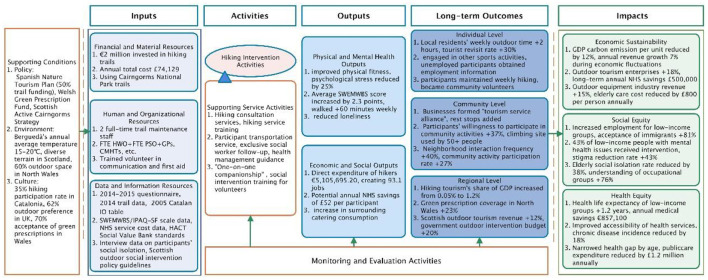 Figure 2
|
|
|
|
|
|
|
|---|---|---|---|---|---|
| Oja P (2018) ( | Body mass | 42 | −0.134 | −0.233, −0.034 | < 0.01 |
| BMI | 29 | −0.142 | −0.257, −0.027 | 0.015 | |
| Body fat | 29 | −0.216 | −0.336, −0.096 | < 0.01 | |
| SBP | 35 | −0.213 | −0.344, −0.082 | < 0.01 | |
| DBP | 33 | −0.166 | −0.285, −0.047 | < 0.01 | |
| FG | 17 | −0.211 | −0.401, −0.022 | 0.029 | |
| VO2max | 31 | 0.528 | 0.391, 0.664 | < 0.01 | |
| Hanson S and Jones A (2015) ( | SBP | 440 | −3.72 | −5.28, −2.17 | < 0.01 |
| DBP | 440 | −3.14 | −4.15, −2.13 | < 0.01 | |
| HR | 252 | −2.88 | −4.13, −1.64 | < 0.01 | |
| Body fat (%) | 328 | −1.31 | −2.10, −0.52 | 0.01 | |
| BMI | 451 | −0.71 | −1.19, −0.23 | < 0.01 | |
| Total cholesterol (mmol/L) | 271 | −0.11 | −0.22, −0.01 | 0.03 | |
| VO2max | 166 | 2.66 | 1.67, 3.65 | < 0.01 | |
| SF-36 Physical Functioning (points) | 68 | 6.02 | 0.51, 11.53 | 0.03 | |
| 6-min Walk Distance (m) | 65 | 79.6 | 53.37, 105.84 | < 0.01 |
|
|
|
|
|
|
|
|---|---|---|---|---|---|
| Grassini S. (2022) ( | Depression (pre- vs. post-nature walk) | 175 | −0.39 | −0.61, −0.18 | < 0.01 |
| Anxiety (pre- vs. post-nature walk) | 173 | −0.43 | −0.69, −0.17 | < 0.01 | |
| Depression (nature walk vs. control) | 637 | −0.23 | −0.34, −0.12 | < 0.01 | |
| Anxiety (nature walk vs. control) | 637 | −0.23 | −0.87, −0.64 | < 0.01 | |
| Coventry PA (2021) ( | Depressive mood | 1044 | −0.64 | −1.05, −0.23 | < 0.01 |
| Anxiety | 737 | −0.94 | −1.87, −0.01 | < 0.01 | |
| Positive affect | 289 | 0.95 | 0.59, 1.31 | 0.101 | |
| Negative affect | 347 | −0.52 | −0.77, −0.26 | 0.350 | |
| Hanson S and Jones A (2015) ( | Depression Score | 101 | −0.67 | −0.97, −0.38 | < 0.01 |
- —Fundamental Research Funds for the Central Universities10.13039/501100012226
Peer Reviews
No public reviews on file for this paper yet. If you reviewed it on a platform where reviews are public (OpenReview, ICLR, NeurIPS, ICML), you can paste yours below so the community can read it here.
Videos
No videos yet. Explain this paper in a talk, walkthrough, or lecture? Add one.
Taxonomy
TopicsTherapeutic Uses of Natural Elements · Urban Green Space and Health · Recreation, Leisure, Wilderness Management
Introduction: discovering the value of outdoor hiking
1
With the acceleration of globalization and urbanization, sedentary lifestyles, persistent psychological stress, and detachment from natural environments have led to rising trends in chronic diseases (such as cardiovascular disease, obesity, and diabetes) and mental health issues (such as anxiety, depression, and stress disorders) (1–6). These issues pose a significant burden on both individual quality of life and public health systems. In response to these challenges, public health policies have increasingly focused on promoting active lifestyles, particularly through outdoor activities like hiking, to improve physical and mental health. Hiking, with its low entry barriers, flexibility, and rich nature-based experiences, has become a globally popular outdoor activity (7). In this study, hiking is defined as a non-competitive outdoor walking activity conducted in natural environments (such as forests, mountains, and rural trails), typically lasting ≥30 min and characterized by natural exposure, psychological restoration, and social interaction (8–10). Existing studies indicate that hiking not only improves cardiovascular function, weight management, and immune function but also alleviates stress, improves mood, and enhances mental health (9–15). Furthermore, hiking promotes social interactions, strengthens community cohesion, and has positive effects on local economies, particularly in tourism and environmental conservation sectors (9, 10, 16, 17). However, most studies have focused either on physiological or psychological effects, often with small sample sizes or cross-sectional designs, lacking interdisciplinary integration. Research on the economic and social benefits remains fragmented. Knowledge gaps still exist regarding unequal participation opportunities, the sustainability of hiking activities, and policy implementation pathways. Therefore, this review adopts an interdisciplinary approach to systematically assess the multidimensional impacts of hiking on health, economics, and social sustainability, examining mechanisms, policies, and practical applications to provide scientific evidence for public health, urban planning, and tourism (18).
Methods
2
This study is an integrative review that synthesizes systematic reviews, meta-analyses, and original research evidence, aiming to evaluate the multidimensional benefits of outdoor hiking in terms of physiological, psychological, and socio-economic outcomes. The methodology follows the structure of an umbrella review, integrating quantitative data from existing meta-analyses for the physiological and psychological aspects, while employing a traditional narrative review approach for the socio-economic section. The research follows the PICO/PECO framework to define the study scope: Population: general adults and specific subgroups (such as older individuals and adolescents); Intervention/Exposure: outdoor hiking activities (including trekking, mountain trail walking, and walking in natural environments, excluding indoor or virtual walking, unless used as a comparison); Comparison: non-participants or groups engaged in usual activities; Outcome: physiological health, psychological health, socio-economic benefits, and factors influencing participation barriers and facilitators. Systematic searches were conducted in the PubMed, Scopus, Web of Science, PsycINFO, and SPORTDiscus databases, with a cutoff date of October 20, 2025, including only English-language literature, supplemented by gray literature and reference tracking. The search strategy was developed by an information expert and reviewed according to PRESS standards (the full search strategy is provided in Supplementary Table S1). Two researchers independently screened the literature and extracted data, managing references using EndNote 20.2.1, and documenting study characteristics, intervention information, and primary outcomes using standardized forms. Double data entry and independent verification ensured accuracy, with discrepancies resolved by a third researcher. The quality of the included studies was assessed using the AMSTAR2 tool (see Supplementary Tables S2–S5) (19). Data synthesis primarily involved narrative analysis, with quantitative summaries for measurable outcomes, covering physiological, psychological, and socio-economic benefits, and identifying factors influencing participation barriers and facilitators. Policy, infrastructure, and health promotion strategies were also summarized. The study adhered to the PRISMA 2020 reporting standards, with the literature screening process and final selection of articles presented in Supplementary Figure S1 and Supplementary Table S6.
Global development and trends in outdoor hiking
3
Global participation overview, growth projections, and influencing factors
3.1
Outdoor leisure activities, particularly hiking, have gained increasing attention worldwide, with participation showing a strong upward trajectory. However, it is noteworthy that, to date, there is no authoritative institution that has published unified and precise comparative data on outdoor hiking participation rates for 2025 across countries. Nonetheless, statistical data from North America, particularly the United States, provides valuable insights into global hiking trends. Long-term forecasts from organizations such as the U.S. Forest Service predict steady growth in hiking participation from 2010 to 2060, with an expected increase of ~7%−10% (7). This growth trend is largely driven by factors such as population growth, socioeconomic changes, and increased leisure time (7, 20). Although some studies suggest a decline in participation among younger generations in certain outdoor activities, the youth demographic remains a key participant group in hiking (7). For Europe and Asia, despite the lack of detailed forecasting data, there are indications of positive trends in hiking through the growth of adventure tourism, increased national park visitation, and the booming outdoor equipment market, suggesting that hiking is similarly on the rise in these regions (21, 22).
Participation in hiking is influenced by a range of factors, with population demographics, socioeconomic conditions, resource accessibility, and climate change being key variables (7, 23–25). While aging populations may see a decline in participation in high-intensity outdoor activities, hiking, with its low-to-moderate physical demands, offers broad adaptability, allowing participation across different age groups with minimal impact from age-related changes. Socioeconomic factors also play a crucial role, with higher-income individuals typically having greater economic capacity and more leisure time to engage in hiking activities, whereas urbanization and accessibility to natural environments may limit urban residents' opportunities for such engagement. The distribution and quality of public natural resources, such as national parks, forests, and trails, directly affect the promotion of hiking activities. The greater the accessibility to these resources, the higher the level of hiking participation. Furthermore, the growing impact of climate change has altered suitable seasons and geographical areas for hiking, significantly influencing the seasonal distribution and regional participation rates of hiking.
Emerging trends: technological integration and practical transformations
3.2
With advancements in technology, the integration of navigation and safety technologies has significantly enhanced the accessibility and safety of hiking. Devices such as smartphones, GPS devices, personal locator beacons (PLBs), and hiking apps (off-line maps, route planning, and elevation tracking) have become essential equipment for hikers (7, 26). These technologies not only reduce the risk of getting lost but also enhance hikers' sense of safety in the outdoors, particularly for beginners, encouraging more individuals to attempt more complex trails. Additionally, the rise of social media, online forums, and video platforms (such as YouTube) has facilitated the rapid dissemination of route guides, equipment reviews, and real-time trail information, fostering the widespread dissemination of hiking culture and the formation of online communities (27).
However, the proliferation of technology has sparked debates regarding the relationship between “technology and nature,” with some hikers expressing concerns that over-reliance on technology might diminish the deep connection between individuals and nature, thus impacting the authentic wilderness experience (26, 27). Therefore, finding a balance between enjoying the conveniences brought by technology and maintaining the traditional spirit of hiking has become an ongoing topic of discussion. Furthermore, technological advancements have also led to the emergence of new outdoor activities, such as “Geocaching,” which incorporates GPS positioning to add an element of gaming and exploration to hiking, attracting more young participants and driving the diversification of the hiking experience (7).
Physical and mental health benefits of hiking
4
Physical health benefits
4.1
Hiking, as a moderate-intensity aerobic exercise, has been widely recognized for its positive effects on physical health (Figure 1). It not only improves cardiovascular health and optimizes metabolic function but also boosts immune system defenses. Numerous studies have shown that hiking significantly helps in the prevention and management of chronic diseases, particularly cardiovascular diseases and type 2 diabetes (28, 29). Furthermore, organizations such as the World Health Organization (WHO) actively promote hiking as an integral part of daily physical activity, recognizing it as an effective means to enhance physical health and delay aging (30–32). Regular hiking activities contribute to weight management, lower blood pressure, improved blood lipid levels, and significantly enhance bone, muscle, and joint health, thereby improving overall quality of life (33–35).
Health benefits of hiking and their potential mechanisms.
Cardiovascular system improvement
4.1.1
Extensive clinical research supports the positive effects of hiking on cardiovascular health. Hiking has been shown to significantly reduce systolic and diastolic blood pressure in individuals with hypertension, with the benefits being particularly pronounced when hiking in natural environments, such as urban parks or forests (36–41) (Table 1). Regular hiking can also improve heart rate recovery, an indicator of cardiovascular system adaptation and health (42). While hiking may lead to temporary increases in heart rate and blood pressure due to exercise intensity, long-term adherence to hiking helps the body control these fluctuations, thereby reducing the long-term risk of cardiovascular diseases (43, 44). At the molecular level, hiking significantly promotes the expression of proteins related to cholesterol reverse transport (e.g., CD36 and ABCA1) while reducing levels of matrix metalloproteinase-9 (MMP-9), which facilitates vascular remodeling. These molecular changes contribute to lowered blood pressure, improved arterial elasticity, and reduced arterial stiffness, thereby lowering the risk of coronary heart disease and other cardiovascular conditions (38, 45). Additionally, heart rate variability (HRV), a key indicator of autonomic nervous system function, has been shown to significantly improve with hiking in natural environments, highlighting the relaxation and health-promoting effects that nature has on the cardiovascular system (46).
Metabolic and immune function optimization
4.1.2
Hiking not only benefits weight management and energy balance but also improves metabolic function and enhances immune system defenses. Hiking helps control body weight, increase energy expenditure, improve insulin sensitivity, and reduce the risk of type 2 diabetes and other metabolic diseases (47). Particularly when conducted in natural environments, hiking, such as “Shinrin-yoku” (forest bathing), has been found to modulate the functions of the central nervous system, autonomic nervous system, and endocrine systems, thereby enhancing immune system responses (47). By promoting parasympathetic nervous activity and reducing sympathetic nervous tension, hiking helps the body enter a state of recovery and relaxation, which not only benefits mental health but also boosts immune defenses, preventing chronic diseases (37). In terms of immune function, hiking, especially in natural environments such as forests, has been shown to significantly increase the activity of natural killer (NK) cells, enhancing the body's ability to fight disease (47). Furthermore, hiking reduces stress and regulates stress hormone levels, further enhancing the body's immune response and improving overall health (47).
Exploring the physiological mechanisms of hiking
4.1.3
The health benefits of hiking result from a complex interaction of physiological, psychological, and environmental factors. Physiological evidence shows that forest hiking significantly lowers salivary cortisol levels by modulating the hypothalamic-pituitary-adrenal (HPA) axis, thereby reducing stress responses (48–50). This process enhances parasympathetic nervous activity and reduces sympathetic nervous tension, allowing the body to effectively enter a state of recovery and relaxation, thereby improving self-repair abilities (37, 51). Moreover, hiking also quantifiably demonstrates the effects of this recovery process through physiological indicators such as heart rate variability (HRV). Neuroscientific studies further reveal that hiking significantly reduces the activity of the subgenual prefrontal cortex and amygdala, brain regions associated with negative thinking, suggesting that hiking has a direct neurological basis for stress regulation (52, 53). In terms of neurotransmitters, hiking is thought to promote the release of “happy hormones” such as serotonin, dopamine, and endorphins, which improve mood and mental well-being (54, 55). However, some studies suggest that forest walking may reduce dopamine levels in the blood, indicating that the mechanisms of hiking are more complex and involve the rebalancing of neurotransmitter networks (47). As such, future research will need to focus on the specific regulatory effects of outdoor hiking on neurotransmitter dynamics, exploring its complex physiological and psychological mechanisms (56–58).
Mental health benefits: the therapeutic power of nature
5
Emotional and stress regulation
5.1
Multiple systematic reviews and randomized controlled trials (RCTs) have empirically demonstrated that outdoor hiking can alleviate stress, improve mood, enhance self-esteem, and overall well-being, while also promoting psychological recovery and emotional regulation (see Figure 2, Table 2) (41, 59, 60). Natural environments provide quiet, green spaces that facilitate psychological restoration and emotional regulation, which can be explained by theories based on ecological psychology and environmental psychology (56, 61–63). Research indicates that, compared to indoor or urban settings, “green exercise” in natural environments has distinct advantages in improving mood; forest walking (Shinrin-yoku) is particularly effective in reducing anxiety and stress (37, 48, 64), suggesting that natural spaces, through their quiet and green characteristics, play a significant role in promoting psychological health recovery (47, 65, 66).
Comprehensive benefits of outdoor hiking interventions: an analysis based on the Theory of Change (ToC) framework.
Cognitive function and creativity enhancement
5.2
The Attention Restoration Theory (ART) posits that the “soft fascination” of natural environments (e.g., trees, flowing water, birdsong) requires minimal cognitive effort to capture attention, thereby aiding in the restoration of directed attention and enhancing cognitive function and creativity (37, 67, 68). The Stress Reduction Theory (SRT) and Biophilia Hypothesis also emphasize that the evolutionary bond between humans and nature can reduce psychological stress. Hiking interventions, which combine gait rhythm with natural sensory stimulation, have been shown to improve attention, working memory, and cognitive flexibility (69). As a sustainable exercise therapy, hiking has been explored as an adjunctive treatment for mental disorders (e.g., depression, anxiety), with some studies showing that its psychological benefits are comparable to traditional cognitive behavioral therapy or pharmacological interventions (70–72). Additionally, hiking has been found to improve the quality of life, psychological recovery, and social functioning in specific populations (e.g., cancer survivors, veterans) (69, 73–75). However, as of 2025, there is a lack of large-scale, up-to-date meta-analyses specifically focused on “hiking interventions for mental disorders” (73, 74, 76, 77), highlighting the need for high-quality, cross-population longitudinal research to further validate its intervention effects and mechanisms.
Theoretical frameworks and neurophysiological evidence
5.3
ART, SRT, and the Biophilia Hypothesis provide psychological mechanisms explaining how natural environments can alleviate mental fatigue and activate the parasympathetic nervous system, thereby reducing stress and anxiety (37, 78). Neurophysiological studies show that forest walking significantly increases parasympathetic activity, reduces sympathetic tension, lowers cortisol levels, and improves blood pressure (79–81). Complex natural landscapes have also been shown to enhance brain executive functions, particularly in cognitive flexibility and perceptual fluency (79, 82).
Quantitative assessment of emotional improvement
5.4
In scientific evaluations, standardized scales such as WHO-5, DASS-21, and PANAS are widely used to quantify emotions, stress, and well-being (60, 83–86). Meta-analyses have indicated that exposure to natural environments significantly reduces fatigue (POMS effect size = −0.84), and hiking interventions produce moderate to large effects in improving mood (87–89).
In summary, outdoor hiking, as a moderate-intensity aerobic exercise, derives its psychological health benefits from the interaction between psychological and environmental factors. Empirical evidence supports that hiking improves mood, reduces stress, and enhances cognitive function, while theoretical frameworks (ART, SRT, Biophilia Hypothesis) provide explanations of the psychological and physiological mechanisms involved, offering scientific basis for public health interventions and disease prevention (28, 90, 91).
Physiologically, hiking contributes to cardiovascular health, metabolic regulation, and immune function. Psychologically, it helps alleviate anxiety and depression, enhances emotional health, and improves cognitive function and creativity. These benefits are mediated by neurophysiological mechanisms, including reduced cortisol levels, enhanced self-repair capacity, and the promotion of serotonin, dopamine, and endorphin release.
Quantitative assessment of economic and social benefits
6
. Macroeconomic impact: driving regional growth and employment
6.1
Hiking tourism, as a significant form of outdoor recreation, has been shown to significantly promote economic growth in regions rich in natural resources, particularly in rural areas. Existing literature categorizes the economic benefits of hiking tourism into three effects: direct effects, indirect effects, and induced effects. The direct effects primarily arise from tourists' expenditures on accommodation, transportation, dining, and equipment. Indirect effects involve the diffusion of hiking-related industry chains, such as equipment manufacturing and the supply of local agricultural products. Induced effects stem from the re-consumption of hiking-related income (17, 92). Empirical studies indicate that these effects can significantly increase regional output and employment. For example, a quantitative study in the Berguedà region of Spain, using input-output models and tourist expenditure surveys, assessed the specific contributions of hiking activities to total output, value-added, and employment (17). Other outdoor recreational activities, such as visits to state parks, non-motorized trail use, rafting, and fishing, also demonstrate similar economic impacts, including job creation, increased local income, and higher regional tax revenues (93–95). Research methodologies primarily include input-output (I-O) models, Keynesian multiplier methods, and tourist expenditure surveys (17, 93, 96, 97). While some studies attempt to explore the relationship between trail mileage and regional GDP or employment rates through regression analysis (98), no standardized quantitative model or official guidelines (such as frameworks from WHO or the UN) currently exist internationally. Therefore, the existing economic benefit data are derived from empirical studies conducted in specific regions, serving as background information to demonstrate the economic potential of hiking tourism. From a macroeconomic perspective, the outdoor recreation industry has become an important component of national economies. For instance, the large scale of the outdoor recreation economy in the United States significantly contributes to GDP (99). This data suggests that outdoor activities, particularly hiking, are not only independent economic phenomena but also key drivers of growth in related industries such as equipment manufacturing, tourism services, and transportation (100).
Health economics perspective: cost-effectiveness and value transformation
6.2
The health benefits of hiking can be viewed as a quantifiable economic asset. Existing research has shown that organizing outdoor hiking activities can effectively prevent chronic diseases, improve physical and mental health, and reduce dependence on national healthcare services, thereby saving public healthcare expenditure (e.g., the UK's NHS) (18). Moreover, improvements in physical and mental health can directly translate into increased labor productivity, such as reduced absenteeism and improved efficiency. One study indicated the significant economic loss caused by depression to the U.S. workforce (101), indirectly supporting the potential economic value of outdoor activities like hiking in improving mental health. Health economics research typically uses cost-benefit analysis (CBA) (17) and quality-adjusted life years (QALYs) (102) to monetize health benefits. In this context, CBA quantifies all costs and benefits to assess the social return on investment, while QALYs combine life expectancy and health quality to convert health improvements into economic value.
Contribution to social development: social cohesion and community building
6.3
Hiking activities also have significant social impacts, particularly in promoting social cohesion and community building. Research shows that group or partnered hiking can build trust, support, and a sense of belonging through shared challenges, thereby enhancing social capital within the group (103–107). Organized hiking activities, such as community walking groups, have been shown to reduce health inequalities, strengthen neighborhood relationships, and enhance community identity (105, 106). Trust and cooperation gained through social interactions among participants can further promote community entrepreneurship and sustainable development (108). Additionally, specific hiking communities (e.g., long-distance hikers) have formed unique social networks through online and offline activities and information sharing, injecting new vitality into hiking culture (109).
Outdoor hiking interventions not only improve participants' physical and mental health and reduce healthcare costs but also promote community participation, enhance social cohesion, and create economic benefits through tourism and related industries. These multi-level benefits highlight the integrated value of hiking activities in the fields of health economics and social development (Figure 2). The ToC model in Figure 2 is constructed based on the evidence-based ToC framework proposed by WHO, employing a combination of systematic literature mapping, expert consultations, and theoretical deduction. The causal pathways regarding the effects of hiking on cardiovascular, metabolic, and mental health are supported by a wealth of randomized controlled trials and meta-analyses. However, the links between hiking and economic benefits (e.g., employment, GDP growth) as well as social cohesion (e.g., community participation, social capital formation) are, in part, based on theoretical synthesis from interdisciplinary literature, and require further verification through longitudinal and mixed-methods research.
The Theory of Change (ToC) model for outdoor hiking interventions was constructed based on three core references (17, 18, 105). This figure follows the stage-by-stage process outlined in the “Evidence-Informed Theory of Change” published by the World Health Organization (WHO), systematically presenting the outcome chain of outdoor hiking interventions from “Inputs—Activities—Outputs—Long-Term Outcomes—Ultimate Impacts.” On the left side of the figure, the supporting conditions that generate effects (policy, environment, and culture) are listed. The core chain illustrates how hiking activities and associated services can ultimately create comprehensive societal value in the areas of economic sustainability, social equity, and health equity by improving physical and mental health, promoting tourism consumption, and fostering community interaction.
Emerging issues
6.4
In recent years, the rise of digital platforms and the sharing economy model has profoundly altered the organization, economic structure, and social dynamics of outdoor hiking activities. Platforms like AllTrails and Meetup have provided hiking enthusiasts with more convenient ways to organize and participate, driving both economic and social transformation in the field. Sharing economy platforms, by connecting service providers (e.g., hiking guides) with consumers, have created new market opportunities. Through this model, individual guides or amateur enthusiasts can bypass traditional intermediaries to provide direct services to tourists, thereby earning more income (110, 111). However, the emergence of digital platforms has also introduced new competitive challenges. By charging commissions and employing price competition strategies, these platforms may influence the income structure of traditional professional guides (112–114). Moreover, the proliferation of platform economies could lead to market profits being concentrated in a few large platform companies, whose algorithms and rule-making processes play a decisive role in the income and market access of guides, raising concerns about fairness (115, 116). From a social inclusivity perspective, digital platforms have a dual impact. On the one hand, they provide marginalized groups (such as people of color, women, and larger-bodied individuals) with more opportunities to participate and platforms for social interaction, thereby increasing their visibility in outdoor activities (117–119). On the other hand, the widespread adoption of these platforms may exacerbate the “digital divide,” particularly for economically disadvantaged groups or those living in rural areas who may lack access to digital devices or related skills, thus hindering their full participation in outdoor activities and exacerbating social inequalities in health behaviors (120, 121).
Challenges and frontiers in evaluation methodology
6.5
Although existing evaluation tools and frameworks are becoming more refined, there remain significant challenges in quantifying “non-market values,” especially when it comes to pricing mental health benefits. Methods such as Wellbeing Valuation and Social Return on Investment (SROI) provide directions for addressing this issue (18, 122), but they often rely on complex surveys and statistical models, and the universality and robustness of their results still require further empirical validation (123, 124). Additionally, the standardization of data collection remains a major challenge in evaluations. Current studies predominantly collect data through surveys and interviews (125), yet there is a lack of unified national or international data collection protocols. Establishing standardized data frameworks would improve the transparency and comparability of evaluation results (126–128). While some regions have enhanced the market appeal and tourist satisfaction of trails through certification systems (e.g., Europe's “Leading Quality Trails”) (129), the integration of these certification standards with economic impact assessment methods is still not widespread.
Major issues and challenges currently faced
7
With the rapid growth of outdoor hiking, the health, economic, and social benefits it brings are becoming increasingly evident. However, existing research and empirical case studies indicate that the widespread adoption of this activity also exposes a range of challenges, including those related to individual health and safety, social equity, environmental sustainability, and inadequate data and policy support.
Firstly, concerning individual health and safety, although hiking has been shown to effectively improve physical health, beginners and participants in high-risk environments still face significant risks. These include acute illnesses caused by environmental conditions and weather, accidents such as falls or slips, musculoskeletal injuries, and psychological stress (120, 130–136). Evidence suggests that systematic risk education, pre-hike planning, physical conditioning, first aid training, the provision of professional equipment, and the establishment of rescue systems can effectively reduce the incidence of such accidents (132, 133, 135, 137, 138).
Secondly, social inequality and resource distribution issues remain prominent in hiking activities. Low-income communities, ethnic minorities, and people with disabilities encounter significant barriers to access to trail resources, information, and the economic costs associated with hiking (106, 118, 139–142). Empirical research shows that even with interventions such as community walking programs and free walking events like Parkrun, participation inequalities have not been fully eliminated (139, 140, 143–147). Additionally, the rapid growth of hiking activities exerts pressure on vulnerable ecosystems, leading to vegetation destruction, soil compaction, wildlife disturbance, and environmental pollution (144, 148–155). This growth may also negatively impact residents' quality of life and visitors' experiences (156–159). While measures such as visitor flow management, the promotion of “Leave No Trace” principles, and trail maintenance have been implemented, challenges related to funding, staffing, and visitor compliance remain constraints (153, 160).
Lastly, the issues of data collection and policy lag further hinder the sustainable development of outdoor hiking. Current assessments of economic, health, and social benefits suffer from significant methodological differences, inconsistencies in scope, and lack of standardization (17, 97, 161–164), resulting in a delay in policy development relative to the growth of the activity. This is particularly evident in the challenge of balancing environmental protection, visitor experience, community interests, and economic development (160, 165).
Policy implications, research limitations and future directions
8
. Policy recommendations
8.1
Based on the aforementioned empirical findings, several policy suggestions can be made to enhance the comprehensive benefits of outdoor hiking, while distinguishing between evidence-based recommendations and interpretive inferences. Firstly, the construction of high-quality, accessible trail networks should be prioritized as a key infrastructure investment. Previous studies indicate that trail accessibility and quality are directly related to participation rates, public health improvements, and local economic growth (18). Therefore, trail planning should encompass both urban and rural areas, ensuring barrier-free access, with a particular focus on accessibility for people with disabilities, to maximize social and health benefits. Secondly, interdepartmental collaboration among sectors such as healthcare, environmental protection, sports, and tourism should be promoted. Health economics research demonstrates that outdoor hiking activities improve mental health, alleviate symptoms of depression, and reduce healthcare costs (101, 102). Consequently, at the policy level, hiking could be incorporated into a “green social prescription” system, allowing doctors to prescribe outdoor activities as preventive and rehabilitative interventions. Thirdly, it is crucial to establish a standardized framework for evaluating the benefits of outdoor activities and to improve data collection systems. Existing literature shows significant discrepancies in the methodologies, indicators, and scope of quantifying economic, health, and social benefits (161–164), which hampers the scientific rigor and practicality of policy-making. Developing unified data collection methods, core evaluation indicators, and recommended assessment approaches would provide reliable support for policy decisions and improve performance management. Fourthly, targeted interventions are needed to address social equity and the participation of disadvantaged groups (partially evidence-based and partially interpretive suggestions). Studies indicate that low-income groups, ethnic minorities, and individuals with disabilities face barriers in accessing trail resources (139–141). Policies can improve resource accessibility through community empowerment projects, digital technology, and social platforms, while ensuring equitable participation. Finally, environmental protection and visitor management should be strengthened. Empirical research indicates that hiking activities exert pressure on ecosystems, while visitor flow management, trail maintenance, and the promotion of “Leave No Trace” principles can mitigate environmental degradation (144, 160). Policies should leverage big data and monitoring technologies to optimize visitor distribution, ensuring a safe and sustainable outdoor experience.
. Research limitations and future directions
8.2
While existing literature broadly supports the positive effects of hiking on physical and mental health, there are still notable gaps in both methodology and evidence. Firstly, many studies combine hiking with broader categories such as “outdoor activities” or “nature exposure,” making it difficult to isolate the specific effects of hiking (166–168). Secondly, small sample sizes and the predominance of cross-sectional designs limit the generalizability and causal inference of the results. Moreover, most studies rely on self-reported questionnaires, lacking long-term follow-up and objective physiological measures (28, 60, 169, 170). Differences in environmental types (e.g., forests, coastlines, mountains), intervention intensity, and cultural contexts further increase heterogeneity in results (171). Quantitative studies on the dose-response relationship of hiking (including frequency, duration, and intensity) remain limited, and no standardized recommendations for policy or clinical implementation have been established (172). In terms of economic and social dimensions, most research focuses on descriptive analysis, with insufficient cross-regional comparability (96, 173). Additionally, longitudinal studies on the impact of hiking on socio-economic outcomes are almost non-existent (17, 174, 175). Although some studies examine differences in outdoor activity participation among low-income populations (176), the long-term economic impact of hiking as a path to social capital and career development (e.g., guiding or hospitality businesses) has not been explored in depth. Furthermore, there is a lack of research systematically assessing the long-term contributions of hiking activities in reducing chronic disease burden and saving healthcare costs from a macro health economics perspective (177).
To improve the scientific rigor and practicality of outdoor hiking research and policy-making, future studies should adopt a combination of longitudinal designs and mixed methods, incorporating objective physiological indicators, psychological assessments, and economic modeling to build a robust evidence base (56, 123, 124). Furthermore, there is a need to explore the differential responses of various groups (e.g., children, older individuals, and those with specific health conditions) to intervention dose, frequency, and intensity, providing a foundation for personalized interventions and policy optimization. Additionally, interdisciplinary collaboration—encompassing public health, economics, and geographic information sciences—is essential for establishing a standardized framework for evaluating the health, economic, and social benefits of hiking. This would aid in the scientific evaluation of policy effectiveness and guide resource allocation, thereby achieving the integrated enhancement of social equity, environmental sustainability, and public health goals. Moreover, the use of digital technologies and data analytics could facilitate dynamic management, optimize visitor flow distribution, and reduce ecological pressure. This would maximize the health, social, and economic benefits of outdoor hiking activities while ensuring participant safety and environmental sustainability, providing quantifiable scientific support for policy decisions (18, 144, 150).
Conclusion
9
This study demonstrates that outdoor hiking activities have widespread and profound effects on enhancing individual physical and mental health, fostering social integration, and promoting local economic development. Specifically, outdoor hiking not only reduces the incidence of chronic diseases and promotes mental health improvements but also generates significant economic benefits, especially in tourism, employment, and related industries. However, with the increasing participation in hiking, new challenges such as resource inequality, environmental burdens, and personal safety risks have emerged. Therefore, ensuring the sustainable development of outdoor hiking requires systematic and comprehensive policy interventions and management measures. Policymakers should prioritize addressing resource allocation inequalities, enhancing infrastructure, optimizing trail networks, and promoting public health through initiatives like green social prescribing. Meanwhile, future research should focus on long-term health benefits, particularly the economic quantification of mental health improvements, and explore the effectiveness of personalized intervention strategies. These efforts will lay a solid foundation for promoting the sustainable development of outdoor hiking and ensuring its widespread benefits across society. Therefore, further strengthening interdisciplinary collaboration and policy support will be key to maximizing the health, economic, and social benefits of outdoor hiking activities.
The reference list from the paper itself. Each links out to its DOI / PubMed record.
- 1Romain AJ Marleau J Baillot A. Association between physical multimorbidity, body mass index and mental health/disorders in a representative sample of people with obesity. J Epidemiol Commun Health. (2019) 73:874–80. doi: 10.1136/jech-2018-21149731201257 · doi ↗ · pubmed ↗
- 2Lavallee KL Zhang XC Schneider S Margraf J. Obesity and mental health: a longitudinal, cross-cultural examination in Germany and China. Front Psychol. (2021) 12:712567. doi: 10.3389/fpsyg.2021.71256734646201 PMC 8504480 · doi ↗ · pubmed ↗
- 3Samudra RP Heboyan V. Examining the connection between health outcomes, state political ideology, and food access in the United States. J Public Health Manag Pract JPHMP. (2023) 29:E 284–92. doi: 10.1097/PHH.000000000000178637536664 · doi ↗ · pubmed ↗
- 4Geiger S Steinbach J Skoda EM Jahre L Rentrop V Kocol D . Needs and demands for e-mental health interventions in individuals with overweight and obesity: user-centred design approach. Obes Facts. (2023) 16:173–83. doi: 10.1159/00052791436442465 PMC 10028369 · doi ↗ · pubmed ↗
- 5Muro A Mateo C Parrado E Subirana-Malaret M Moya M Garriga A . Forest bathing and hiking benefits for mental health during the COVID-19 pandemic in Mediterranean regions. Eur J For Res. (2023) 142:415–26. doi: 10.1007/s 10342-023-01531-636779181 PMC 9896453 · doi ↗ · pubmed ↗
- 6Teixeira A Gabriel R Quaresma L Alencoão A Martinho J Moreira H. Obesity and natural spaces in adults and older people: a systematic review. J Phys Act Health. (2021) 18:714–27. doi: 10.1123/jpah.2020-058933883287 · doi ↗ · pubmed ↗
- 7Cordell HK. Outdoor Recreation Trends and Futures: A Technical Document Supporting the Forest Service 2010 RPA Assessment. Asheville, NC: US Department of Agriculture Forest Service, Southern Research Station (2012). p. 1–167. doi: 10.2737/SRS-GTR-150 · doi ↗
- 8Fattorini L Pittiglio G Federico B Pallicca A Bernardi M Rodio A. Workload comparison between hiking and indoor physical activity. J Strength Cond Res. (2012) 26:2883. doi: 10.1519/JSC.0b 013e 318242 a 61e 22158090 · doi ↗ · pubmed ↗