Tip-in underwater endoscopic mucosal resection for a sessile lesion at a poorly visualized location
Keijiro Numa, Kenichiro Imai, Kinichi Hotta, Kazunori Takada, Sayo Ito, Hiroyuki Ono

Abstract
Click any figure to enlarge with its caption.
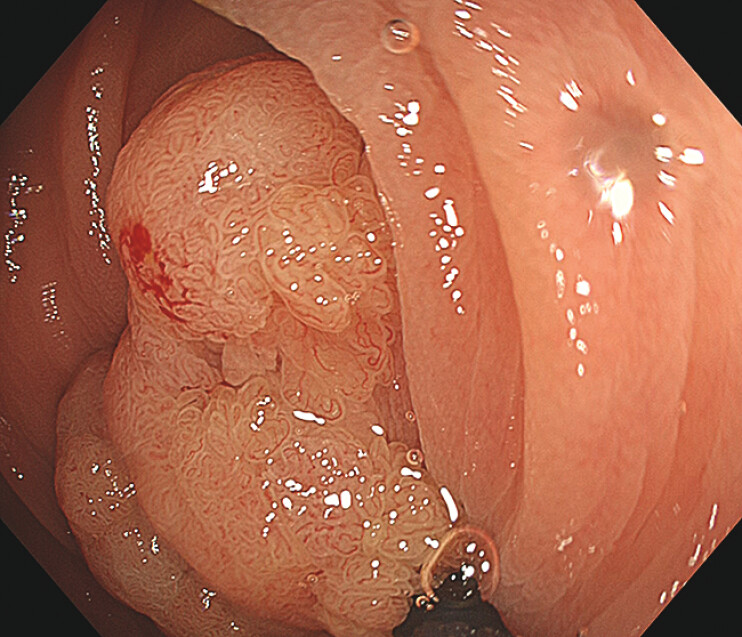 Fig. 1
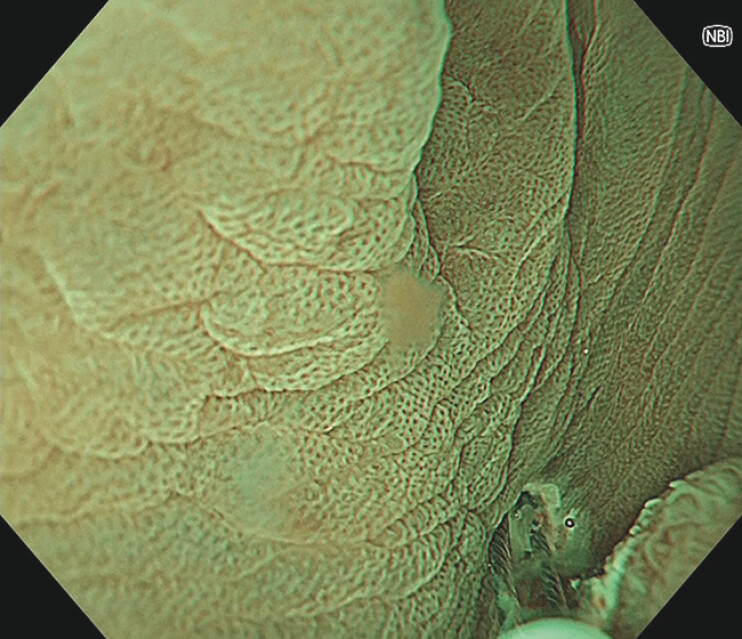 Fig. 2
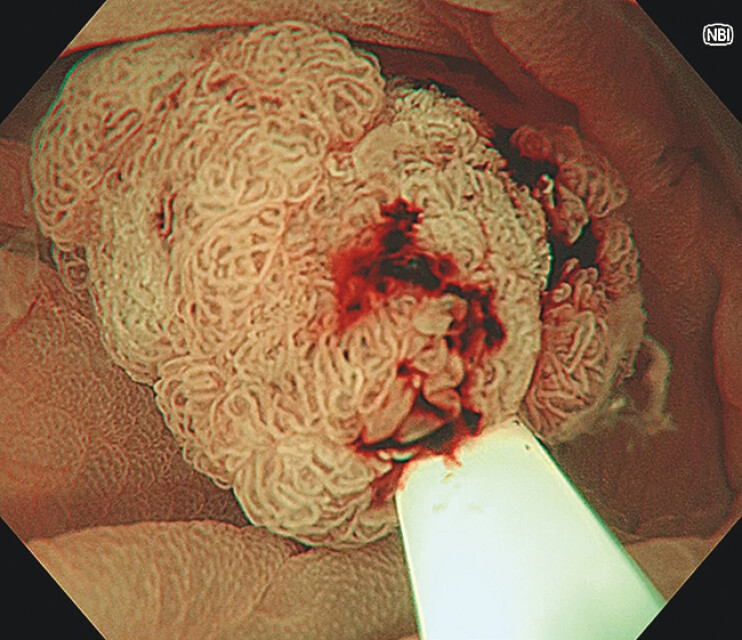 Fig. 3
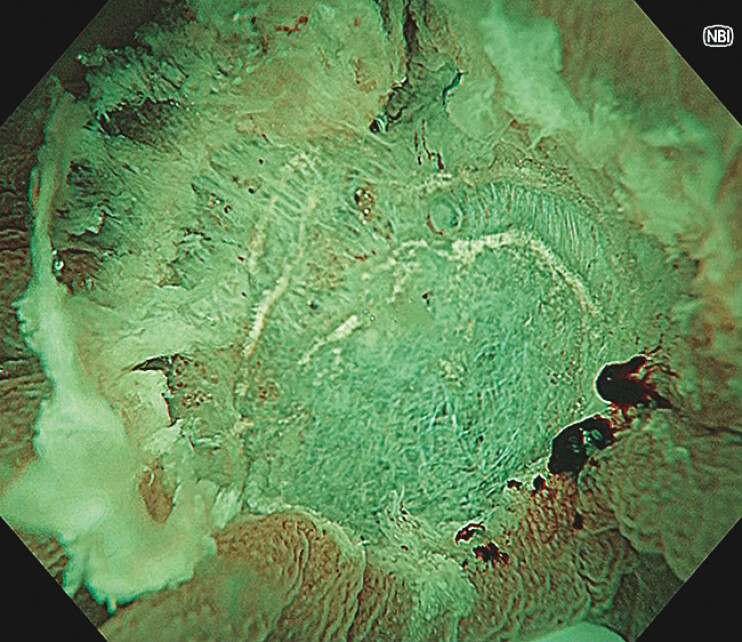 Fig. 4
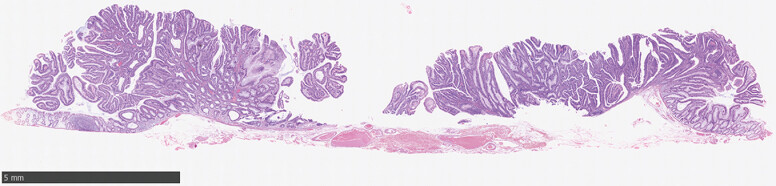 Fig. 5
Peer Reviews
No public reviews on file for this paper yet. If you reviewed it on a platform where reviews are public (OpenReview, ICLR, NeurIPS, ICML), you can paste yours below so the community can read it here.
Videos
No videos yet. Explain this paper in a talk, walkthrough, or lecture? Add one.
Taxonomy
TopicsSinusitis and nasal conditions · Esophageal Cancer Research and Treatment · Esophageal and GI Pathology
Endoscopic resection of proximal colonic lesions located behind the flexure is challenging because poor visualization of the oral side of the lesion makes it difficult to capture the entire lesion. Water immersion improves scope maneuverability and alleviates luminal angulation by reducing luminal distension 1 . Thus, underwater endoscopic mucosal resection (UEMR) could be effective for poorly visualized polyps such as orifice- or diverticular-related polyps 2 3 . Nevertheless, suboptimal visualization of proximal margins in the deflated lumen would hamper assured snaring in UEMR 4 . We present a case of successful en bloc resection using tip-in UEMR of a proximal colonic lesion with poor visualization due to the location behind the flexure ( Fig. 1 ).
An endoscopic image of a 19-mm sessile lesion at the hepatic flexure.
A 68-year-old man was referred with a protruded lesion of 19 mm in size at the hepatic flexure. As the lesion was diagnosed as an adenoma, UEMR was attempted to improve scope maneuverability and its visualization. However, poor visualization of the oral side of the lesion did not ensure snare capturing of the entire lesion. To assure proximal margin, a spot-shaped mucosal incision at the proximal site of the lesion was made with a snare tip using a cut current ( Fig. 2 ), and the lesion was within the snare ( Fig. 3 ). Stable snare manipulation owing to an anchored tip could achieve en bloc resection without adverse events ( Fig. 4 , Video 1 ). Histopathological examination revealed high-grade dysplasia ( Fig. 5 ).
The snare tip was anchored at the proximal mucosa using the cutting current to secure the resection margin and stabilize snare manipulation.
The lesion was completely captured within the snare.
An endoscopic image showing the post-tip-in UEMR defect without residue and perforation.
Tip-in underwater endoscopic mucosal resection enabled en bloc resection of a hepatic flexure lesion with poor access by applying water immersion and snare anchoring to secure the resection margin.Video 1
Histopathological examination showing high-grade dysplasia with negative margins.
In this case, tip-in UEMR has several advantages. First, reduced luminal distension could improve scope maneuverability and flexure angulation. Second, the tip-in maneuver could assure proximal margins even in poor visualization. Third, the anchoring snare tip could secure the snare capturing even where scope maneuverability was poor. This case suggests that tip-in UEMR is an effective technique for polyps with poor visualization and scope maneuverability.
Endoscopy_UCTN_Code_TTT_1AQ_2AD_3AC
The reference list from the paper itself. Each links out to its DOI / PubMed record.
- 1Leung FW Leung JW Mann SK The water method significantly enhances patient-centered outcomes in sedated and unsedated colonoscopy Endoscopy 20114381682121611947 10.1055/s-0030-1256407 · doi ↗ · pubmed ↗
- 2Shiotsuki K Imai K Hotta K Underwater endoscopic mucosal resection for complete R 0 removal of an adenoma extending into the appendiceal orifice Dig Endosc 202032 e 7e 810.1111/den.1352831625197 · doi ↗ · pubmed ↗
- 3Shiotsuki K Imai K Hotta K Underwater endoscopic mucosal resection for complete R 0 removal of an adenoma extending deep into a colonic diverticulum Endoscopy 202052 E 374E 37532219795 10.1055/a-1134-4668 · doi ↗ · pubmed ↗
- 4Okumura T Imai K Hotta K Tip-in underwater endoscopic mucosal resection for a residual lower rectal lesion extending to the dentate line Endoscopy 20235501 E 1252 E 125310.1055/a-2215-264238092056 PMC 10718945 · doi ↗ · pubmed ↗