Long-term local tumor control by endoscopic radiofrequency ablation for ampullary carcinoma with biliary extension in a patient with familial adenomatous polyposis
Keita Fujisaki, Susumu Hijioka, Yoshikuni Nagashio, Shota Harai, Daiki Yamashige, Joshua Josef Torres, Takuji Okusaka

Abstract
Genes, proteins, chemicals, diseases, species, mutations and cell lines named across the full text — each resolved to its canonical identifier and authoritative record.
Click any figure to enlarge with its caption.
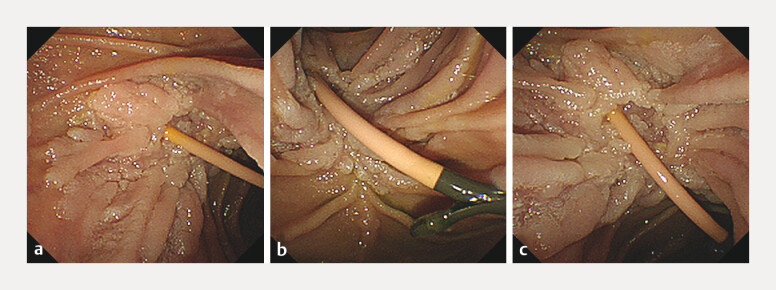 Fig. 1
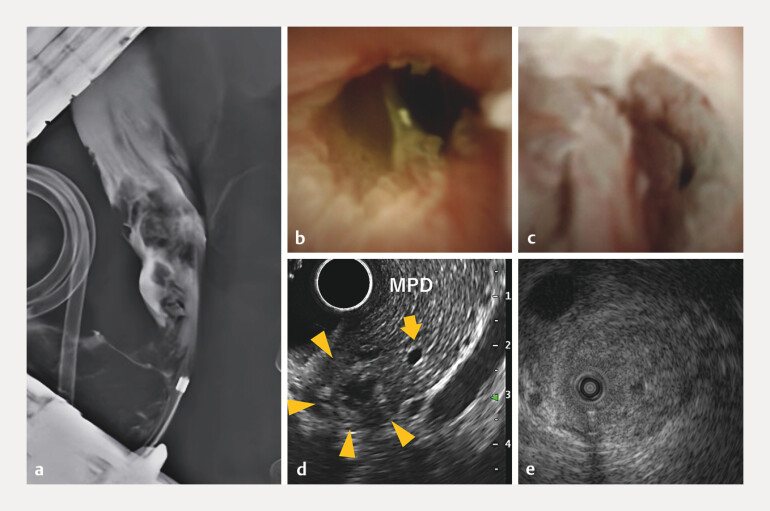 Fig. 2
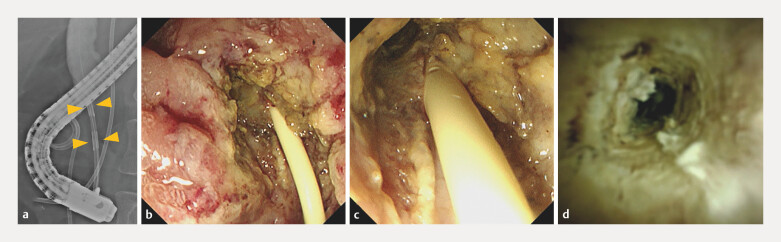 Fig. 3
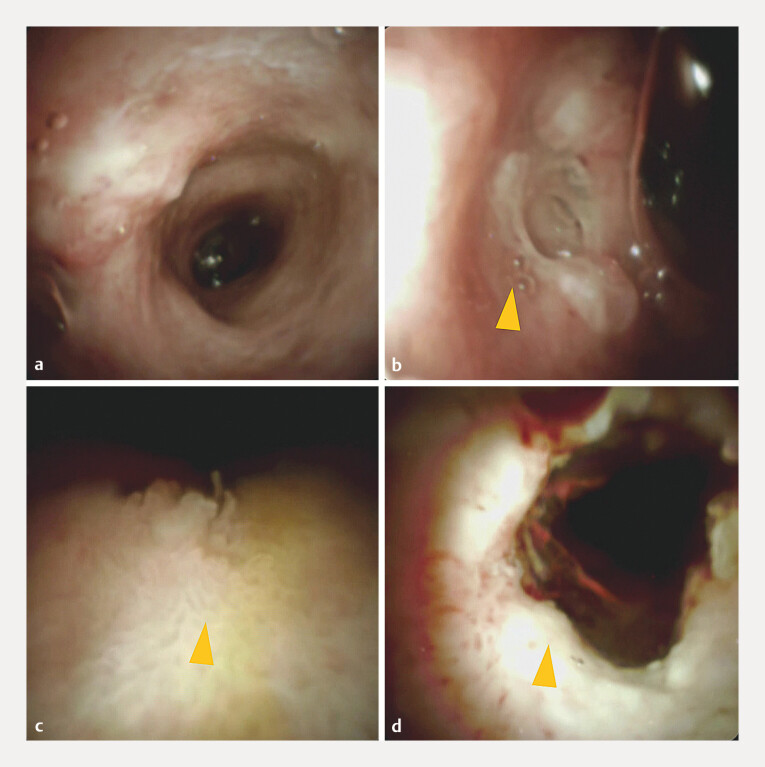 Fig. 4
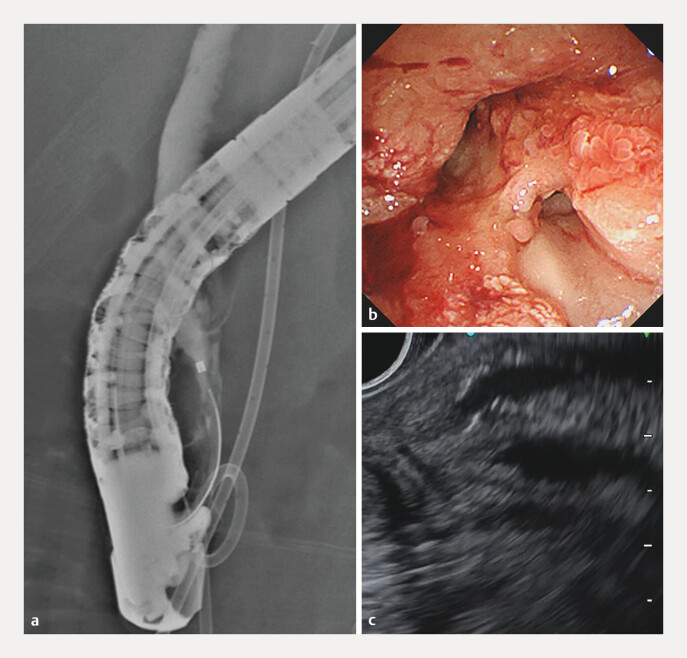 Fig. 5
Peer Reviews
No public reviews on file for this paper yet. If you reviewed it on a platform where reviews are public (OpenReview, ICLR, NeurIPS, ICML), you can paste yours below so the community can read it here.
Videos
No videos yet. Explain this paper in a talk, walkthrough, or lecture? Add one.
Taxonomy
TopicsPancreatic and Hepatic Oncology Research · Genetic factors in colorectal cancer · Medical Imaging and Pathology Studies
A Habib EndoHPB catheter (Boston Scientific) is a bipolar endoscopic radiofrequency ablation (RFA) device that enables circumferential ablation of the biliary tract 1 . While adjunctive endoscopic RFA has shown efficacy for malignant biliary strictures and as salvage treatment for remnant bile duct lesions after papillectomy 2 3 4 , reports of its use as initial therapy for ampullary carcinoma (AC) remain limited.
We report a surgically ineligible 48-year-old man with familial adenomatous polyposis who was diagnosed with intraepithelial AC (cT1aN0M0, Stage IA) with extension into the distal bile duct and duodenum. The patient had a history of five prior open abdominal surgeries, including total colectomy, and multiple intra-abdominal desmoid tumors. Duodenoscopy revealed a depressed ampulla with a laterally spreading whitish elevated lesion ( Fig. 1 a–c ), and endoscopic retrograde cholangiography and cholangioscopy demonstrated a papillary tumor extending into the distal bile duct ( Fig. 2 a–c ). Endoscopic ultrasound and IDUS demonstrated preservation of the bile duct muscularis and no pancreatic invasion ( Fig. 2 d, e ). Biopsies confirmed an adenoma in the duodenum and adenocarcinoma in the ampulla and intrapancreatic bile duct.
Duodenoscopic findings of the descending duodenum. a – c The ampulla appeared depressed with lateral extension into the adjacent surrounding duodenal mucosa.
Given the patient’s poor surgical candidacy, endoscopic RFA was performed following pancreatic duct stent placement. The Habib EndoHPB catheter was applied from the distal bile duct to the ampulla for 15–25 seconds each 5 , achieving complete tumor ablation, as confirmed by post-RFA endoscopy and cholangioscopy ( Fig. 3 a–d ). A covered self-expandable metal stent was then deployed to ensure biliary drainage. Endoscopic surveillance at 3 months ( Fig. 4 a–d ) and 2 years post-treatment ( Fig. 5 a–c ) revealed no local tumor recurrence or distant metastasis ( Video 1 ).
Pre-treatment biliary evaluation. a Endoscopic retrograde cholangiography (ERC) showing an irregular radiolucent area in the distal bile duct. b and c Peroral cholangioscopy revealing a papillary tumor. d An endoscopic ultrasound (EUS) image showing no evidence of pancreatic invasion. e Intraductal ultrasonography (IDUS) showing no invasion of the bile duct muscularis layer.
Images of RFA. a An ERC image showing ablation of the distal bile duct using the Habib EndoHPB catheter. b and c A duodenoscopic view after ablation showing circumferential ablation of the ampulla. d A cholangioscopic view confirming the circumferential ablation of the intraductal tumor. ERC, endoscopic retrograde cholangiography; RFA, radiofrequency ablation.
Cholangioscopic findings at 3 months post-RFA. a Confluence of the cystic duct. b Biopsy just below the cystic duct confluence revealed no malignancy. c Biopsy from the distal bile duct revealed no malignancy. d Biopsy from the area just above the ampulla revealed no malignancy. RFA, radiofrequency ablation.
Endoscopic findings at 2 years post-RFA. a An ERC image showing no elevated lesions in the distal bile duct; biopsy revealed no malignancy. b A duodenoscopic view showing no suspicious findings at the orifice of the bile or pancreatic duct. c No tumor extension into the bile and pancreatic ducts was observed. ERC, endoscopic retrograde cholangiography; RFA, radiofrequency ablation.
Endoscopic radiofrequency ablation for ampullary carcinoma with intraductal extension, showing complete tumor ablation and 2-year recurrence-free follow-up in a patient unsuitable for surgery.Video 1
This case suggests that endoscopic RFA may offer an alternative, particularly in cases like this, for surgically unfit patients with localized ampullary or biliary malignancies. Further studies are warranted to validate its role as a primary therapeutic option in selected cases.
Endoscopy_UCTN_Code_TTT_1AR_2AF
The reference list from the paper itself. Each links out to its DOI / PubMed record.
- 1Itoi T Isayama H Sofuni A Evaluation of effects of a novel endoscopically applied radiofrequency ablation biliary catheter using an ex-vivo pig liver J Hepatobiliary Pancreat Sci 20121954354710.1007/s 00534-011-0465-722038500 · doi ↗ · pubmed ↗
- 2Steel AW Postgate AJ Khorsandi S Endoscopically applied radiofrequency ablation appears to be safe in the treatment of malignant biliary obstruction Gastrointest Endosc 20117314915310.1016/j.gie.2010.09.03121184881 · doi ↗ · pubmed ↗
- 3Park N Jung MK Kim EJ In-stent radiofrequency ablation with uncovered metal stent placement for tumor ingrowth/overgrowth causing self-expandable metal stent occlusion in distal malignant biliary obstruction: multicenter propensity score-matched study Gastrointestinal Endosc 20239769470310.1016/j.gie.2022.11.01736460085 · doi ↗ · pubmed ↗
- 4Takeshita K Hijioka S Maehara K Bile duct radiofrequency ablation for a residual adenoma after endoscopic papillectomy Endoscopy 20235501 E 185E 18810.1055/a-1960-325336368670 PMC 9829753 · doi ↗ · pubmed ↗
- 5Yamamoto K Itoi T Sofuni A Verification in an animal study of the appropriate settings for a novel radiofrequency generator in radiofrequency ablation therapy for residual intraductal lesions after endoscopic papillectomy (with video)Digestive Endoscopy 20253770471139833995 10.1111/den.14986 PMC 12162417 · doi ↗ · pubmed ↗