Modification of the existing maximum residue levels for prothioconazole in various crops
Giulia Bellisai, Giovanni Bernasconi, Luis Carrasco Cabrera, Irene Castellan, Monica del Aguila, Lucien Ferreira, Luna Greco, Renata Leuschner, Andrea Mioč, Stefanie Nave, Hermine Reich, Silvia Ruocco, Alessia Pia Scarlato, Marta Szot, Anne Theobald, Manuela Tiramani

TL;DR
This paper discusses the modification of maximum residue levels for prothioconazole in various crops to ensure consumer safety.
Contribution
The paper proposes new maximum residue levels for prothioconazole in specific crops based on risk assessment.
Findings
Sufficient data were provided to derive MRL proposals for pome fruits, apricots, cherries, plums, cucurbits, and rice.
Analytical methods are available to control residues at the validated limit of quantification of 0.01 mg/kg.
EFSA concluded that residue intake from prothioconazole and its metabolites is unlikely to pose a risk to consumer health.
Abstract
In accordance with Article 6 of Regulation (EC) No 396/2005, the applicant Sipcam Oxon SpA submitted a request to the competent national authority in Greece to modify the existing maximum residue levels (MRLs) for the active substance prothioconazole in various crops. The data submitted in support of the request were found to be sufficient to derive MRL proposals for the group of pome fruits, apricots, cherries, plums, cucurbits with edible and inedible peel and rice. Adequate analytical methods for enforcement are available to control the residues of prothioconazole in plant matrices under consideration at the validated limit of quantification (LOQ) of 0.01 mg/kg. Based on the risk assessment results, EFSA concluded that the short‐term and long‐term intake of residues resulting from the use of prothioconazole and of the triazole derivative metabolites (TDMs) according to the reported…
Genes, proteins, chemicals, diseases, species, mutations and cell lines named across the full text — each resolved to its canonical identifier and authoritative record.
Click any figure to enlarge with its caption.
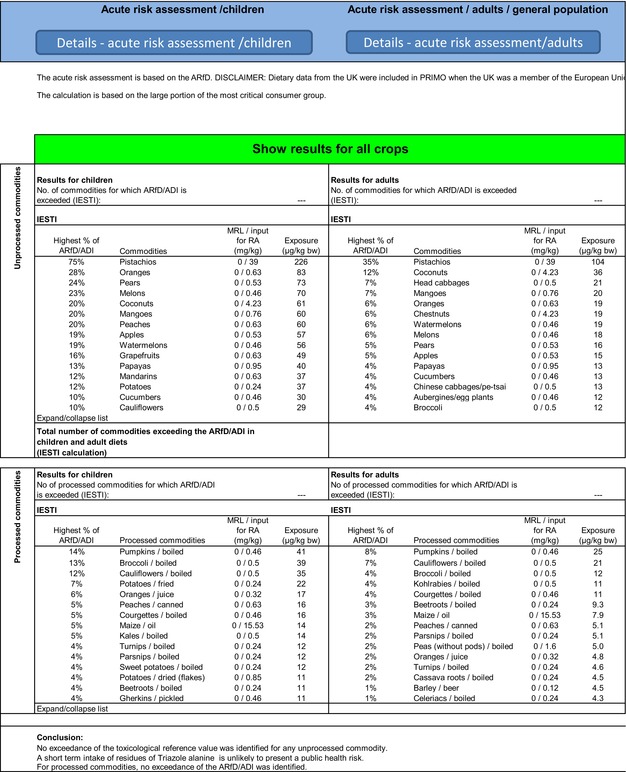 Figure 1
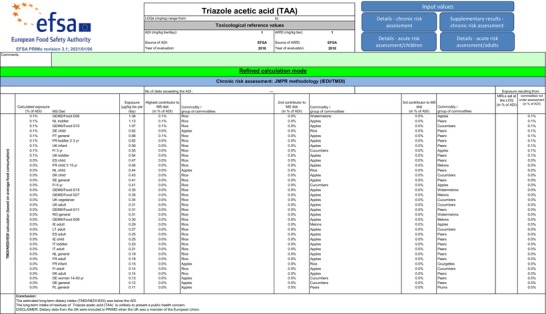 Figure 2
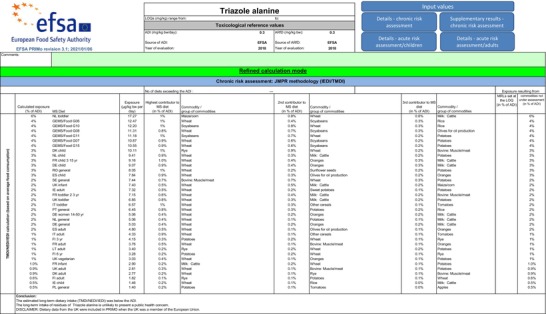 Figure 3
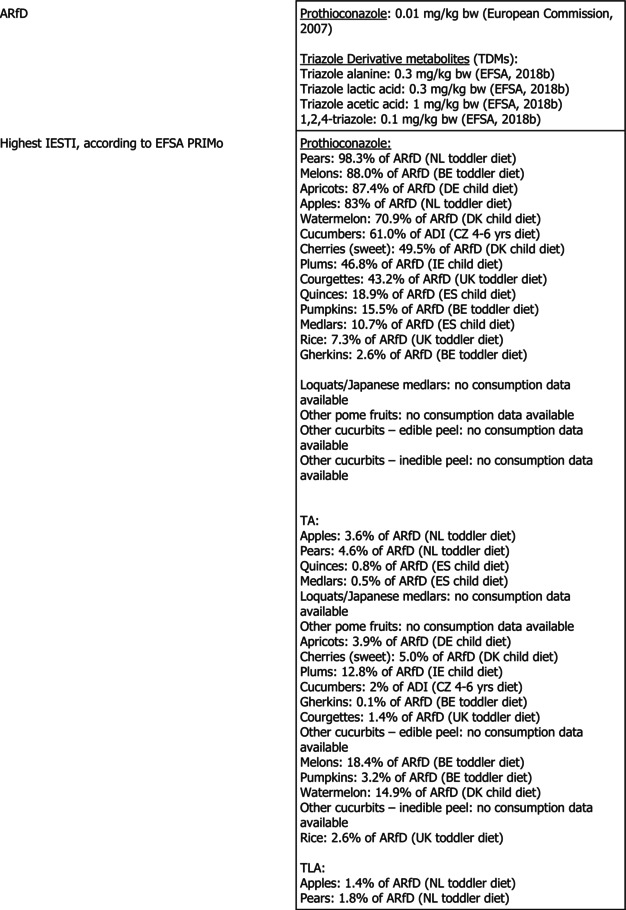 Figure 4
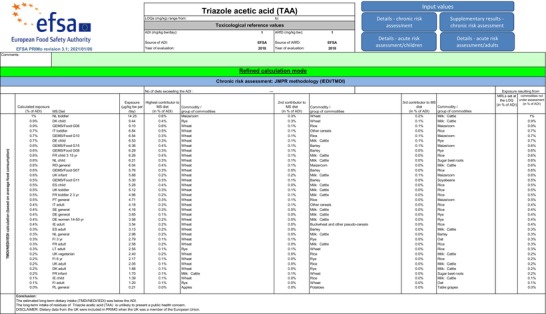 Figure 5
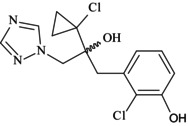 Figure 6
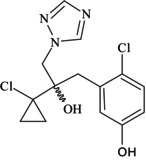 Figure 7
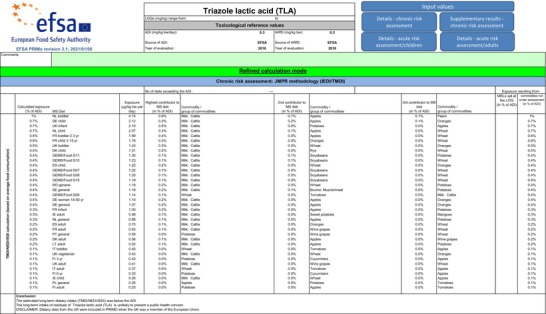 Figure 8
 Figure 9
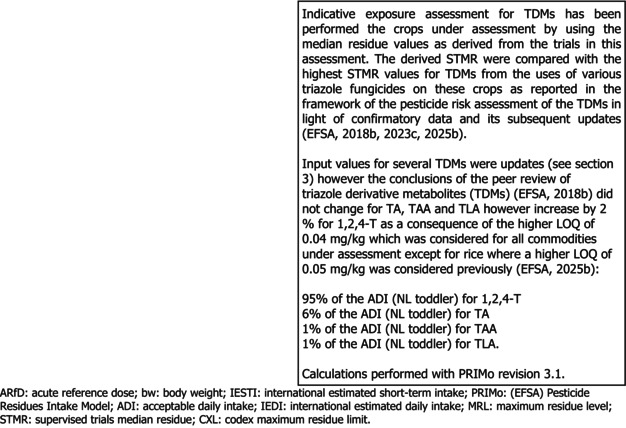 Figure 10
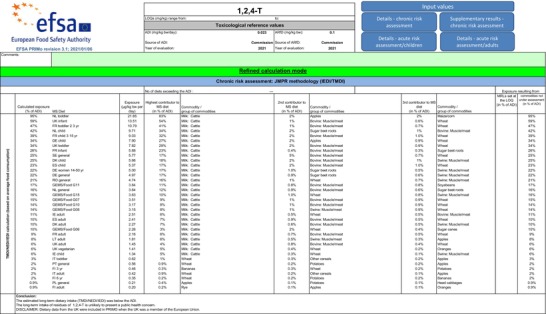 Figure 11
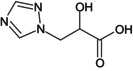 Figure 12
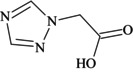 Figure 13
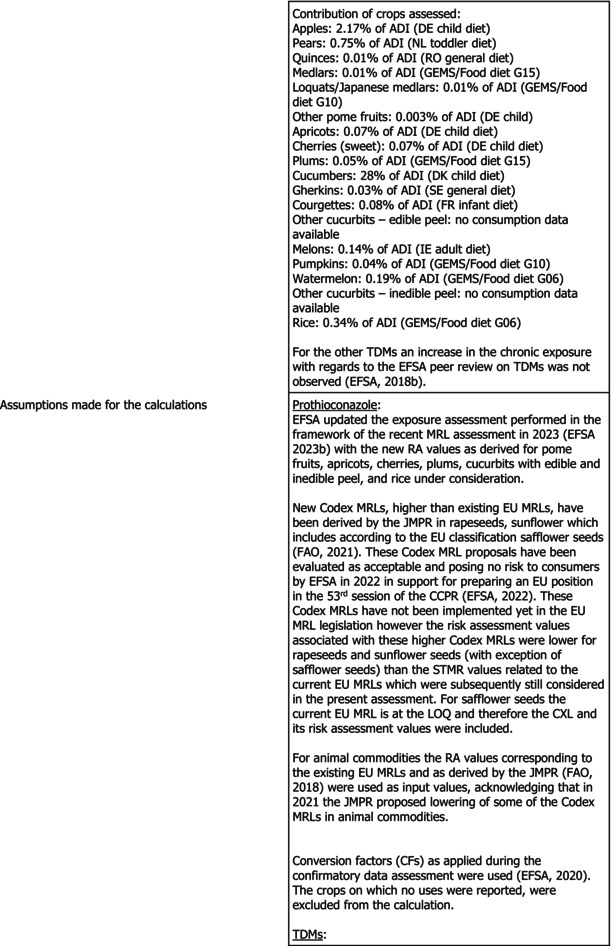 Figure 14
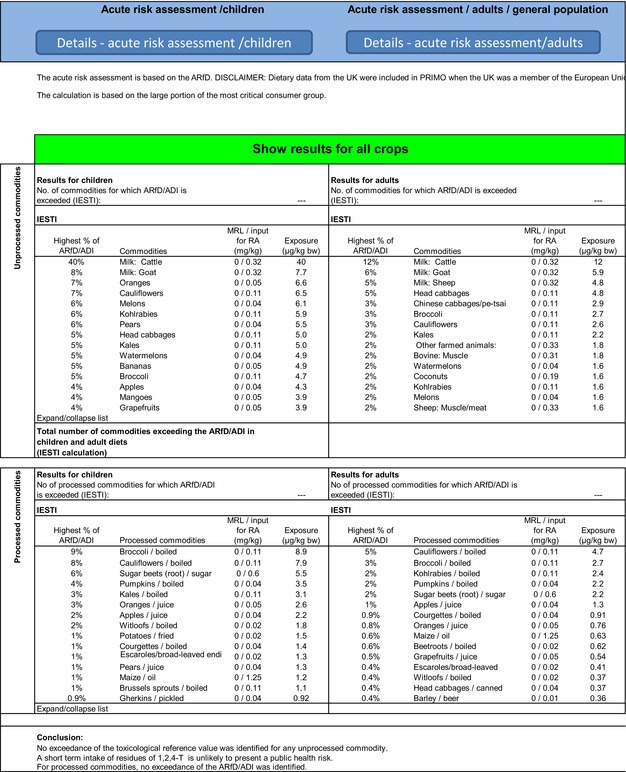 Figure 15
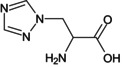 Figure 16
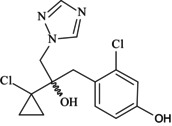 Figure 17
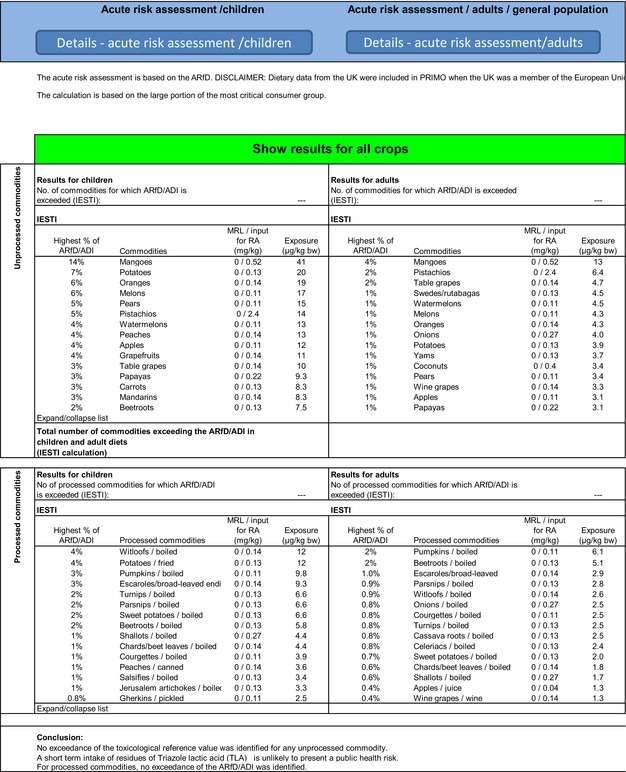 Figure 18
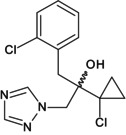 Figure 19
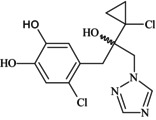 Figure 20
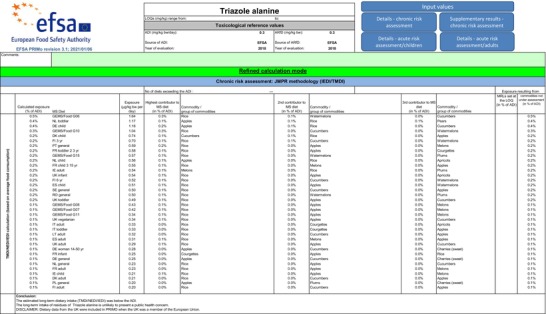 Figure 21
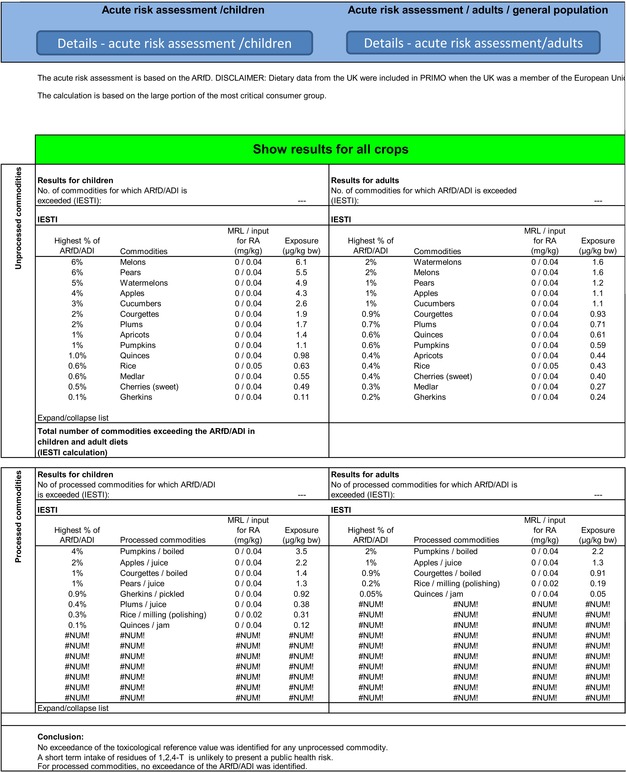 Figure 22
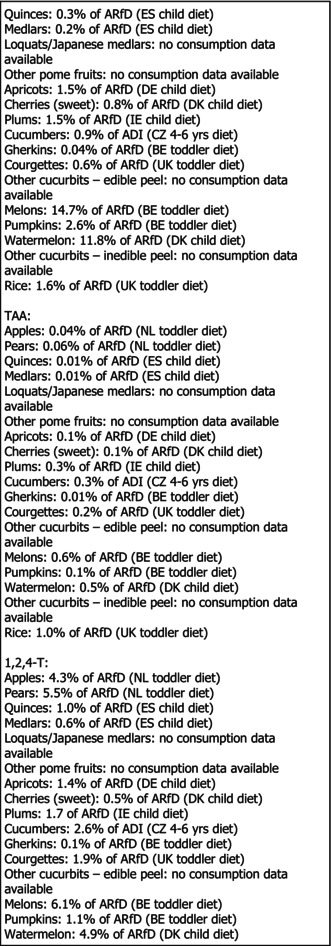 Figure 23
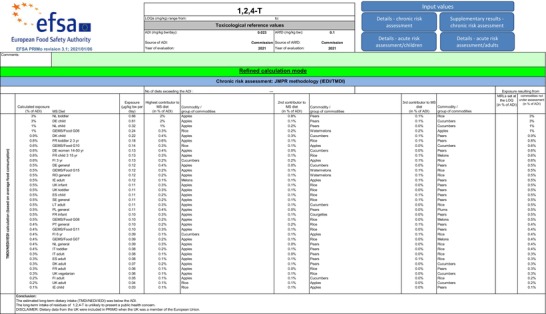 Figure 24
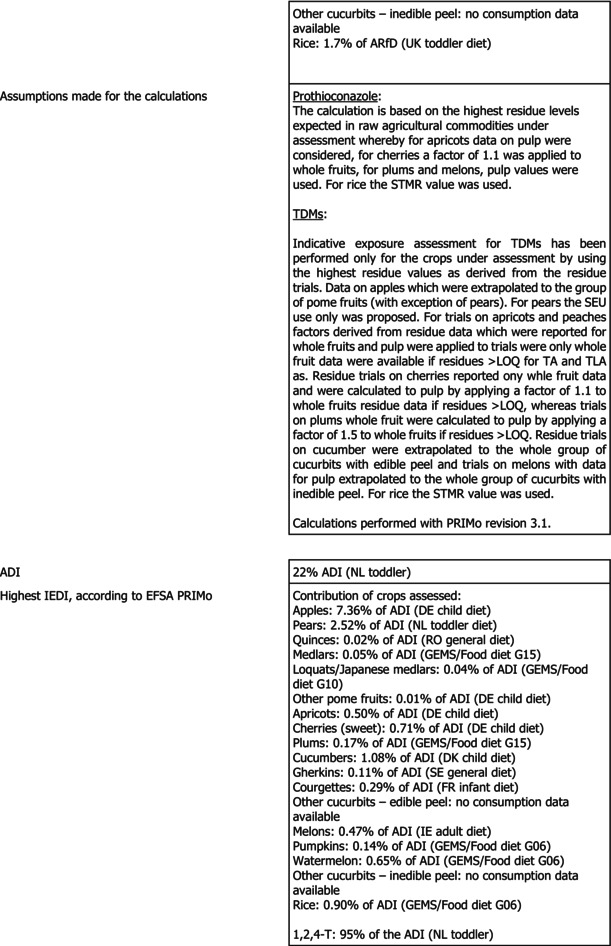 Figure 25
 Figure 26
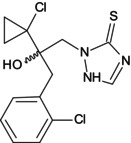 Figure 27
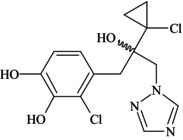 Figure 28
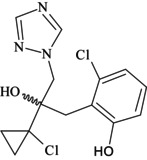 Figure 29
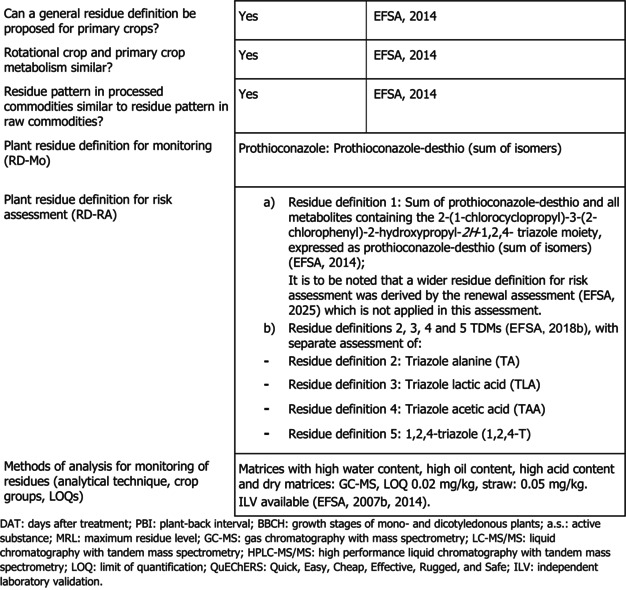 Figure 30
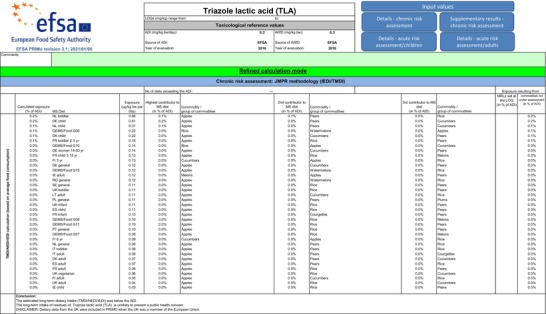 Figure 31
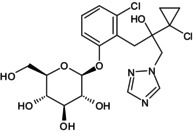 Figure 32
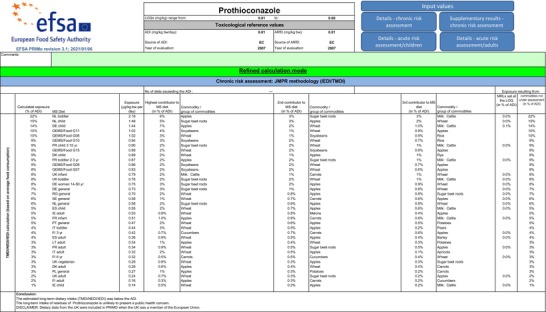 Figure 33
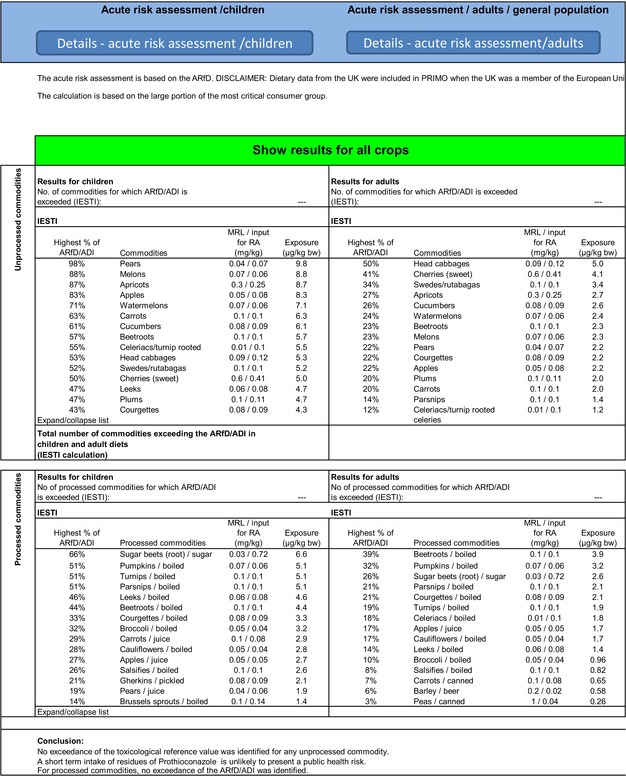 Figure 34
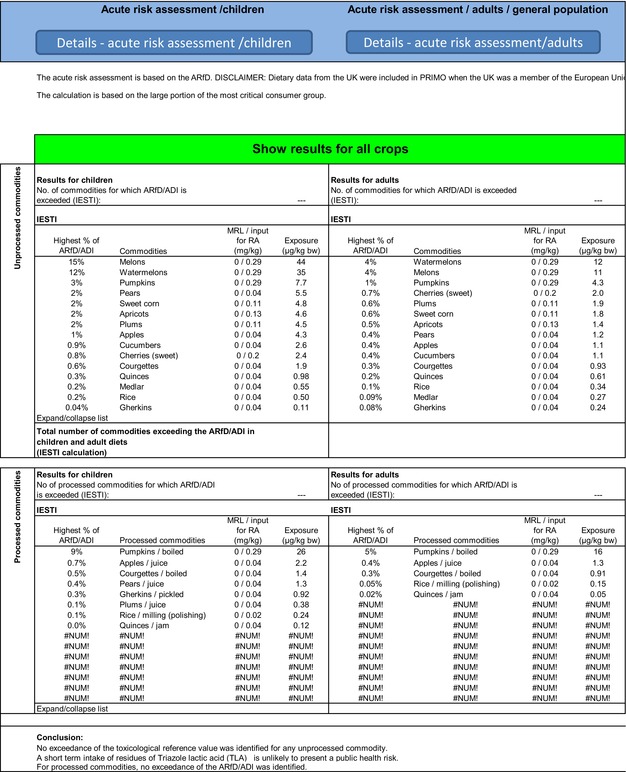 Figure 35
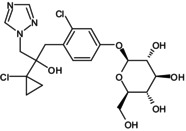 Figure 36
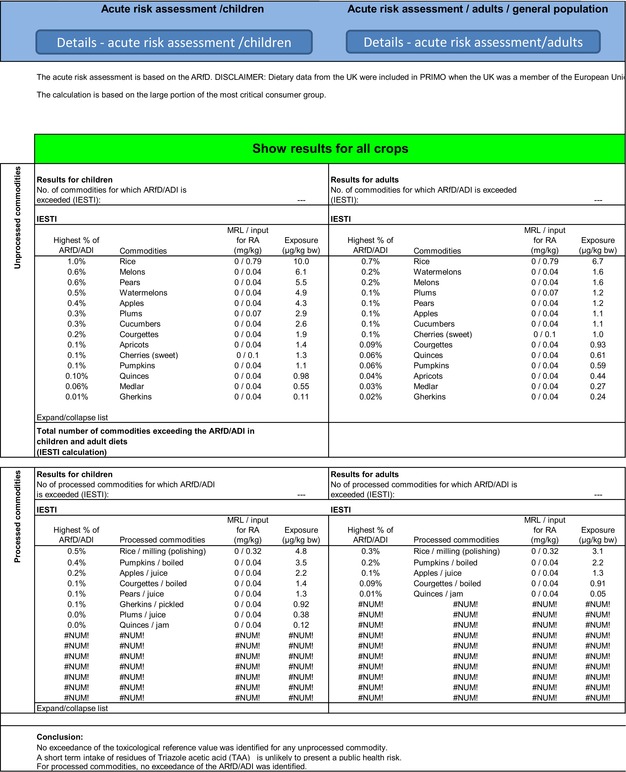 Figure 37
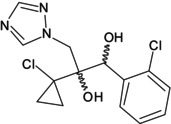 Figure 38
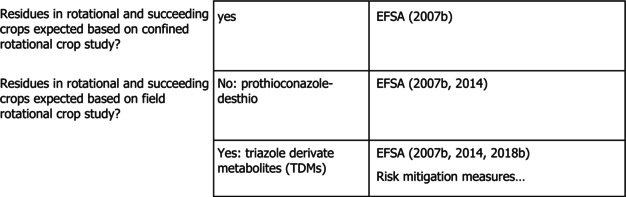 Figure 39
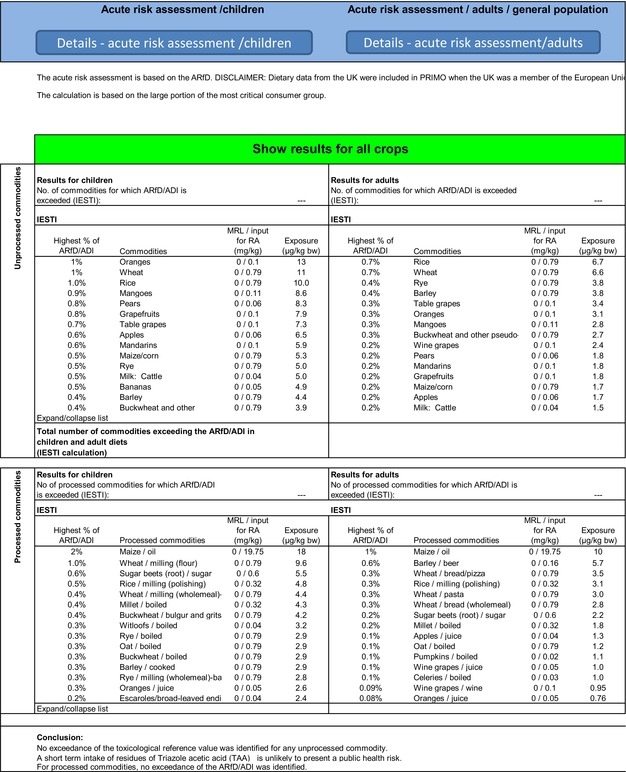 Figure 40
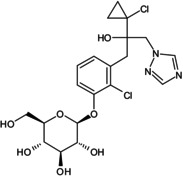 Figure 41
Peer Reviews
No public reviews on file for this paper yet. If you reviewed it on a platform where reviews are public (OpenReview, ICLR, NeurIPS, ICML), you can paste yours below so the community can read it here.
Videos
No videos yet. Explain this paper in a talk, walkthrough, or lecture? Add one.
Taxonomy
TopicsAgricultural safety and regulations · Pesticide Residue Analysis and Safety · Genetically Modified Organisms Research
SUMMARY
In accordance with Article 6 of Regulation (EC) No 396/2005, Sipcam Oxon SpA submitted an application to the competent national authority in Greece (evaluating Member State, EMS) to modify the existing maximum residue levels (MRLs) for the active substance prothioconazole in the group of pome fruits, apricots, cherries, plums, cucurbits with edible and inedible peel and rice on the basis of intended EU uses.
The application, alongside the dossier containing the supporting data in IUCLID format, was submitted through the European Food Safety Authority (EFSA) Central Submission System on 4 August 2022. The appointed EMS Greece assessed the dossier and declared its admissibility on 3 July 2023. Subsequently, following the implementation of the EFSA's confidentiality decision, the non‐confidential version of the dossier was published by EFSA and a public consultation launched on the dossier. The consultation aimed to consult stakeholders and the public on the scientific data, studies and other information part of, or supporting, the submitted application, in order to identify whether other relevant scientific data or studies are available. The consultation ran from 28 July 2023 to 18 August 2023. No additional data nor comments were submitted in the framework of the consultation.
At the end of the commenting period, the EMS proceeded drafting the evaluation report, in accordance with Article 8 of Regulation (EC) No 396/2005, which was submitted to the European Commission and to the European Food Safety Authority (EFSA) on 15 April 2024. To accommodate for the intended EU uses of prothioconazole, the EMS proposed to raise the existing MRLs from the limit of quantification (LOQ) 0.01 mg/kg for several crops. Specifically, it was proposed to raise the MRLs for apples, quinces and Loquats/Japanese medlars to 0.05 mg/kg, the MRL for pears to 0.04 mg/kg, the MRL for apricots to 0.3 mg/kg, the MRL for cherries to 0.6 mg/kg, the MRL for plums to 0.1 mg/kg, the MRLs for cucurbits with edible peel and inedible peel to 0.08 mg/kg and 0.07 mg/kg, respectively, and finally the MRL for rice was proposed to be raised to 0.03 mg/kg.
On 22 April 2024 the European Commission sent a mandate to EFSA to assess the application and the evaluation report as required by Article 10 of the MRL regulation.
EFSA identified data gaps which needed further clarification and requested the EMS to address them. On 10 July 2025, the applicant provided the requested information in an updated IUCLID dossier. The additional information was duly considered by the EMS who submitted a revised evaluation report to EFSA on 23 July 2025, which replaced the previously submitted evaluation report.
Based on the conclusions derived by EFSA in the framework of Directive 91/414/EEC, the data evaluated under previous MRL assessments, and the additional data provided by the EMS in the framework of this application, the following conclusions are derived.
The metabolism of prothioconazole following foliar treatment was investigated in crops belonging to the groups of root crops, cereals and pulses/oilseeds. The metabolic pattern of prothioconazole was shown to be similar in all plant groups with prothioconazole‐desthio being the predominant compound of the total residues. Besides prothioconazole‐desthio, other metabolites, which are structurally closely related to this compound, and three triazole derivative metabolites (TDMs) were identified in crops treated with prothioconazole. Triazole alanine (TA) represented the main TDM in the crops investigated, followed by triazole acetic acid (TAA) and triazole lactic acid (TLA). The fourth TDM, 1,2,4‐triazole (1,2,4‐T), was not detected.
Studies investigating the effect of processing on the nature (hydrolysis studies) of prothioconazole and of the TDMs demonstrated that these compounds are stable.
In the rotational crop metabolism, the major residues identified were prothioconazole‐desthio and its hydroxylated derivative metabolites, either free or conjugated. In studies with triazole‐labelled prothioconazole, the main residues in rotational crops were TDMs, namely TA, TAA, TLA and 1,2,4‐T.
Based on the metabolic pattern identified in metabolism studies, hydrolysis studies, the toxicological relevance of metabolites and the capabilities of the analytical enforcement methods, the residue definitions for prothioconazole in plant products were derived by the EU pesticide peer review on prothioconazole. Additional risk assessment residue definitions related to the presence of TDMs were derived by the peer review of the risk assessment of the TDMs in the light of confirmatory data.
For enforcement the residue definition is defined as ‘prothioconazole‐desthio (sum of isomers)’ and, as follows, for the risk assessment:
- Residue definition 1: Sum of prothioconazole‐desthio and all metabolites containing the 2‐(1‐chlorocyclopropyl)‐3‐ (2‐chlorophenyl)‐2‐hydroxypropyl‐2H‐1,2,4‐triazole moiety, expressed as prothioconazole‐desthio (sum of isomers). This residue definition covers prothioconazole‐desthio (M04) and the metabolites M14, M15, M16, M17 and M18;
- Residue definition 2: Triazole alanine (TA);
- Residue definition 3: Triazole lactic acid (TLA);
- Residue definition 4: Triazole acetic acid (TAA);
- Residue definition 5: 1,2,4‐triazole (1,2,4‐T).
EFSA concluded that for the crops assessed in this application, metabolism of prothioconazole in primary and in rotational crops, and the possible degradation in processed products has been sufficiently addressed for both foliar and seed treatments and that the previously derived residue definitions are applicable.
Sufficiently validated analytical methods based on high performance liquid chromatography with tandem mass spectrometry (HPLC–MS/MS) are available to quantify residues in the crops assessed in this application according to the enforcement residue definition.
The available residue trials are sufficient to derive MRL proposals for all crops under consideration. In fruit crops under consideration, the hydroxy metabolites (included in the residue definition for the risk assessment) were in all cases below the individual LOQ of 0.01 mg/kg. In rice grain, hydroxy metabolites were below the LOQ, while present at quantifiable levels in straw. Residues of TDMs were occasionally present both in treated and control samples of all crops under consideration.
Specific studies investigating the magnitude of prothioconazole residues in processed commodities are not required, as the total theoretical maximum daily intake (TMDI) is below the trigger value of 10%. Nevertheless, one processing study on stone fruits (cherry juice, peach juice and plums (juice, jam and purée) was provided with data on prothioconazole‐desthio and its hydroxy metabolites and indicated that a reduction of residues is expected in juice and jam, whereas residue remain stable in purée. The number of available studies is insufficient to derive robust processing factors. For cucurbits with inedible a peeling factor of 0.41 was derived.
The occurrence of prothioconazole residues in rotational crops was investigated in the framework of the EU pesticides peer review. Based on the available information on the nature and magnitude of residues, it was concluded that significant residue levels of prothioconazole‐desthio are unlikely to occur in rotational crops, provided that the active substance is used according to the proposed Good Agricultural Practice (GAP).
Based on the available information, EFSA could not exclude that the use of prothioconazole according to the proposed GAP will result in significant residues in rotational crops related to the TDMs. Therefore, Member States might consider the setting of specific risk mitigation measures to avoid the presence of TDMs in rotational crops.
As the by‐products of apples (pomace) and rice (straw and bran) are used as feed products, a potential carry‐over of prothioconazole residues into the food of animal origin was assessed. The calculated livestock dietary burden exceeded the trigger value of 0.1 mg/kg dry matter (DM) for all relevant animal species. The contribution of prothioconazole residues in apple pomace and rice bran and straw to the total livestock exposure was insignificant, therefore a modification of the existing MRLs for commodities of animal origin was considered unnecessary. The previous animal dietary burden calculation remains still valid.
The toxicological profile of prothioconazole was assessed in the framework of the EU pesticides peer review under Directive 91/414/EEC and the data were sufficient to derive an acceptable daily intake (ADI) of 0.05 mg/kg bw per day and an acute reference dose (ARfD) of 0.2 mg/kg bw. Furthermore, the main crop metabolite prothioconazole‐desthio (M04), was concluded to be more toxic than parent prothioconazole, and therefore its ADI and ARfD of 0.01 mg/kg bw were selected to be used for the consumer risk assessment.
The toxicological profile of prothioconazole and prothioconazole‐desthio was recently reassessed in the framework of the peer review in accordance with Regulation (EC) No 1107/2009 for the renewal of approval. A new ADI value of 0.036 mg/kg bw was derived for prothioconazole, while the ARfD of 0.2 mg/kg bw was confirmed. For prothioconazole‐desthio the TRVs previously derived (0.01 mg/kg bw) were both confirmed and used for an indicative update of the consumer risk assessment.
The hydroxy metabolites are considered not of higher toxicity than the parent active substance. However, in the recent renewal assessment of prothioconazole the residue definitions for risk assessment of plant and animal commodities were revised:
- for plant commodities: Prothioconazole‐desthio (M04), M14, M15, M16, M17 and their glucoside conjugates (M21, M22, M23) and M18 expressed as prothioconazole‐desthio equivalents (provisionally), pending data to address the genotoxic potential of M15 and M17;
- for animal commodities: Prothioconazole‐desthio (M04) free and conjugated, M14, M15, M33, M35, free and their conjugates expressed as prothioconazole‐desthio equiv.
The proposed residue definitions for risk assessment are considered as provisional pending upon the requested toxicity data on the metabolites M15, M17, M33 and M35 to address its genotoxicity potential. The residue definition for monitoring was not amended. Considering that the MRL application was submitted before completion of the renewal of approval process, the residue data for glucoside conjugates was not available. On the grounds of these uncertainties, the consumer exposure assessment is considered provisional and might need to be updated once the decision on the renewal of approval of prothioconazole is taken by the European Commission.
The consumer risk assessment was performed with revision 3.1 of the EFSA Pesticide Residues Intake Model (PRIMo). The short‐term exposure for prothioconazole‐desthio did not exceed the ARfD for any of the crops under consideration, but it is to be noted that the maximum individual acute exposure for pears was 98.3% of the ARfD (NL toddler diet). Refinement options for the acute intake calculations could not be identified based on the available data and may be further investigated in future assessments. No long‐term consumer intake concerns were identified for any of the diets included in the EFSA PRIMo, as the estimated maximum long‐term dietary intake accounted for 22% of the ADI (NL toddler diet). The individual contribution of residues in the commodities under assessment was the highest for apples, pears and cucumber reaching 7.36% of the ADI (DE child).
For TDMs the short‐term exposure did not exceed the ARfD for any of the crops under consideration. The highest exposure for TA, TLA and 1,2,4‐T were from residues in melons with 18.4% ARfD (BE child), 14.7% ARfD (BE child) and 6.1% ARfD (BE child), respectively. For TAA the highest acute exposure was observed for rice with 1.0% ARfD (UK toddler).
Regarding TDMs no long‐term consumer intake concerns were identified for any of the diets included in the EFSA PRIMo. The chronic risk assessment performed during the peer review of TDM metabolites remained valid, with exception of an increase of 2% for the ADI of 1,2,4‐T to from 93% to 95% of the ADI (NL toddler) with apples being the highest contributor (2.17% of the ADI for DE child); EFSA notes that in all apple trials the residues of 1,2,4‐T were below the LOQ of 0.04 mg/kg. Therefore, the chronic exposure could be overestimated as driven by the assumption that residues of 1,2,4‐triazole occur at the level of the LOQ. The applicants are hence requested to apply more sensitive analytical methods for the analysis of TDMs to reduce uncertainties in estimation of risk assessment values.
EFSA concluded that the proposed EU uses of prothioconazole on pome fruits, apricots, cherries, plums, cucurbits with edible peel, cucurbits with inedible peel and rice will not result in a consumer exposure exceeding the toxicological reference values of prothioconazole‐desthio and TDMs and therefore is unlikely to pose a risk to consumers' health.
The peer review of the active substance in accordance with Regulation (EC) No 1107/2009 was recently finalised by EFSA. Noting that in the renewal assessment the residue definition for risk assessment included additional metabolites and is pending further toxicological information for current metabolites, the consumer risk assessment could not be finalised. However, a decision on the renewal of approval of prothioconazole (and related new endpoints) has not been implemented yet by the European Commission. Therefore, the conclusions reported in this reasoned opinion are provisional and might need to be reconsidered in the light of the outcome of the peer review.
EFSA emphasises that the above assessment took into consideration TDMs. As these metabolites may be generated by several pesticides belonging to the group of triazole fungicides they were assessed by the methodology outlined in the EFSA conclusion on the peer review of the pesticide risk assessment for the triazole derivative metabolites in light of confirmatory data.
EFSA proposes to amend the existing MRLs as reported in the summary table below.
Full details of all end points and the consumer risk assessment can be found in Appendices B, C, D.CodeCommodityExisting EU MRL (mg/kg)Proposed EU MRL (mg/kg)Comment/justification Enforcement residue definition: Prothioconazole: prothioconazole‐desthio (sum of isomers)F 0130010Apples0.01* 0.05 The submitted data on apples are sufficient to derive an MRL proposal for the intended NEU and SEU uses based on a combined data set. Risk for consumers is unlikely. 0130020Pears0.01* 0.04 The submitted data on apples are sufficient to derive by extrapolation an MRL proposal for pears. The MRL proposal reflects the SEU use for pears. Risk for consumers unlikely. 0130030Quinces0.01* 0.05See apples. Extrapolation to quinces possible. Risk for consumers is unlikely.0130040Medlars0.01* 0.05 See apples. Extrapolation to medlars possible. Risk for consumers is unlikely. 0130050Loquats/Japanese medlars0.01* 0.05 See apples. Extrapolation to loquats/Japanese medlars possible. Risk for consumers is unlikely. 0140010Apricots0.01* 0.30 The submitted data on apricots and peaches are sufficient to derive an MRL proposal for the intended NEU and SEU uses on apricots based on a combined dataset. Risk for consumers is unlikely. 0140020Cherries0.01* 0.60 The submitted data on cherries are sufficient to derive an MRL proposal for the intended NEU and SEU uses. The MRL proposal reflects the more critical residue situation of the NEU use. Risk for consumers is unlikely. 0140040Plums0.01* 0.10The submitted data on plums are sufficient to derive an MRL proposal for the intended NEU and SEU uses. The MRL proposal reflects the more critical residue situation of the NEU use. Risk for consumers is unlikely.0232000 Cucurbits with edible peel: Cucumber Gherkins Courgettes Other cucurbits with edible peel 0.01* 0.08 The submitted data on courgettes/zucchini are sufficient to derive an MRL proposal for the intended indoor use which covers the less critical SEU use for the whole group of cucurbits with edible peel. Risk for consumers is unlikely. Member States should consider the setting of specific risk mitigation measures to avoid an additional contribution of TDM residues in rotational crops from the intended use of prothioconazole on cucurbits with edible peel. 0233000 Cucurbits with inedible peel: Melons Pumpkins Watermelons Other cucurbits with inedible peel 0.01* 0.07 The submitted data on melon are sufficient to derive an MRL proposal for the intended SEU use for the whole group of cucurbits with inedible peel. Risk for consumers is unlikely. Member States should consider the setting of specific risk mitigation measures to avoid an additional contribution of TDM residues in rotational crops from the intended use of prothioconazole on cucurbits with inedible peel. 0500060Rice0.01* 0.03 The submitted data on rice are sufficient to derive an MRL proposal for the intended SEU use. Risk for consumers is unlikely. Member States should consider the setting of specific risk mitigation measures to avoid an additional contribution of TDM residues in rotational crops from the intended use of prothioconazole on rice. Abbreviations: GAP, Good Agricultural Practice; MRL, maximum residue level; NEU, northern Europe; SEU, southern Europe.*Indicates that the MRL is set at the limit of analytical quantification (LOQ). ^a^ Commodity code number according to Annex I of Regulation (EC) No 396/2005. ^F^ Fat soluble.
ASSESSMENT
The EFSA received an application to modify the existing MRL for prothioconazole in pome fruit, apricots, cherries, plums, cucurbits (with edible and with inedible peel) and rice. The detailed description of the intended EU indoor or outdoor uses of prothioconazole, which are the basis for the current MRL application, is reported in Appendix A.
Prothioconazole is the ISO common name for (RS)‐2‐[2‐(1‐chlorocyclopropyl)‐3‐(2‐chlorophenyl)‐2‐hydroxypropyl]‐2,4‐dihydro‐1,2,4‐triazole‐3‐thione (IUPAC), it is noted that this ISO common name corresponds to a racemic mixture of (R)‐ and (S)‐ prothioconazole. The chemical structures of the active substance and its main metabolites are reported in Appendix E.
Prothioconazole was evaluated in the framework of Directive 91/414/EEC1 with the United Kingdom designated as rapporteur Member State (RMS) for the representative uses as a foliar treatment on cereals and rapeseeds. The draft assessment report (DAR) prepared by the RMS has been peer reviewed by EFSA (EFSA, 2007b). Prothioconazole was approved2 for the use as a fungicide on 1 August 2008. The process of renewal of the first approval has been completed (EFSA, 2025c), however, a decision on the renewal of approval of prothioconazole (and related new endpoints) has not been implemented yet by European Commission.
The EU MRLs for prothioconazole are established in Annex II of Regulation (EC) No 396/2005.3 The review of existing MRLs according to Article 12 of Regulation (EC) No 396/2005 (MRL review) has been performed (EFSA, 2014) and the proposed modifications have been implemented in the MRL legislation. After completion of the MRL review, EFSA has issued some reasoned opinions on the modification of MRLs for prothioconazole, from which the proposals have been considered in MRL regulations.4 Also, certain Codex maximum residue limits (CXLs) have been taken over in the EU MRL legislation.
The data submitted to address the Article 12 confirmatory data have been evaluated by EFSA (2020), however, have not been implemented in the MRL legislation. Afterwards, EFSA issued two Reasoned opinions on the modification of MRLs for prothioconazole in garlic, onions and shallots and on sugar beet and chicory roots (EFSA, 2023a, 2023b). However, only the proposals for sugar beet and chicory roots (EFSA, 2023b) have been implemented in the recent EU MRL legislation. It is therefore noted that although some proposals from recent opinions have not been implemented yet in the EU MRL legislation, they will be taken into consideration for the present assessment.
In accordance Article 6 of Regulation (EC) No 396/2005 and following the provisions set by the ‘Transparency Regulation’ (EU) 2019/13815 the applicant Sipcam Oxon SpA submitted an application to the competent national authority in Greece (evaluating Member State, EMS) to modify the existing MRLs for the active substance prothioconazole in various crops.
The application, alongside the dossier containing the supporting data in IUCLID format, was submitted through the EFSA Central Submission System on 4 August 2022. The appointed EMS Greece assessed the dossier and declared its admissibility on 3 July 2023. Subsequently, following the implementation of the EFSA's confidentiality decision, the non‐confidential version of the dossier was published by EFSA, and a public consultation launched on the dossier. The consultation aimed to consult stakeholders and the public on the scientific data, studies and other information part of, or supporting, the submitted application, in order to identify whether other relevant scientific data or studies are available. The consultation run from 28 July 2023 to 18 August 2023. No additional data nor comments were submitted in the framework of the consultation.
At the end of the commenting period, the EMS proceeded drafting the evaluation report, in accordance with Article 8 of Regulation (EC) No 396/2005, which was submitted to the European Commission and to the European Food Safety Authority (EFSA) on 15 April 2024. To accommodate for the intended uses of prothioconazole, the EMS proposed to raise the existing MRLs at the limit of quantification (LOQ) 0.01 mg/kg for several crops. On 22 April 2024 the European Commission sent a mandate to EFSA to assess the application and the evaluation report as required by Article 10 of the MRL regulation.
EFSA identified data gaps which needed further clarification and requested the EMS to address them. On 10 July 2025, the applicant provided the requested information in an updated IUCLID dossier. The additional information was duly considered by the EMS who submitted a revised evaluation report to EFSA on 23 July 2025, which replaced the previously submitted evaluation report.
EFSA based its assessment on the evaluation report submitted by the EMS (Greece, 2024), the DAR and its addendum (United Kingdom, 2004, 2007) prepared under Council Directive 91/414/EEC, the final Commission review report on prothioconazole (European Commission, 2021), the conclusion on the peer review of the pesticide risk assessment of the active substance prothioconazole (EFSA, 2007b), as well as the conclusions from previous EFSA opinions on prothioconazole (EFSA, 2015a, 2015b, 2020, 2023a, 2023b), including the reasoned opinion on the MRL review according to Article 12 of Regulation No 396/2005 (EFSA, 2014).
For this application, the data requirements established in Regulation (EU) No 544/20116 and the guidance documents applicable at the date of submission of the IUCLID application are applicable (European Commission, 1997a, 1997b, 1997c, 1997d, 1997e, 1997f, 1997g, 2000, 2010, 2023a, 2023b, 2023c; OECD, 2007, 2014). The assessment is performed in accordance with the legal provisions of the Uniform Principles for the Evaluation and the Authorisation of Plant Protection Products adopted by Commission Regulation (EU) No 546/2011.7
The EU pesticides peer review of the active substance in accordance with Regulation (EC) No 1107/2009 was recently finalised by EFSA, but the decision of renewal was not yet taken by European Commission. Therefore, the conclusions reported in this reasoned opinion are provisional may need to be reconsidered in the light of the outcome of decision of renewal of the active substance.
A selected list of end points of the studies assessed by EFSA in the framework of this MRL application including the end points of relevant studies assessed previously, is presented in Appendix B.
The evaluation report submitted by the EMS (Greece, 2024) and the exposure calculations using the EFSA Pesticide Residues Intake Model (PRIMo) are made publicly available as background documents to this reasoned opinion.8
RESIDUES IN PLANTS
1
Nature of residues and methods of analysis in plants
1.1
Nature of residues in primary crops
1.1.1
The metabolism of prothioconazole labelled in the phenyl ring has been investigated in root (sugar beet), pulses/oilseeds (peanut) and cereal/grass (wheat) crop groups by foliar treatment and by seed treatment on cereal/grasses crop group (wheat) in the framework of the EU pesticides peer review under Directive 91/414/EEC and the Article 12 MRL review (EFSA, 2007a, 2007b, 2014) and in the renewal of approval of prothioconazole (EFSA, 2025c).
In addition, the metabolism of prothioconazole‐desthio labelled in the triazole moiety was investigated after foliar applications on cereals (EFSA, 2007b, 2014). The metabolism of triazole‐labelled prothioconazole in root crops (sugar beet) and pulses and oilseeds (peanut) was assessed by the Joint FAO/WHO Meeting on Pesticide Residues (JMPR) and reported during the MRL review (EFSA, 2014; FAO and WHO, 2009a, 2009b).
In wheat grain following foliar spray application with phenyl‐ and triazole‐labelled prothioconazole, the total radioactive residue (TRR) accounted for 0.08 mg eq./kg and 4.97 mg eq./kg, respectively. In studies with phenyl‐label, parent prothioconazole accounted for 1% of the TRR (0.008 mg e.q./kg) and prothioconazole‐desthio for 15.9% of the TRR. For the triazole label in grain, TA accounted for 71% of the TRR, TAA for 19% of the TRR and TLA for less than 1% of the TRR (FAO, 2009a, 2009b).
In peanut nutmeat, following phenyl and triazole‐labelled prothioconazole application, the total residues accounted for 0.3 to 1.4 mg eq./kg, respectively. Parent prothioconazole was below 10% of the TRR. For the triazole label in nutmeat, TA accounted for 47.8% of the TRR (0.67 mg eq./kg), TLA for 24.5% of the TRR (0.34 mg eq./kg) and TAA for 1.2% of the TRR (0.02 mg eq./kg) (FAO, 2009a, 2009b).
In sugar beets, for the phenyl and triazole labels, TRR levels were higher in leaves (4.3–5.2 mg eq./kg) than in roots (0.12–0.13 mg eq./kg). Following phenyl labelled prothioconazole application, prothioconazole‐desthio accounted for 58% of the TRR in roots. Prothioconazole was seen to be extensively degraded in both leaves and roots of sugar beet and accounted for less than 10% of the TRR (EFSA, 2014; FAO, 2009a, 2009b). Regarding the triazole labelling moiety, besides prothioconazole‐desthio that was identified in roots (25% TRR, 0.03 mg eq./kg), TA was found to be the predominant compound of the total residues in roots (29% TRR, 0.04 mg eq./kg) (EFSA, 2014). The other TDMs were not reported as quantified in sugar beet roots. In sugar beet tops, TA represented 2% of the TRR (0.084 mg eq/kg) and the only other TDM quantified was TLA with 4% TRR (0.207 mg eq/kg) (FAO, 2009a, 2009b).
In plants, prothioconazole is extensively metabolised and the metabolic pathway is similar in all crops investigated. The main metabolic pathway consisted of the formation of prothioconazole‐desthio (M04), with further hydroxylation (with the formation of several closely related metabolites) and glucosidation steps (EFSA, 2014). Prothioconazole‐desthio hydroxylated derivatives (M14, M15, M16, M17 and M189) were recovered in significant concentration mainly in feed items, wheat forage, straw and peanut hay, while the glucoside conjugates of hydroxylated derivatives (M21, M22, M23) were recovered in crops relevant for human consumption such as peanut meat, wheat grain and beet tops (EFSA, 2025c). The studies with triazole‐labelled prothioconazole indicated the cleavage of triazole linkage and formation of three major TDM metabolites: triazole alanine, triazole lactic acid and triazole acetic acid (EFSA, 2014).
For the intended uses on pome fruits, apricots, cherries, plums, cucurbits and rice, the metabolism of prothioconazole is considered sufficiently addressed.
The above studies do not investigate the possible impact of plant metabolism on the isomer ratio of prothioconazole (EFSA, 2019b). In the renewal assessment, it was noted that no information for the preferential isomeric degradation of (R)‐ and (S)‐ enantiomer of prothioconazole and prothioconazole‐desthio (M04) in plant and animal matrices, was provided, and therefore, a data gap was identified (EFSA, 2025c). New studies were assessed in the recent renewal assessment and were considered out of the scope of this assessment (EFSA, 2025c).
Nature of residues in rotational crops
1.1.2
Prothioconazole is proposed to be used on cucurbits and rice, which can be grown in crop rotation with other crops.
According to soil degradation studies, investigated in the framework of the EU pesticides peer review, prothioconazole itself is of very low persistence in soil (DT_90 field_ of 5.5 days (median)), whereas prothioconazole‐desthio is of low persistence with a DT_90 field_ of 140 days (median) (EFSA, 2007b). Prothioconazole soil metabolite 1,2,4‐triazole did not exceed 2% of the AR and was therefore not further assessed by the EU pesticides peer review (EFSA, 2007a, 2007b).
The metabolism of prothioconazole in rotational crops was investigated in the framework of the EU pesticides peer review in Swiss chards, turnips and spring wheat following the treatment of bare soil with prothioconazole at an application rate of 580 g/ha using the compound labelled in the phenyl ring. The main compounds identified were prothioconazole‐desthio and its hydroxylated derivative metabolites, either free or conjugated (EFSA, 2014, 2020).
The MRL review and the EU pesticides peer review on renewal of approval concluded that the metabolism of prothioconazole in primary and rotational crops was found to be similar (EFSA, 2014, 2025a, 2025b, 2025c).
The metabolism of prothioconazole labelled in the triazole ring was assessed by the JMPR (FAO, 2009a, 2009b) and reported in the MRL review (EFSA, 2014). Swiss chards, turnips and spring wheat were grown in soil treated with prothioconazole at a rate of 4 × 204 g/ha. The studies indicate the cleavage of triazole linkage to form major metabolites TA, TLA and TAA, whereas parent prothioconazole and prothioconazole‐desthio were identified as minor metabolites (EFSA, 2014). No free 1,2,4‐triazole was detected in any matrix (FAO, 2009a, 2009b).
During the peer review of the pesticide risk assessment for the TDMs in light of confirmatory data, it was also concluded that the metabolic behaviour of TDMs is similar both in primary and rotational crops (EFSA, 2018b).
For the proposed uses assessed in this application, no further information is required.
Nature of residues in processed commodities
1.1.3
The effect of processing on the nature of prothioconazole was investigated in the framework of the MRL review (EFSA, 2014). The MRL review referred to studies with prothioconazole investigated by the JMPR and studies with prothioconazole‐desthio reported by Germany (EFSA, 2014). In the available studies, prothioconazole‐desthio was reported to be stable under all standard hydrolysis steps (99.4%–99.9% AR), whereas parent prothioconazole slightly degraded to prothioconazole‐desthio under sterilisation process (≤ 11% AR) (EFSA, 2014).
The Article 12 MRL review concluded that other compounds, which are included in the risk assessment residue definition and contain the 2‐(1‐chlorocyclopropyl)‐3‐(2‐chlorophenyl)‐2‐hydroxypropyl‐2H‐1,2,4‐triazole moiety (hydroxy metabolites), due to their similar structure to the parent compound and/or prothioconazole‐desthio, are expected to remain stable under hydrolysis (EFSA, 2014, 2015b).
The TDMs are stable under hydrolysis studies simulating baking/brewing/boiling, pasteurisation and sterilisation (EFSA, 2018b).
Analytical methods for enforcement purposes in plant commodities
1.1.4
The analytical enforcement method for the determination of prothioconazole‐desthio residues in plant commodities was assessed during the EU pesticides peer review and the MRL review (EFSA, 2007b, 2014). The recently published EFSA Conclusion describes the quick, easy, cheap, effective, rugged, and safe (QuEChERS) liquid chromatography–tandem mass spectrometry detector (LC–MS/MS) method as suitable with a LOQ of 0.01 mg/kg in each matrix group without requesting further data (EFSA, 2025c).
Details are reported in Appendix B.1.1.1.
Storage stability of residues in plants
1.1.5
The storage stability of prothioconazole‐desthio in plant samples stored under frozen conditions was investigated in the framework of the MRL review and in the recent renewal of the approval (EFSA, 2014, 2025a, 2025b, 2025c).
The parent prothioconazole‐desthio was demonstrated to be stable in high‐water content matrices (wheat forage, sugar beets, spinaches and tomatoes) for at least 24 months when stored at −18°C (EFSA, 2025c).
In dry commodities, which are relevant for the intended use on rice, prothioconazole‐desthio is stable for at least 24 months when stored at −18°C (EFSA, 2014).
With regards to the five hydroxy metabolites, the assessed storage stability studies demonstrated that in high‐water content commodities (tomatoes and potatoes), in high‐acid commodities (oranges) and in high‐oil commodities (soyabeans and rape seeds), they are stable for the study period of 25 months (EFSA, 2020, 2025c). The peer review concluded that for hydroxylated metabolites, only one study in potatoes is not sufficient to cover cereals; therefore, an additional commodity from the category of high‐starch content or one from the high‐protein content category would be needed to extrapolate to all crops (EFSA, 2025c). It should be noted that, during the renewal process, the updated OECD storage‐stability guidance (OECD, 2025) was not yet applicable. Consequently, this data gap is based on the previous storage‐stability matrix classification (OECD, 2007).
Under the present assessment, a new 12‐month storage stability study was provided to assess the storage stability of prothioconazole‐desthio and its five hydroxy metabolites in zucchini and sugar beet roots (high‐water commodities), dry peas (dry commodity), oilseed rape seeds (high‐oil commodity) and grapes (high‐acid commodity). In this study, it was demonstrated that prothioconazole‐desthio and its five hydroxy metabolites were stable for the study period of 12 months with the exception of the hydroxy metabolites M14, M15 and M17, which were stable for only 6 months, 3 months and 9 months, respectively in sugar beet roots (Greece, 2024).
Considering that the stability of these hydroxy metabolites has been demonstrated in three crops of the high‐water content matrix group (tomatoes, potatoes and zucchini), the data of the new study were not considered to invalidate the residue trial data for high‐water content crops in cases when sample storage exceeded 12 months. Therefore, with regards to the stability of the hydroxy metabolites the overall evidence is considered in this assessment and the previously assessed study of a duration of 25 months considered the point of reference. Moreover, the new submitted study on dry peas, classified as high‐protein content/dry commodity under the storage stability guidance applicable during the peer review process (OECD, 2007), addresses the data gap of the EU pesticides peer review for the storage stability of hydroxy metabolites in cereals. The 12 months storage stability of hydroxy metabolites in dry commodities can thereby be confirmed.
The freezer storage stability of various TDMs was investigated in the conclusion of the peer review of the pesticide risk assessment of the TDMs in light of confirmatory data (EFSA, 2018b). In high‐water content matrices relevant to the present assessment, the storage stability is demonstrated for 6 months for 1,2,4 triazole, 53 months for TA and TAA. For TLA, the storage stability has been demonstrated only in lettuce (48 months) (EFSA, 2018b).
In this application, new data for 1,2,4 triazole demonstrated stability when stored at −18°C for 12 months in high water (apples and sugar beets) and dry (peas) commodities relevant for this assessment; however, the study also included high‐oil commodity (oilseed rape seeds) and high‐acid commodity (grape) and demonstrated their stability also for 12 months (Greece, 2024).
The overview of available storage stability studies is provided in Appendix B.1.1.2.
Proposed residue definitions
1.1.6
Based on the metabolic pattern identified in metabolism studies, the results of hydrolysis studies, the toxicological relevance of metabolites and the capabilities of enforcement analytical methods, the following residue definitions were proposed by the MRL review of prothioconazole (EFSA, 2014):
- for risk assessment (risk assessment residue definition 1): sum of prothioconazole‐desthio and all metabolites containing the 2‐(1‐chlorocyclopropyl)‐3‐(2‐chlorophenyl)‐2‐hydroxypropyl‐2H‐1,2,4‐triazole moiety (namely: prothioconazole‐α‐hydroxy‐desthio (M14), prothioconazole‐3‐hydroxy‐desthio (M15), prothioconazole‐4‐hydroxy‐desthio (M16), prothioconazole‐5‐hydroxy‐desthio (M17) and prothioconazole‐6‐hydroxy‐desthio) (M18)), expressed as prothioconazole‐desthio (sum of isomers).
- for enforcement: prothioconazole‐desthio (sum of isomers).
The residue definition for enforcement set in Regulation (EC) No 396/2005 is identical to the above‐ mentioned residue definition.
In the conclusion on the peer review of the pesticide risk assessment of the TDMs in light of confirmatory data, EFSA proposed the following residue definitions for risk assessment for all active substances belonging to the class of triazole fungicides (EFSA, 2018b):
- Residue definition 1: parent compound and any other relevant metabolite exclusively linked to the parent compound.10
- Residue definition 2: triazole alanine (TA)
- Residue definition 3: triazole lactic acid (TLA)
- Residue definition 4: triazole acetic acid (TAA)
- Residue definition 5: 1,2,4‐triazole (1,2,4‐triazole)
For the uses on the crops under consideration, EFSA concludes that the metabolism of prothioconazole is sufficiently investigated and that the abovementioned residue definitions are applicable. The same residue definitions are applicable to rotational crops and processed products.
The risk assessment for the crops under consideration is to be performed for parent prothioconazole and for each of the triazole metabolites (TA, TLA, TAA and 1,2,4‐T).
While for this assessment the residue definitions derived previously by EFSA (EFSA, 2014) are applied, it is to be noted that in the recent renewal assessment (EFSA, 2025c), the same residue definition for enforcement for plant commodities was maintained, while a wider risk assessment residue definition was proposed as:
- Prothioconazole‐desthio (M04), M14, M15, M16, M17 and their glucoside conjugates (M21, M22, M23) and M18 expressed as prothioconazole‐desthio equivalents (provisionally), pending data to address the genotoxic potential of M15 and M17.
Magnitude of residues in plants
1.2
Magnitude of residues in primary crops
1.2.1
In support of the MRL application, the applicant submitted residue trials performed on pome fruits (apples), apricots and peaches, cherries, plums, cucurbits with edible peel (zucchini) and inedible peel (melons), and rice. The samples were analysed for the parent compound and the metabolites included in the residue definitions for enforcement and risk assessment.
Residue trials for the parent and its hydroxy metabolites (compound specific residue definition 1, see 1.1.6) were analysed using a sufficiently validated method with an LOQ of 0.01 mg/kg for prothioconazole‐desthio and for each hydroxy metabolite, respectively. The method is using acetonitrile for extraction and purification by dispersive solid phase extraction (D‐SPE). The purified samples were finally analysed with an HPLC system coupled with a Triple‐Quadrupole Mass analyzer (LC–MS/MS). For rice grain, extraction was performed with water: acetonitrile (5:20 (v:v)) in an ultrasonic bath at 70°C for 15 min. The method was independently validated. According to the assessment of the EMS, the methods used were sufficiently validated and fit for purpose (Greece, 2024).
The extraction efficiency with acetonitrile used in the method to analyse the residue trials of apples, plums, apricots, cherries, courgettes and melons (high‐water commodities) against the solvent used in the metabolism study on sugar beet tops and roots (acetonitrile/water (4:1) and methanol/water (4:1)) (EFSA, 2009) was demonstrated by a cross‐validation study. In the study, samples from field trials on cherries were used, where partly quantifiable amounts of residues were measured for the parent M04; however, not for metabolites M14, M15, M16, M17 and M18. Extraction efficiency for prothioconazole‐desthio (M04) only was demonstrated according to the guidance (European Commission, 2023c). In parallel acceptable recovery of residues in spiked samples at a fortification level of 0.01 and 1 mg/kg for parent prothioconazole‐desthio and its five hydroxy metabolites was demonstrated (Greece, 2024).
For rice a cross‐validation study with samples from field trials on rice grain where quantifiable amounts of residues were measured for the parent M04 and for metabolites M14, M15, M16, M17 and M18 was compared against the solvent of the metabolism study in wheat. The modified extraction procedure used for rice samples (water: acetonitrile (20:80 (v/v), followed by shaking for 1 min and subsequently placing in an ultrasonic bath of 70°C for 15 min) was within the 30% range for parent M04 and for its hydroxy metabolites as provided for by the guidance (European Commission, 2023c) when compared with the metabolism study on wheat (extracted with acetonitrile/water, with added cysteine hydrochloride to prevent oxidation of the parent material). Solvent extraction was initially at room temperature, followed by accelerated solvent extraction (ASE) at 50 and 100°C (Greece, 2024). The extraction efficiency of parent M04 and the hydroxy metabolites was considered proven according to the guidance (European Commission, 2023c).
Green material and straw from metabolism studies with wheat were extracted with water/methanol, followed by methanol/dichloromethane, then partitioned with dichloromethane (EFSA, 2007b), with the exception of metabolite M14, where 31% was observed in one sample, whereby a second sample was within 8% difference. This is, however, considered to be a minor deficiency. For rice grain, in addition, appropriate recovery was demonstrated with spiking levels of 0.1 and 1 mg/kg between the solvent used in the metabolism study and the method used for the residue trials (Greece, 2024).
The cross‐validation study also included oilseed rape straw, which is relevant for the analysis of rice straw. For parent M04 extraction efficiency was 8.59% in one however 58.49% in the second sample. For the hydroxy metabolites M14, M15, M16, M17 and M18 extraction efficiency exceeded in all samples the interval of 30%. For rice straw extraction, efficiency was not considered to be proven according to the guidance (European Commission, 2023c). For oilseed rape straw, however, appropriate recovery was demonstrated with spiking levels of 0.1 mg/kg and 1 mg/kg between the solvent used in the metabolism study and the method used for the residue trials (Greece, 2024).
The samples of these residue trials were stored under conditions for which the integrity of the samples has been demonstrated for prothioconazole‐desthio residues and the hydroxy metabolites included in the existing residue definition for risk assessment (Greece, 2024). In is noted that in the new storage stability data in high‐water content commodities, reduced stability of hydroxy metabolites M14 (6 months), M15 (3 months) and M17 (9 months) was observed in sugar beet roots. However, since the storge storage stability of these five hydroxy metabolites has been demonstrated previously for 24 months, this was considered as a minor uncertainty.
Triazole derivates (TDMs)
Residue trials for the TDMs and residue definitions for risk assessments (TA, TLA, TAA and 1,2,4‐triazole) were analysed with an HPLC system coupled with a Triple‐Quadrupole Mass analyzer with differential mobility spectrometry (LC–DMS/MS/MS) (Greece, 2024). EFSA notes high validated LOQ for each TDMs metabolites of 0.04 mg/kg and, for future applications, strongly advices that applicants use more sensitive analytical methods for the analysis of TDMs.
Samples were extracted with water/methanol with 1% formic acid (1;1, v/v). The procedural recoveries of the method are within the acceptable range. The method was considered sufficiently validated for the analytes under assessment (Greece, 2024).
Extraction efficiency was investigated for TA and TAA in a cross‐validation study against the solvents used in the available plant metabolism study (methanol: water (50:50 (v/v)). (Greece, 2024). Extraction efficiency for cherries was proven with shortcomings because for TA, it varied from 15.4% to 31.7% and for TAA, only one of the two trial samples had residues above the LOQ and an extraction efficiency of 13.4% was derived.
For rice, on the other hand, the extraction efficiency for TA ranged from 44.1% to 54.9% and for TAA from 42.7% to 50.3%. While the recovery was higher for the method used in the metabolism study than the method used for the residue trials, it cannot be concluded that extraction efficiency has been demonstrated for TAA in rice according to the guidance (European Commission, 2023a, 2023b, 2023c). In addition, the extraction efficiency of TLA and 1,2,4‐T were not investigated. This adds non‐standard uncertainties to the results for three TDM metabolites.
It is to be noted that some TDMs residues above the LOQ were found in several control samples in the various matrices. In some cases, residues were in the same range of the respective treated samples, while in other cases, they were found at higher level. This is probably due to a background level in the soil and residue uptake in crops. For each TDM metabolite, the highest residue values measured among treated, or control samples were selected as the worst‐case approach for risk assessment.
For the TDMs, several samples were exceeding the proven storage stability period of 12 months, which was overall considered as a minor deficiency for 1,2,4‐T, the only TDM for which stability was not demonstrated for up to 2 years due to the length of the study (Greece, 2024). This is discussed in detail in the sections below.
All provided residue data in support of the intended uses are summarised in Appendix B.1.2.1.
Pome fruits (apples, pears (SEU use only), quinces, medlars, loquats, other pome fruits)
Intended NEU use of prothioconazole on apples, quinces, medlars, loquats/Japanese medlars and other pome fruits: two foliar applications (interval between applications: 7 days) × 120 g a.s./ha; PHI = 35 days) (Greece, 2024)
In support of the intended NEU GAP on pome fruits, the applicant submitted eight GAP‐compliant independent residue trials on apples performed during the growing season of 2023 in Poland (three), Hungary (four) and the United Kingdom (one) (Greece, 2024).
Samples were stored for up to 190 days, covered by all available storage stability data (Greece, 2024). The residues of hydroxy metabolites were in all samples below the individual LOQ of 0.01 mg/kg.
An MRL of 0.05 mg/kg is proposed for prothioconazole‐desthio in apples, quinces, medlars, loquats/Japanese and extrapolated to the whole group of pome fruits in line with the applicable guidance SANTE/2019/12752 (European Commission, 2023b).
In all trials samples analysed, only TA was detected above the LOQ of 0.04 mg/kg in three residue trials with the highest values of 0.0994 mg/kg in a control sample (Greece, 2024). The storage time of the trial samples was covered by storage stability data.
Intended SEU use of prothioconazole on apples, pears, quinces, medlars, loquats, other pome fruits: 2 foliar applications (interval between applications: 7 days) × 120 g a.s./ha; PHI = 35 days (Greece, 2024)
In support of the intended SEU GAP on pome fruits, the applicant submitted eight GAP‐compliant independent residue trials on apples performed during the growing season of 2023 in Italy (four), Greece (one) and Spain (two), and one trial performed during the 2024 growing season in Italy (Greece, 2024). The applicants' proposed extrapolation from apples to pears is sufficiently supported by residue data in line with the applicable guidance SANTE/2019/12752 (European Commission, 2023b).
Samples were stored for up to 152 days, covered by all available storage stability data (Greece, 2024).
An MRL of 0.04 mg/kg is derived for the intended SEU use of prothioconazole‐desthio in pome fruits and extrapolated to the whole group of pome fruits in line with the applicable guidance SANTE/2019/12752 (European Commission, 2023b).
In all trial samples analysed, TDMs were below the individual LOQ of 0.04 mg/kg (Greece, 2024). The storage time of the trial samples was covered by storage stability data.
In conclusion:
For apples, quinces, medlars, loquats/Japanese medlars and other pome fruits, NEU and SEU residue data can be merged and an MRL of 0.05 mg/kg proposed.
For pears, an MRL of 0.04 mg/kg is proposed for prothioconazole‐desthio based on the SEU dataset and applicable to SEU zone only because for pears only a SEU use proposed.
The residues of hydroxy metabolites were in all samples below the individual LOQ of 0.01 mg/kg. It can therefore be concluded that a conversion factor of 1 from enforcement to risk assessment would be appropriate for pome fruit.
Apricots
Intended NEU use of prothioconazole on apricots: two foliar applications (interval between applications: 7 days) × 160 g a.s./ha; PHI = 3 days (Greece, 2024)
In support of the intended NEU GAP on apricots, the applicant submitted seven NEU GAP‐compliant independent residue trials on apricots and peaches performed during the growing season of 2020–2021 in Hungary (two trials on apricots, one on peaches), and Poland (two trials on peaches, one on apricots) and one more trial on peaches performed during the 2024 growing season in Hungary (Greece, 2024). Apricots are a minor crop in NEU and therefore, the number of residue trials is sufficient to support the intended use.
Samples were stored for up to 313 days and are covered by all available storage stability data (Greece, 2024).
In order to derive residue data for plum flesh (used in the risk assessment), in cases where data only for the whole fruit were available, a factor of 1.079 was calculated based on available residue data in apricots and peaches pulp and in whole fruits.
An MRL proposal of 0.03 mg/kg can be derived for prothioconazole‐desthio in apricots. The residues of hydroxy metabolites were in all samples below the individual LOQ of 0.01 mg/kg.
All submitted trial samples were analysed for TDMs.
One trial performed during the 2023 growing season in Poland on peaches was not considered as GAP compliant because only a PHI of 82 days was reported (Greece, 2024). The residues of TAA, 1,2,4‐triazole, were in all samples below the LOQ of 0.04 mg/kg, while residues of TA and TLA were present both in treated and control samples.
Residue data reported for whole fruits only were converted by a median conversion factor of 1.157 for TA and TLA from pulp to whole fruit based on measured data (see Appendix B.1.2).
The samples from trials performed during the 2020 growing season were stored for 749 days, which exceeds the demonstrated storage period of 12 months for 1,2,4‐T. Since all other triazoles are stable for up to 2 years, it is also likely that 1,2,4‐T will be stable at longer storage intervals and not limited to the duration of the storage stability study of 12 months. However, this has not been proven by valid storage stability studies and therefore introduces additional uncertainty regarding 1,2,4‐T residue data. According to metabolism studies, the presence of 1,2,4‐triazole was not confirmed (see Appendix B.1.1.2).
Intended SEU use of prothioconazole on apricots: two foliar applications (interval between applications: 7 days) × 160 g a.s./ha; PHI = 3 days). (Greece, 2024)
In support of the intended SEU GAP on apricots, 13 residue trials (five on apricots and eight on peaches) conducted in Southern Europe have been submitted. Since apricots are a major crop in SEU, the number of trials was enough to support the MRL proposal. The applicant submitted eight GAP‐compliant independent residue trials on apricots and peaches performed during the growing season of 2020–2021 in Italy (six – four trials on apricots, two on peaches), and Spain (two – one trial on apricots and one on peaches) and five more trials performed during the 2024 growing season in Italy (four trials on peaches) and Spain (one trial on peaches).
Samples were stored for up to 291 days and are covered by all available storage stability data (Greece, 2024).
For risk assessment, for the SEU use, residue data were reported as whole fruit and for pulp (Greece, 2024).
An MRL proposal of 0.03 mg/kg can be derived for prothioconazole‐desthio in apricots. The residues of hydroxy metabolites were in all samples below the individual LOQ of 0.01 mg/kg.
In all trials, samples were analysed also for TDMs. The residues of TAA, 1,2,4‐triazole, were in all samples below the LOQ of 0.04 mg/kg, while residues of TA and TLA were present both in treated and control samples. Residues of the five trials during the 2024 growing phase were reporting residues in pulp and whole fruits, which were used to derive a median factor of 1.081 for TA and of 1.106 for TLA. These factors were further used to convert residue data from whole fruits to pulp in cases where only data on whole fruit have been provided (see Appendix B.1.2).
In conclusion:
According to SANTE/2019/12752, peaches data can be extrapolated to apricots if a minimum of half of the trials have been conducted on apricots (European Commission, 2023b). Since this requirement was fulfilled, EFSA agreed with the EMS's proposal to use the trials on peaches and apricots to derive the MRL proposal of 0.3 mg/kg on apricots. SEU and NEU residue data can be merged. The residues of hydroxy metabolites were in all samples below the individual LOQ of 0.01 mg/kg. It can therefore be concluded that a conversion factor of 1 from enforcement to risk assessment would be appropriate for apricots.
Cherries
Intended NEU use of prothioconazole on cherries: two foliar applications (interval between applications: 7 days) × 160 g a.s./ha; PHI = 3 days) (Greece, 2024)
Cherries are a major crop in NEU. The applicant submitted eight NEU GAP‐compliant independent residue trials on cherries performed during the growing season of 2020 in Hungary (two) and Poland (two), and four more trials performed during the 2021 growing season in Hungary. Half of them represent decline residue trials (Greece, 2024). Samples were stored for up to 265 days and are covered by all available storage stability data (Greece, 2024).
For the NEU use, an MRL proposal of 0.6 mg/kg can be derived for prothioconazole‐desthio in cherries. The residues of hydroxy metabolites were in all samples below the individual LOQ of 0.01 mg/kg.
In all trials, samples were analysed also for TDMs. Residues were reported for whole fruits only and a factor of 1.1 was applied to derive risk assessment values for pulp based on a previous MRL assessment on cherries (EFSA, 2025a) (see Appendix B.1.2). Residues of TA and TLA were present either in control or treated samples, the residues of TAA were above the LOQ only in one sample while residues of 1,2,4‐T were in all trial samples below the LOQ of 0.04 mg/kg.
The samples of the trials performed during the 2020 growing season were stored for 767 days, which exceeds the demonstrated storage period of 1,2,4‐T. This was, however considered as a minor uncertainty because the study duration was limited to 12 months and all other triazole derivatives were stable for up to 2 years (see Appendix B.1.1.2).
Intended SEU use of prothioconazole on cherries: two foliar applications (interval between applications: 7 days) × 160 g a.s./ha; PHI = 3 days) (Greece, 2024)
Cherries are a minor crop in SEU. The applicant submitted six SEU GAP‐compliant independent residue trials on cherries (half of them were decline trials) performed during the growing season of 2020 in Italy (two) and Spain (one), and three more trials performed during the 2021 growing season in Italy. Samples were stored for up to 293 days and are covered by all available storage stability data (Greece, 2024).
For the SEU use, an MRL proposal of 0.4 mg/kg can be derived for prothioconazole‐desthio in cherries. The residues of hydroxy metabolites were in all samples below the individual LOQ of 0.01 mg/kg.
According to SANTE/2019/12752, the MRL proposals can be combined for the individual data sets that fall into the same or a neighbouring MRL class (European Commission, 2023b). The NEU and SEU data sets cannot be merged in this case.
In all trials, samples were analysed also for TDMs. Residues were reported for whole fruits only and a factor of 1.1 was applied to derive risk assessment values for pulp based on a previous MRL assessment on cherries (EFSA, 2025a) (see Appendix B.1.2). Residues of TA and TLA were present either in control or treated samples, the residues of TAA were above the LOQ only in one sample while residues of 1,2,4‐T were in all trial samples below the LOQ of 0.04 mg/kg.
The samples performed during the 2020 growing season were stored for 782 days, which exceeds the demonstrated storage period of 1,2,4‐T. This was, however, considered as a minor uncertainty because the study duration was limited to 12 months and all other triazole derivatives were stable for up to 2 years (see Appendix B.1.1.2).
In conclusion:
Sufficient residue data is available to support an MRL proposal of 0.6 mg/kg in cherries according to the most critical dataset, which is the NEU.
For the risk assessment of cherries, it is to be noted that residue data on pulp were not provided and the homogenised whole fruit was analysed for residues. Therefore, a factor of 1.1 was applied to the residue data of whole fruits to consider that the stone will normally not be consumed and is not expected to have residues. It is estimated to contribute 10% of the weight of the whole fruit as extrapolated from a previous assessment (EFSA, 2025a).
The residues of hydroxy metabolites were in all samples below the individual LOQ of 0.01 mg/kg. It can therefore be concluded that a conversion factor of 1 from enforcement to risk assessment would be appropriate for cherries.
Plums
Intended NEU use of prothioconazole on plums: two foliar applications (interval between applications: 7 days) × 160 g a.s./ha; PHI = 3 days) (Greece, 2024)
Plums is a major crop in NEU. The applicant submitted a total of eight NEU GAP‐compliant independent residue trials on plums, of which half represented decline trials. Six of them were performed during the growing season of 2020 in Hungary (three), and Poland (three) and two more trials were performed during the 2021 growing season in Northern France and Germany. Residues were reported for whole fruits and pulp. Samples were stored for up to 291 days and are covered by all available storage stability data (Greece, 2024).
For the NEU use, an MRL proposal of 0.1 mg/kg can be derived for prothioconazole‐desthio in plums. The residues of hydroxy metabolites were in all samples below the individual LOQ of 0.01 mg/kg.
In all trials, samples were analysed also for TDMs. A factor of 1.15 was applied to derive risk assessment values for pulp by considering an average weight of the stone of 15% of the weight of the whole fruit (see Appendix B.1.2). Only residues of TA were above the LOQ in plums ranging from < 0.04 mg/kg to 0.159 mg/kg in the whole fruit; residues of remaining TDMs were below the LOQ of 0.04 mg/kg.
The samples performed during the 2020 growing season were stored for 734 days, which exceeds the demonstrated storage period of 1,2,4‐T. This was however considered as a minor uncertainty because the study duration was limited to 12 months and all other triazole derivatives were stable for up to 2 years (see Appendix B.1.1.2).
Intended SEU use of prothioconazole on plums: two foliar applications (interval between applications: 7 days) × 160 g a.s./ha; PHI = 3 days) (Greece, 2024)
Plums is a major crop in SEU. The applicant submitted eight GAP‐compliant independent residue trials on plums performed during the growing season of 2020–2021 in Italy (six) and Spain (two). Residues were reported for whole fruits and pulp. Samples were stored for up to 254 days are covered by all available storage stability data (Greece, 2024).
For the SEU use, an MRL proposal of 0.05 mg/kg can be derived for prothioconazole‐desthio in plums. The residues of hydroxy metabolites were in all samples below the individual LOQ of 0.01 mg/kg.
In all trials, samples were analysed also for TDMs.
A factor of 1.15 was applied to derive risk assessment values for pulp by considering an average weight of the stone of 15% of the weight of the whole fruit (see Appendix B.1.2). Residues of TA were present both in treated and control samples and ranged from < 0.04 to 0.79 mg/kg in the whole fruit, in two samples also residues of TLA and TAA were detected, while residues of 1,2,4‐T and in all samples in all cases below the LOQ of 0.04 mg/kg.
The samples performed during the 2020 growing season were stored for 745 days, which exceeds the demonstrated storage period of 1,2,4‐T. This was however considered as a minor uncertainty because the study duration was limited to 12 months and all other triazole derivatives were stable for up to 2 years (see Appendix B.1.1.2).
In conclusion:
According to SANTE/2019/12752, the MRL proposals can be derived for the individual data sets that fall into the same or a neighbouring MRL class (European Commission, 2023b). In this case, the NEU and SEU data sets cannot be merged.
Sufficient residue data is available to set an MRL of 0.10 mg/kg in plums according to the most critical dataset, which is the NEU.
The residues of hydroxy metabolites were in all samples below the individual LOQ of 0.01 mg/kg. It can therefore be concluded that a conversion factor of 1 from enforcement to risk assessment would be appropriate for plums.
Cucurbits with edible peel (cucumbers, gherkins, zucchini and other cucurbits with edible peel)
Intended SEU use of prothioconazole on courgettes/zucchini: three foliar applications (interval between applications: 10 days) × 120 g a.s./ha; PHI = 3 days) (Greece, 2024)
In support of the intended SEU GAP on cucurbits with edible peel, the applicant submitted eight residue trials conducted in courgettes/zucchini under outdoor field conditions, half of which represented decline trials. The field trials were performed during the growing season of 2020 in Italy (three), and Spain (one) and four more trials were performed during the 2021 growing season in Italy (three) and Spain (one). Samples were stored for up to 274 days, covered by all available storage stability data (Greece, 2024).
For the SEU use, an MRL proposal of 0.03 mg/kg can be derived for prothioconazole‐desthio in courgettes/zucchini. The residues of hydroxy metabolites were in all samples below the individual LOQ of 0.01 mg/kg.
In six GAP residue trials, samples were analysed also for TDMs. Four trials performed during the 2020 growing season in Italy four trials were performed during the 2021 growing season in Italy (3) and Spain (1) (Greece, 2024). The samples performed during the 2020 growing season were stored for 760 days, which exceeds the demonstrated storage period of 1,2,4‐T. This was, however, considered as a minor uncertainty because the study duration was limited to 12 months and all other triazole derivatives were stable for up to 2 years (see Appendix B.1.1.2). The reduced number of the trials deemed sufficient since all residues were below the LOQ of 0.04 mg/kg.
Intended EU indoor use of prothioconazole on courgettes/zucchini: three foliar applications (interval between applications: 10 days) × 120 g a.s./ha; PHI = 3 days) (Greece, 2024)
In support of the intended EU GAP on cucurbits with edible peel, the applicant submitted eight residue trials conducted under greenhouse conditions. The indoor greenhouse trials were performed during the growing season of 2020 in Italy (three), and Spain (one) and four more trials were performed during the 2021 growing season in Italy. Samples were stored for up to 351 days and are covered by all available storage stability data (Greece, 2024).
For the EU indoor use, an MRL proposal of 0.08 mg/kg can be derived for prothioconazole‐desthio in courgettes/zucchini. The residues of hydroxy metabolites were in all samples below the individual LOQ of 0.01 mg/kg.
In two trials performed during the 2020 growing season in Italy and four trials were performed during the 2021 growing season in Italy, the samples were analysed for TDMs (Greece, 2024). The reduced number of the trials was deemed sufficient since all residues were below the LOQ of 0.04 mg/kg.
The samples performed during the 2020 growing season were stored for 778 days, which exceeds the demonstrated storage period of 1,2,4‐T. This was, however, considered as a minor uncertainty because the study duration was limited to 12 months and all other triazole derivatives were stable for up to 2 years (see Appendix B.1.1.2).
In conclusion:
According to SANTE/2019/12752, courgette/zucchini data could be extrapolated to the whole subgroup of cucurbits with edible peel (European Commission, 2023b). Sufficient residue data is available to set an MRL of 0.08 mg/kg in cucurbits with edible peel, which reflects the most critical indoor use.
The residues of hydroxy metabolites were in all samples below the individual LOQ of 0.01 mg/kg. It can therefore be concluded that a conversion factor of 1 from enforcement to risk assessment would be appropriate for cucurbits with edible peel.
Cucurbits with inedible peel (melons, pumpkins, watermelons and other cucurbits with inedible peel)
Intended SEU use of prothioconazole on melons: three foliar applications (interval between applications: 10 days) × 120 g a.s./ha; PHI = 3 days) (Greece, 2024)
In support of the intended GAP on cucurbits with inedible peel, eight residue trials conducted on melon in Southern Europe have been submitted. Four trials were performed during the growing season of 2020 in Italy (two out of three of which were decline trials) and Spain (one), and four more were performed during the 2021 growing season providing residue data at PHIs of 3 and 7 days in Italy (three) and Spain (one). Samples were stored for up to 269 days and are covered by all available storage stability data (Greece, 2024). The residues of hydroxy metabolites were in all samples below the individual LOQ of 0.01 mg/kg.
In all trials, samples were analysed also for TDMs. Residues of TAA, TLA and 1,2,4‐T were in all samples below the LOQ of 0.04 mg/kg, while triazole alanine was detected in two samples. Residue data were reported for whole fruits, peel and pulp (Greece, 2024). The samples performed during the 2020 growing season were stored for 835 days (27.5 months), which exceeds the demonstrated storage period of 1,2,4‐T. This was, however, considered as a minor uncertainty because the study duration was limited to 12 months and all other triazole derivatives were stable for up to 2 years (see Appendix B.1.1.2).
In conclusion:
According to SANTE/2019/12752, data on melons could be extrapolated to the whole subgroup of cucurbits with inedible peel (European Commission, 2023b). Sufficient residue data is available to set an MRL of 0.07 mg/kg in cucurbits with inedible peel.
Rice
Intended SEU use of prothioconazole on rice: one foliar application × 200 g a.s./ha; PHI = 60 days) (Greece, 2024)
In support of the intended GAP on rice, 12 residue trials were provided. However, four trials conducted in Italy (three trials) and in Spain (one trial) during the 2020 growing seasons were not considered as GAP compliant because they were performed with two applications of 160 g a.s./ha instead of one. Thus, these trials were disregarded by EFSA.
Four out of eight GAP compliant trials were performed during the growing season of 2021 in Italy (three) and Spain (one), and four more were performed during the 2023 growing season in Italy (three) and Spain (one). Samples were stored for up to 204 days and are covered by all available storage stability data.
It is to be noted that in three trials, residues were measured at PHIs exceeding the 25% tolerance foreseen by the technical guideline (European Commission, 2023b). In two trials, samples were taken at 76 days and 82 days, respectively instead of 75 days (upper limit) and in one trial sample was taken at 42 days instead of 45 days (lower limit). According to the EMS, this can be accepted given that the critical parameter is the BBCH of the last application, which was GAP‐compliant in all cases (Greece, 2024). EFSA supports that this represents a minor deviation. Residue data were provided also for rice straw.
The residues of hydroxy metabolites were in all grain samples below the individual LOQ of 0.01 mg/kg. In straw, only the 5‐hydroxy metabolite was below the LOQ of 0.01 mg/kg in all samples, while the rest of the hydroxy metabolites were detected above the LOQ.
In all trials, samples of straw and grain were analysed also for TDMs. In grain, triazole alanine residues were present above the LOQ of 0.04 mg/kg in four samples, with a maximum value of 0.215 mg/kg. TLA and 1,2,4‐triazole were in all grain samples below the LOQ of 0.04 mg/kg, while TAA was present in three samples with a highest value of 0.12 mg/kg.
In straw, residues of TA and 1,2,4‐triazole were below the LOQ of 0.06 mg/kg. Residues of TAA and TLA were detected in straw samples with the highest values at 0.098 mg/kg and 0.15 mg/kg, respectively. An overview of the residue trials is presented in Appendix B.1.1.2.
In conclusion:
It can be concluded that sufficient residue data is available to derive an MRL proposal of 0.03 mg/kg in rice. The residues of hydroxy metabolites were in all rice samples below the individual LOQ of 0.01 mg/kg. Considering that in previous assessments on prothioconazole, hydroxy metabolites have been occasionally detected in cereals and in the case of intended use of rice, the hydroxy metabolites are present in rice straw, on the basis of eight trials available EFSA does not propose a CF of 1 for rice grain.
Magnitude of residues in rotational crops
1.2.2
Cucurbits with edible and inedible peel and rice can be grown in rotation. Therefore, the magnitude of residues in rotational cops shall be investigated further.
A possible transfer of prothioconazole residues from primary crop uses to crops that are grown in a crop rotation has been assessed in the MRL review (EFSA, 2014). On the basis of confined rotational crop study and considering the authorised EU uses reported for the MRL review, the MRL review concluded that prothioconazole residue levels in food and feed commodities derived from rotational crops are expected to be covered by the residue levels in primary crops (EFSA, 2014).
Since the maximum annual application rate for the crops under consideration (i.e. 3 × 120 g a.s./ha) is lower than the application rate tested in the confined rotational crop study (i.e. 1 × 630 g a.s./ha applied to bare soil), the same conclusions are applicable.
This conclusion, nevertheless, is not justified for the occurrence of triazole derivative metabolites in soil from the uses of prothioconazole, other triazole pesticides or fertilisers and subsequent carry‐over to plants. The peer review on the pesticide risk assessment for the TDMs in light of confirmatory data could not conclude on the magnitude of TDMs in rotational crops following the use of triazole fungicides due to data gaps related to storage stability of rotational crop field trial samples (EFSA, 2018b).
Thus, without appropriate field data, the magnitude of TDMs in rotational crops currently cannot be estimated. It is nevertheless noted that metabolism studies and residue trials indicate the uptake of TDMs by rotational crops. Therefore, EFSA recommends that Member States shall consider the need to set specific risk mitigation measures to avoid an additional contribution of TDMs in soil from the intended uses on cucurbits with edible and inedible peel and rice.
Magnitude of residues in processed commodities
1.2.3
For this application, processing studies would not be required because residues above 0.1 mg/kg prothioconazole‐desthio are not expected and the consumer exposure to residues in the commodities under assessment is individually less than 10% ADI (European Commission, 1997d).
The highest contributor to the TMDI is apples, with a 6% of the ADI.
Nevertheless, one processing study on stone fruits (cherries and plums) was provided and assessed. Cherry and plum trees were treated three times at 1000 g a.s./ha (8–10 days interval) and fruit samples for processing were collected at a PHI of 5 (Greece, 2024). The effect of processing on the magnitude of prothioconazole‐desthio residues in cherry and plum juice and plum jam was investigated, and indicated that all three processes lead to a reduction of the prothioconazole‐desthio residues in the processed product whereby in plum puree a slight concentration by a factor of 1.05 was observed. The five hydroxy metabolites were below the LOQ of 0.01 mg/kg in the raw commodities and data confirm no presence of hydroxy metabolites (Greece, 2024). An additional study on peach juice processing according to the SEU GAP was provided and demonstrated dilution of prothioconazole‐desthio residues whereby the hydroxy metabolites were not observed (Greece, 2024).
One processing study, however, is not sufficient to derive robust processing factors, so the values are indicative. The processing factors derived show that residue dilution is expected in cherry and plum juice and jam, whereas residues remain stable in purée. It should be taken into consideration that the residues measured in plum purée and in RAC for cherry and plum commodities were at LOQ; therefore, the PF might be overestimated.
For melon from residue trials, a median peeling factor of 0.41 can be derived according to the residue definition for monitoring and of 0.80 according to the residue definition for risk assessment including prothioconazole‐desthio and its five hydroxy metabolites. Hydroxy metabolites were, however, in pulp below the LOQ in all trials. For the calculation, the LOQ of 0.01 or 0.058 mg/kg, respectively was used and therefore, the PF may be overestimated.
The new studies provided are summarised in Appendix B.1.2.3.
Proposed MRLs
1.2.4
The available data are considered sufficient to derive MRL proposals and risk assessment values for the commodities under evaluation (see Appendix B.4). In Section 3, EFSA assessed whether prothioconazole and TDMs residues on these crops resulting from the intended uses are likely to pose a consumer health risk.
RESIDUES IN LIVESTOCK
2
By‐products from apples and rice may be used for feed purposes. Hence, it was necessary to perform a dietary burden calculation for livestock to estimate whether the intended use of prothioconazole would have an impact on the residues expected in food of animal origin.
The input values for the exposure calculations for livestock are presented in Appendix D.1.
For the exposure calculation, EFSA considered also the input values for rapeseeds and sunflower seeds (covering also safflower) for which raising of the Codex MRL was proposed in 2021 and for which no EU reservation was made. The dietary burden calculated by FAO increased (FAO and WHO, 2021; EFSA, 2022). It is noted that these Codex MRLs have not been taken over in EU legislation yet. These residue contributions in these commodities did not increase the existing EU dietary burden. The results of the dietary burden calculation are presented in Section B.2 and demonstrated that the impact of commodities under assessment was insignificant with regard to the previously performed dietary burden calculation, which was performed by EFSA (2023b).
Appendix B.2 gives an overview of the dietary burden calculation.
In Conclusion, the previous dietary burden calculation for livestock assessed during a previous assessment remains valid (EFSA, 2023b). Further assessment of the animal dietary burden was therefore not required for this application.
It is however to be noted that the residue definition for risk assessment for animal commodities was proposed as: Prothioconazole‐desthio (M04) free and conjugated, M14, M15, M33, M35, free and their conjugates expressed as prothioconazole‐desthio equivalent. The proposed RD is considered as provisional pending the requested toxicity data on the metabolites M15, M33 and M35 (EFSA, 2025c).
CONSUMER RISK ASSESSMENT
3
EFSA performed a dietary risk assessment using revision 3.1 of the EFSA PRIMo (EFSA, 2018a, 2019a). This exposure assessment model contains food consumption data for different subgroups of the EU population and allows the acute and chronic exposure assessment to be performed in accordance with the internationally agreed methodology for pesticide residues (FAO, 2016).
In the framework of the current MRL application, the risk assessment was performed for the parent prothioconazole; while for the additional residue definitions related to the TDMs, EFSA performed an indicative exposure assessment, considering only the crops under consideration.
The results of the calculation are summarised in Appendix B.3 and a summary of the input values is provided in Appendix D.1.
Prothioconazole‐desthio
3.1
The toxicological reference values for prothioconazole and prothioconazole‐desthio used in the risk assessment (i.e. ADI and ARfD values) were derived in the framework of the EU pesticides peer review under Directive 91/414/EEC and the data were sufficient to derive an ADI of 0.05 mg/kg bw per day and an ARfD of 0.2 mg/kg bw (European Commission, 2007).
The main crop metabolite prothioconazole‐desthio (M04) was concluded to be more toxic than parent prothioconazole, and therefore its ADI and ARfD of 0.01 mg/kg bw were selected to be used for the consumer risk assessment. The toxicological profiles of prothioconazole and prothioconazole‐desthio were recently reassessed in the framework of the peer review in accordance with Regulation (EC) No 1107/2009 for the renewal of approval. A new ADI value of 0.036 mg/kg bw was derived for prothioconazole, while the ARfD of 0.2 mg/kg bw was confirmed. For prothioconazole‐desthio, the TRVs previously derived (0.01 mg/kg bw) were both confirmed and used for an indicative update of the consumer risk assessment. The metabolites included in the residue definition are covered by the toxicological reference values of prothioconazole‐desthio (EFSA, 2007b). It is however to be noted that in the renewal assessment additional data on metabolites M15 and M17 are requested to address their genotoxic potential (EFSA, 2025c).
The latest consumer exposure was updated (EFSA, 2023b) with the new risk assessment values as derived for pome fruits, apricots, cherries, plums, cucurbits with edible and inedible peel and rice from the submitted residue trials. New Codex MRLs, higher than existing EU MRLs, have been derived by the JMPR in rapeseeds, sunflower and safflower seeds (FAO, 2021). These Codex MRL proposals have been evaluated as acceptable and posing no risk to consumers by EFSA in 2022 in support for preparing an EU position in the 53rd session of the CCPR (EFSA, 2022). These Codex MRLs have not been implemented yet in the EU MRL legislation and therefore, a higher STMR values associated with the lower EU MRLs were maintained for the consumer risk assessment, with exception of safflower seeds, where the EU MRL is currently at the LOQ and the new CXL was used instead.
The crops for which no uses were reported in the framework of the MRL review or in subsequent assessments were excluded from the calculation.
The calculations were based on the highest residue (HR) and median residue (STMR) levels expected in pome fruits, apricots, cherries, plums, cucurbits with edible and inedible peel, and rice according to the values calculated from the submitted residue trials. Where available, for stone fruits, the residue data in fruit without stone were used as input values. For apricots/peaches, a factor was calculated to allow the conversion of whole fruits values to pulp values for which residue data was reported only for whole fruit. The median factor of 1.079 was derived from NEU data, which were reported for whole fruits and pulp and applied to values only reported for whole fruits. For cherries, in the absence of data on residues in pulp, a factor of 1.10 was used assuming 10% of the whole fruit weight was represented by the stone based on a previous assessment (EFSA, 2025c).
For cucurbits with inedible peel, the HR and STMR values for residues measured in the pulp were used.
The five hydroxy metabolites included in the residue definition for risk assessment have not been observed at significant levels (above the LOQ of 0.01 mg/kg) for the commodities under assessments (with the exception of rice straw). Nonetheless, the combined LOQ of 0.048 mg/kg when expressed as prothioconazole‐desthio for the sum of the five hydroxy metabolites was included for risk assessment.
Short‐term (acute) dietary risk assessment
3.1.1
The complete list of input values can be found in Appendix D.2.
The short‐term exposure did not exceed the ARfD for any of the crops assessed in this application. The highest estimated exposure for raw agricultural commodities accounted for 98.3% of the ARfD for residues in pears (NL toddler diet) (see Appendix B.4). The highest estimated exposure for processed commodities accounted for 66% of the ARfD for sugar from sugar beet roots.
Long‐term (chronic) dietary risk assessment
3.1.2
A comprehensive long‐term exposure assessment was performed in the latest EFSA reasoned opinion considering the existing uses at the EU and non‐EU level (EFSA, 2023b).
No long‐term consumer intake concerns were identified for any of the diets included in the EFSA PRIMo, as the estimated maximum long‐term dietary intake accounted for 22% of the ADI (NL toddler diet). The individual contribution of residues in the commodities under assessment was, generally, below 1% of the ADI with a few exceptions. Apples, pears and cucumbers reached 7.36% of the ADI (DE child), 2.52% of the ADI (NL toddler) and 1.08% of the ADI (DK child) respectively.
For animal commodities, the HR and STMR values supporting the existing EU MRLs and derived by the JMPR (FAO and WHO, 2009c, 2018) were used as input values. Since the latest CXLs derived by Codex are not implemented in EU legislation, only risk assessment values related to adopted CXL were used which were higher than risk assessment values related to current MRLs in EU legislation (FAO, 2021).
EFSA concluded that the long‐term and short‐term intake of residues of prothioconazole‐desthio resulting from the existing and the intended uses is unlikely to present a risk to consumer health. It is, however, noted that for two metabolites included in the existing risk assessment residue definition (M15 and M17), the genotoxicity potential remains not addressed according to the EU pesticides peer review on the renewal of approval (EFSA, 2025a, 2025b, 2025c) and therefore, the exposure calculation is considered provisional. EFSA also notes that in the fruit crops under consideration, residue trials indicate that no presence of any of the five hydroxy metabolites above the LOQ of 0.01 mg/kg was observed.
TDMs
3.2
The toxicological reference values for each triazole derivative metabolite (i.e. ADI of 0.3 mg/kg bw day for TA, 0.3 mg/kg bw day for TLA, 1 mg/kg bw day for TAA and 0.023 mg/kg bw day for 1,2,4‐T; ARfD of 0.3 mg/kg bw for TA, 0.3 mg/kg bw for TLA, 1 mg/kg bw for TAA and 0.1 mg/kg bw for 1,2,4‐T) were derived in the framework of the pesticide risk assessment of the TDMs in light of confirmatory data (EFSA, 2018b) and formally taken note by the European Commission (European Commission, 2020a).
Short‐term (acute) dietary risk assessment
3.2.1
The short‐term exposure assessment was performed for the commodities under assessment, in accordance with the internationally agreed methodology. The calculations were based on the HR levels expected in pome fruits, apricots, cherries, plums, cucurbits with edible and cucurbits with inedible peel and the median residue (STMR) levels expected in rice, according to the submitted residue trials. For apricots, cherries and plums, the HR levels measured in the pulp were used where available and, were data was reported for whole fruit a factor was applied for residues above the LOQ. For apricots, based on data which were reported for whole fruit and pulp the conversion factors applied were: NEU TA and TLA: 1.157; SEU TA 1.081 and TLA 1.106. For cherries and for plums, conversion factors of 1.1 and of 1.15, respectively, were estimated. The complete list of input values can be found in Appendix D.2.
The short‐term exposure did not exceed the ARfD for any of the crops assessed in this application.
For the TDMs the short‐term exposure did not exceed the ARfD for any of the crops under consideration. Highest exposure for TA, TLA and 1,2,4‐T were from the intake of melons with 18.4% ARfD (BE child), 14.7% ARfD (BE child) and 6.1% ARfD (BE child), respectively. For TAA, the highest acute exposure was observed for rice with 1.0% ARfD (UK toddler).
Long‐term (chronic) dietary risk assessment
3.2.2
The long‐term exposure assessment was performed for the commodities under assessment, in accordance with the internationally agreed methodology. The calculations were based on the median residue (STMR) levels expected in pome fruits, apricots, cherries, plums, cucurbits with edible and cucurbits with inedible peel and in rice, according to the submitted residue trials. For apricots, cherries and plums, the STMR levels measured or recalculated in the pulp were used as input values. The complete list of input values can be found in Appendix D.2.
A comprehensive long‐term exposure assessment, considering all crops in which TDMs might be present from the uses of all pesticides belonging to the class of triazole fungicides, was performed in the framework of the pesticide risk assessment for the TDMs in light of confirmatory data (EFSA, 2018b).11 An update of this calculation was performed under the previous assessments on mefentrifluconazole in various commodities (EFSA, 2023c)12 and subsequently for difenoconazole (EFSA, 2025b).
To estimate whether the TDMs in the crops under consideration would have an impact on the estimated chronic exposure, EFSA compared the STMR values derived in previous assessments triggering an update of the consumer exposure to TDMs (EFSA, 2018b, 2023c, 2025b) with the STMR values derived under the present assessment for the crops under consideration.
EFSA notes that the analytical method used to analyse residue trial samples for TDMs had a high validated LOQ of 0.04 mg/kg, despite the fact that more sensitive methods are available. In cases where residues were below the LOQ, it was assumed that residues occured at the level of quantification.
The following amendments were noted:
A higher LOQ of 0.04 mg/kg was reported for TAA in pome fruits, apricots and cucurbits with edible and inedible peel and, therefore, higher STMR of 0.04 mg/kg was obtained; however, for plums and cherries, STMR values of 0.046 mg/kg for pulp and 0.044 mg/kg for pulp, respectively, were considered.
The same was applicable for TLA whereby the higher LOQ of 0.04 mg/kg exceeded the previous value of 0.03 mg/kg for rice.
For TA, the higher LOQ of 0.04 mg/kg was considered for pome fruits.
For 1,2,4‐T, the higher LOQ of 0.04 mg/kg exceeded the previously lower LOQ of 0.01 mg/kg for pome fruits, apricots, plums, cherries and cucurbits with edible and inedible peel, whereby it did not exceed the previously reported LOQ of 0.05 mg/kg for rice (EFSA, 2025b).
Since new STMR values (previously not available), as well as higher STMR values than those considered in the previous TDM assessments (EFSA, 2018b, 2023c, 2025b), were derived in the present assessment and mainly driven by the high LOQ of the analytical method, an update of the previous chronic consumer dietary exposure calculations was performed. To avoid an overestimate, EFSA updated specifically the STMR values linked to the commodities in the assessment.
EFSA notes that the update of previous exposure is driven by the high LOQ of the analytical method used to analyse residue trial samples for the residues of TDMS, and therefore, the consumer exposure could be overestimated. The applicants are strongly advised to apply more sensitive analytical methods for the analysis of TDMs in the trials.
Based on the updated consumer risk assessment, the estimated long‐term dietary exposure accounted for a maximum of 95% of the ADI (NL toddler diet) for 1,2,4‐T, 6% of the ADI (NL toddler diet) for TA, 1% of the ADI (NL toddler diet) for TLA 1% of the ADI (NL toddler diet) and 1% of the ADI (NL toddler diet) for TAA 1% of the ADI (NL toddler diet).
With the exception of an increase of 2% for the ADI of 1,2,4‐T to 95% of the ADI (NL toddler), for the remaining TDMs the conclusions of the peer review of TDMs remained still valid (EFSA, 2018b). The highest contribution to 1,2,4‐T exposure were apples with 2.17% of the ADI for DE child.
Overall, EFSA concluded that the short‐term and the long‐term dietary exposure to prothioconazole and TDM residues resulting from the intended uses of prothioconazole and on the crops under consideration is unlikely to present a risk to consumer health.
The complete list of input values is presented in Appendix D.2. The results of the calculations are summarised in Appendix B.2. For further details on the exposure calculations, screenshots of the Report sheet of the PRIMo is presented in Appendix C.
CONCLUSION AND RECOMMENDATIONS
4
The data submitted in support of this MRL application were found sufficient to derive MRL proposals and risk assessment values for the commodities under assessment. The residue data on TDMs were submitted to supplement the TDM data base.
Higher MRL proposals than the existing EU MRLs or the MRLs proposed by the MRL review were derived for prothioconazole in pome fruits, apricots, cherries, plums, cucurbits with edible and inedible peel, and rice. The submitted residue data indicate that hydroxy metabolites were in all fruit samples and rice grain below the LOQ of 0.01 mg/kg.
The results of the updated livestock exposure indicate no need to modify the existing EU MRLs for prothioconazole in animal matrices.
EFSA concluded that the dietary exposure to prothioconazole residues from the intake of the commodities under assessment is unlikely to present a risk for consumers, noting that the consumer risk assessment needs to be revised in the future considering the outcomes of the recently published renewal assessment (EFSA, 2025c).
The consumer exposure assessment takes into consideration TDMs which may be generated by several pesticides belonging to the group of triazole fungicides. EFSA concluded that TDM residues in crops from the intended prothioconazole uses will not result in consumer intake concerns.
The MRL recommendations are summarised in Appendix B.4.
For further details on the exposure calculations, a screenshot of the Report sheet of the PRIMo is presented in Appendix C.
ABBREVIATIONSADIacceptable daily intakeARfDacute reference dosea.s.active substanceASEaccelerated solvent extractionBBCHgrowth stages of mono‐ and dicotyledonous plantsbwbody weightCCPRCodex Committee on Pesticide ResiduesCFconversion factor for enforcement to rifsk assessment residue definitionCXLCodex maximum residue limitDALAdays after last applicationDARdraft assessment reportDATdays after treatmentDMdry matterD‐SPEdispersive solid phase extractionDT_90_ period required for 90% dissipation (define method of estimation)EMSevaluating Member Stateeqresidue expressed as a.s. equivalentEURLEU Reference Laboratory (former Community Reference Laboratory (CRL))FAOFood and Agriculture Organization of the United NationsGAPGood Agricultural PracticeGC–MSgas chromatography with mass spectrometryHPLChigh performance liquid chromatographyHPLC–MS/MShigh performance liquid chromatography with tandem mass spectrometryHRhighest residueIEDIinternational estimated daily intakeIESTIinternational estimated short‐term intakeILVindependent laboratory validationISOInternational Organization for StandardizationIUPACInternational Union of Pure and Applied ChemistryJMPRJoint FAO/WHO Meeting on Pesticide ResiduesLCliquid chromatographyLOQlimit of quantificationMomonitoringMRLmaximum residue levelMSMember StatesMS/MStandem mass spectrometry detectorNEUnorthern EuropeOECDOrganisation for Economic Co‐operation and DevelopmentPBIplant‐back intervalPFprocessing factorPHIpre‐harvest intervalPRIMo(EFSA) Pesticide Residues Intake ModelQuEChERSquick, easy, cheap, effective, rugged, and safe (analytical method)RArisk assessmentRACraw agricultural commodityRDresidue definitionRMSrapporteur Member StateSANCODirectorate‐General for Health and ConsumersSCsuspension concentrateSEUsouthern EuropeSTMRsupervised trials median residueTAtriazole alanineTAAtriazole acetic acidTLAtriazole lactic acidTMDItheoretical maximum daily intakeTRRtotal radioactive residueWHOWorld Health Organization
REQUESTOR
European Commission
QUESTION NUMBER
EFSA‐Q‐2023‐00455
COPYRIGHT FOR NON‐EFSA CONTENT
EFSA may include images or other content for which it does not hold copyright. In such cases, EFSA indicates the copyright holder and users should seek permission to reproduce the content from the original source.
The reference list from the paper itself. Each links out to its DOI / PubMed record.
- 1EFSA (European Food Safety Authority) . (2007 a). Reasoned opinion on the potential chronic and acute risk to consumers' health arising from proposed temporary EU MR Ls. EFSA Journal, 5(3), 32r. 10.2903/j.efsa.2007.32r · doi ↗
- 2EFSA (European Food Safety Authority) . (2007 b). Conclusion regarding the peer review of the pesticide risk assessment of the active substance prothioconazole. EFSA Journal, 5(8), RN‐106. 10.2903/j.efsa.2007.106r PMC 1239188040894467 · doi ↗ · pubmed ↗
- 3EFSA (European Food Safety Authority) . (2014). Reasoned opinion on the review of the existing maximum residue levels (MR Ls) for prothioconazole according to article 12 of regulation (EC) No 396/2005. EFSA Journal, 2014(12), 3689. 10.2903/j.efsa.2014.3689 PMC 1188313440061611 · doi ↗ · pubmed ↗
- 4EFSA (European Food Safety Authority) . (2015 a). Reasoned opinion on the modification of the existing maximum residue level (MRL) for prothioconazole in shallots. EFSA Journal, 13(5), 4105. 10.2903/j.efsa.2015.4105 PMC 1188309940061602 · doi ↗ · pubmed ↗
- 5EFSA (European Food Safety Authority) . (2015 b). Reasoned opinion on the modification of the existing maximum residue levels for prothioconazole in sunflower seeds. EFSA Journal, 13(12), 4371. 10.2903/j.efsa.2015.4371 PMC 1188312640061617 · doi ↗ · pubmed ↗
- 6EFSA (European Food Safety Authority) , Brancato, A. , Brocca, D. , Ferreira, L. , Greco, L. , Jarrah, S. , Leuschner, R. , Medina, P. , Miron, I. , Nougadere, A. , Pedersen, R. , Reich, H. , Santos, M. , Stanek, A. , Tarazona, J. , Theobald, A. , & Villamar‐Bouza, L. (2018 a). Guidance on use of EFSA pesticide residue intake model (EFSA PRI Mo revision 3). EFSA Journal, 16(1), 5147. 10.2903/j.efsa.2018.5147 PMC 700936132625691 · doi ↗ · pubmed ↗
- 7EFSA (European Food Safety Authority) , Brancato, A. , Brocca, D. , Carrasco Cabrera, L. , Chiusolo, A. , Civitella, C. , Court Marques, D. , Crivellente, F. , De Lentdecker, C. , Erdös, Z. , Ferreira, L. , Goumenou, M. , Greco, L. , Istace, F. , Jarrah, S. , Kardassi, D. , Leuschner, R. , Medina, P. , Mineo, D. , … Villamar‐Bouza, L. (2018 b). Conclusion on the peer review of the pesticide risk assessment for the triazole derivative metabolites in light of confirmatory data. · doi ↗ · pubmed ↗
- 8EFSA (European Food Safety Authority) , Anastassiadou, M. , Brancato, A. , Carrasco Cabrera, L. , Ferreira, L. , Greco, L. , Jarrah, S. , Kazocina, A. , Leuschner, R. , Magrans, J. O. , Miron, I. , Pedersen, R. , Raczyk, M. , Reich, H. , Ruocco, S. , Sacchi, A. , Santos, M. , Stanek, A. , Tarazona, J. , … Verani, A. (2019 a). Pesticide residue intake model‐ EFSA PRI Mo revision 3.1 (update of EFSA PRI Mo revision 3). EFSA Supporting Publications, 16(3), EN‐1605. 10.2903/sp.efsa. · doi ↗