How are African livestock farmers responding to climate variability and change? A systematic review
M A North, N B Hunter, K Queenan, R Slotow

TL;DR
This paper reviews how African livestock farmers are adapting to climate change, highlighting common responses and gaps in research.
Contribution
A systematic review of livestock farmers' responses to climate variability and change in Africa, identifying key strategies and research gaps.
Findings
Most responses involved changing herd management and feed management, driven primarily by drought.
Financial constraints and lack of knowledge were major barriers to adaptation.
Research gaps exist in Central and Northern Africa and commercial farming systems.
Abstract
Livestock underpin livelihoods and food security in Africa, using marginal lands to produce high-quality protein for the household or as a source of income. For mixed farmers, livestock provide draught power, manure for fields, and buffer variations in crop productivity. Livestock also hold cultural significance. However, African livestock farmers are especially vulnerable to climate hazards, and attempt to reduce impacts in different ways, with varied outcomes. A synthesis of the state of knowledge of livestock farmers’ responses to climate variability and change would assist policymakers and practitioners to make informed decisions, and guide researchers towards gaps that need to be filled. To that end, we systematically reviewed articles published between 2014 and 2022—the period between the end of the Intergovernmental Panel on Climate Change’s Fifth Assessment and the end of the…
Genes, proteins, chemicals, diseases, species, mutations and cell lines named across the full text — each resolved to its canonical identifier and authoritative record.
Click any figure to enlarge with its caption.
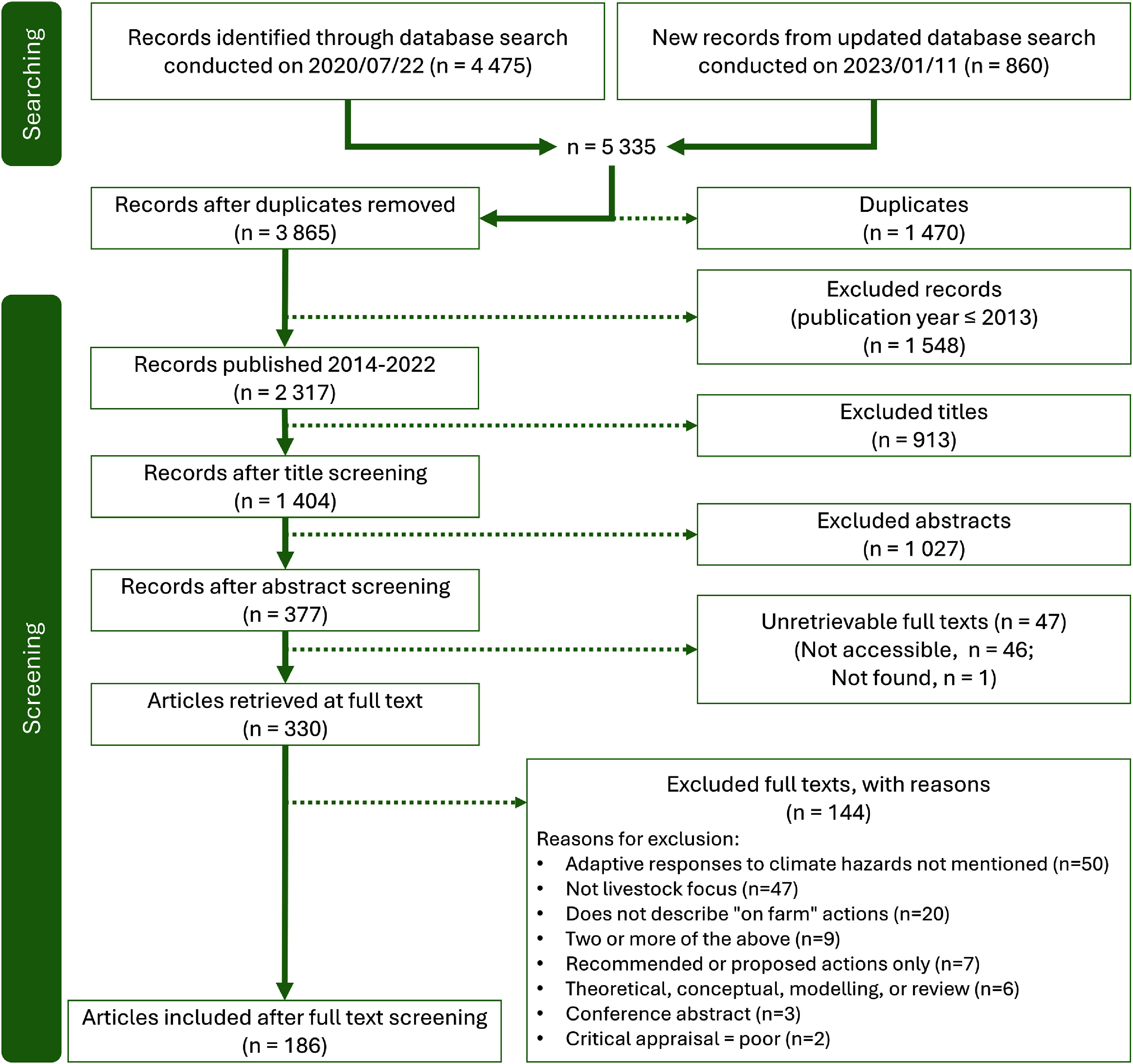 Figure 1
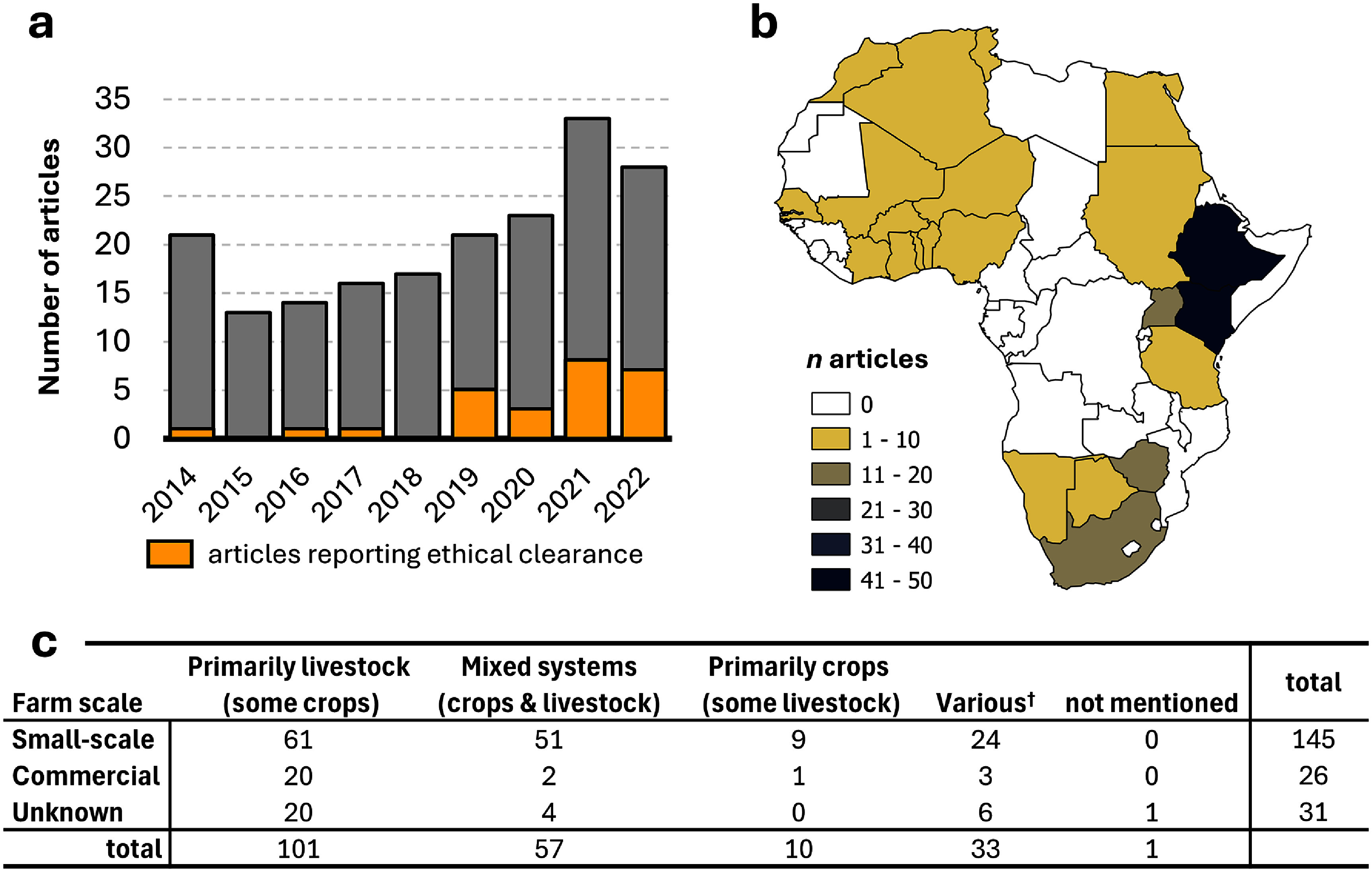 Figure 2
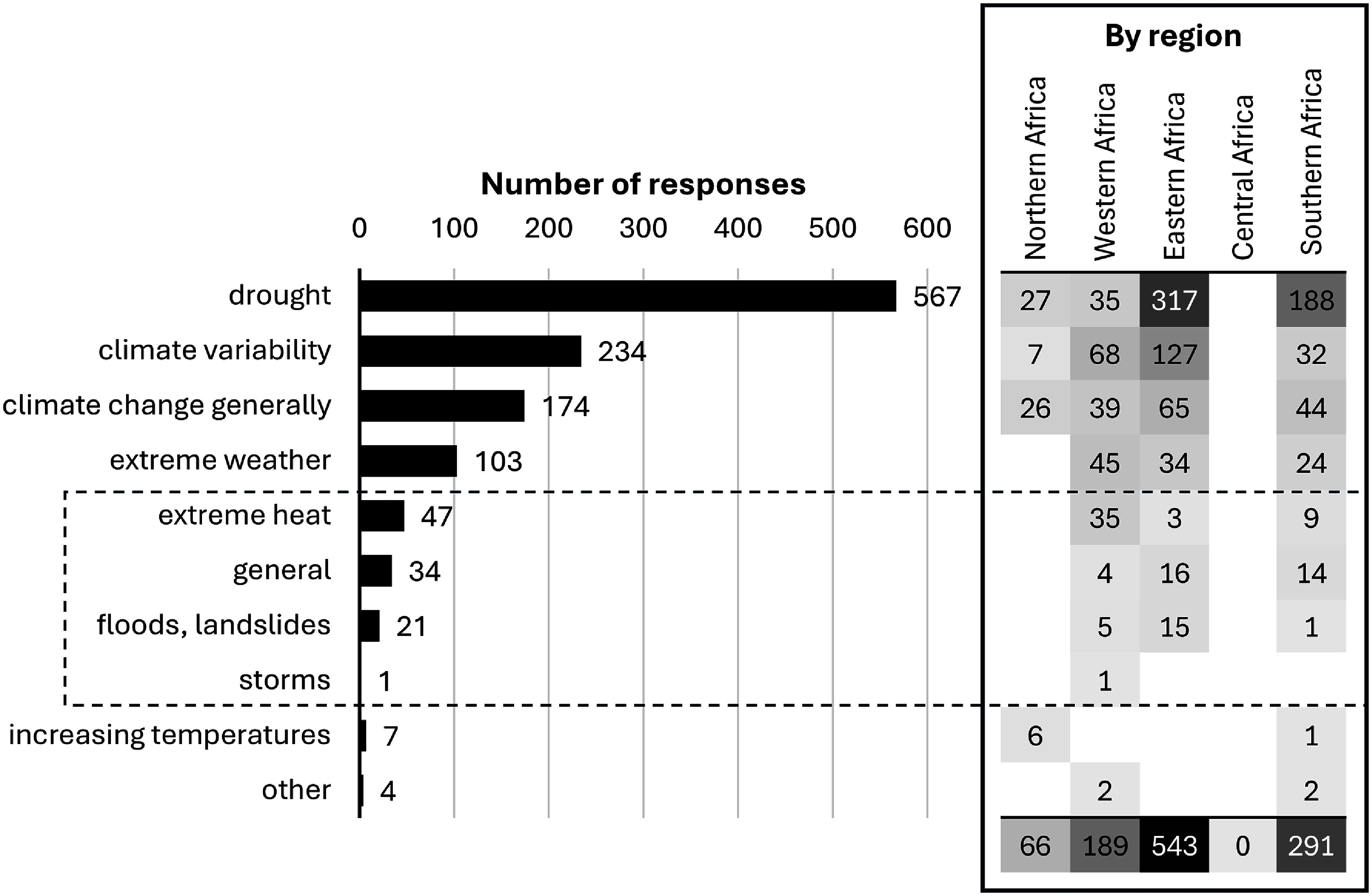 Figure 3
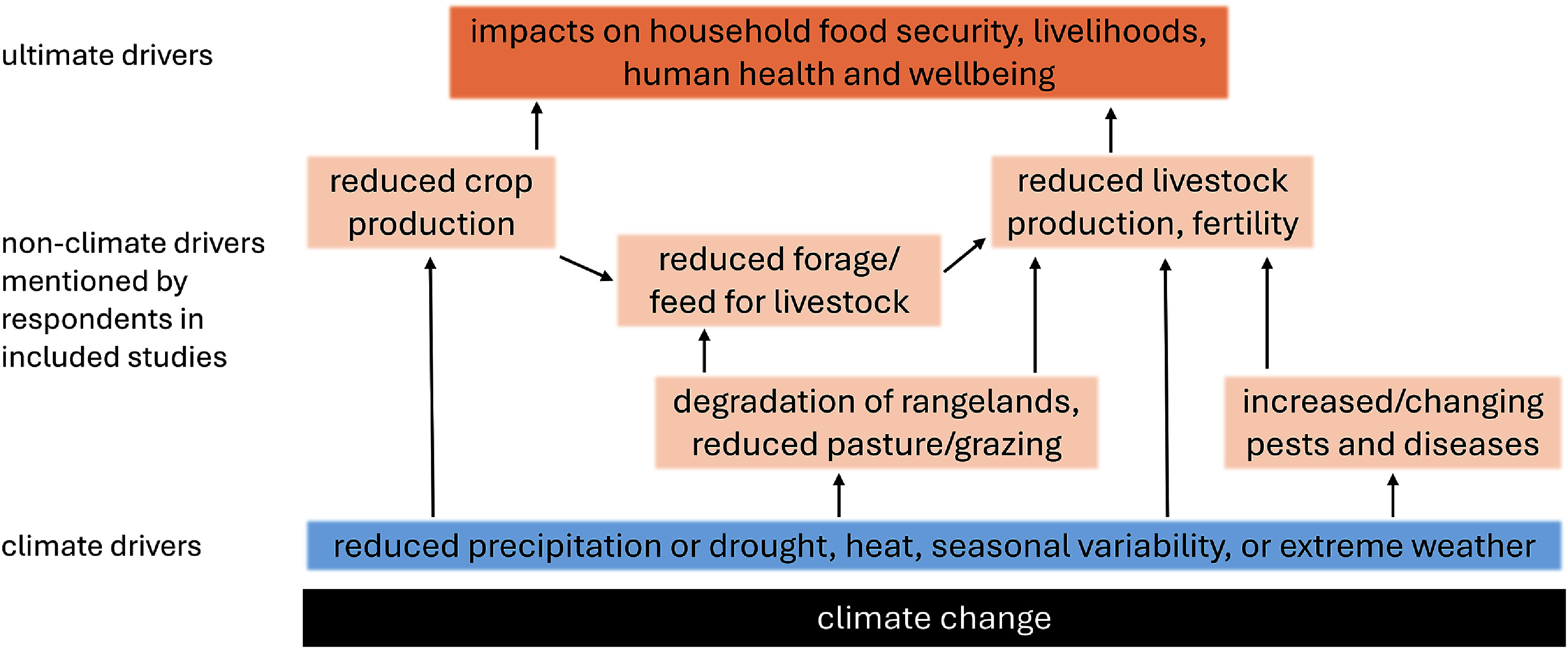 Figure 4
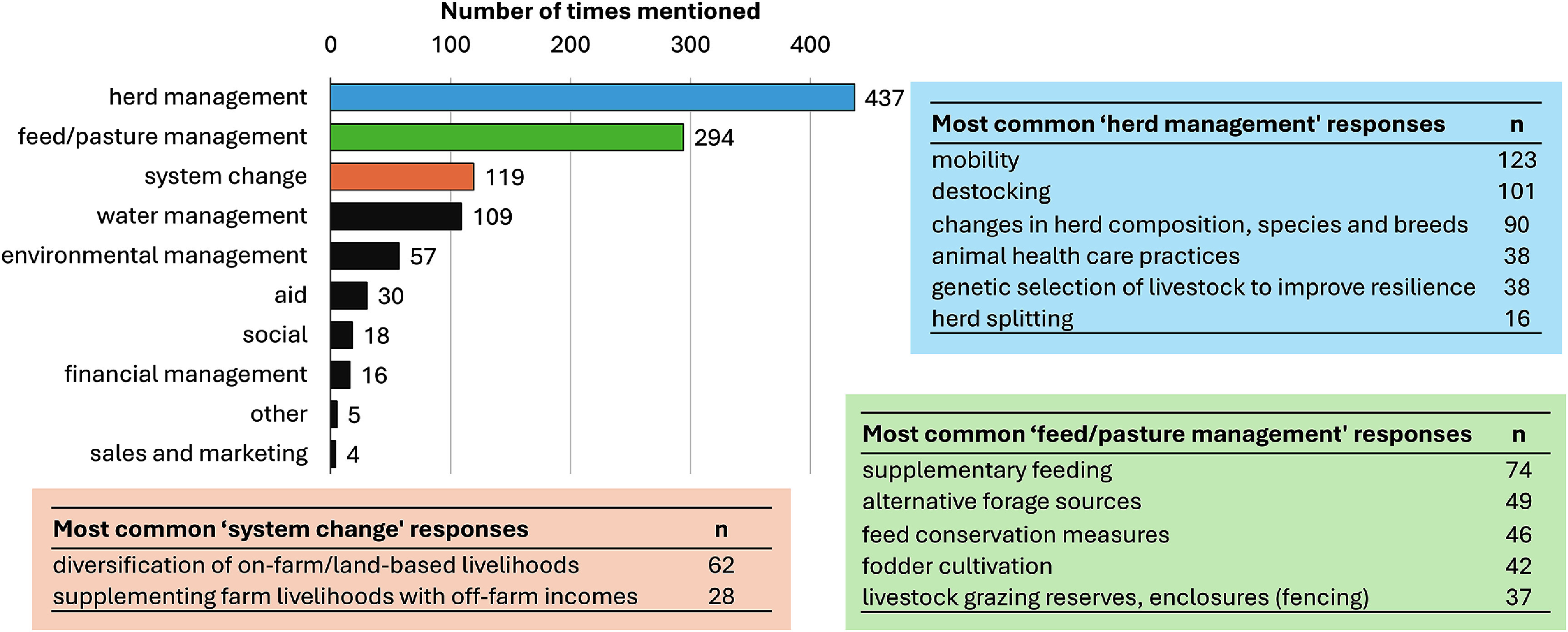 Figure 5
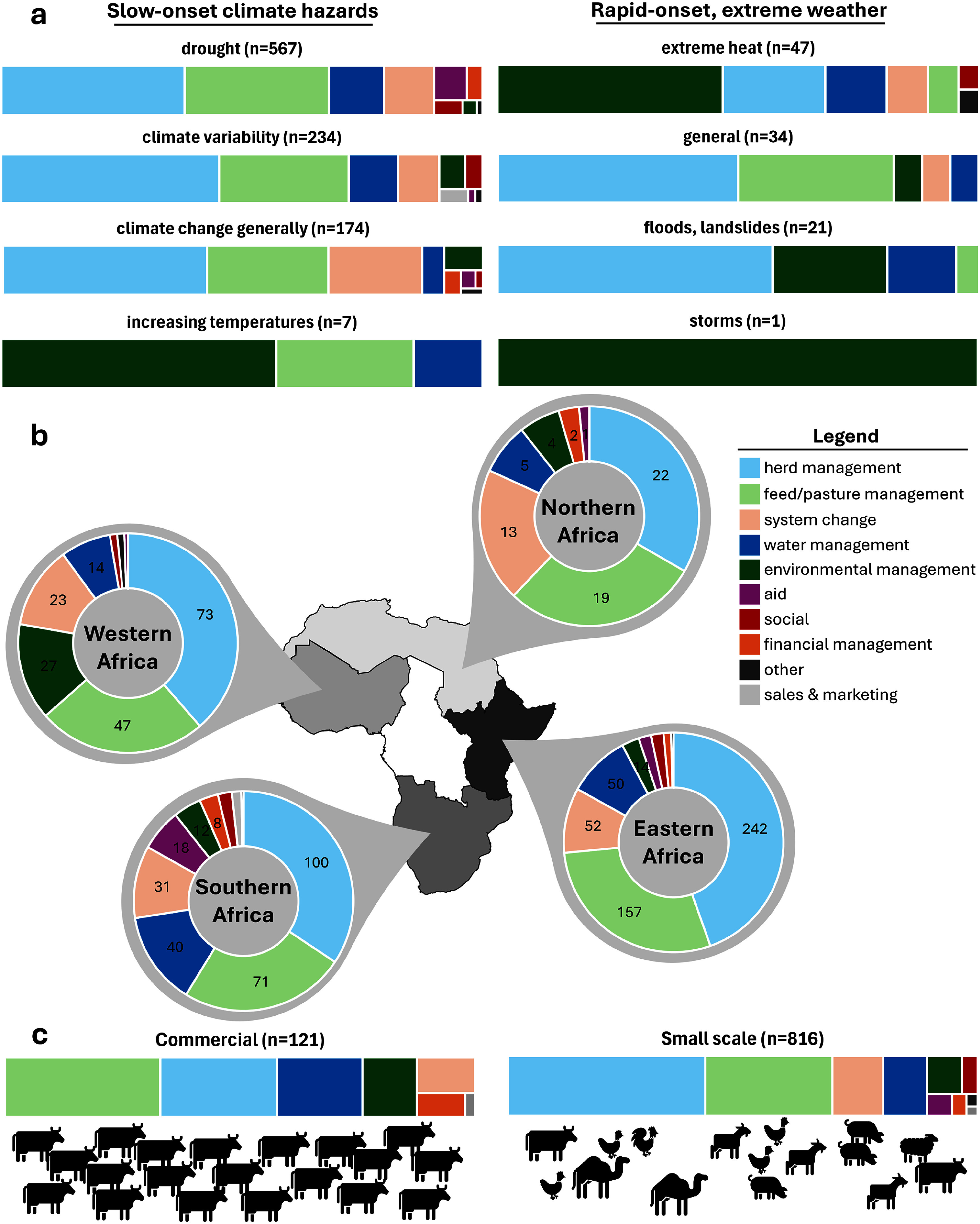 Figure 6
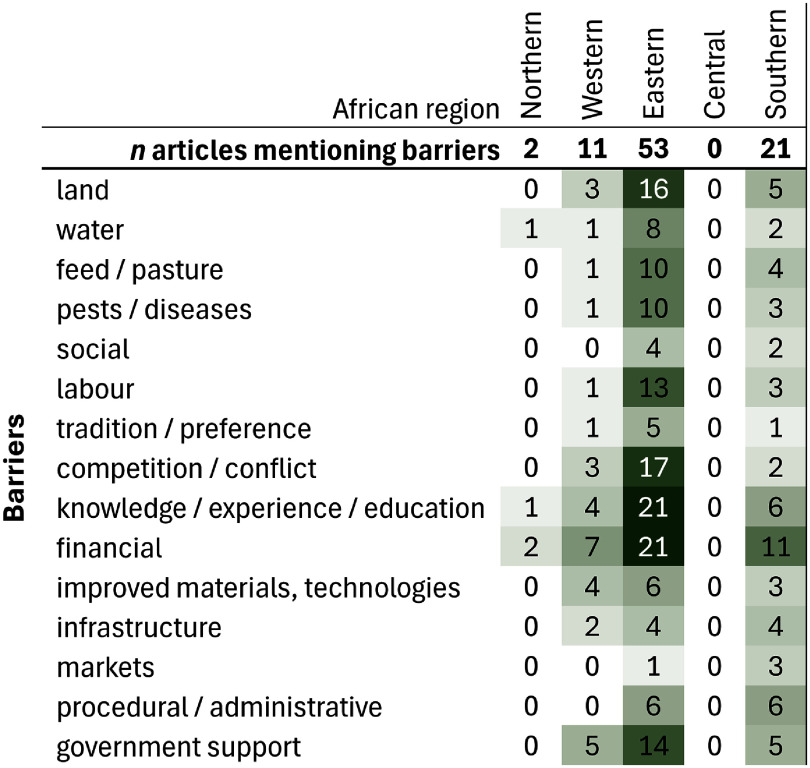 Figure 7
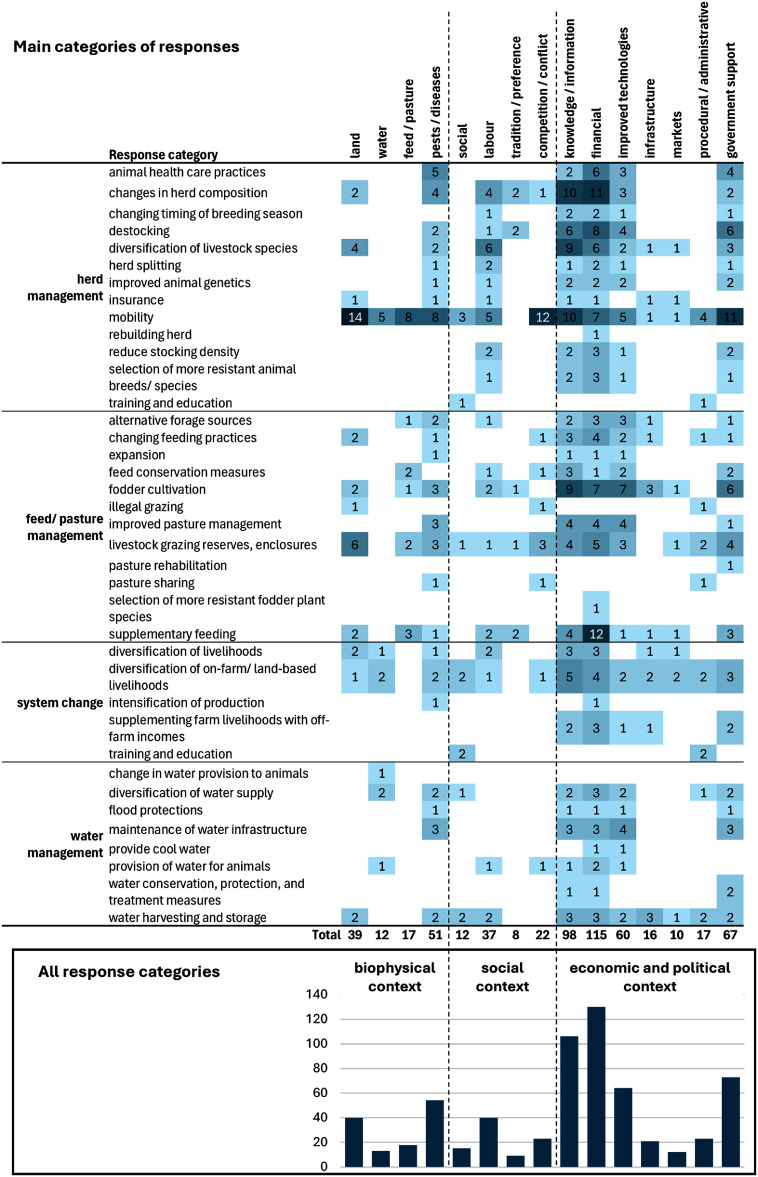 Figure 8
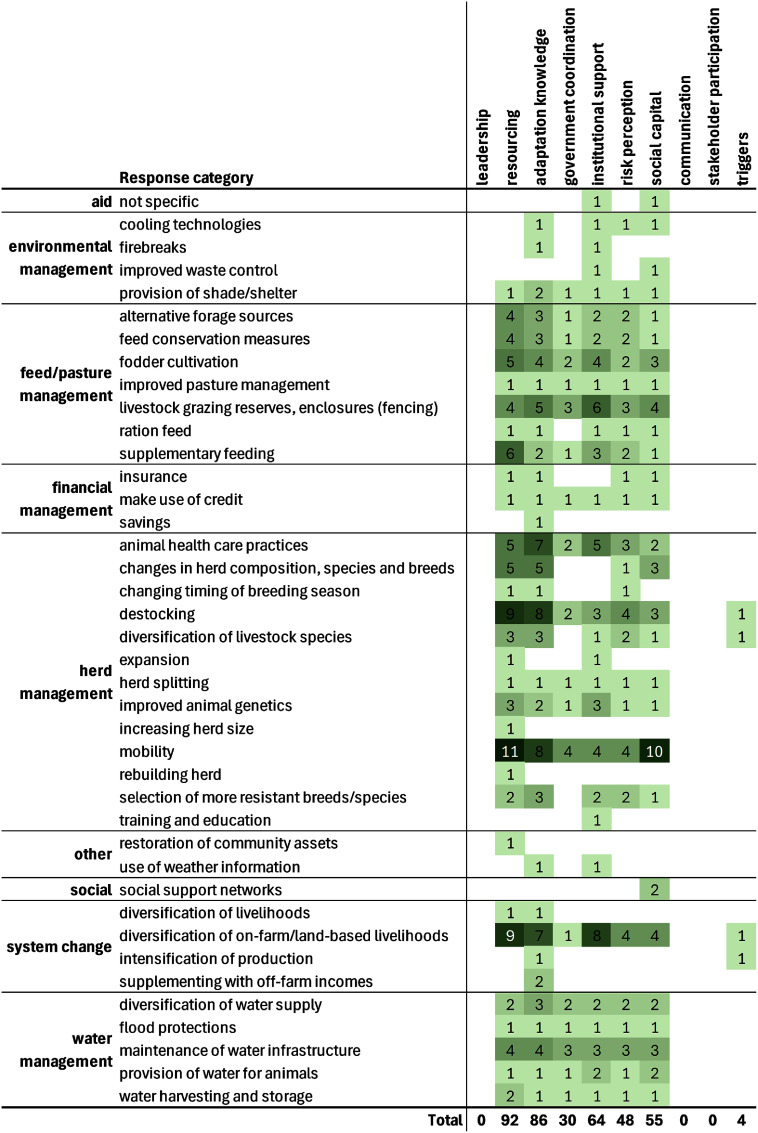 Figure 9
| Coding variables | Categories and explanation |
|---|---|
|
| |
|
| |
| Actor type |
Individuals (i.e. farmers) Communities Organisation (government and non-governmental) |
|
| |
| Farm scale |
Small-scale (including subsistence or household producers) Commercial (production primarily market-focused (Tibesigwa |
|
| |
| Primary production system |
Primarily crops (some livestock) Mixed crop-livestock systems Primarily livestock (some crops) |
|
| |
| Farmer mobility |
Sedentary Nomadic/practice transhumance |
|
| |
| Farmer tenure |
Own land (private use) Communal land |
|
| |
|
| |
|
| |
| Response category |
Aid (including relief, receipt of money, feed, or other resources from government or NGOs) Environmental management (responses intended to control degradation, bush encroachment or pests; e.g. burning) Feed/pasture management (responses relating to feed or grazing resources) Financial management (responses relating to financial resources, e.g. savings, access to credit) Herd management (responses relating to the livestock) Sales and marketing responses (relating to timing of sales or changes to prices) Social responses (relating to social support networks, traditional institutions) System change (e.g. livelihood diversification or change) Water management (relating to water resources) ‘Other’ (responses that do not fit into the other categories) |
|
| |
| Barriers |
|
- —Deutscher Akademischer Austauschdienst10.13039/501100001655
- —Wellcome Trust10.13039/100010269
Peer Reviews
No public reviews on file for this paper yet. If you reviewed it on a platform where reviews are public (OpenReview, ICLR, NeurIPS, ICML), you can paste yours below so the community can read it here.
Videos
No videos yet. Explain this paper in a talk, walkthrough, or lecture? Add one.
Taxonomy
TopicsClimate change impacts on agriculture · Effects of Environmental Stressors on Livestock · Rangeland Management and Livestock Ecology
Introduction
The agricultural sector is vital for many African economies (NEPAD 2013), contributing, on average, 17% of African countries’ GDP (Valev et al 2025), and employing over half of workers in sub-Saharan Africa (Fox et al 2013, FAO and ECA 2018). Within this sector, livestock production contributes up to half of the African agricultural GDP (Simpkin et al 2020), while also serving as a vital safety net for agricultural or rural communities, helping households endure climate-related shocks (Thornton et al 2009). Edible livestock products, such as meat, milk, and eggs, are a rich source of highly bioavailable nutrients, essential amino acids and critical micronutrients (Schönfeldt et al 2013, Beal et al 2023), particularly important for children and pregnant women (Grace et al 2018). Equally, both edible and non-edible (hides, wool, manure) animal products serve as a source of household income, and animals themselves act as financial capital, available to be sold for cash in times of need (Bahta 2022). Moreover, livestock are inherently complementary to crop production, providing draught power (for ploughing fields and transport) and manure for improving soil health and fertility (Thornton 2010), while crop residues serve as feed during the post-harvest dry season (Eisler et al 2014). Finally, livestock, and cattle in particular, serve important socioeconomic functions in many African cultures, including for spiritual and ceremonial purposes, maintaining social and kinship ties, or as a form of non-monetary currency (Coertze 1986, Ainslie 2013, Shava and Masuku 2019).
However, the sector, and all the people depending on it, is highly vulnerable to the impacts of climate change (Makate 2019). Climate-related hazards like temperature extremes and unpredictable rainfall are well-known challenges for farmers, impacting livestock production both directly (such as through exposure to high temperatures) and indirectly (for example, where climate hazards reduce the availability of feed or increase the burden of parasites and diseases) (Thornton et al 2009, 2021, Rojas-Downing et al 2017, North et al 2023).
In Africa, climate change is already resulting in altered seasonal precipitation patterns and timing, an increase in the number of consecutive dry days, changes in total annual precipitation, more frequent and severe weather events, and increasing average temperatures (fewer cold days in winter, and more hot days with even higher temperatures than usual in summer) (Niang et al 2014, Hoegh-Guldberg et al 2018, Trisos et al 2022). Additionally, the combination of warmer temperatures and decreasing rainfall are leading to a reduction in soil moisture, which impacts plant growth (Hoegh-Guldberg et al 2018)—including in rangelands, and the production of feed for livestock (Niang et al 2014).
It is thus critical that farmers and governments implement strategic responses that anticipate these climate-related hazards and reduce their impacts, to improve the sustainability and resilience of livestock farmers across Africa. There are many recommended adaptations for farmers, including from the Food and Agriculture Organisation of the United Nations (FAO) (FAO 2013, 2019, Alvar-Beltrán et al 2021). However, despite broad agreement that the best way to support local-level adaptation is to start with, and build on, existing (indigenous) strategies (Niang et al 2014), there is currently a lack of systematic syntheses of the literature describing what African livestock farmers are already doing to cope with current conditions to inform this process. This makes it difficult to generalise policy-relevant recommendations, or identify adaptation projects worthy of receiving adaptation funding (Escarcha et al 2018, Ariom et al 2022).
The global discourse on adaptation has grown exponentially in the last few decades (Sietsma et al 2021), corresponding with an increasing focus on adaptation in the latest IPCC assessments, including the Fifth (AR5, published in 2013/2014) and Sixth Assessments (AR6, published in 2022/2023). With the IPCC assessment process described as one of the ‘most rigorous scientific assessment processes’ globally (Nalau et al 2024, p 1), the description of how African livestock farmers respond to climate variability and change in these reports may be regarded as a useful foundation on which this systematic review can build.
In the IPCC AR5 Working Group II (WGII) report, Chapter 9 (Rural Areas), while predominately focussing on crop-based agriculture, described the following responses of African livestock farmers: replacing cattle with hardier goats and camels; using mobility to make use of the spatial variability in resources; providing supplemental feed, using crop residues, or conserving feed; destocking by culling and sale; and developing improved livestock breeds (Dasgupta et al 2014). Chapter 22 (Africa) included two further examples: increasing use of boreholes and selection of heat-tolerant animals (Niang et al 2014).
During AR6, both the Special Report on Climate Change and Land and the WGII report touched on the adaptation of livestock farming systems (IPCC 2019, 2022). The high-level adaptation assessment in the Africa chapter showed that livestock management had less evidence available than crop and fisheries management, demonstrating a relative gap in the literature, as well as regional gaps, with Northern and Central Africa unrepresented in the literature (Trisos et al 2022).
There is, therefore, an imbalance in agricultural adaptation synthesis, with a strong focus on crop production, with few tangible examples of adaptation in African livestock-based agriculture. In addition, with the burgeoning body of adaptation literature challenging authors’ abilities to comprehensively review and assess the information available, particularly during AR6 (Callaghan et al 2020, Nalau et al 2024), there is increasing need for synthetic research papers to assist with this process (Minx et al 2017). Finally, the breadth of topics covered in IPCC reports and tight page limits, prevented these reports from presenting a comprehensive set of workable examples of adaptation responses that are specific to, and useful for, African livestock farmers. Such detail is what is required to inform policy development and resource allocations in Africa.
The aim of this study is therefore to systematically review what the literature says African farmers are doing to reduce the impacts of climate-related hazards on their livestock systems, focussing on papers published after AR5. We start by mapping what is known and where, and who is conducting the research; we then describe farmers’ responses, climate and non-climate drivers, and barriers and enablers that were reported. We also identify gaps in the literature and suggest areas and topics that need further study.
Methods
This review followed the ROSES framework for systematic evidence synthesis for tracking, recording and reporting the process (Haddaway et al 2017b).
Search strategy
2.1.
Search terms and synonyms were compiled from key conceptual papers (conceptual papers included: Nienaber and Hahn (2007), Seo and Mendelsohn (2008), Ifejika Speranza (2010), Renaudeau et al (2012), and Mashizha (2019)), and arranged by the four components of the research question. These were: (1) African country names, (2) major livestock species and products, (3) hazards related to climate change and variability, and (4) actions associated with responding to climate hazards. These terms were tested in Scopus and Web of Science using iterative searches to identify a master list of search terms, with words being added or removed based on the relevance of the first few pages of search results as well as the total number of articles found by each search. Base terms and wildcards were combined to include all derivations of the search terms (for example, ‘alleviat*’ for alleviate or alleviating); similarly, some African country names were not included to shorten the search string (e.g. ‘Africa’ will also identify papers on ‘South Africa’). Google Translate was used to translate the English search terms into French to improve the language inclusivity of search results. The final search strings were selected based on: (1) ability to identify a large number of papers, (2) with minimal irrelevant results, and limited by (3) the maximum number of characters allowed by each citation index (supplementary information (SI) section 1).
Searches were conducted by tailoring the master list of terms for each of six separate citation indices (Scopus, Web of Science ‘All Databases’44The University of KwaZulu-Natal (UKZN) subscription to Web of Science (July 2020) includes the following databases: Web of Science Core Collection (1945-present): Science Citation Index Expanded (1945-present), Social Sciences Citation Index (1956-present), Arts & Humanities Citation Index (1975-present), Conference Proceedings Citation Index–Science (2010-present), Conference Proceedings Citation Index–Social Science & Humanities (2010-present), Book Citation Index–Science (2010-present), Book Citation Index–Social Sciences & Humanities (2010-present), Emerging Sources Citation Index (2015-present); KCI-Korean Journal Database (1980-present); MEDLINE® (1950-present); Russian Science Citation Index (2005-present); SciELO Citation Index (2002-present)., CAB Direct, Sabinet, PubMed, and JSTOR). The main search, run in 2020, was followed by a secondary search in January 2023 to update the results to include articles published up until the end of 2022. Detailed terms for each database or platform are included in the SI. Where the citation index allowed, search terms were in English and French. Search results were not initially restricted by year of publication; however, due to resource limitations, during the initial screening process, all papers that were published before 2014 were excluded. A full distribution of search results by publication year is provided in figure SI.1.
Screening
2.2.
Search results were screened sequentially by article titles, abstracts, and then full text PDFs, applying the inclusion and exclusion criteria listed in table SI.2. Screening was performed by the first author, with any ambiguous cases resolved during discussions with the second author. To avoid biasing against papers in local, less prestigious journals, and authors for whom English was not their mother tongue, the process of critical appraisal was very lightly applied, with only papers with severe faults (e.g. methodological flaws, factually incorrect background information presented, very poor writing, spelling errors throughout, or major problems with figures (including no axis labels, repeated figures) that suggest poor editorial and reviewer oversight) excluded. Full texts were obtained wherever possible—when behind paywalls, the authors were contacted by email or via ResearchGate, and unformatted copies stored on institutional websites were used for several papers. Articles that were not in English were translated using Google Translate before full-texts were screened.
Data extraction, coding, and analysis
2.3.
The metadata of included papers (source type, journal name, publication date, and the country of first author affiliation), information on the study (country of study, livestock production system, livestock species, climate hazards being responded to (i.e. the ‘climate driver’)), and detail on all actions taken by farmers in response to climate hazards (including barriers, enabling conditions, and non-climate drivers) were extracted and recorded in Microsoft Excel.
Early during the review, it was noticed that very few papers mentioned compliance with ethical guidelines, or approval by research ethics committees/review boards. Since this is a critical part of ensuring research integrity and quality, particularly for research involving human participants (Gelling 1999), the authors decided to record whether included papers mention of ethical clearance as an additional research question.
Responses were then coded as follows: first, they were grouped into categories that emerged from and were refined during the review, noting the climate and non-climate drivers, the desired outcome, and barriers or enabling conditions; then, the responses were coded according to asset-based adaptation metrics (Frayne et al 2012) and adaptation process metrics (Thornton and Manasfi 2010). Barriers and enablers were categorised by drawing on key influential papers (Eisenack et al 2014, Sibiya et al 2023, Brullo et al 2024), and analysed by region and response type. Responses that were difficult to code—for example, where the writing of the original study lacked detail, or the response did not clearly fall within adaptation metric categories—were noted for discussion, and resolved, either through consensus or noting ‘could not be determined’ or by leaving that cell blank.
Some of the main coding variables and their explanations are presented in table 1. For a full list of the extracted data, coding categories, and explanations and examples, please see SI sections 4 and 5.
We first present the general patterns we observed in the literature at the level of the articles and responses, highlighting hotspots and knowledge gaps. We then describe characteristics of the different response categories, some or the more novel types of responses being implemented by African livestock farmers, and provide an overview of the more common barriers to and enablers of adaptation.
Results
Characteristics and description of the included articles
3.1.
In all, 186 articles published between 1 January 2014 and 31 December 2022 were included (figure 1; for full list see SI). Most were peer-reviewed journal articles (n = 180 or 97%) published in 107 journals, and led by African authors (n = 152), primarily from Ethiopia, Kenya, or South Africa. Five of the included articles were in languages other than English: four in French, one in Japanese.
ROSES flow diagram of the results of the systematic review. Modified from Haddaway et al (2017a).
While the number of articles published per year increased between 2014 and 2022, the increase was not as great as has been reported for other regions and topics relating to climate change (e.g. Berrang-Ford et al (2011), Callaghan et al (2020), and Hunter et al (2020); figure 2(a)). The relatively high number of articles on livestock adaptation published in 2014 may be the culmination of research conducted during, and in support of, the IPCC’s AR5 WGII report, which had a strong adaptation focus (IPCC 2014).
Overview of the included articles. (a) Number of articles that describe how African livestock farmers are responding to climate-related stressors per year between 2014–2022 (grey columns) and those that reported receiving ethical clearance (gold); (b) country where the research took place (n = 184; two articles covered multiple countries and were excluded from mapping); and (c) overview of the livestock systems represented in the included articles, with regard to scale and primary production system focus. † varied among the participants in the study.
Only 26 articles (14%) reported obtaining ethical clearance or approval for their research, despite the fact that all these studies involved some form of stakeholder engagement (typically focus group discussions and key informant interviews). There was no clear pattern between reporting ethical clearance and first author affiliation, institution type or country; however, it appears that the number and proportion of articles reporting ethical approval is increasing over time (figure 2(a)). The lack of oversight by research ethics committees/institutional review boards may explain some weaknesses observed in study design. For example, many studies supplied participants with a closed list of responses to select from or rate (Oyekale 2014, Leal Filho et al 2017, Tetteh et al 2020, Ankrah Twumasi and Jiang 2021, Dika et al 2022). While facilitating statistical modelling, this approach precludes the identification of novel, potentially highly adaptive responses.
Another issue that better ethical oversight might have addressed was the over-research of some geographic areas, risking research fatigue in some communities, while other areas remain unstudied. For example, of the 42 articles based in Ethiopia, a country with 12 regional states, 11 took place in Oromia Regional State. In Kenya, a country with 47 counties, five of the 42 articles were based in Laikipia County, and four in Kajiado County.
Of the 55 countries located on the continent of Africa, 22 were represented in this body of literature, with Kenya and Ethiopia predominating. Figure 2(b) illustrates the massive geographic gap in this research, with Central African countries completely neglected, and Northern African countries also underrepresented.
Small-scale, sedentary (i.e. do not practice transhumance) livestock farmers were most widely documented (56 articles). Cattle were the most commonly mentioned livestock species (in 115 articles), followed by goats (101) and sheep (91; table SI.7), although most farmers kept more than one species. A considerable number of studies (39) did not mention the species of livestock being kept. Few publications focussed on responses of commercial farmers to climate change (figure 2(c)), with almost none focussing on large (industrial)-scale farms.
Characteristics and description of the responses
3.2.
The 186 articles described 1089 responses of livestock farmers to climate-related hazards.
Climate-related drivers of change
3.2.1.
Over half of responses were implemented in response to drought (figure 3), while a fifth were attributable to climate variability (usually variable or unpredictable onset or end of rainy season). This pattern remained when direct climate drivers were broken down by region, although heat was relatively more important to Western African livestock farmers than those based elsewhere.
Number of times the different climate drivers were mentioned in relation to African livestock farmers’ responses, in total and by region (inset, right). Types of extreme weather are enclosed with the dashed box. ‘Other’ refers to articles that mentioned combinations such as heat and drought, or windstorms leading to wildfires.
In about half the cases (566), drivers secondary to climate-related hazards were cited as the direct motivation to implement changes in management or behaviour (figure 4). The most commonly mentioned of these secondary, non-climate drivers were a shortage of feed (or pasture) or water for livestock (301 or 28% of responses), increased livestock pests or diseases (86, 8%), and the degradation of rangelands, including bush encroachment (83, 8%; see table SI.8 for a full list, and examples).
Conceptual illustration of the direct and indirect drivers of farmers’ responses: drivers secondary to climatic changes (in orange, referred to as non-climate drivers in this manuscript) and their relationship to the underlying/direct climate drivers (blue) that are projected to worsen as a result of climate change.
Actors
3.2.2.
Almost all (96%) of the responses were implemented by individuals (farmers or households, n = 1041), with the remainder by communities (18), government departments (20), and non-governmental organisations (NGOs) (5). There was also evidence of partnerships amongst actors, with government departments working with NGOs and faith-based organisations (11), and NGOs working with communities (9) to respond to climate-related hazards. While many of the responses implemented by government and NGOs related to the provision of aid or relief in response to disasters, the NGO-community partnership work tended to represent adaptation to reduce future vulnerability, such as the provision of disaster risk-reduction education, drilling boreholes, and the promotion of water harvesting and storage methods and home gardens.
Three-quarters of responses (801) were implemented by small-scale or subsistence farmers, and 164 by commercial farmers, with the scale of 167 responses unknown. Overall, a quarter of responses (276) were implemented by those who practice some form of transhumance. Finally, land tenure was not consistently described: a third (373) of responses were by those with their own land, a further third (362) by those on communal lands, and for the final third (354) tenure was not mentioned.
Response categories and typologies
3.2.3.
Over half (589) of the responses were implemented in advance of the climate-related challenges, with the remainder (500) implemented reactively. The desired outcome was mentioned for 285 responses, and mostly revolved around reducing the impacts of climate hazards (e.g. interventions that maintain or improve production, or reduce the incidence of livestock disease or mortality), or the vulnerability of their system to these hazards, for example, by selecting more tolerant breeds or species of livestock or diversifying household income. Ensuring access to- or conserving essential resources like water, livestock feed, or cash, were other desired outcomes.
There were nine main categories of adaptation response (figure 5; a full breakdown of these response categories is provided in table SI.9).
Overview of the main categories of responses applied by African livestock farmers, including examples of the most common responses (mentioned more than 10 times) for each of the top three categories (table insets).
The responses varied by climate driver, region, and farming system (figure 6 and table SI.10). Across all categories, herd management responses were most frequently reported, followed by feed or pasture management. Most responses were reported from Eastern African countries, by small-scale farmers, and in response to drought. Aid—typically from government or NGOs, and in the form of feed for livestock, although occasionally as grants, water distribution or multidimensional—was only provided in response to drought. Farmers tended to implement environmental management in response to extreme heat (and, to a lesser extent, increasing temperatures and flooding), rather than other climate hazards, and was noted more in Western Africa than elsewhere. A greater proportion of Northern African farmers responded by changing their livelihood systems than from the other regions. Commercial farmers tended to focus relatively more on feed/pasture and water management-related responses than herd management, when compared to small-scale farmers.
Distribution of response categories by climate driver (a), African region (b), and scale of farmer (c). African regions shaded according to the total number of responses from each (darker = more responses). Coloured spaces represent proportions of responses in each category, numbers in (b) represent the number of responses making up each segment. Results presented as percentages by row in table SI.10.
There were a number of examples of responses from the different categories that represent environmental stewardship that are worth highlighting. These included preserving areas for dry season or drought grazing using fences or by temporarily removing water sources (Abate 2016, Ng’ang’a et al 2016a, Mihiretu et al 2020, Ndiritu 2021, Lelamo et al 2022), and improved pasture management, which was achieved by implementing rotational or controlled grazing (Mare et al 2018, Muricho et al 2018), clearing encroaching bush or alien species (Abate 2016, de Vries 2019, Pili and Ncube 2022), or reseeding pastures with locally collected indigenous grasses (Mganga et al 2015). Other examples of adaptation that required a sense of stewardship or ownership of land included the cultivation of various fodder crops, including indigenous and drought-tolerant species (many examples, including (Wetende et al 2018, Abdou et al 2020, Bosekeng et al 2020, Djohy and Sounon Bouko 2021)) and the propagation of drought tolerant fodder trees (Balehegn et al 2015, Wetende et al 2018, Dube et al 2021).
Most (60% or 652) responses fell within Frayne et al (2012)’s ‘limiting damage and protection’, though a third (38% or 414) represented efforts towards building long-term resilience. Only 23 responses were explicitly aimed at recovery.
Thornton and Manasfi (2010)’s ‘adaptation process’ typology best explained the full range of African livestock farmers’ responses to climate-related stressors, with only nine not clearly fitting into any of the categories. A quarter (28% or 301) of responses involved intensification of management practices, followed by diversification (20% or 213). Rationing- (154), innovation- (140) and mobility-related responses (127) were also fairly frequently reported, with only few examples of pooling (67) or exchange (72).
Barriers and enablers
3.2.4.
Of the 186 articles, 87 (47%) described barriers and 60 (32%) described enabling conditions for the farmers’ responses. Because some articles reported barriers (or enablers) for individual responses, and others listed all barriers to responding in general, it is difficult to compare the relative importance of different barriers for different responses. Thus, while we have reported the number of responses where each of the barriers was reported, these frequencies at best provide an estimate of the relative importance of each of the barriers, and should be interpreted as such.
A lack of money (or the cost of the response) was most commonly reported as being a barrier to adaptation, for all regions (figure 7). This manifested in several ways: the response may have been too expensive; farmers did not have the financial means to respond; or the response reduced productivity/income generation from the farm to the extent that it was not feasible. A lack of knowledge, including previous experience of climate hazards, traditional knowledge, own learning, and traditional ways of responding (Simotwo et al 2018, Wernersson 2018, Bosekeng et al 2020), as well as inadequate access to external sources of information, for example from government extension services or NGO projects (Chah et al 2018, Wetende et al 2018, Gebeyehu et al 2021), was highlighted as being a particularly common barrier in Eastern Africa. A lack of government support was noted as an important barrier in Western and Southern Africa. This included: prioritising crop agriculture over livestock; a lack of government policy on climate change; a lack of, or inadequate extension services; inadequate drought relief; and government settlement programmes, that do not consider pastoralist needs (Korbéogo 2014, Muller and Shackleton 2014, Wetende et al 2018, Ng’ang’a et al 2020, Anbacha and Kjosavik 2021, Lottering et al 2021). Access to agricultural inputs (e.g. feed, seed, medical treatments, improved genetics), infrastructure or equipment (including storage facilities and roads) (Chah et al 2018, Basupi et al 2019), and proximity to markets both for inputs and sale of livestock and products (Bosekeng et al 2020, Musara et al 2021), were also noted.
Barriers reported for the different African regions, with cell shading proportional to the number of times each barrier was reported.
Distinct patterns emerged when assessing which barriers were mentioned most frequently for each type of response (figure 8 and table SI.11). While money was mentioned frequently as a barrier overall, for the most commonly mentioned response, mobility, difficulties accessing land (particularly resulting from expanding areas of fenced-off croplands which obstructed livestock mobility routes (Byenkya et al 2014, Kgosikoma and Batisani 2014, Tumusiime et al 2018)), and competition and conflict (Korbéogo 2014, Camfield et al 2020) were the most common barriers. Knowledge and experience were highlighted as a major barrier to farmers changing the composition of their herd, or diversifying the livestock species they keep, particularly for pastoralists in Eastern Africa who were increasingly keeping camels but reported a lack of knowledge of camel husbandry practices or diseases (Boru et al 2014, Megersa et al 2014, Volpato and King 2019).
Barriers reported for the four main categories of responses (most would represent ‘a lack of’—the listed barrier). Main figure: heat map, with cell shading proportional to the number of times each barrier-response was reported; Inset figure: column chart of the total number of times each barrier was reported (for all response categories), with the barriers grouped by biophysical, social and economic/political contexts (Eisenack et al 2014). Lack of knowledge/information includes education and experience. The barriers for all categories of responses are presented in table SI.11.
The most important factors enabling farmers’ responses were availability of and access to resources (money, feed or grazing and water for livestock, land, and labour), having knowledge of response options and how to implement them, and having sufficient institutional support to respond (including support of traditional institutions that regulate access to resources, and formal institutions that provide aid, information or services; figure 9).
Factors that enabled farmers’ responses, for each response category. Categories of enablers modified from Brullo et al (2024): ‘resourcing’ refers to sufficient resourcing, and included having access to sufficient financial, infrastructural (e.g. markets), natural resources (water, feed, land) or labour; ‘social capital’ includes social networks; ‘communication’ refers to effective communication; and ‘triggers’ refers to triggering events or windows of opportunity for adaptation.
Discussion
The literature
4.1.
The dominance of African-led research in this field—a contrast to the findings of other similar Africa-focused reviews (Pasgaard et al 2015, Hunter et al 2020, North et al 2020)—suggests that there is a lot of local expertise and interest in the intersection of climate change and livestock, bringing this highly relevant topic for Africa into the peer-review realm.
While, in some ways, this was a robust body of information to draw on when analysing the detail of farmers’ responses, it also demonstrated some limitations. The literature describing African livestock farmers’ responses to climate challenges was skewed, both geographically, and on the topics covered. There was a critical lack of literature from Central Africa, with very few publications from Northern African countries, a gap also highlighted in the IPCC’s Sixth Assessment (Trisos et al 2022). These regions already suffer from the impacts of climate change, as well as social inequality, weak institutional capacity, and political unrest that compound their vulnerability (Birkmann et al 2022, Trisos et al 2022), and more research is needed to highlight feasible and effective options to improve their resilience to environmental and socioeconomic shocks.
The lack of reported research ethics oversight of these studies is concerning, although the recent improvement may reflect improving awareness of research ethics, and an evolving research culture. Funders, journals, and universities (including research supervisors) have a duty to promote—or enforce—research integrity (including ethical clearance), to ensure that research is well-designed, neither harms nor exploits participants for scientific purposes without feedback or perceptible benefits, and that it is capable of fulfilling its potential to benefit society (Gelling 1999, Horn 2017, North et al 2022a, Pizzolato and Dierickx 2023). The relatively limited funding available to African researchers compared to the rest of the world (North et al 2020) makes it even more critical that the research that is done, is done well.
The effectiveness of adaptation to climate change has been shown to be largely determined by the local context (social, economic, biophysical and governance), interacting stressors (climate and non-climate drivers) and barriers, the actors, and the system being acted upon (Moser and Ekstrom 2010, Thornton and Manasfi 2010, Eriksen et al 2011). Consequently, studies that do not report sufficient contextual detail undermine the value of their findings for broader assessments and application. Most of the included articles did not report these additional details—for example, many were not clear about how responses related to the climate driver—in terms of timing, what other drivers may have contributed to decisions, or desired outcomes. Few articles presented their results in a way that extends the field, or used recognised classifications (e.g. grazing system (FAO 1980, Simpkin et al 2020)), although some details could be inferred (e.g. farmer scale). Questions around barriers, enablers, drivers, or outcomes were not commonly asked or the answers reported. Some articles did not even report the species of livestock being kept, and most did not regard poultry as livestock, meaning that poultry was disregarded during interviews and reporting (which may account for the low incidence of poultry keeping-related responses). Considering the importance of poultry or village chickens for supporting household food security (Queenan et al 2016, Bettridge et al 2018, Mseleku et al 2023, Tenza et al 2024), this omission is a crucial gap. Future research should provide more information on these aspects.
Many of these gaps could have been addressed during the study design phase if authors from different academic disciplines, across the natural and social sciences, and from policy and practice, were included in the research team. In fact, with ‘wicked’ or intractable cross-cutting challenges, which the deeply complex relationship between climate change and society epitomises (Termeer et al 2013, Sun and Yang 2016), a widely advocated approach is an inter- or transdisciplinary one, in which diverse research teams pool and integrate multiple perspectives (Swart et al 2014, Victor 2015, Degroot et al 2021, Hunter et al 2022, Rising et al 2022, North et al 2022b).
The responses
4.2.
The predominance of responses to drought and climate variability is unsurprising, given the magnitude and geographic scale of impact these hazards have on agriculture, particularly in arid or semi-arid regions that rely predominantly on natural rainfall (You et al 2011). However, with the increasing incidence of severe heat globally (Giguere et al 2025, Martinez-Villalobos et al 2025) and in Africa (Ranasinghe et al 2021, Trisos et al 2022), and what is known about the erosive impacts of heat on livestock health and productivity (Thornton et al 2021, North et al 2023), more research attention needs to be paid to the impacts of, and responses to, heat stress.
Unlike similar reviews of adaptation (Berrang-Ford et al 2011, Hunter et al 2020), where low-income countries tend to be characterised by reactive adaptations, this study found that more than half of the responses were implemented in anticipation of the hazard. This may reflect the frequency with which livestock farming is affected by such hazards, and consequently, the wealth of local and traditional knowledge and mechanisms for responding to these recurring challenges (Niang et al 2014).
The lack of research on commercial farmers’ responses was unexpected, even accounting for the predominance of small-scale farmers in Africa (Herrero et al 2017, Lowder et al 2019), when one considers the long-established discipline of animal science, and the fact that commercial production is highly data-driven (Rodriguez-Ledesma et al 2015). However, animal science research tends to retain a heavily discipline-specific focus on improving production efficiencies (Rodriguez-Ledesma et al 2015), and, consequently, might not make use of key terms relating to climate change, or adaptation. Moreover, the results of experimental research were excluded from this review, which may have selected against animal science research. Finally, the data underlying modern, large, intensive commercial production, may be held within industry, or might derive from work conducted in the Global North, rather than Africa, as was observed in a meta-analysis of heat stress research (North et al 2023).
Nevertheless, the relatively poor coverage of commercial farming in the climate change adaptation literature is concerning. Commercial farming, with its market-focus and efficiency-driven production, contributes to national food security and GDP, as well as food security in neighbouring countries and internationally via exports (Olbrich et al 2013, Temoso et al 2016, 2024, DALRRD 2024). It also supplies food to rapidly urbanising areas (Mirzabaev et al 2019), and contributes to employment (Christiaensen and Maertens 2022). While commercial farms may not be as immediately vulnerable to climate change as limited-resource, small-scale producers, since they often have greater assets, market access, and institutional support (Godde et al 2021), any impacts to these farming systems, resulting in loss of production or even the decision to step away from farming altogether, has the potential for large-scale repercussions (Tibesigwa et al 2017). A lack of research into and communication of African commercial farmers’ climate-related challenges and the mechanisms they employ to mitigate risk results in a bias in the literature, and subsequently biased assessments and recommendations filtering through IPCC and FAO reports, and thereby in government priorities and responses to climate-related disasters (Mare et al 2018, Lowder et al 2019). Even with this imbalanced sample, it was clear that commercial and small-scale farmers tend to focus on managing different aspects of their systems to reduce risk. Better understanding of the different needs and priorities of small-scale vs commercial farmers to reduce their vulnerability to climate-related shocks would support informed decision-making at the national level—for example, what support would be most beneficial to whom during climate-related disasters. Moreover, a clearer understanding of the different needs and strategies of different types of farmers could inform targeted knowledge transfer efforts, for example through extension services, providing tools appropriate for improving the sustainability of their specific production systems, under a future with climate change.
While most responses tended to be incremental changes to herd management that allowed farmers to ‘get by’, a notable portion represented transformation of farmers’ livelihood systems (for example, by changing from cattle to camels, or by diversifying their sources of income), or anticipatory actions to reduce vulnerability (e.g. conservation of grazing or fodder). This is indicative of bottom-up, proactive adaptation, where, in the absence of government interventions, farmers are solving their problems using innovative, localised solutions. Governments need to recognise and acknowledge these developments, and ensure that any shifts in policy or practice promote effective local practices, rather than stifling them (Brown et al 2017, Conway et al 2019).
With the expansion of the adaptation literature has come many proposed systems of classifying adaptation responses. These include those proposed or adapted by Berrang-Ford et al (2011), Biagini et al (2014) and Lesnikowski et al (2015) for assessing adaptation globally. However, when applied to the responses in this review, primarily on-farm decisions and motivations of livestock farmers, typologies by Frayne et al (2012) and Thornton and Manasfi (2010) proved the most useful and able to capture the range of response types and objectives. The process typology of Thornton and Manasfi (2010) (mobility, exchange, rationing, pooling, diversification, intensification, innovation, revitalisation) and the asset-adaptation lens used by Frayne et al (2012), both map directly to the large majority of herd-management, feed/pasture, and livelihood diversification responses captured in our review. Similar to the findings of Hunter et al (2020), many of the global adaptation typologies were unable to accommodate most of the responses, either being too broad to provide much insight into what farmers were doing (for example, Epule et al (2017)), or having a Global North, top-down focus, and therefore not relevant to the actions taken by African farmers on the ground (Berrang-Ford et al 2011, 2014, Biagini et al 2014). Meta-level tracking approaches (outcome-based, readiness/proxy, and policy/program inventories) are useful for national-level monitoring but are typically too coarse to capture farmer-level strategies (Ford et al 2013, Berrang-Ford et al 2014). Likewise, typologies derived from donor/project documents (Biagini et al 2014) are valuable when translating farmer actions into policy or funding language (capacity building, physical infrastructure, early warning), but they tend to underrepresent informal, autonomous tactics.
Across the board, most of the barriers to adaptation that were mentioned by livestock farmers related to insufficient resources (financial, information/knowledge/skills, and infrastructure). While barriers frequently co-occur, making it harder to successfully adapt to stressors (Simpkin et al 2020), the ways barriers were reported in the publications made it impossible to assess co-occurrence in this review. As noted by Eisenack et al (2014), barriers to different types of responses varied, with specific resources or social factors constraining some responses (like mobility), and access to information constraining others (particularly when the response involved ‘trying something new’, like taking on new livestock or fodder plant species). Since most of the included articles were based on interviews with farmers, it is not surprising that the focus was largely on the most immediately obvious ‘factors that make it harder to plan and implement adaptation actions or that restrict options’ (Klein et al 2014, p 907), like a lack of information or resources, rather than higher level barriers such as lack of political capacity or will (Nkuba et al 2021). A clearer picture of all the factors impeding adaptation by African livestock farmers would require more nuanced case studies that tease apart the obstacles and how they are affected by the specific local context, actors, and system (Moser and Ekstrom 2010).
Unsurprisingly, many of the enablers mentioned in the included articles echoed Brullo et al (2024)’s findings relating to enablers for agricultural households, including: access to sufficient resources (natural, social, financial, physical and human); having sufficient knowledge (traditional or scientific) to perceive the risk and thus the need to respond, and of the different response options available; and guidance or oversight from responsible institutions. These largely align with the concept of adaptive capacity, or the ‘biophysical and socioeconomic factors that enhance human capability to adapt to and recover from adverse impacts of climate change’, representing ‘a system’s ability to mobilise resources in response to stresses and shocks’ (Chapagain et al 2025, p 2). However, as with the barriers, missing from the included articles were mention of the higher-level enablers, such as proactive leadership, coordination of different levels of government, effective communication, and participation of communities and other stakeholders in decision-making around adaptation initiatives (Brullo et al 2024), as well as the agency of the livestock farmers themselves to adapt (Chapagain et al 2025).
Reducing the vulnerability of Africa’s livestock farmers requires the systemic barriers inhibiting their responses to be addressed, putting into place interventions that improve the agency and flexibility of the farmers, and that create an enabling environment. By knowing which are the greatest barriers to adaptation, particularly which barriers relate to which kinds of adaptations, governments and NGOs can ensure that adaptation programmes include mechanisms for addressing these barriers. Crucially, while addressing barriers would make some responses more feasible, Brullo et al (2024) note that creating an enabling environment for adaptation requires a combination of interrelated enabling conditions (for example, sufficient resources, and knowledge of adaptation options, and institutional support), rather than an exclusive focus on removing barriers.
While many of the enablers were localised and internal, examples of impactful interventions that could be scaled up included: the provision of information and early warnings (Ndiritu 2021, Maina et al 2022); training on response options and skills to support responses (Opiyo et al 2015, Abdou et al 2020, Snaibi et al 2021); support services like farmer cooperatives, agricultural extension and animal health care services (de Vries 2019, Liverpool-Tasie et al 2019, Fanadzo et al 2021); infrastructure like roads, storage facilities (livestock feed and water) (Fanadzo et al 2021); and access to markets (Zampaligré et al 2014, Opiyo et al 2015, de Vries 2019). Access to finances though credit, subsidising certain actions (like timely destocking or various insurance options), and supporting savings groups, were also important predictors of whether farmers could respond or not (Ng’ang’a et al 2016b, Asayehegn et al 2017); although these interventions all need to be carefully designed and implemented to improve long-term rural resilience.
The results of this systematic review point to possible areas of intervention by governments, NGOs and individual farmers across Africa, where top-down interventions can be implemented to complement or enhance what African farmers are already doing on the ground (Brown et al 2017). More government interventions are needed to support farmers, by addressing barriers and ensuring resources, including knowledge and skills (not just technical (de Lange et al 2025)), are available to enable proactive and informed management and decision-making to reduce the vulnerability of livestock farming to climate variability and change. Current collaborative efforts between NGOs, government, and communities to build resilience (e.g. as reported by Ndlovu et al (2020) and Abdou et al (2020)) could be scaled up, as this multi-level and multi-partner adaptation has been identified to be effective at building resilience elsewhere (Leck and Simon 2013, Lassa et al 2023).
Limitations
Because the information prescribed by this review was ground-level action, ‘case study’ style papers predominated. This means that large-scale (global or regional) modelling or synthesis work was excluded—and may be the explanation behind the primarily local authorship in this sample. It is also important to note that this review is an aggregation of the results of smaller studies whose authors already had to aggregate the results of their interviews, and so in the process much of the context, the nuance behind responses and the consequences of responses may have been lost. While this review only recorded responses that were directly or indirectly linked to climate, we acknowledge that there are many drivers of change, including social, economic and political pressures (Simpkin et al 2020). Many of these drivers will be interacting with the climate-related drivers to push livestock farmers to adapt their systems. The body of literature drawn upon ends at the end of 2022, but due to resource constraints, it was not possible to extend this to closer to the publication date.
Recommendations
The distinction between crop and livestock farming is artificial for most African farmers, with most keeping a mixture of the two depending on available resources (Thornton and Herrero 2015). While responses aimed at adapting livestock systems in isolation may be appropriate for intensive, commercial enterprises, for the majority of African farmers, livestock form part of a diverse portfolio of cultural, income- and food-generating activities (Pell 1999, Waha et al 2018). The purpose of adaptation for these farmers is to maintain the stability of the system as a whole, and thus their livelihood and household food security, with different elements being used to counterbalance impacts on others: responses that only address the risks to livestock does not make sense or address the needs of these farmers (Garbole et al 2025). Systems approaches that consider livestock as an element of the wider livelihood system and environment, and evaluate responses for their potential to reduce risk to the system as a whole in a sustainable way (Bilotto et al 2024), could be employed both by academics in future adaptation research, and practitioners evaluating different options for implementation.
We propose a number of specific recommendations for future research. These include improved research integrity and ethical oversight training and support from institutions, and more stringent ethical requirements from funders and journals. We also call for research that: addresses geographic and topical gaps; better describes the contexts in which farmers are adapting; considers non-traditional animal species being kept for livelihoods; reports the primary purpose of the livestock and notes whether the system is intensive/specialised, or mixed/diversified; evaluates and reports the longer-term outcomes of different responses; or investigates the barriers to preferred responses at different scales. We also recommend the use of a wider selection of research methods tailored to and appropriate for the specific research population and questions, including quantitative methods to model changes in livestock production yields in response to different adaptation approaches (Escarcha et al 2018); inter- and transdisciplinary action research that includes more depth and has policy and action relevant outcomes (e.g. Froebrich et al 2020); or makes use of systems approaches, to better capture the wide range of interlinked land-based livelihoods (including crop and livestock agriculture, harvesting wild foods and products, and bee keeping) and how rural people are diversifying their livelihoods to survive (e.g. Glendell et al 2025).
African farmers are responding to multiple stimuli, not just climate change (Adimassu and Kessler 2016). If adaptation responses have multiple co-benefits, farmers are more likely to withstand different types of stressors, that include climate shocks, but also economic, political and other stressors (Berrang-Ford et al 2011). Therefore, when planning adaptation projects, practitioners and governments should evaluate the relative benefits of different responses for reducing vulnerability, or improving the resilience and sustainability of land-based livelihood systems to a range of possible stressors (Osbahr et al 2010). Some examples of responses that improve resilience include those that diversify livelihoods, by including different forms of production on the same land (e.g. mixed species herds, mixed farming, bee keeping, agroforestry) (Mganga et al 2015, Opiyo et al 2015, Fadina and Barjolle 2018, Muricho et al 2018), or incorporate off-farm activities with land-based incomes (Mayanja et al 2020, Ndlovu et al 2020). Researchers can support this by providing data to support different livelihood combinations in different contexts (see for instance Bostedt et al (2023)), and how they respond to different stressors, or their vulnerability to different climate scenarios (Stadtbäumer et al 2022).
Governments should consider the main barriers that were highlighted by the study and put in place interventions to reduce them. Among these include improved sources of information for farmers to support better decision-making—by improving resources allocated to the departments overseeing agriculture and extension, to increase farmers’ access to extension services (Ayim et al 2022). Complementing greater access to extension, educators at tertiary institutions need to update curricula to ensure that the message of climate variability and change, and adaptation options, is sufficiently emphasised, particularly for agricultural extension agents and similar outreach workers who have regular and trusted contact with farmers (Belay et al 2024).
Governments should ensure that policies support and do not undermine traditional institutions that manage access to, and use of, land and other natural resources (Basupi et al 2017). Improved public infrastructure, like roads (World Bank 2024a, 2024b), which facilitate access to markets and agricultural inputs, and wide communication of early warning of climate-related hazards (Pienaah et al 2023), are all crucial for improving farmers’ ability to respond to stressors.
Conclusions
During this review, a range of different actions that African livestock farmers are implementing in response to climate variability and change were recorded from the literature, predominantly relating to herd, fodder, and water management. Within these broad categories a wide range of responses were observed. Despite a lack of institutional support and limited access to resources, in general, African farmers demonstrate a good awareness of climate hazards, and implement responses that allow withstand climate-related impacts. However, a large proportion of farmers are responding reactively, without information, planning or support. These farmers are likely to become progressively less able to withstand shocks, increasing food insecurity, rural-urban migration, and worsening social conditions.
While a sizeable body of literature describing African livestock farmers’ climate-related challenges and responses exists, this review highlights a number of issues that could be addressed to ensure future research better supports policy and planning. With resource constraints limiting African researchers’ capacity, it becomes even more important that investigations comply with ethical standards and are sufficiently rigorous for maximum social impact. Funders and research organisations need to ensure that research into adaptation responses and options is designed, implemented, and reported in such a way as to better address the needs of policymakers and other stakeholders, providing information that can inform implementation, as well as policy and planning at different levels of government. Governments have a responsibility to address barriers that are impeding adaptation to climate variability and change, to help farmers respond appropriately and sustainably, to improve livelihoods, food security, and better manage land for generations to come.
The reference list from the paper itself. Each links out to its DOI / PubMed record.
- 1Abate T 2016 Indigenous ecological knowledge and pastoralist perception on rangeland management and degradation in Guji Zone of south Ethiopia Consilience 15192218192–218(available at: https://www.jstor.org/stable/26188765)
- 2Abdou H Karimou I A Harouna B K Zataou M T 2020 Perception du changement climatique des éleveurs et stratégies d’adaptation aux contraintes environnementales: cas de la commune de Filingué au Niger Revue d’e´levage et de me´decine ve´te´rinaire des pays tropicaux 73819081–9010.19182/remvt.31873 · doi ↗
- 3Adimassu Z Kessler A 2016 Factors affecting farmers’ coping and adaptation strategies to perceived trends of declining rainfall and crop productivity in the central Rift valley of Ethiopia Environ. Syst. Res.51310.1186/s 40068-016-0065-2 · doi ↗
- 4Ainslie A 2013 The sociocultural contexts and meanings associated with livestock keeping in rural South Africa Afr. J. Range Forage Sci.30353835–3810.2989/10220119.2013.770066 · doi ↗
- 5Alvar-Beltrán J Elbaroudi I Gialletti A Heureux A Neretin L Soldan R 2021 Climate Resilient Practices: Typology and Guiding Material for Climate Risk Screening Food and Agriculture Organization of the United Nations (FAO
- 6Anbacha A E Kjosavik D J 2021 Pastoral Livelihood Diversification and Gender in Borana, Southern Ethiopia Rangeland Ecol. Manage.791121–1210.1016/j.rama.2021.06.006 · doi ↗
- 7Ankrah Twumasi M Jiang Y 2021 The impact of climate change coping and adaptation strategies on livestock farmers’ technical efficiency: the case of rural Ghana Environ. Sci. Pollut. Res.281438640014386–40010.1007/s 11356-020-11525-133210253 · doi ↗ · pubmed ↗
- 8Ariom T O Dimon E Nambeye E Diouf N S Adelusi O O Boudalia S 2022 Climate-smart agriculture in African countries: a review of strategies and impacts on smallholder farmers Sustainability 141137010.3390/su 141811370 · doi ↗