Collaborative development of a scoping review protocol to map instruments assessing the parent–infant relationship: An International Initiative from COST Action TREASURE
Sónia Brandão, Anat Talmon, Ewa Gieysztor, Patrícia Souto, Andreia Soares Goncalves, Rosa Silva, Patrícia Gonçalves, Paula Prata, Özlem Şensoy, Esra Ardahan Akgül, Semra Pinar, Kristiina Uriko, Seda Ardahan Sevgili, Elif Bulut, Rajesh Shigdel, Demet Gülaldı, Otília Freitas

TL;DR
An international team created a structured plan to map tools that assess parent-infant relationships in early childhood, aiming to improve understanding and use of these tools.
Contribution
A collaborative, standardized protocol for a scoping review to map parent-infant relationship assessment tools from birth to 24 months.
Findings
A replicable protocol was developed using the JBI methodology and PRISMA-ScR standards.
The protocol clarifies core constructs and age range using the PCC framework.
The collaborative process involved multidisciplinary experts from multiple countries.
Abstract
Early relational health during the first 24 months of life is a key determinant of child development and wellbeing. The parent–infant relationship plays a central role in emotional regulation, bonding, and developmental trajectories. However, existing assessment tools differ widely in their scope and characteristics, and no comprehensive review has yet mapped the instruments available to assess this relationship in early infancy. In response to this gap, a transdisciplinary working group within the COST Action CA22114 – TREASURE collaboratively developed a scoping review protocol to systematically map instruments assessing the parent–infant relationship from birth to 24 months of age. This Brief Report outlines the collaborative methodological process used to construct the protocol. Development followed an iterative, consensus-driven approach involving multidisciplinary experts from…
Genes, proteins, chemicals, diseases, species, mutations and cell lines named across the full text — each resolved to its canonical identifier and authoritative record.
Click any figure to enlarge with its caption.
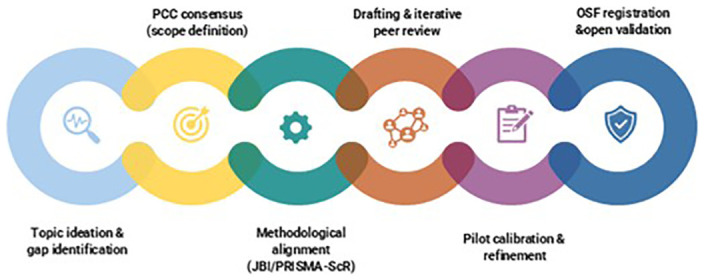 Figure 1
- —European Cooperation in Science and Technology
Peer Reviews
No public reviews on file for this paper yet. If you reviewed it on a platform where reviews are public (OpenReview, ICLR, NeurIPS, ICML), you can paste yours below so the community can read it here.
Videos
No videos yet. Explain this paper in a talk, walkthrough, or lecture? Add one.
Taxonomy
TopicsMaternal Mental Health During Pregnancy and Postpartum · Infant Development and Preterm Care · Attachment and Relationship Dynamics
Introduction
Early childhood development is widely recognised as a global public health priority, aligned with the Sustainable Development Goals and the Convention on the Rights of the Child. The first 1,000 days of life, from conception to a child’s second birthday, represent a critical period of rapid brain growth and heightened neuroplasticity ( Berg, 2016; Scher, 2024; Wardoyo et al., 2024). Within this broad framework of early childhood development, increasing attention has been directed towards early relational health, the quality of early caregiving relationships that form the foundation for emotional, social, and cognitive development. During this time, interactions between infants and their primary caregivers shape neurocognitive, socioemotional, and self-regulatory development, with long-term implications for physical and mental health ( Black & Merseth, 2018; Scher, 2024). Nurturing and responsive caregiving environments promote adaptive developmental trajectories, whereas adverse or disrupted early relationships may contribute to stress dysregulation and increased vulnerability to later mental health difficulties ( Bhamani et al., 2023).
Parental mental health during the perinatal period, particularly elevated stress, anxiety or depressive symptoms, can significantly influence how parents adapt to their new relational roles after birth ( Aktar et al., 2019; Stein et al., 2014). Stress-related physiological changes, such as hormonal, inflammatory, and neuroendocrine alterations, may not only affect pregnancy outcomes, including preterm birth or low birth weight, but also shape the conditions under which early parent–infant bonding begins ( Wardoyo et al., 2024). Preterm birth and related neonatal complications often disrupt early physical proximity and skin-to-skin contact, key experiences for establishing early relational health. Thus, the impact of parental mental health extends beyond individual wellbeing, influencing the quality of early interactions and the foundations of the parent–infant relationship.
The COST Action CA22114 – Maternal Perinatal Stress and Adverse Outcomes in the Offspring: Maximising Infants’ Development (TREASURE) was established to address these challenges by integrating a multidisciplinary European network to explore strategies that mitigate the effects of perinatal stress and promote early relational health. Within this framework, the parent–infant relationship is recognised as a key mediator linking perinatal stress with developmental outcomes ( Fredriksen et al., 2019; Kim et al., 2016). Sensitive and attuned interactions support secure attachment and healthy development, while disruptions in these relationships are linked to poorer outcomes ( Korom & Dozier, 2021; Wardoyo et al., 2024). Accordingly, international health and research agendas increasingly recommend the systematic assessment of the parent–infant relationship within perinatal and early childhood care as a means of promoting early intervention and family wellbeing ( Bhamani et al., 2023).
Several instruments have been developed to assess aspects of the parent–infant relationship, including bonding (e.g., Postpartum Bonding Questionnaire; Brockington et al., 2006), attachment (e.g., Maternal Postnatal Attachment Scale; Condon & Corkindale, 1998), and interactional quality (e.g., Parent–Child Early Relational Assessment; Clark, 1999; Parent–Infant Interaction Observation Scale; Svanberg et al., 2013). (e.g., Parent–Child Early Relational Assessment; Parent–Infant Interaction Observation Scale). However, existing measures differ widely in their conceptual focus, psychometric properties, and intended applications. Despite growing global interest, no scoping review to date has systematically mapped instruments that assess the parent–infant relationship specifically within the first 24 months of life.
This Brief Report outlines the collaborative and transnational methodological process that guided the development of the scoping review protocol, offering a structured framework for evidence mapping within multidisciplinary international research networks. Its primary aim is to document the key steps and collaborative mechanisms that informed the protocol’s design.
Methods
This Brief Report describes the collaborative process through which the scoping review protocol was developed within the COST Action CA22114. The methodological process followed distinct, iterative phases, detailed below.
a) Collaborative framework design
The protocol was developed within Working Group 4.3 (WG4.3) of COST Action CA22114 – TREASURE, a multidisciplinary international research network addressing perinatal stress and early developmental outcomes. WG4.3 included researchers and clinicians from different countries participating in the Action, with expertise in maternal and child health nursing, midwifery, psychology, psychiatry, paediatrics, developmental sciences, and perinatal mental health. The development adopted a collaborative and transdisciplinary approach that integrated diverse professional perspectives, resulting in an internationally applicable and methodologically robust protocol.
b) Consensus development process
The scoping review topic was identified through structured discussions held during early WG4.3 meetings, where members highlighted the need to map existing instruments assessing the parent–infant relationship. A structured consensus-building process was adopted, involving iterative online deliberations via a videoconferencing platform. During guided discussions, the group clarified conceptual boundaries (e.g., relationship, bonding, attachment, interaction, responsiveness) and agreed to focus on instruments applicable to infants aged 0–24 months. The scope was defined using the Population–Concept–Context (PCC) framework recommended by the JBI ( Peters et al., 2024): Population = infants aged 0–24 months and their parents; Concept = instruments assessing the parent–infant relationship; Context = any setting, without geographical or clinical restrictions. Consensus was achieved through iterative negotiation and member validation at each stage.
c) Methodological alignment and search strategy development
The JBI methodology for scoping reviews was adopted due to its suitability for mapping emerging evidence without restricting study design ( Peters et al., 2024). The protocol was aligned with the Preferred Reporting Items for Systematic Reviews and Meta-Analyses extension for Scoping Reviews (PRISMA-ScR) to ensure transparency and reproducibility ( Tricco et al., 2018).
The search strategy was collaboratively developed by the research team with methodological input from a health sciences librarian experienced in evidence synthesis. Guided by the PCC framework, keyword clusters were generated using both free-text terms and controlled vocabulary (e.g., MeSH in PubMed, Emtree in Embase). Iterative pilot searches in PubMed were conducted to refine term relevance, sensitivity, and specificity. Boolean logic (OR within clusters and AND between clusters) was applied to construct the final strategy. All keyword iterations and database-specific strings were documented to support transparency and replicability. The final search strategy was endorsed through group consensus before being incorporated into the registered protocol.
d) Protocol development phases
Protocol drafting followed an iterative co-construction process using a shared online document platform, enabling simultaneous contributions and asynchronous revisions. The initial sections were developed using the JBI template and refined through structured internal feedback cycles. Special attention was given to clarifying operational definitions, eligibility criteria, and the overall methodological flow. Once full agreement was achieved, the protocol was registered on the Open Science Framework (OSF) (DOI: 10.17605/OSF.IO/HRVX9), ensuring transparency, traceability, and alignment with the open science principles that underpin COST-funded collaborations.
e) Tools and platforms
A range of digital tools supported the collaborative development process. An online videoconferencing platform was used for synchronous consensus meetings, while a shared online document platform enabled iterative drafting and real-time commentary. Spreadsheet software facilitated initial screening tests and the organisation of database structures. Covidence was selected for the dual-reviewer screening workflow due to its structured interface for title, abstract, and full-text assessment. The OSF served as the public repository for protocol registration and documentation of methodological decisions, reinforcing transparency and adherence to open research principles.
f) Pilot testing of screening procedures
A pilot validation exercise was conducted to ensure the clarity, feasibility, and consistency of the proposed screening tools and procedures. This pre-test simulated the title and abstract screening process using a small, random subset of search results to verify the applicability of the PCC framework and to promote inter-reviewer alignment. Each reviewer independently applied the title and abstract screening tool (phase 1) to identify potential ambiguities and ensure shared understanding of inclusion and exclusion criteria.
Findings from this pre-test were discussed in a consensus meeting, leading to the refinement of the screening criteria and clarification of decision rules. Based on collective feedback, the title and abstract screening tool (phase 1) was revised, and a full-text screening tool (phase 2) was developed to guide subsequent stages of data extraction and synthesis.
This structured and iterative validation process enhanced the internal consistency and usability of the protocol, ensuring its methodological robustness and conceptual coherence. Collectively, these steps illustrate a rigorous and transparent process of protocol development that underpins the collaborative framework described next.
Results
Results – Output of the collaborative process
The collaborative work of WG4.3 culminated in a structured framework that captures the stages, roles, and decision-making processes involved in the development of the scoping review protocol. This framework integrates the agreed conceptual parameters (PCC), methodological alignment with JBI and PRISMA-ScR, and the collaborative mechanisms that guided protocol construction. It reflects a transparent, consensus-based workflow that can be adapted for other multidisciplinary and international research initiatives.
The final collaborative workflow is summarised in Figure 1.
Stages of the collaborative workflow used to develop the scoping review protocol.This figure illustrates the sequential stages of the collaborative process undertaken by WG4.3 of COST Action CA22114 – TREASURE, from topic identification and consensus building to protocol registration on the Open Science Framework (OSF). Each stage reflects iterative decision-making and methodological alignment across international, multidisciplinary partners.
Conclusions/Discussion
This scoping review protocol was conceived in response to the growing recognition of the parent–infant relationship as a foundational determinant of health during the first 1,000 days of life. Mapping the available assessment instruments is essential to guide research, clinical practice, and early intervention strategies, since existing measures vary in their scope, conceptual foundations, and methodological characteristics. By formalising a rigorously developed protocol, this initiative addresses a critical gap and establishes a structured pathway for synthesising and describing evidence on instruments assessing the parent–infant relationship in infants aged 0–24 months.
A key strength of this work lies in its explicitly collaborative, transdisciplinary, and international nature, embedded within the COST Action CA22114 – TREASURE network. The contribution of experts enabled conceptual convergence across diverse perspectives on bonding, attachment, interaction, and responsiveness. The structured consensus process fostered shared ownership of methodological decisions, enhancing the protocol’s global relevance and adaptability.
Methodological rigour was ensured through alignment with established standards (JBI framework; PRISMA-ScR), open registration on the OSF, and a pilot validation phase that improved inter-reviewer consistency and clarified screening criteria.
Beyond establishing a methodological foundation, this protocol sets the stage for identifying conceptual, psychometric, and cultural gaps in existing instruments. Mapping tools according to their constructs, domains, reliability, validity, usability, and contextual adaptation will inform both research and practice, while also guiding future tool development—particularly in relation to paternal involvement, cultural sensitivity, and dynamic interaction-based assessments.
Ultimately, this Brief Report presents not only the outcome of a protocol development process but also a replicable framework for collaborative methodological construction within international research networks. The protocol, titled “Instruments for the assessment of parent–infant relationships: A scoping review protocol” and registered on OSF, provides the foundation for a forthcoming scoping review that will generate insights into the availability, conceptual diversity, and psychometric adequacy of relational assessment tools in early infancy.
In conclusion, this work demonstrates how structured, consensus-based collaboration within COST networks can produce methodologically sound and widely applicable research frameworks. By clarifying the field of parent–infant relational assessment, it contributes to advancing research, clinical decision-making, and policy development in early relational health, offering a scalable model for future interdisciplinary evidence synthesis initiatives across Europe and beyond.
Ethics and consent
Ethical approval and consent were not required for this study, as it reports the collaborative development process for a scoping review protocol and does not involve human participants or personal data.
The reference list from the paper itself. Each links out to its DOI / PubMed record.
- 1Aktar E Qu J Lawrence PJ : Fetal and infant outcomes in the offspring of parents with perinatal mental disorders: earliest influences. Front Psychiatry. 2019;10:391. 10.3389/fpsyt.2019.00391 31316398 PMC 6610252 · doi ↗ · pubmed ↗
- 2Berg A : The importance of the first 1,000 days of life. J Child Adolesc Ment Health. 2016;28(2):iii–vi. 10.2989/17280583.2016.1223803 27562006 · doi ↗ · pubmed ↗
- 3Bhamani S Syed A Sheikh L : Investing in mental health during the first 1,000 days of life: now and future. J Pak Med Assoc. 2023;73(2):374–376. 10.47391/JPMA.6044 36800729 · doi ↗ · pubmed ↗
- 4Black M Merseth KA : First 1000 days and beyond: strategies to achieve the Sustainable Development Goals.In: S. Verma & A. Petersen (Eds.), Developmental science and sustainable development goals for children and youth.(Social Indicators Research Series), Springer,2018;74:97–112. 10.1007/978-3-319-96592-5_5 · doi ↗
- 5Brandão S Talmon A Gieysztor E : Instruments for the assessment of parent-infant relationships: a scoping review protocol. 2025. 10.17605/OSF.IO/HRVX 9 · doi ↗
- 6Brockington IF Fraser C Wilson D : The postpartum bonding questionnaire: a validation. Arch Womens Ment Health. 2006;9(5):233–242. 10.1007/s 00737-006-0132-1 16673041 · doi ↗ · pubmed ↗
- 7Clark R : The Parent–Child early relational assessment: a factorial validity study. Educ Psychol Meas. 1999;59(5):821–846. 10.1177/00131649921970161 · doi ↗
- 8Condon J Corkindale C : The assessment of parent-to-infant attachment: development of a self-report questionnaire instrument. J Reprod Infant Psychol. 1998;16(1):57–76. 10.1080/02646839808404558 · doi ↗