Psychometric validation and determination of minimal clinically important differences for the strengths and difficulties questionnaire in adolescents with myopia
Ruosong Yang, Hongpo Yin, Yuanyuan Hu, Shijie Yu, Ronghua Lai, Wei Sun, Hongsheng Bi, Jianfeng Wu

TL;DR
This study validates the Strengths and Difficulties Questionnaire (SDQ) for assessing mental health in adolescents with myopia, determining a 2-point threshold for meaningful changes.
Contribution
The study provides the first psychometric validation of the SDQ in adolescents with myopia and establishes a minimal clinically important difference (MCID) of 2 points.
Findings
The SDQ showed acceptable internal consistency (Cronbach’s α = 0.71) and good test–retest reliability (ICC = 0.73).
Construct validity was supported by strong correlations between problem-related subscales and difficulty scores (r = 0.51–0.72).
The MCID for the SDQ in this population was determined to be between 2.00–2.38 points.
Abstract
Myopic adolescents face multiple psychological challenges, including anxiety, depression, and social isolation, necessitating multidimensional assessment. One such assessment tool is the Strengths and Difficulties Questionnaire (SDQ), though it has not yet been validated in this specific population. This study aimed to evaluate the reliability, validity, responsiveness, and the minimal clinically important difference (MCID) of the SDQ in this specific population. Following the consensus-based standards for the selection of health measurement instruments (COSMIN) guidelines, we conducted a psychometric evaluation combining cross-sectional and longitudinal designs among 307 adolescents with myopia (including newly diagnosed and follow-up cases). Baseline assessments evaluated feasibility, reliability (internal consistency and test–retest stability), and validity (construct and…
Genes, proteins, chemicals, diseases, species, mutations and cell lines named across the full text — each resolved to its canonical identifier and authoritative record.
Click any figure to enlarge with its caption.
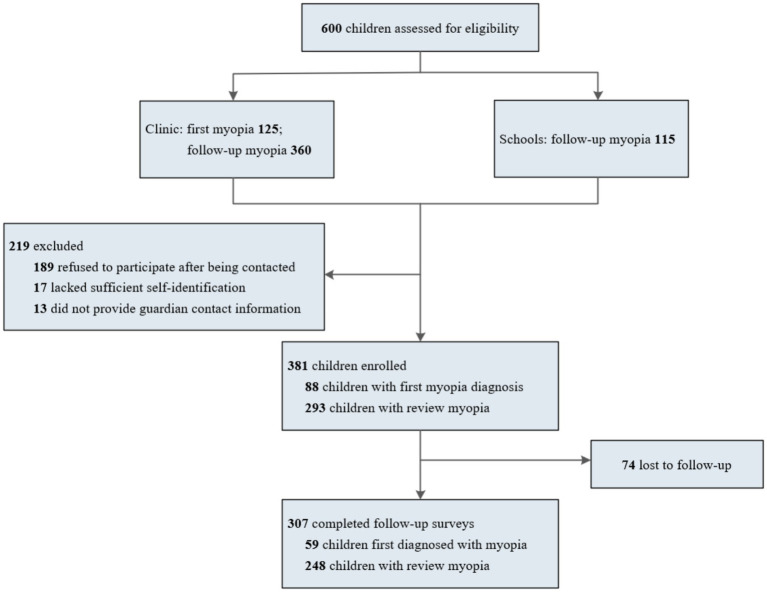 Figure 1
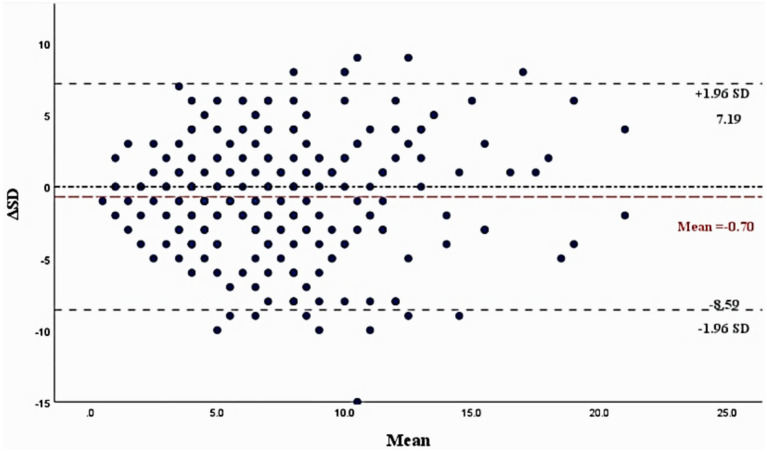 Figure 2
Peer Reviews
No public reviews on file for this paper yet. If you reviewed it on a platform where reviews are public (OpenReview, ICLR, NeurIPS, ICML), you can paste yours below so the community can read it here.
Videos
No videos yet. Explain this paper in a talk, walkthrough, or lecture? Add one.
Taxonomy
TopicsOphthalmology and Visual Impairment Studies · Scoliosis diagnosis and treatment · Retinopathy of Prematurity Studies