Gender-based differences in telomere attrition and long-term respiratory dysfunction in COVID-19 ICU survivors one year post-infection: implications for aging-associated pulmonary decline
Raquel Behar-Lagares, Ana Virseda-Berdices, Óscar Martínez-González, Rafael Blancas, Eva Manteiga, Paula Muñoz-García, María J. Mallol Poyato, Jorge Molina del Pozo, Marcela Homez-Guzmán, María A. Alonso Fernández, Salvador Resino, Amanda Fernández-Rodríguez

TL;DR
This study finds that telomere shortening in blood cells is linked to long-term lung problems in men and women who survived critical COVID-19, with gender-specific patterns.
Contribution
The study identifies gender-specific associations between telomere attrition and long-term respiratory outcomes in post-ICU COVID-19 survivors.
Findings
Women with shorter telomeres and a history of pronation had more persistent respiratory symptoms.
Men with shorter telomeres were more likely to develop diffuse parenchymal lung disease.
Telomere attrition was significantly linked to ICU interventions like IMV and prone positioning in both genders.
Abstract
A significant proportion of COVID-19 Intensive Care Unit (ICU) survivors develop long-term respiratory complications, including pulmonary fibrosis. Telomere attrition, a marker of cellular senescence, has emerged as a potential biomarker for post-COVID-19 sequelae. This study investigated the association between peripheral blood relative telomere length (RTL) and long-term pulmonary outcomes in COVID-19 ICU survivors, with a specific focus on gender-specific differences. ICU-admitted COVID-19 patients were followed for at least one year post-discharge. RTL was quantified from peripheral blood using monochromatic multiplex quantitative PCR (MMqPCR) at hospital admission and one-year post-discharge. Primary outcomes were respiratory symptoms and diffuse parenchymal lung disease (DPLD), assessed via imaging. Data were analyzed using gender-stratified generalized linear models, adjusted…
Genes, proteins, chemicals, diseases, species, mutations and cell lines named across the full text — each resolved to its canonical identifier and authoritative record.
Click any figure to enlarge with its caption.
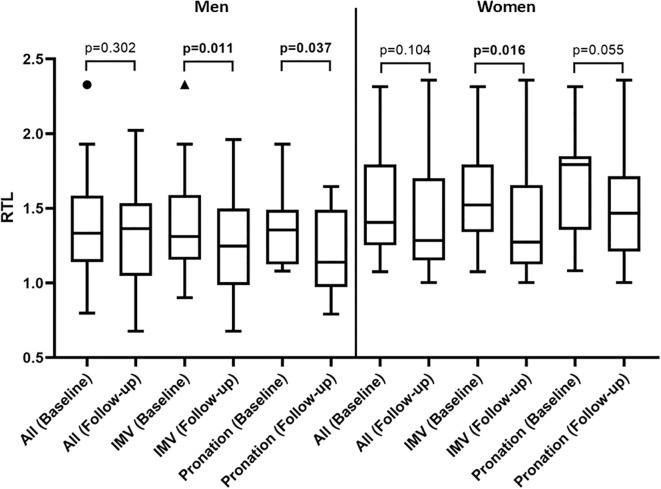 Figure 1
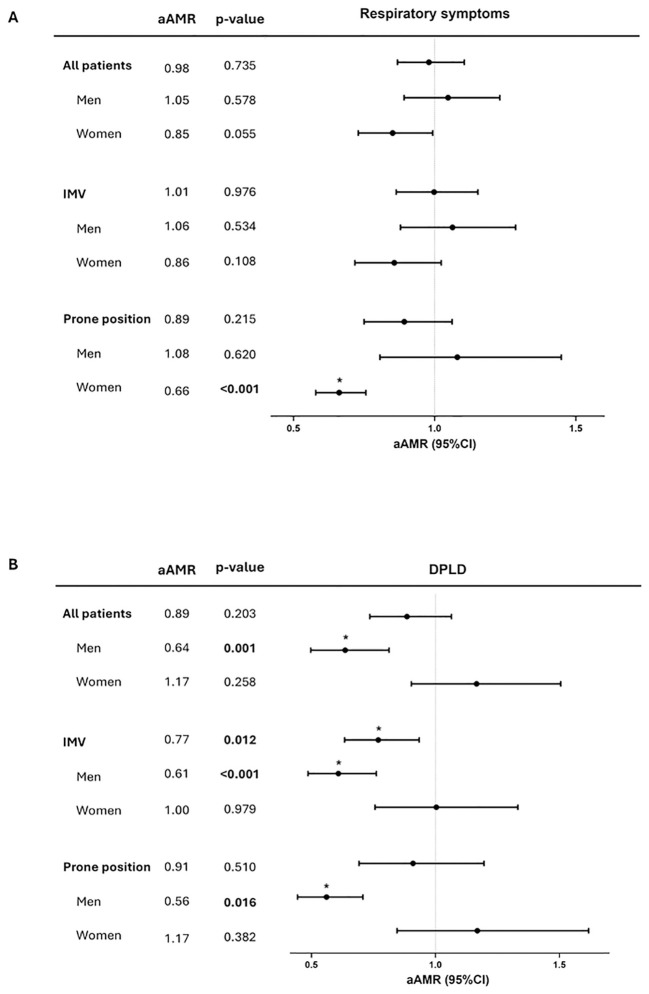 Figure 2
Peer Reviews
No public reviews on file for this paper yet. If you reviewed it on a platform where reviews are public (OpenReview, ICLR, NeurIPS, ICML), you can paste yours below so the community can read it here.
Videos
No videos yet. Explain this paper in a talk, walkthrough, or lecture? Add one.
Taxonomy
TopicsTelomeres, Telomerase, and Senescence · Frailty in Older Adults · Muscle Physiology and Disorders