Validating the Swedish STOP-D: a brief tool for depression, anxiety, stress, anger and social support
Andreas Larsson, Veronica Milos Nymberg, Peter Nymberg, Felicia T. A. Sundström

TL;DR
This study validates a brief Swedish version of the STOP-D tool for assessing depression, anxiety, stress, anger, and social support in adults.
Contribution
The study provides validation of the Swedish STOP-D, a brief mental health screening tool, in a non-clinical population.
Findings
STOP-D items for Sadness and Anxiety showed excellent classification accuracy for depression and anxiety (AUC = 0.87–0.89).
The EGA supported a two-factor model separating Sad/Anxiety/Stress from Anger and Lack of Social Support.
The Swedish STOP-D is a valid brief tool for assessing core psychological distress.
Abstract
Psychological distress, including depression, anxiety, and stress, requires time-efficient assessment tools suited for digital and momentary settings. The Screening Tool for Psychological Distress (STOP-D) is a five-item scale developed for brief mental health screening, but it has not yet been validated in Swedish. This study aimed to evaluate the psychometric properties and diagnostic accuracy of the Swedish STOP-D in a non-clinical adult sample. A total of 427 Swedish-speaking adults (mean age = 49.42, SD = 16.34 years) completed the STOP-D, the Patient Health Questionnaire-4 (PHQ-4), the Single-Item Stress Scale (SISE), and the Need Satisfaction and Frustration Scale (NSFS). ROC analyses were conducted using PHQ-2 and GAD-2 (cut-off ≥ 3) and the SISE (cut-off ≥ 6 and 7). Feature importance was examined using the Boruta algorithm. Exploratory Graph Analysis (EGA) assessed the…
Genes, proteins, chemicals, diseases, species, mutations and cell lines named across the full text — each resolved to its canonical identifier and authoritative record.
Click any figure to enlarge with its caption.
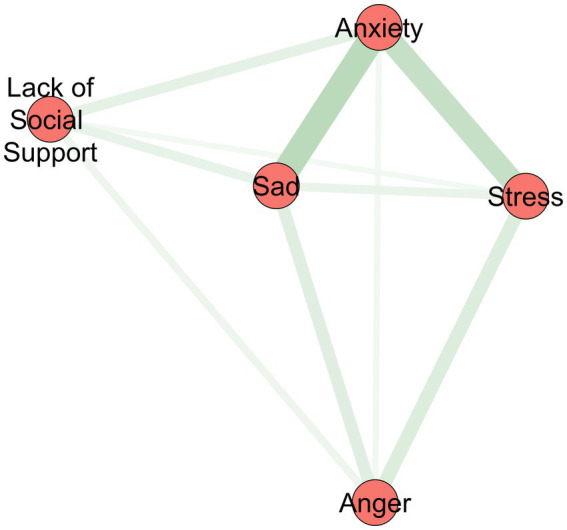 Figure 1
Peer Reviews
No public reviews on file for this paper yet. If you reviewed it on a platform where reviews are public (OpenReview, ICLR, NeurIPS, ICML), you can paste yours below so the community can read it here.
Videos
No videos yet. Explain this paper in a talk, walkthrough, or lecture? Add one.
Taxonomy
TopicsDigital Mental Health Interventions · Mental Health Treatment and Access · Mental Health Research Topics