Gene and function diversity-area relationships in the inflammatory bowel disease fecal and mucosal microbiome
Fubing Yu, Jiyang Song, Linyi Qi, Jinghua Liu, Yintiantian Yang, Wendy Li, Lianwei Li, Zhanshan (Sam) Ma

TL;DR
This study uses diversity-area relationships to show how gut microbiome genes and functions differ in inflammatory bowel disease compared to healthy individuals, revealing a restructured microbial community.
Contribution
The study introduces the use of diversity-area relationships (DAR) to analyze spatial scaling of metagenomic genes and functions in IBD microbiomes.
Findings
Mucosal communities showed greater dissimilarity between individuals compared to fecal communities at gene richness and evenness levels.
Healthy gut microbiomes had higher potential total diversity and greater similarity in gene richness compared to IBD microbiomes.
Fecal samples captured broader microbial diversity than mucosal samples, and antibiotic resistance genes showed distinct scaling behaviors in IBD.
Abstract
The diversity-area relationship (DAR), an extension of the classic species-area relationship (SAR), provides a powerful framework for understanding how biodiversity scales across space. In this study, we applied DAR and its metagenomic counterpart (m-DAR) to investigate the spatial scaling of metagenomic genes (MGs) and metagenomic functional gene clusters (MFGCs) of seven functional databases in the gut microbiomes of individuals with inflammatory bowel disease (IBD) and healthy cohorts. Using shotgun sequencing data from 42 mucosal and 22 fecal samples from both healthy and IBD cohorts, we modeled how this MGs and MFGCs accrues with area (samples), estimating diversity scaling parameters (z), pair-wise diversity overlap (PDO), and maximal accrual diversity (MAD), which reflects the total potential diversity. We found that mucosal communities exhibited greater dissimilarity (less…
Genes, proteins, chemicals, diseases, species, mutations and cell lines named across the full text — each resolved to its canonical identifier and authoritative record.
Click any figure to enlarge with its caption.
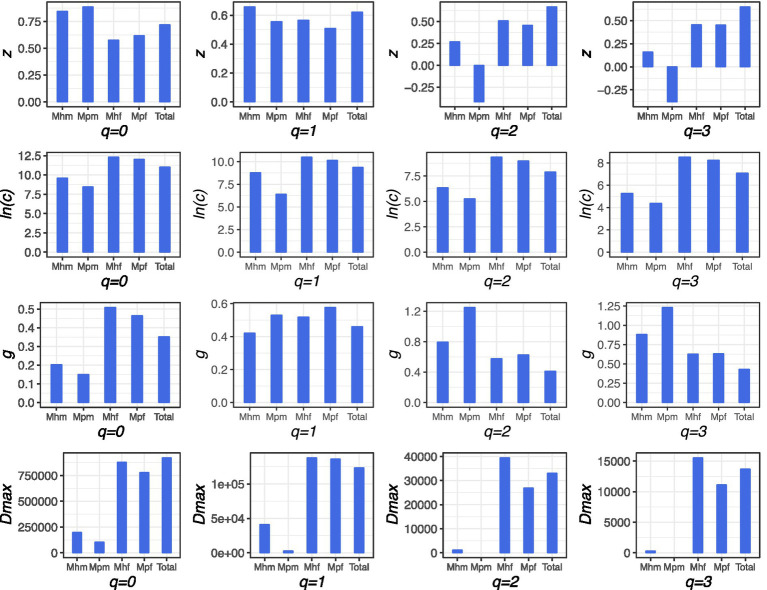 Figure 1
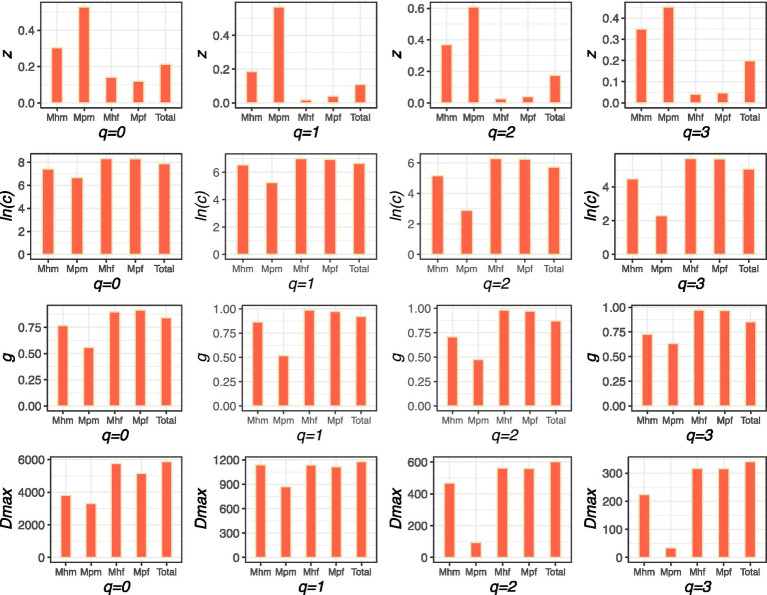 Figure 2
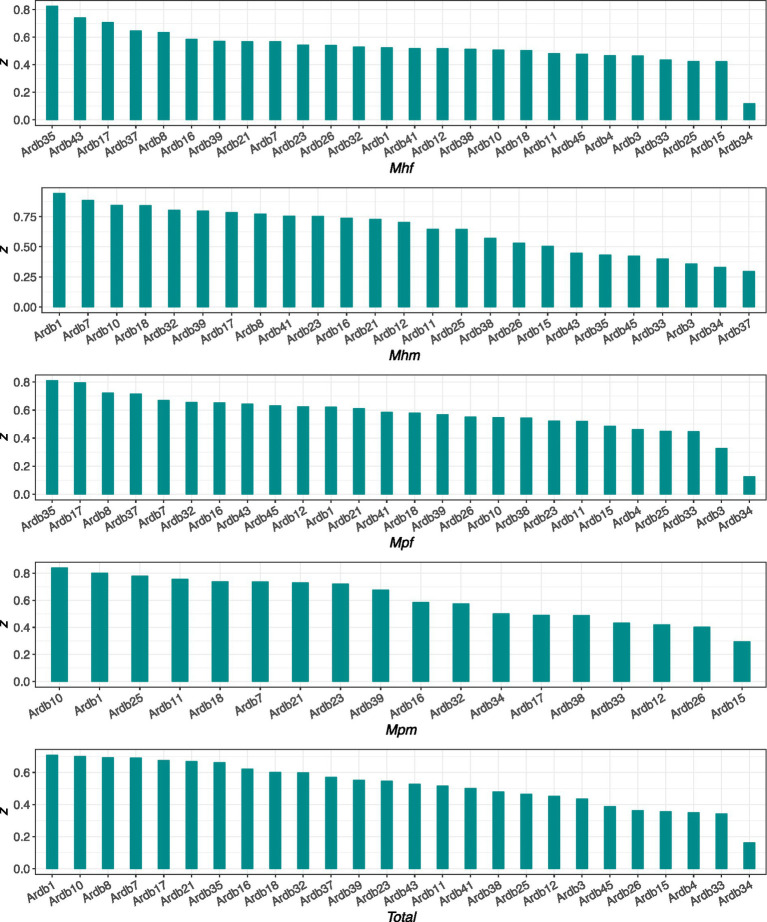 Figure 3
Peer Reviews
No public reviews on file for this paper yet. If you reviewed it on a platform where reviews are public (OpenReview, ICLR, NeurIPS, ICML), you can paste yours below so the community can read it here.
Videos
No videos yet. Explain this paper in a talk, walkthrough, or lecture? Add one.
Taxonomy
TopicsGut microbiota and health · Inflammatory Bowel Disease · Epigenetics and DNA Methylation