From hypereosinophilia to hypereosinophilic syndrome: real-world application of a two-tailed approach for HES diagnosis
Stefania Nicola, Richard Borrelli, Irene Ridolfi, Luca Lo Sardo, Simone Negrini, Monica Fornero, Nicolò Rashidy, Federica Corradi, Iuliana Badiu, Eleonora Cerutti, Giulia Costanzo, Stefano Del Giacco, Giovanni Rolla, Luisa Brussino

TL;DR
This study examines how a two-tailed diagnostic approach improves the accuracy and speed of diagnosing hypereosinophilic syndrome in patients with high eosinophil levels.
Contribution
The study introduces and validates a two-tailed approach for HES diagnosis that simultaneously identifies etiology and organ damage.
Findings
79 patients were diagnosed with HES using the two-tailed approach, with 63 showing multi-organ involvement.
The approach reduced diagnostic delay to 4 months and lowered the rate of idiopathic HES diagnoses.
Heart involvement was observed in 12.7% of patients, highlighting the importance of early organ assessment.
Abstract
Hypereosinophilic Syndrome (HES) is a rare disorder with a heterogeneous clinical presentation. If not recognized, it can lead to diagnostic delay and worse prognosis. Our study aimed to describe the real-world scenario of patients presenting with hypereosinophilia (HE), diagnosed with HES in an Italian Immunology Excellence University Centre. In addition, we also assessed the feasibility of a two-tailed approach for HES diagnosis, which consists of proceeding from the beginning with the differential diagnosis and systematic evaluation of organ damage. A retrospective observational single-center study was conducted. All patients underwent blood and instrumental tests to simultaneously identify HES etiology and any organ damage, through a process we called the “two-tailed approach”. Two hundred forty-seven patients with HE referred to our center underwent the two-tailed approach. Due…
Genes, proteins, chemicals, diseases, species, mutations and cell lines named across the full text — each resolved to its canonical identifier and authoritative record.
Click any figure to enlarge with its caption.
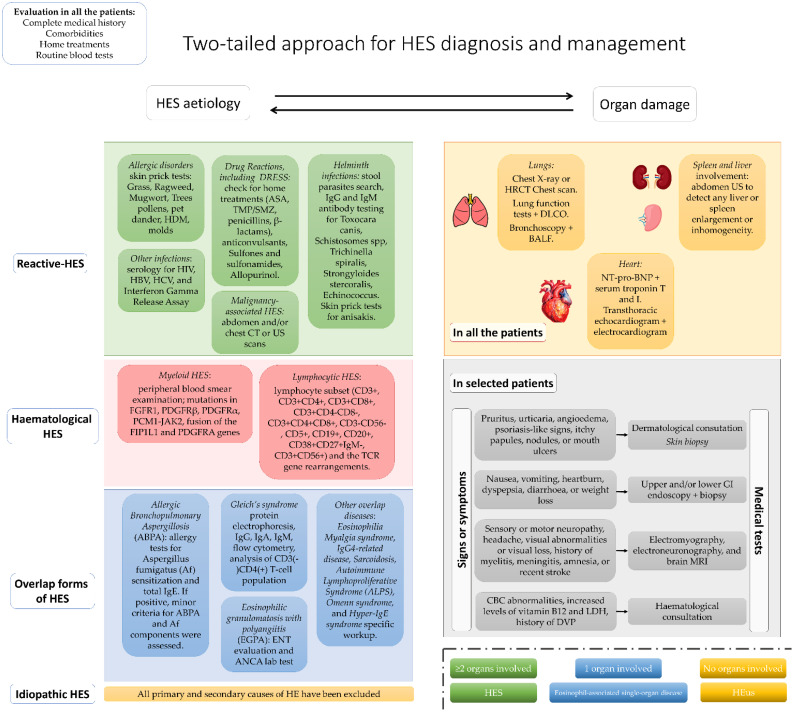 Figure 1
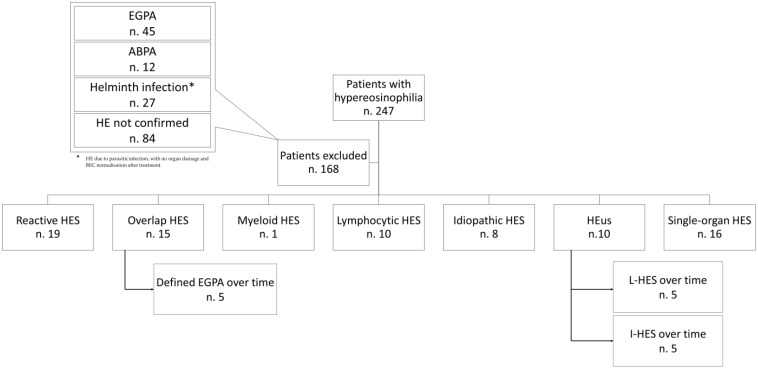 Figure 2
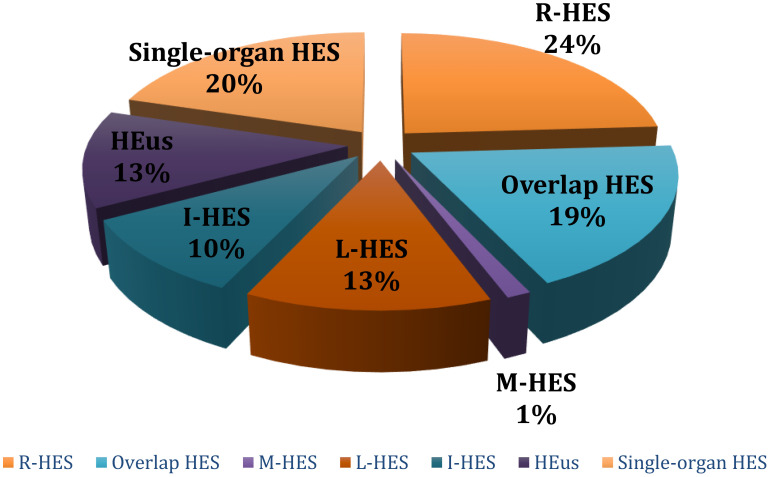 Figure 3
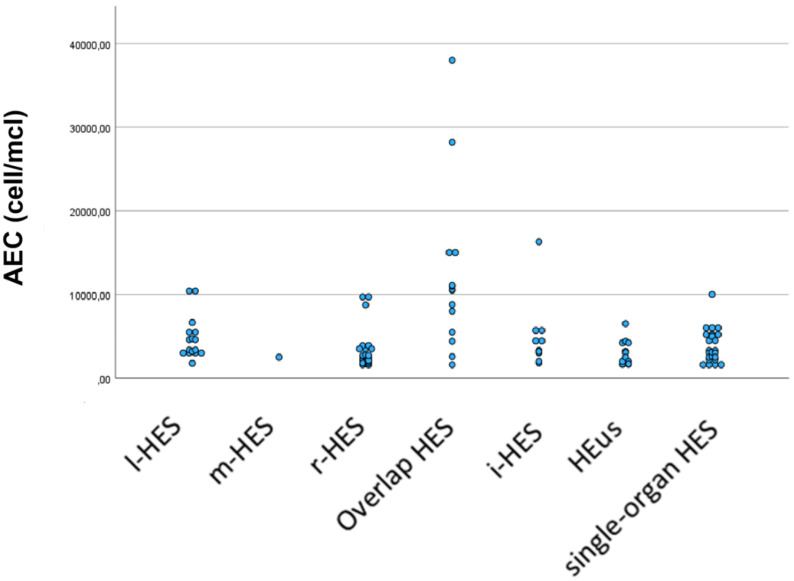 Figure 4
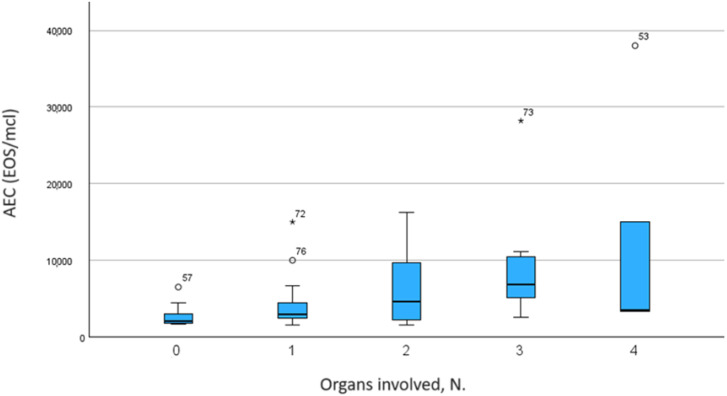 Figure 5
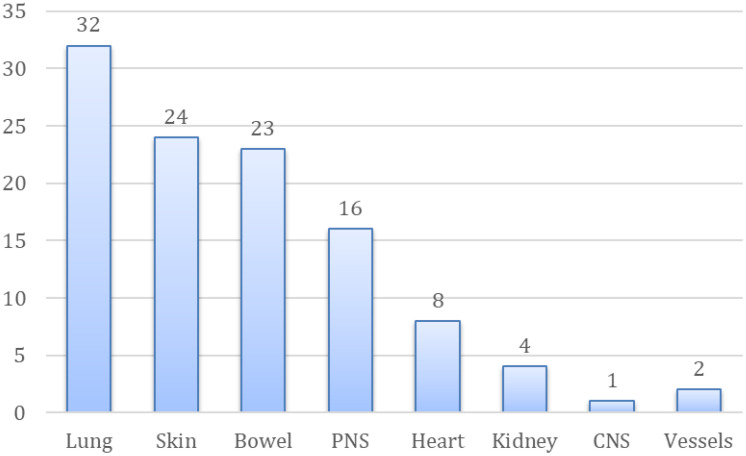 Figure 6
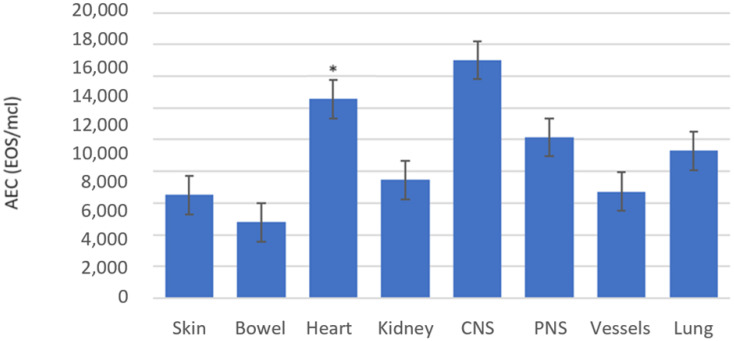 Figure 7
Peer Reviews
No public reviews on file for this paper yet. If you reviewed it on a platform where reviews are public (OpenReview, ICLR, NeurIPS, ICML), you can paste yours below so the community can read it here.
Videos
No videos yet. Explain this paper in a talk, walkthrough, or lecture? Add one.
Taxonomy
TopicsEosinophilic Disorders and Syndromes · Autoimmune and Inflammatory Disorders · Eosinophilic Esophagitis