Multi-mechanism synergistic remediation of phosphate-solubilizing bacteria under tetracycline and lead co-contamination stress: phosphate precipitation and organic acid complexation
Yanjie Zhou, Jiangyan Wu, Qi Tang, Huihui Chen, Yuan Liu, Haoming Chen

TL;DR
A phosphate-solubilizing bacteria strain was found to effectively remediate tetracycline and lead co-contamination through phosphate precipitation and organic acid complexation.
Contribution
The study identifies a novel synergistic mechanism of Pb and TC remediation via phosphate precipitation and organic acid complexation by a specific bacterial strain.
Findings
Strain CZ-M3 achieved a 69.1% higher phosphate solubilization than the control strain.
CZ-M3 removed 57.36% of 200 mg/L tetracycline and 28.5% of 1,000 mg/L Pb2+ within 72 hours.
Tartaric acid secretion under TC stress enhanced Pb immobilization via complexation and phosphate precipitation.
Abstract
Tetracycline (TC) and lead (Pb) contamination have become globally urgent environmental challenges. They are widely distributed in soil, water bodies, and other environments, posing severe threats to ecosystems and human health. Microbial remediation, as a cost-effective and environmentally friendly pollution control approach, has garnered increasing attention in recent years. This study isolated and screened a highly efficient phosphate-solubilizing bacteria strain CZ-M3 (Microbacterium sp.) from a chemical factory contaminated environment. The strain achieved a phosphate solubilization capacity of 125.46 mg/L in PVK medium, significantly outperforming the control strain CZ-B5 (69.1% increase). Stress tolerance experiments demonstrated that strain CZ-M3 maintained robust activity under TC (≤200 mg/L) and Pb2+ (≤1,000 mg/L) stress, achieving 72-h removal rates of 57.36% for 200 mg/L TC…
Genes, proteins, chemicals, diseases, species, mutations and cell lines named across the full text — each resolved to its canonical identifier and authoritative record.
Click any figure to enlarge with its caption.
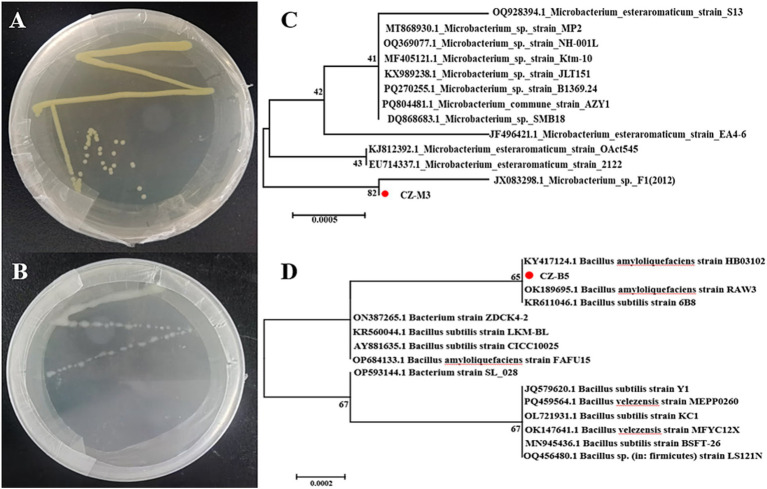 Figure 1
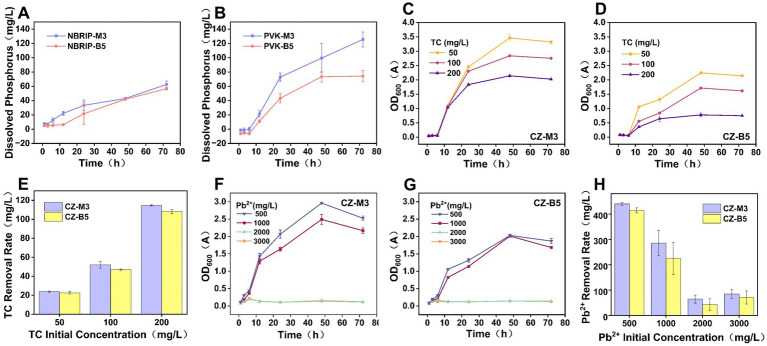 Figure 2
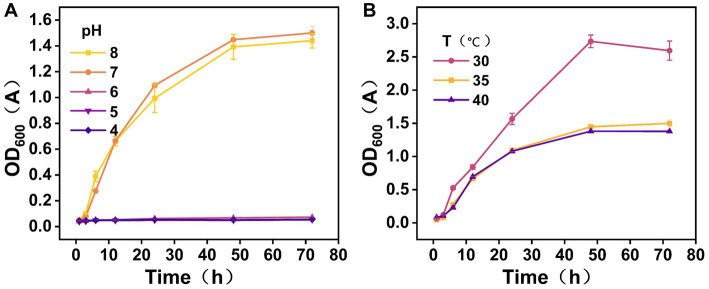 Figure 3
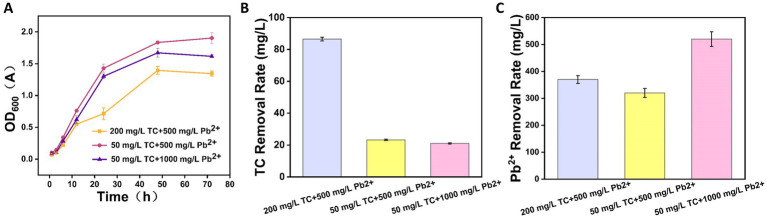 Figure 4
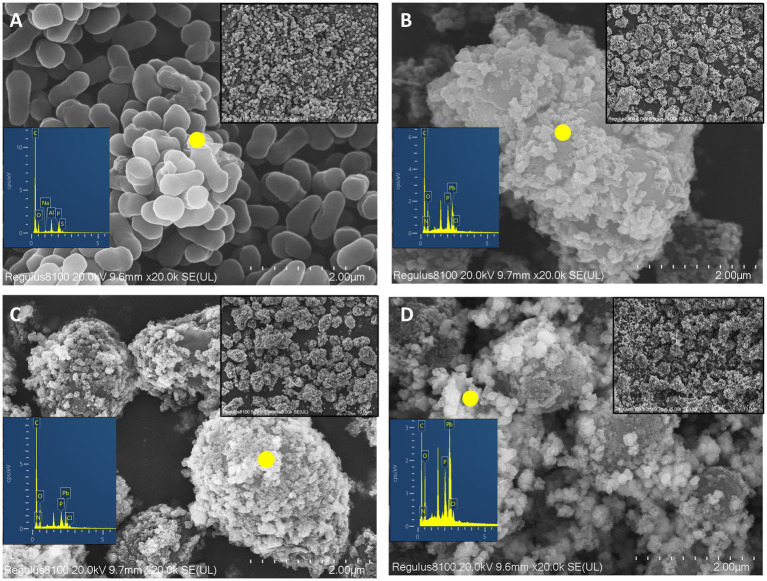 Figure 5
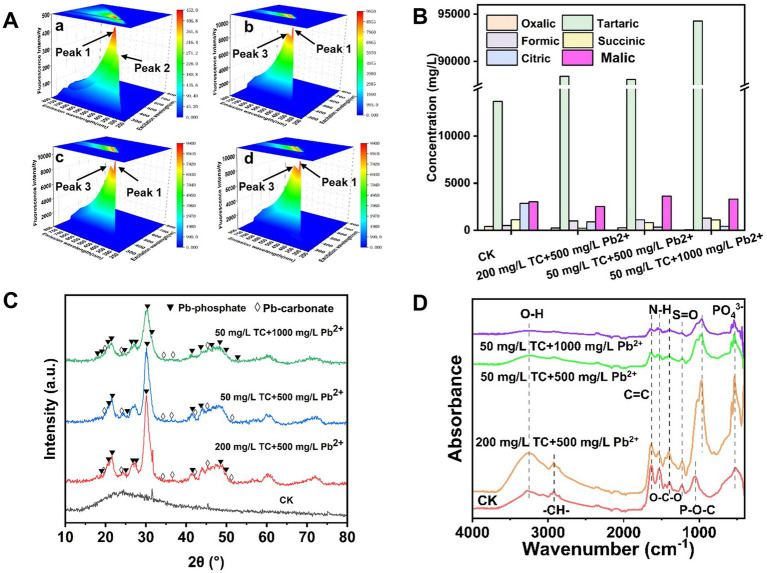 Figure 6
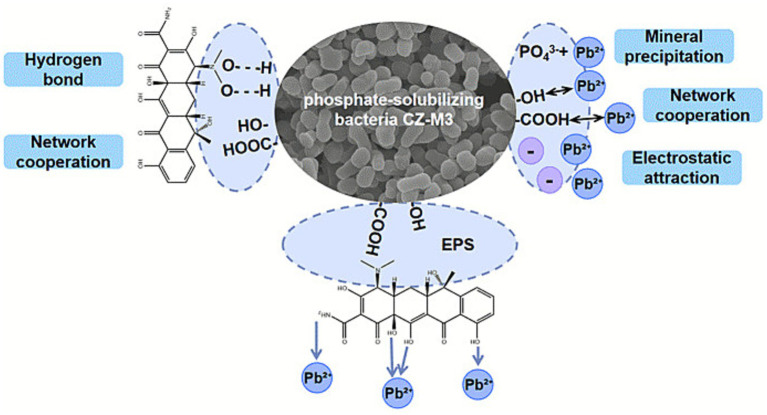 Figure 7
Peer Reviews
No public reviews on file for this paper yet. If you reviewed it on a platform where reviews are public (OpenReview, ICLR, NeurIPS, ICML), you can paste yours below so the community can read it here.
Videos
No videos yet. Explain this paper in a talk, walkthrough, or lecture? Add one.
Taxonomy
TopicsChromium effects and bioremediation · Adsorption and biosorption for pollutant removal · Microbial Applications in Construction Materials