Psychopathy in adult male offenders from Latin America: an item response theory analysis of the self-report psychopathy-short form (SRP-SF)
Nicolás Trajtenberg, Olga Sánchez de Ribera, Elizabeth León-Mayer, Pablo Menese, Craig S. Neumann

TL;DR
This study analyzes how well a short psychopathy questionnaire works for male offenders in Chile and Uruguay, finding some items may not be equally effective across individuals or countries.
Contribution
The study applies item response theory to evaluate the SRP-SF in Latin American incarcerated populations, identifying items with low discrimination and differential functioning.
Findings
Facet 1 (Interpersonal) was most informative for measuring psychopathy.
Six items showed low discrimination and evidence of differential item functioning (DIF).
Seven items displayed DIF across country comparisons between Chile and Uruguay.
Abstract
Research on the item properties of the Psychopathy Checklist–Revised (PCL-R) is extensive, and the Self-Report Psychopathy Scale-Short Form (SRP-SF) is a derivative of the PCL-R. To date, studies on the SRP-SF items have primarily relied on classical test theory with Western populations, although research using latent variable models across different cultures is emerging. This study applied an Item Response Theory approach using the Graded Response Model to examine SRPSF item properties in two incarcerated male samples from Chile (N = 208) and Uruguay (N = 331). It also examined the item functioning differences between these two samples. Findings indicated that Facet 1 (Interpersonal) was the most informative for measuring the latent psychopathy trait. However, six items showed low discrimination and evidence of differential item functioning (DIF). Only two items displayed DIF between…
Genes, proteins, chemicals, diseases, species, mutations and cell lines named across the full text — each resolved to its canonical identifier and authoritative record.
Click any figure to enlarge with its caption.
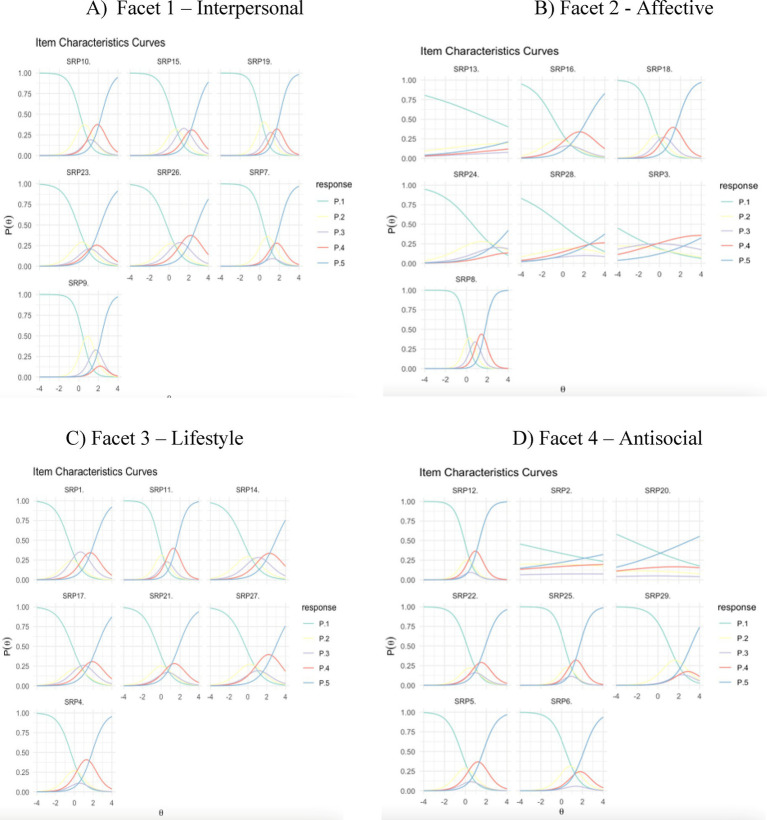 Figure 1
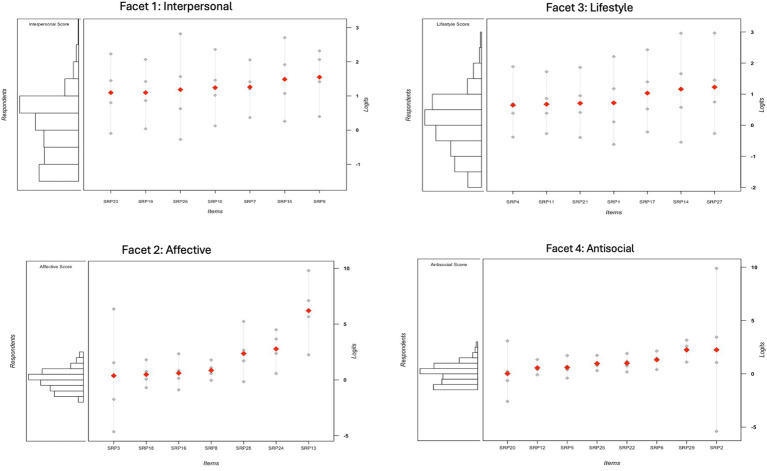 Figure 2
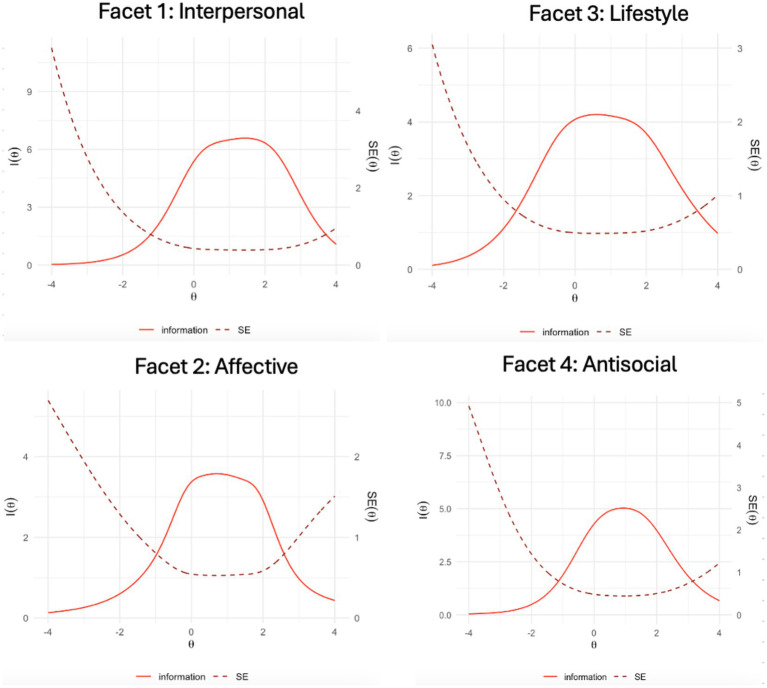 Figure 3
Peer Reviews
No public reviews on file for this paper yet. If you reviewed it on a platform where reviews are public (OpenReview, ICLR, NeurIPS, ICML), you can paste yours below so the community can read it here.
Videos
No videos yet. Explain this paper in a talk, walkthrough, or lecture? Add one.
Taxonomy
TopicsPsychopathy, Forensic Psychiatry, Sexual Offending · Schizophrenia research and treatment · Crime Patterns and Interventions