Serological and molecular surveillance of infectious bovine rhinotracheitis in Kazakhstan
Aiken Karabassova, Vladimir Kirpichenko, Raikhan Nissanova, Marat Turkeev, Akmerey Akylbay, Perizat Akshalova, Elvira Bashenova, Bakhyt Tulepov, Saltanat Mamanova, Saira Kaimoldina, Arailym Zhapbar, Fariza Ikramkulova, Aigul Kassen, Aisha Zharmukhametova, Zhandos Abay

TL;DR
A three-year study in Kazakhstan found that infectious bovine rhinotracheitis remains widespread, with high antibody levels and low viral shedding in cattle.
Contribution
The study provides the first comprehensive multi-year surveillance data on BoHV-1 in Kazakhstan, including validated diagnostic tools and insights for future eradication efforts.
Findings
High antibody prevalence (69-83%) was observed across three years, indicating widespread exposure to BoHV-1.
PCR positivity dropped from 11.2% in 2024 to 0.43% in 2025, suggesting subclinical and intermittent viral shedding.
National reference serum panels achieved >95% concordance with international standards, supporting improved QA/QC for diagnostics.
Abstract
Infectious bovine rhinotracheitis (IBR), caused by bovine herpesvirus type 1 (BoHV-1), remains endemic in Kazakhstan. Despite the absence of vaccination, comprehensive multi-year data on the virus circulation have been limited. A three-year surveillance between 2023 and 2025 was conducted in unvaccinated cattle from all 17 administrative regions a total of 8,590 serum samples and 4,795 nasal swabs. Serological monitoring was performed using two validated ELISA systems (IDEXX IBR gE Ab Test and ID Screen® IBR Indirect ELISA). Molecular detection employed real-time PCR on nasal swabs, and virus-isolation attempts were carried out on Vero cell monolayers. National reference serum panels were developed and externally validated at the Friedrich-Loeffler-Institut (Germany). Serological testing revealed consistently high antibody prevalence—69.13% (2023), 80.64% (2024), and 82.79%…
Genes, proteins, chemicals, diseases, species, mutations and cell lines named across the full text — each resolved to its canonical identifier and authoritative record.
Click any figure to enlarge with its caption.
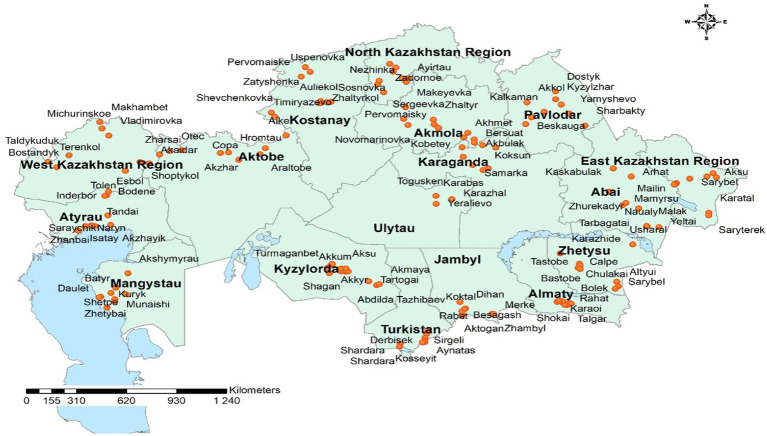 Figure 1
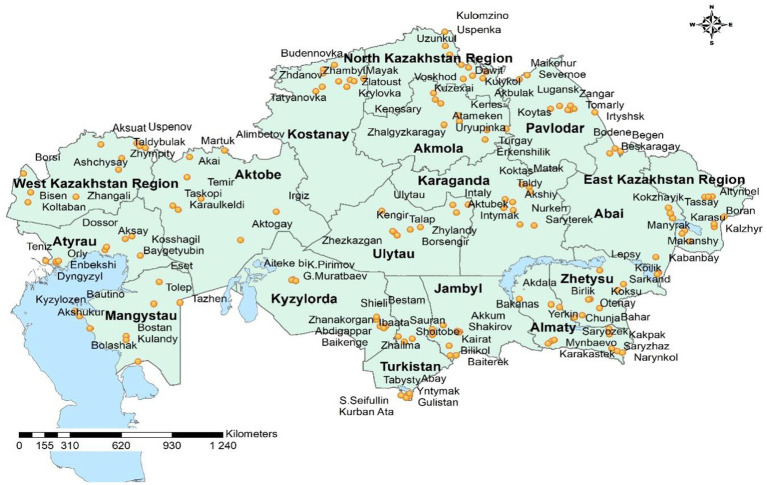 Figure 2
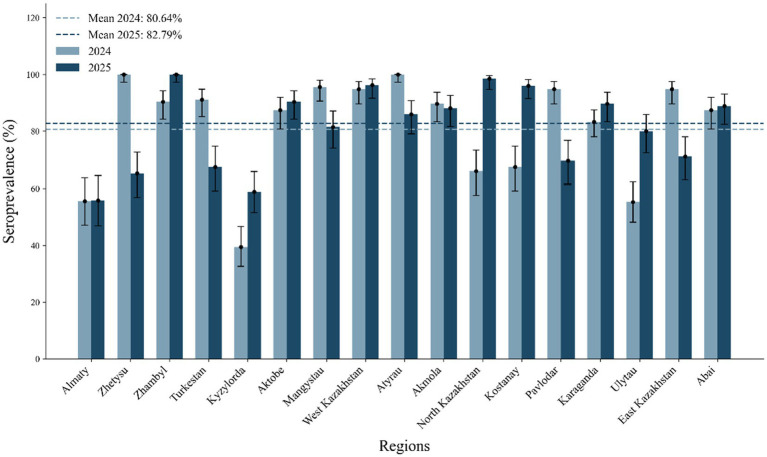 Figure 3
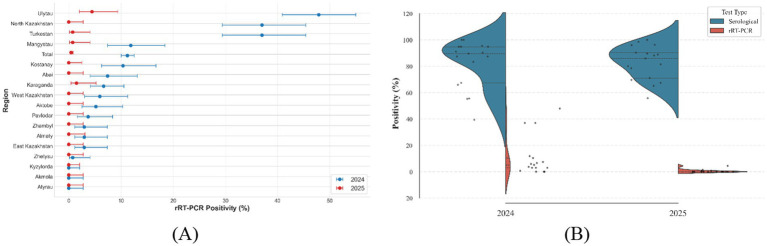 Figure 4
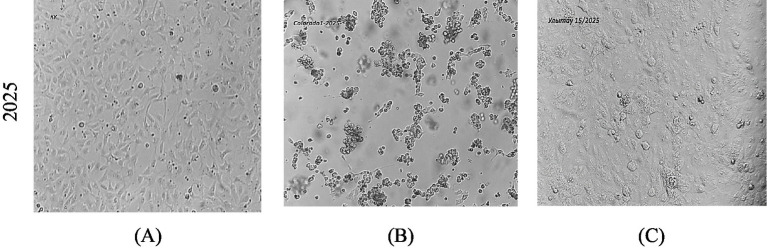 Figure 5
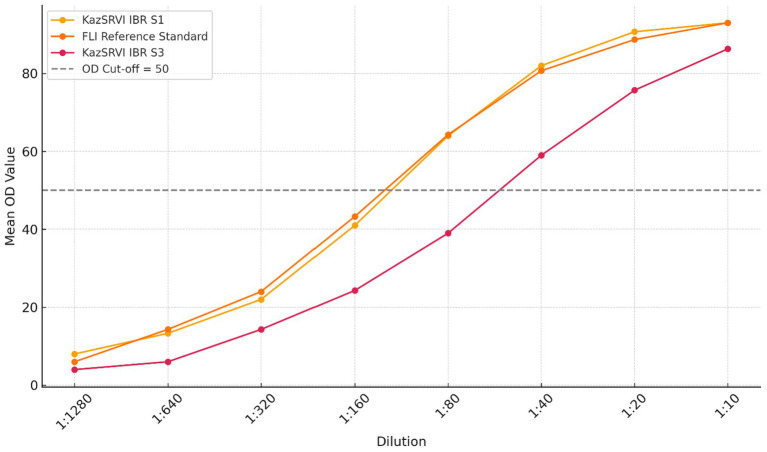 Figure 6
Peer Reviews
No public reviews on file for this paper yet. If you reviewed it on a platform where reviews are public (OpenReview, ICLR, NeurIPS, ICML), you can paste yours below so the community can read it here.
Videos
No videos yet. Explain this paper in a talk, walkthrough, or lecture? Add one.
Taxonomy
TopicsHerpesvirus Infections and Treatments · Animal Disease Management and Epidemiology · Microbial infections and disease research