MDC1 counteracts replication fork reversal and mediates chemosensitivity in BRCA1/2-deficient tumors
Hülya Dogan, Martin Liptay, Joana S. Barbosa, Ewa Gogola, Alexandra A. Duarte, Jonas A. Schmid, Ismar Klebic, Merve Mutlu, Myriam Siffert, Paola Francica, Israel Salguero, Marieke van de Ven, Renske de Korte-Grimmerink, Stephen P. Jackson, Jos Jonkers, Massimo Lopes

TL;DR
This study reveals that MDC1 helps control DNA replication and influences how BRCA1/2-deficient tumors respond to certain cancer drugs.
Contribution
The paper discovers a new role for MDC1 in regulating replication fork dynamics and chemosensitivity in BRCA1/2-deficient tumors.
Findings
MDC1 localizes at replication forks and regulates their progression and stability.
MDC1 loss leads to chemoresistance in BRCA1/2-deficient cells by improving DNA damage tolerance.
MRE11 inhibition can overcome PARPi resistance in these cells.
Abstract
MDC1 is a key protein in DNA damage signaling. When DNA double-strand breaks (DSBs) occur, MDC1 localizes to the sites of DNA damage to promote the recruitment of other factors, including the 53BP1-mediated DSB repair pathway. By studying mechanisms of poly (ADP-ribose) polymerase inhibitor (PARPi) resistance in BRCA2; p53-deficient mouse mammary tumors, we identified a thus far unknown role of MDC1 in replication fork biology. Our results show that MDC1 localizes at active replication forks during normal DNA replication and regulates replication fork progression. It suppresses spontaneous fork reversal and regulates fork nucleolytic processing thereby promoting sensitivity to PARPi and cisplatin. In this way, MDC1 loss improves DNA damage tolerance and causes chemoresistance in BRCA1/2-deficient cells. We demonstrate that limiting MRE11 activity abolishes the reduced fork speed while…
Genes, proteins, chemicals, diseases, species, mutations and cell lines named across the full text — each resolved to its canonical identifier and authoritative record.
Click any figure to enlarge with its caption.
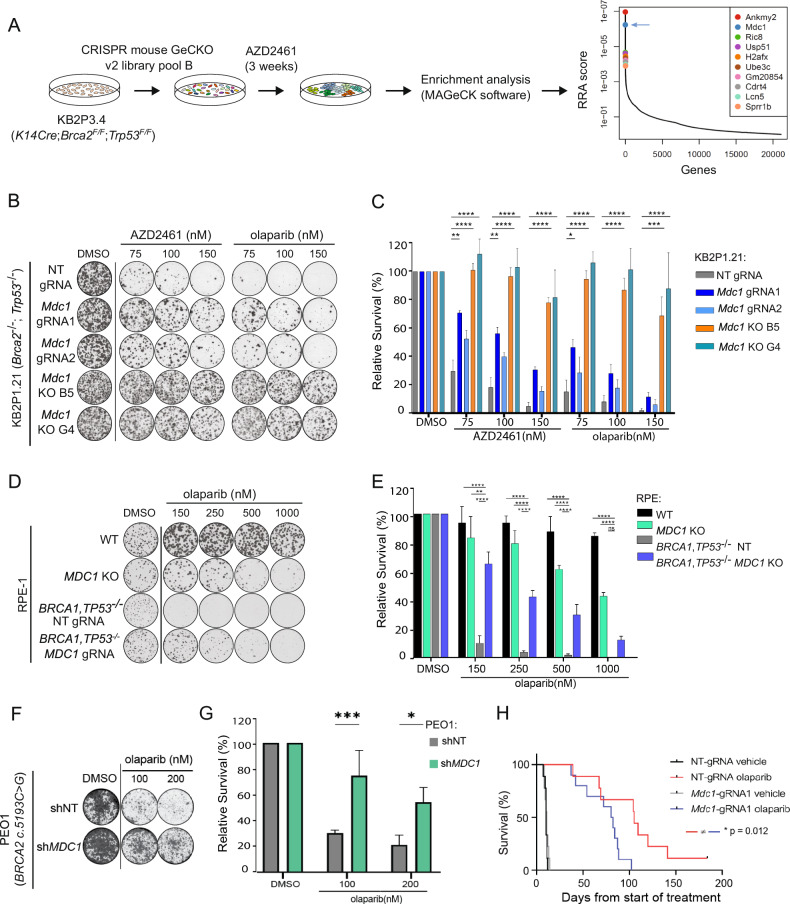 Figure 1
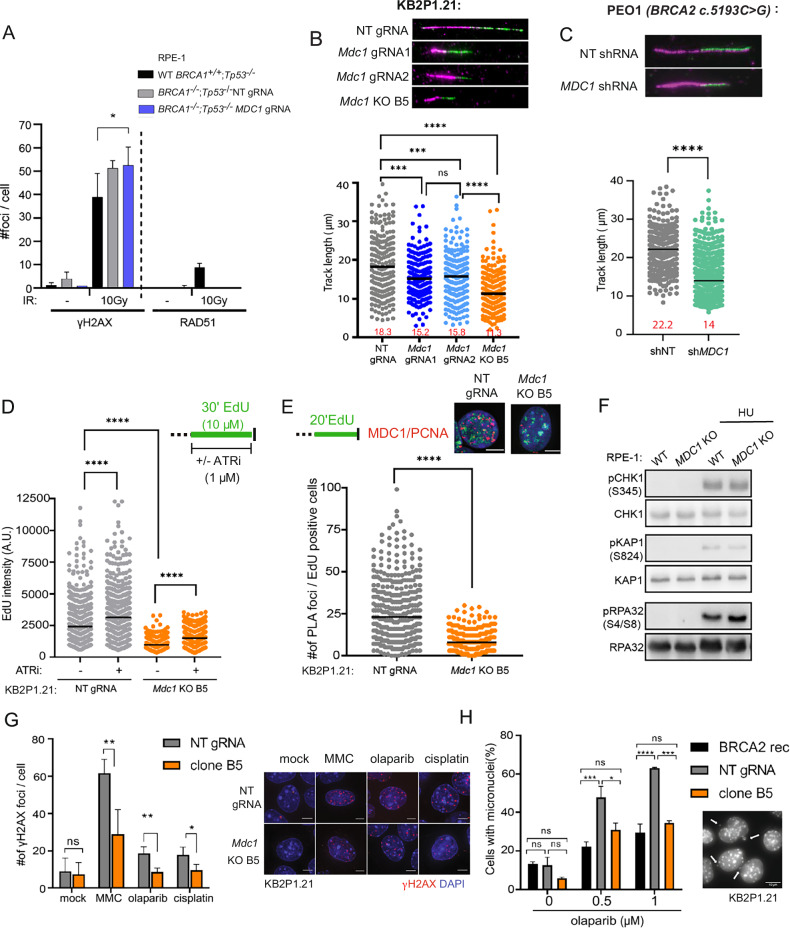 Figure 2
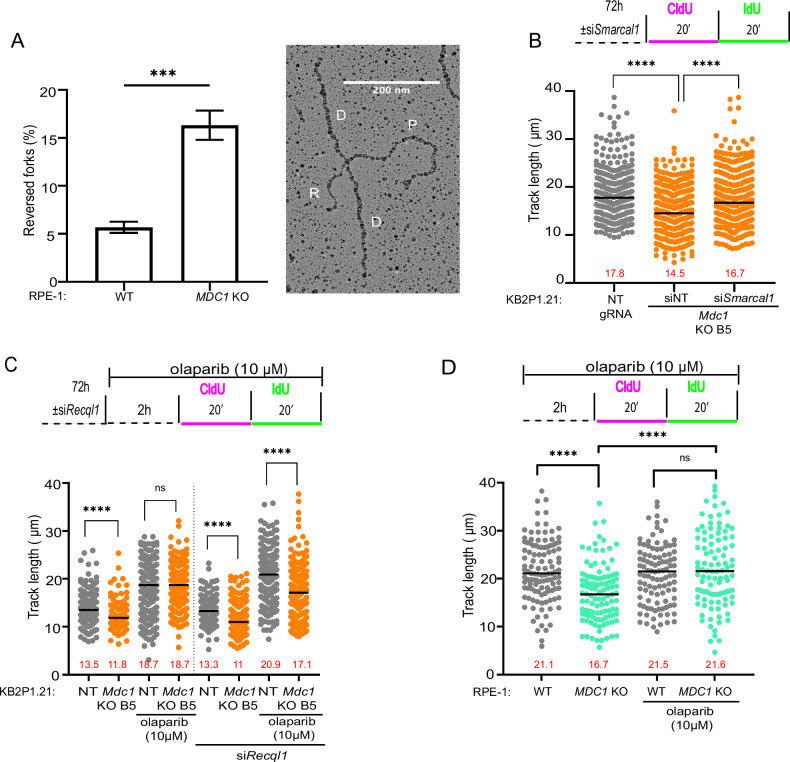 Figure 3
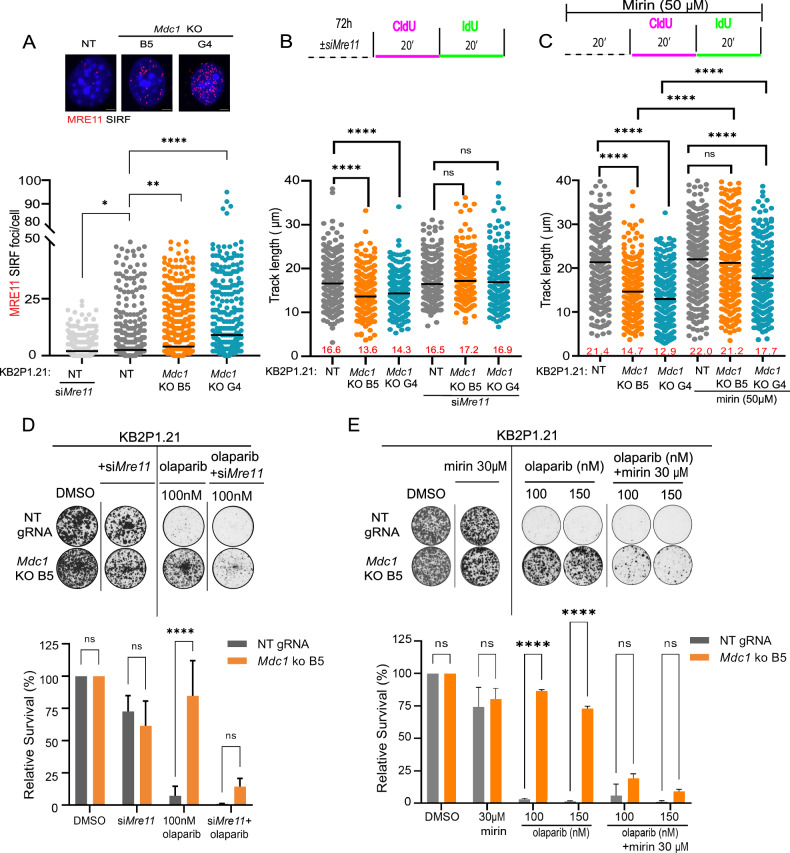 Figure 4
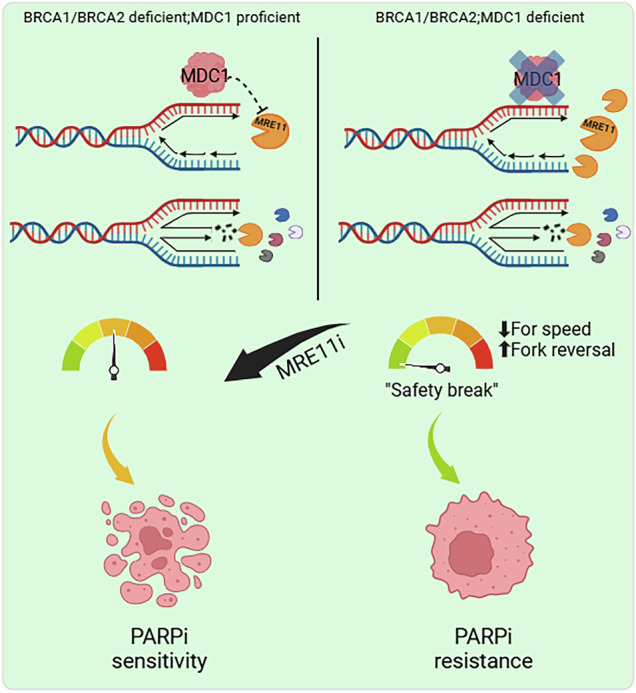 Figure 5
Peer Reviews
No public reviews on file for this paper yet. If you reviewed it on a platform where reviews are public (OpenReview, ICLR, NeurIPS, ICML), you can paste yours below so the community can read it here.
Videos
No videos yet. Explain this paper in a talk, walkthrough, or lecture? Add one.
Taxonomy
TopicsDNA Repair Mechanisms · PARP inhibition in cancer therapy · Microtubule and mitosis dynamics