A single glucocorticoid response element regulates sociability in a sex-specific manner
Brian F. Corbett, Jay Arner, Sandra Luz, Jason Yan, Jose Castro-Vildosola, Tamara Hala, Deanne Taylor, Seema Bhatnagar

TL;DR
A specific glucocorticoid receptor binding site near the S1PR3 gene affects sociability and inflammation in a sex-specific way.
Contribution
The study identifies a sex-specific role of a glucocorticoid response element near S1PR3 in regulating sociability and inflammation.
Findings
Deleting the GR binding site near S1PR3 increased inflammation and reduced sociability in stressed male rats.
Females showed similar effects without stress, indicating greater reliance on GR regulation of S1PR3.
Inhibiting LC neurons projecting to the mPFC increased social interaction in males, suggesting a neural mechanism for resilience.
Abstract
Glucocorticoid receptors (GRs) regulate transcription to reduce inflammatory processes, modulate neuron function, and influence behavior. However, the precise loci bound by GRs that are critically important for these effects have not been fully determined. Here, we deleted the GR binding site near the sphingosine-1-phosphate receptor 3 (S1PR3) gene using a CRISPR/Cas9 approach in rats (S1PR3GRE-/GRE- rats). Socially defeated S1PR3GRE-/GRE- males displayed increased inflammatory markers and reduced sociability compared to defeated wild-type (WT) controls. Similar effects were observed in non-stressed females, indicating a greater dependence on the regulation of S1PR3 by GRs in females. Coherent neural activity between the locus coeruleus (LC) and medial prefrontal cortex (mPFC) was increased in defeated S1PR3GRE-/GRE- males whereas increases were observed in non-stressed S1PR3GRE-/GRE…
Genes, proteins, chemicals, diseases, species, mutations and cell lines named across the full text — each resolved to its canonical identifier and authoritative record.
Click any figure to enlarge with its caption.
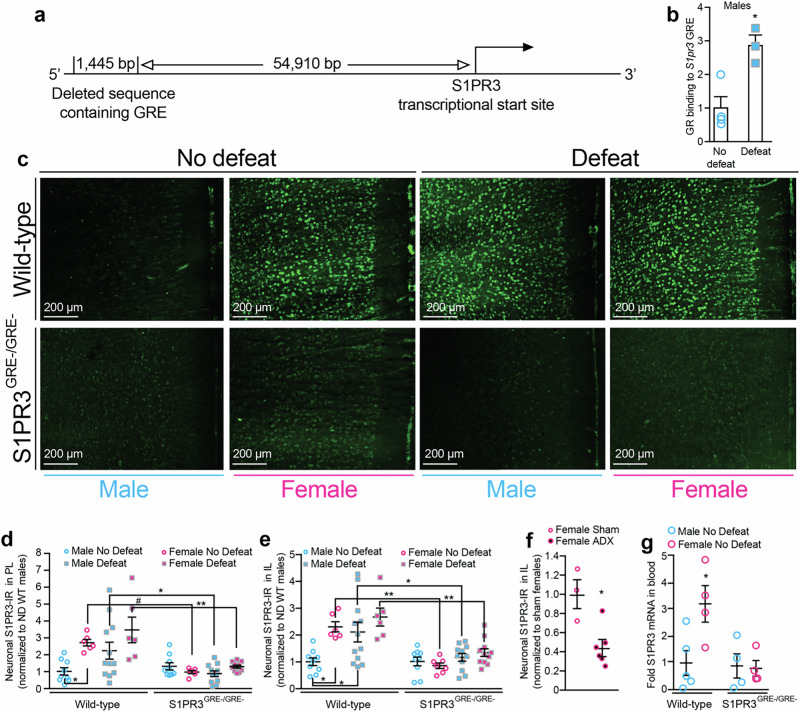 Figure 1
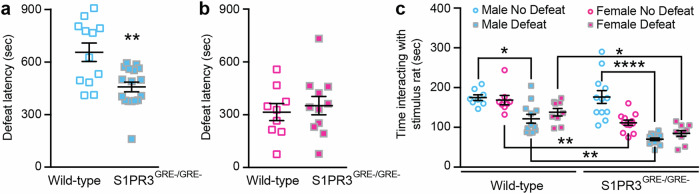 Figure 2
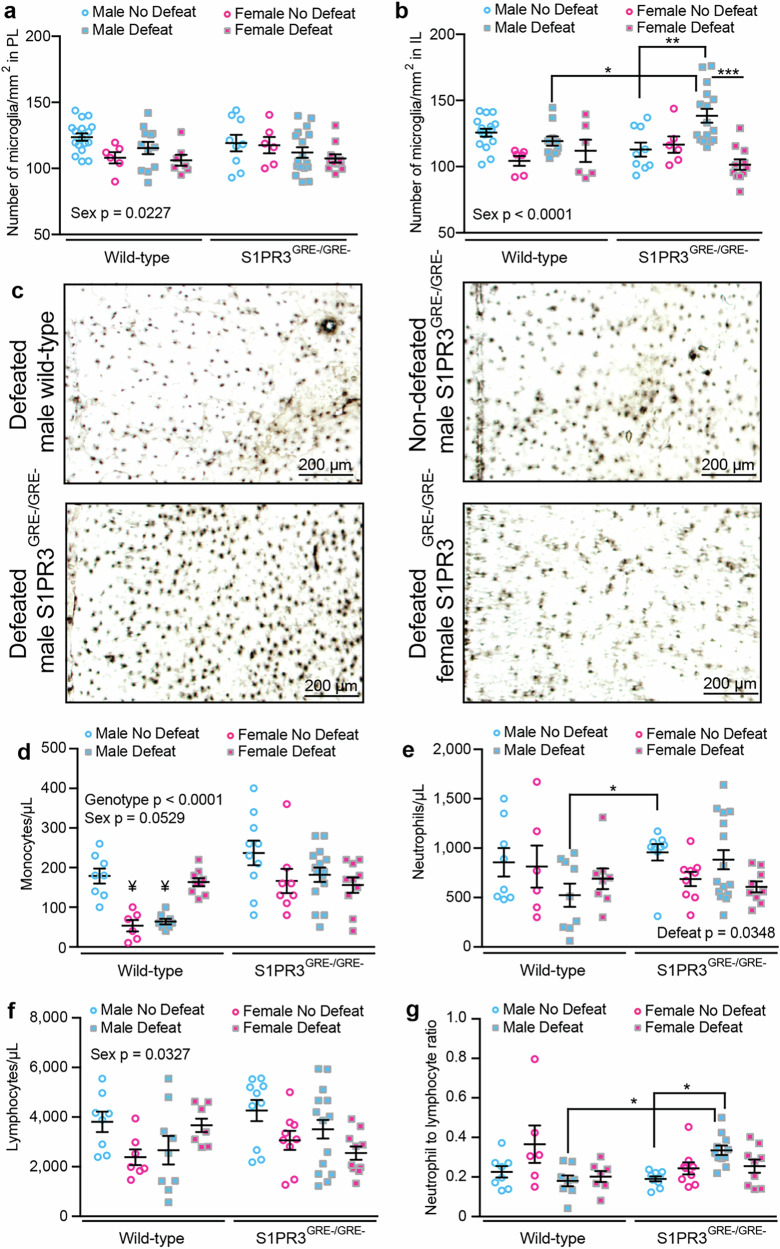 Figure 3
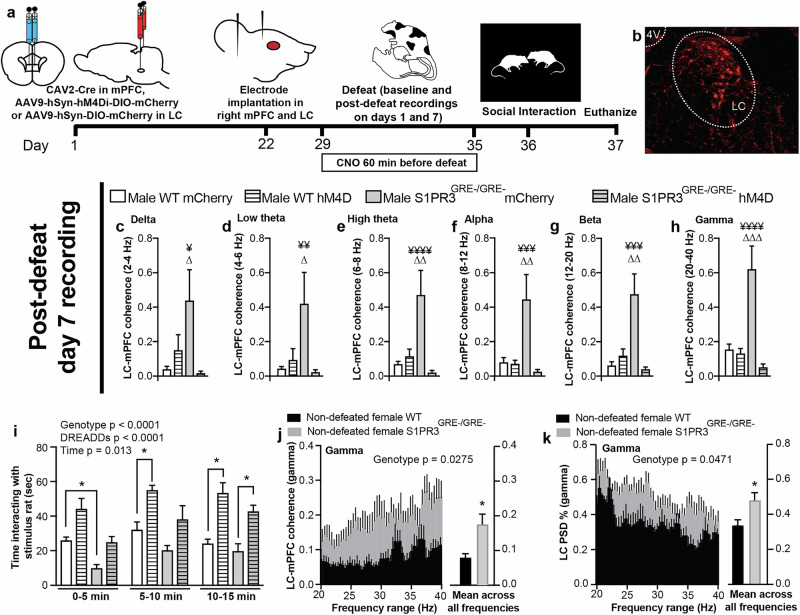 Figure 4
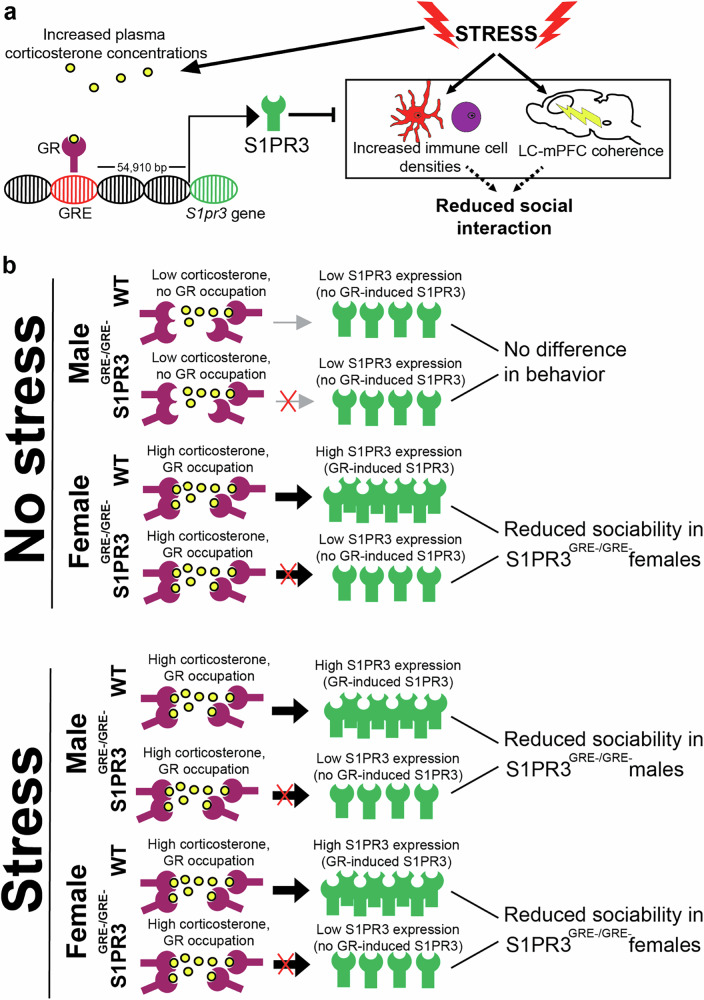 Figure 5
Peer Reviews
No public reviews on file for this paper yet. If you reviewed it on a platform where reviews are public (OpenReview, ICLR, NeurIPS, ICML), you can paste yours below so the community can read it here.
Videos
No videos yet. Explain this paper in a talk, walkthrough, or lecture? Add one.
Taxonomy
TopicsStress Responses and Cortisol · Circadian rhythm and melatonin · Neuroendocrine regulation and behavior