CDG due to Defective Membrane Transporters: Update
D. Quelhas, C. R. Ferreira, J. Jaeken

TL;DR
This review updates knowledge on congenital disorders of glycosylation caused by faulty membrane transporters, covering clinical, biochemical, and genetic aspects.
Contribution
The paper provides a focused update on CDG caused by transporter defects, excluding other trafficking mechanisms.
Findings
Approximately 6.5% of CDG cases are due to defects in ER, Golgi, and plasma membrane transporters.
The review includes clinical, biochemical, genetic, and therapeutic information on these transporter-related CDG.
Animal models are discussed to better understand these disorders.
Abstract
Congenital disorders of glycosylation are genetic defects in the glycoprotein and glycolipid glycan assembly and attachment. Some 200 CDG have been reported since the first clinical description in 1980. Most CDG are enzymatic deficiencies, but 13 (6.5%) are defects in the ER, Golgi apparatus (GA), and plasma membrane transporters. This review provides an update on the clinical, biochemical, genetic, and therapeutic aspects of these disorders and on animal models. Defects in other cellular trafficking mechanisms have been excluded from this update.
Genes, proteins, chemicals, diseases, species, mutations and cell lines named across the full text — each resolved to its canonical identifier and authoritative record.
Click any figure to enlarge with its caption.
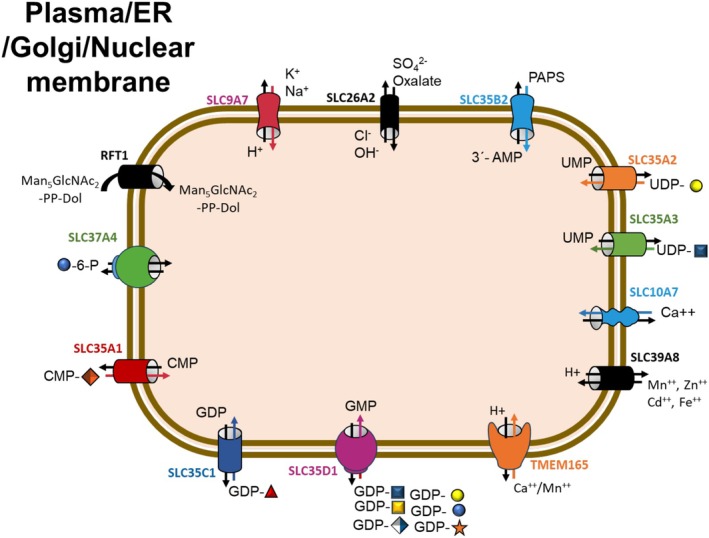 Figure 1
Peer Reviews
No public reviews on file for this paper yet. If you reviewed it on a platform where reviews are public (OpenReview, ICLR, NeurIPS, ICML), you can paste yours below so the community can read it here.
Videos
No videos yet. Explain this paper in a talk, walkthrough, or lecture? Add one.
Taxonomy
TopicsGlycosylation and Glycoproteins Research · Cellular transport and secretion · Genetic and Kidney Cyst Diseases