High-sensitivity cardiac troponin I and frailty: associations with the frailty index and Fried phenotype in older women
Jedd Pratt, Abadi K Gebre, Carlos J Toro-Huamanchumo, Elsa Dent, Trent Bozanich, Wai E Lim, Elizabeth Byrnes, Julee McDonagh, Caleb Ferguson, Craig Sale, Kun Zhu, Carl Schultz, Richard L Prince, Joshua R Lewis, Marc Sim

TL;DR
Higher levels of a heart injury biomarker are linked to increased frailty in older women, suggesting a connection between heart health and physical decline.
Contribution
This study is the first to show a link between high-sensitivity cardiac troponin I and frailty in older women.
Findings
Higher hs-cTnI levels were associated with increased odds of frailty using the frailty index.
Elevated hs-cTnI levels also correlated with greater odds of frailty using Fried’s phenotype.
Associations remained significant after adjusting for protein intake and inflammation markers.
Abstract
Despite the nexus between cardiovascular health and frailty, the relevance of high-sensitivity cardiac troponin I (hs-cTnI), a biomarker of myocardial injury, to frailty is poorly understood. We examined whether hs-cTnI concentrations were associated with frailty in a well-characterized cohort of older women. A total of 1151 community-dwelling women from the Perth Longitudinal Study of Aging Women (mean age ± SD = 75.2 ± 2.7 years) were included. Frailty was operationalized using a validated frailty index (FI) of cumulative deficits and a modified Fried phenotype. Plasma hs-cTnI were categorized into quartiles. Cross-sectional associations between hs-cTnI quartiles and frailty were assessed using multivariable-adjusted logistic regression models. A total of 235 (20.4%) women were classified as frail using the FI, while 74 (6.4%) were considered frail by Fried’s phenotype. In a…
Genes, proteins, chemicals, diseases, species, mutations and cell lines named across the full text — each resolved to its canonical identifier and authoritative record.
Click any figure to enlarge with its caption.
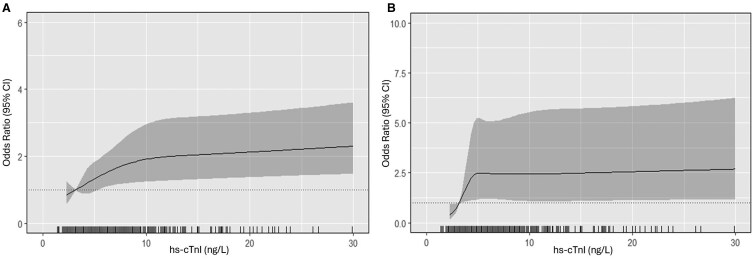 Figure 1
Peer Reviews
No public reviews on file for this paper yet. If you reviewed it on a platform where reviews are public (OpenReview, ICLR, NeurIPS, ICML), you can paste yours below so the community can read it here.
Videos
No videos yet. Explain this paper in a talk, walkthrough, or lecture? Add one.
Taxonomy
TopicsFrailty in Older Adults