TLR4 rs4986790 and TLR9 rs5743836 Polymorphisms and Their Association With Clinical Outcomes of Leishmania infantum Infection in Tunisia
Najla Chargui, Nabil Mtiraoui, Raja Chaabane Banaoues, Hamouda Babba, Wahiba Sakly

TL;DR
This study examines how genetic variations in TLR4 and TLR9 genes relate to the severity of Leishmania infantum infection in Tunisia, finding no significant associations.
Contribution
The study investigates the role of TLR4 rs4986790 and TLR9 rs5743836 polymorphisms in determining clinical outcomes of Leishmania infantum infection in a Tunisian population.
Findings
No significant association was found between TLR4 rs4986790 polymorphism and Leishmania infantum infection outcomes.
TLR9 rs5743836 polymorphism also showed no significant association with clinical forms of the infection.
The study suggests other factors, like parasite tropism, may influence disease variability.
Abstract
Background: The clinical presentation of Leishmania infantum infection ranges from self-resolving cutaneous leishmaniasis (CL) to visceral leishmaniasis (VL). Host genetic factors, particularly polymorphisms in Toll-like receptor (TLR) genes, are suspected to influence disease variability and outcome. This study aimed to investigate the potential association between two specific single-nucleotide polymorphisms (SNPs) in the TLR4 (rs4986790) and TLR9 (rs5743836) genes and susceptibility to different clinical forms of L. infantum leishmaniasis. Methods: This case-control study genotyped TLR4 rs4986790 and TLR9 rs5743836 in a Tunisian population with 70 patients (50 VL, 20 CL), and 70 controls. PCR-RFLP and BI-PASA methods were used in theTLR9 and TLR4 analysis, respectively. To investigate, we used logistic regression (additive/codominant models). Results: For TLR4 rs4986790, genotype…
Genes, proteins, chemicals, diseases, species, mutations and cell lines named across the full text — each resolved to its canonical identifier and authoritative record.
Click any figure to enlarge with its caption.
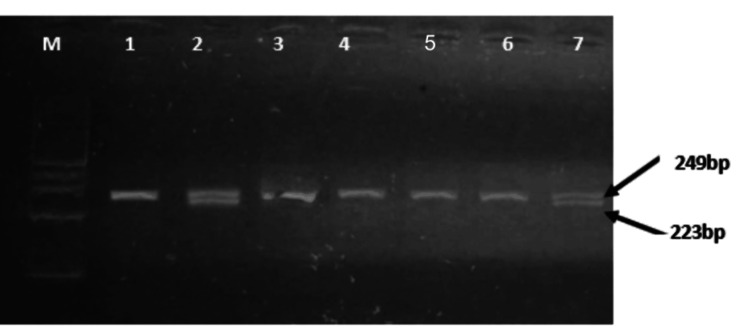 Figure 1
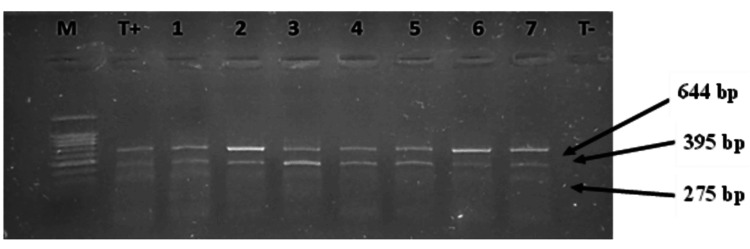 Figure 2
Peer Reviews
No public reviews on file for this paper yet. If you reviewed it on a platform where reviews are public (OpenReview, ICLR, NeurIPS, ICML), you can paste yours below so the community can read it here.
Videos
No videos yet. Explain this paper in a talk, walkthrough, or lecture? Add one.
Taxonomy
TopicsResearch on Leishmaniasis Studies · Parasites and Host Interactions · Trypanosoma species research and implications