Wesam Al Attar singularity evaluation: a simulation-based framework for sports injury risk assessment using critical transitions theory
Wesam Saleh A. Al Attar

TL;DR
This paper introduces a new simulation-based framework for predicting sports injuries using critical transitions theory and biomechanical data.
Contribution
The WASe framework is the first application of critical transitions theory to biomechanical systems for injury risk assessment.
Findings
The WASe framework achieved an AUC of 0.89 in simulations, with sensitivity of 82% and specificity of 87%.
The framework's performance was consistent across different simulated population subgroups.
The framework could identify 4 out of 5 individuals at risk of injury but requires empirical validation for clinical use.
Abstract
Sports injury prediction remains a significant challenge in sports medicine, with traditional approaches often failing to capture the complex, nonlinear nature of injury mechanisms. Critical transitions theory, which describes sudden shifts in complex systems, offers a new theoretical framework for understanding injury occurrence as a transition from stable to unstable biomechanical states. To develop and validate through simulation the Wesam Al Attar Singularity Evaluation (WASe) framework, a new theoretical approach for sports injury risk assessment based on critical transitions theory and multimodal biomechanical data integration. We developed a theoretical framework incorporating four key biomechanical variables: Force Variability (FV), Temporal Asymmetry (TA), Load Distribution (LD), and Bilateral Asymmetry (BA). The WASe equation integrates these variables using weighted…
Genes, proteins, chemicals, diseases, species, mutations and cell lines named across the full text — each resolved to its canonical identifier and authoritative record.
Click any figure to enlarge with its caption.
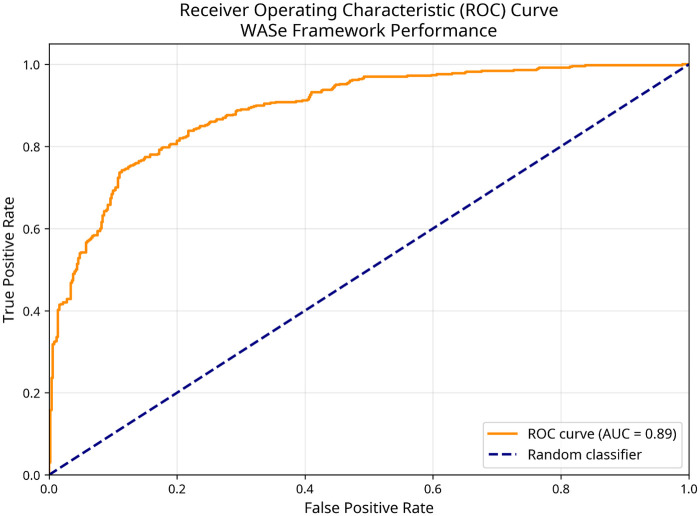 Figure 1
Peer Reviews
No public reviews on file for this paper yet. If you reviewed it on a platform where reviews are public (OpenReview, ICLR, NeurIPS, ICML), you can paste yours below so the community can read it here.
Videos
No videos yet. Explain this paper in a talk, walkthrough, or lecture? Add one.
Taxonomy
TopicsSports injuries and prevention · Automotive and Human Injury Biomechanics · Traumatic Brain Injury Research