Right-Sided Triorchidism: A Rare Case of Supernumerary Testis in a Young Adult Male
Tamer Ewida, Muhammad Abuismaeil, Muhammad Quddus, Ilija Kolevski, Ziauddin Khan

TL;DR
A 22-year-old male was found to have three testes, a rare condition called triorchidism, diagnosed using ultrasound and managed conservatively due to normal findings.
Contribution
This case report highlights a rare right-sided triorchidism presentation and emphasizes the role of high-resolution ultrasound in its diagnosis.
Findings
Scrotal ultrasonography confirmed two morphologically normal testes with distinct structures on the right side.
No evidence of malignancy or torsion was found, supporting conservative management over surgical intervention.
The case underscores the importance of clinical awareness to avoid unnecessary surgery in asymptomatic triorchidism.
Abstract
Triorchidism is an exceptionally rare subtype of polyorchidism, defined by the presence of three testes. Most cases are identified incidentally during evaluation for unrelated scrotal symptoms or imaging studies. Although generally benign, this anomaly has diagnostic and management implications because of potential associations with torsion, cryptorchidism, and malignancy. We report a case of a 22-year-old male who presented with intermittent right scrotal discomfort. Examination revealed a normal left testis and two distinct right-sided testes. Scrotal ultrasonography demonstrated two morphologically normal testes with preserved vascularity, homogeneous echotexture, and separate epididymal and ductal structures. Serum tumour markers were within normal limits, and no radiological features suggestive of neoplasia were observed. The presence of a supernumerary testis is thought to result…
Genes, proteins, chemicals, diseases, species, mutations and cell lines named across the full text — each resolved to its canonical identifier and authoritative record.
Click any figure to enlarge with its caption.
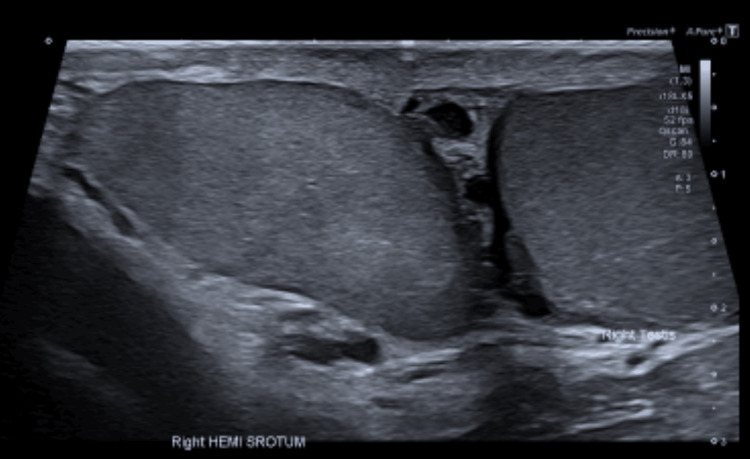 Figure 1
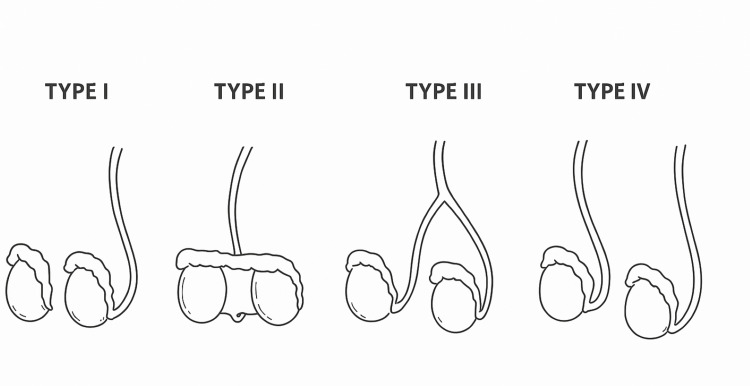 Figure 2
Peer Reviews
No public reviews on file for this paper yet. If you reviewed it on a platform where reviews are public (OpenReview, ICLR, NeurIPS, ICML), you can paste yours below so the community can read it here.
Videos
No videos yet. Explain this paper in a talk, walkthrough, or lecture? Add one.
Taxonomy
TopicsTesticular diseases and treatments · Urologic and reproductive health conditions · Sexual Differentiation and Disorders