Co-occurrence is associated with horizontal gene transfer across marine bacteria independent of phylogeny
Gavin M Douglas, Nicolas Tromas, Marinna Gaudin, Patrick Lypaczewski, Louis-Marie Bobay, B Jesse Shapiro, Samuel Chaffron

TL;DR
This study shows that bacteria in the ocean transfer genes more often when they co-occur, even after accounting for their evolutionary relatedness and environment.
Contribution
The study demonstrates that co-occurrence significantly influences horizontal gene transfer in marine bacteria, independent of phylogeny and environmental factors.
Findings
Co-occurrence is significantly associated with horizontal gene transfer in marine bacteria.
The association between co-occurrence and HGT remains after controlling for phylogenetic distance and environmental variables.
Particle-attached prokaryotes show higher HGT levels and environmental variables like chlorophyll a influence HGT patterns.
Abstract
Understanding the drivers and consequences of horizontal gene transfer (HGT) is a key goal of microbial evolution research. Although co-occurring taxa have long been appreciated to undergo HGT more often, this association is confounded with other factors, most notably their phylogenetic relatedness. To disentangle these factors, we analyzed 15 339 marine prokaryotic genomes (mainly bacteria) and their distribution in the global ocean. We identified HGT events across these genomes and enrichments for functions previously shown to be prone to HGT. By mapping metagenomic reads from 1862 ocean samples to these genomes, we also identified co-occurrence patterns and environmental associations. Although we observed an expected negative association between HGT rates and phylogenetic distance, we only detected an association between co-occurrence and phylogenetic distance for closely related…
Genes, proteins, chemicals, diseases, species, mutations and cell lines named across the full text — each resolved to its canonical identifier and authoritative record.
Click any figure to enlarge with its caption.
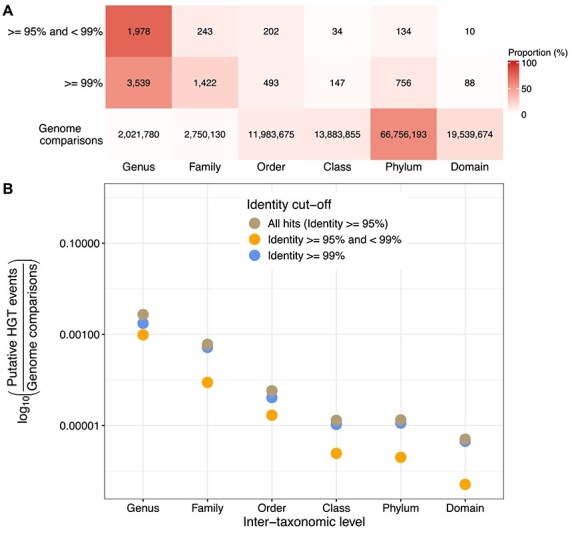 Figure 1
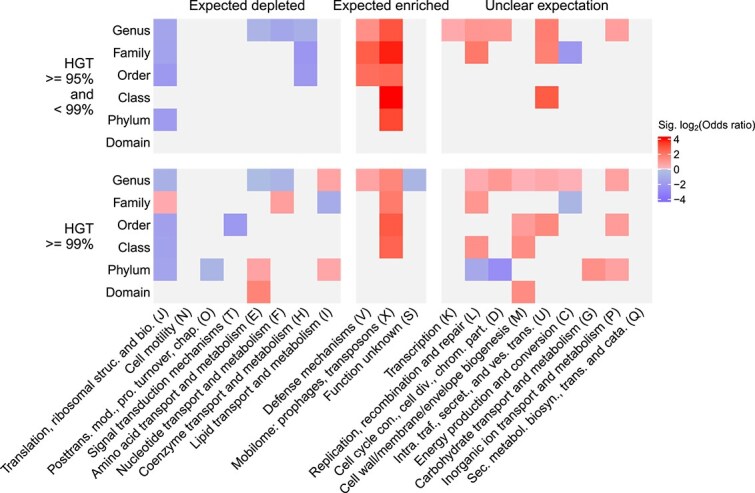 Figure 2
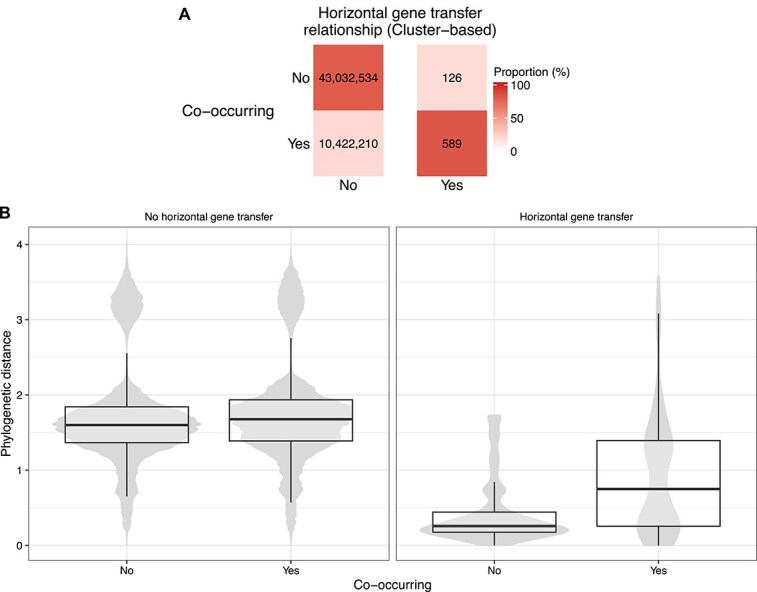 Figure 3
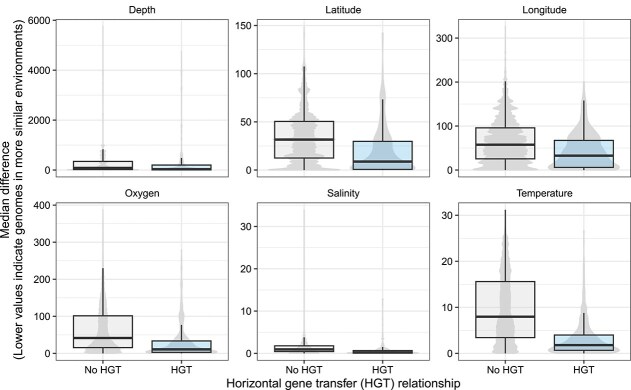 Figure 4
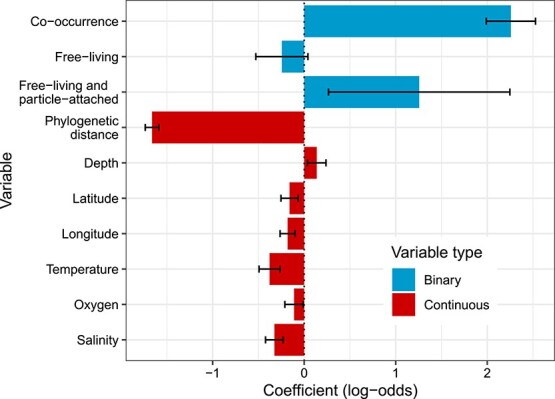 Figure 5
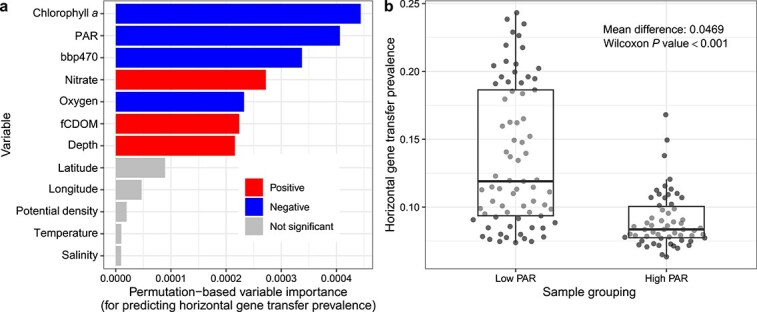 Figure 6
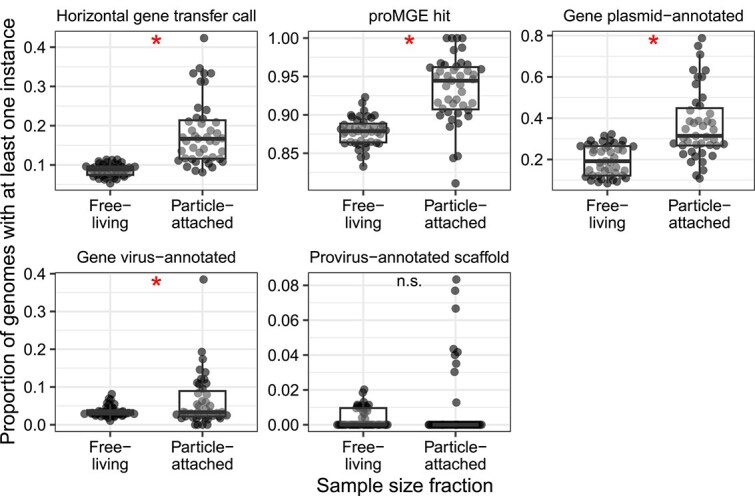 Figure 7
Peer Reviews
No public reviews on file for this paper yet. If you reviewed it on a platform where reviews are public (OpenReview, ICLR, NeurIPS, ICML), you can paste yours below so the community can read it here.
Videos
No videos yet. Explain this paper in a talk, walkthrough, or lecture? Add one.
Taxonomy
TopicsGenomics and Phylogenetic Studies · Microbial Community Ecology and Physiology · Protist diversity and phylogeny