Single genome amplification and molecular cloning of HIV-1 populations in acute HIV-1 infection: implications for studies on HIV-1 diversity and evolutionary rate
Anthony Y Y Hsieh, Amin S Hassan, Jamirah Nazziwa, Lovisa Lindquist, Sara Karlson, Jonathan Hare, Anatoli Kamali, Etienne Karita, William Kilembe, Matt A Price, Per Björkman, Pontiano Kaleebu, Susan Allen, Eric Hunter, Jill Gilmour, Sarah L Rowland-Jones, Eduard J Sanders

TL;DR
This study compares two sequencing methods for analyzing HIV-1 diversity and evolution in early infection, finding that molecular cloning complements single genome amplification for evolutionary rate but not diversity.
Contribution
The study demonstrates that molecular cloning can supplement single genome amplification for evolutionary rate analysis in acute HIV-1 infection.
Findings
Molecular cloning sequences showed higher diversity than single genome amplification sequences.
Evolutionary rates were comparable between the two sequencing methods.
Both methods identified a single transmitted founder virus in samples within 45 days post-infection.
Abstract
Human immunodeficiency virus type 1 (HIV-1) is one of the fastest-evolving human pathogens. Understanding HIV-1 transmission, within-host adaptation, and evolutionary dynamics is pivotal for development of interventions and vaccines. HIV-1 infection is generally caused by a single transmitted founder virus (TFV), and TFV sequences are typically obtained using single genome amplification (SGA). However, suboptimal sample quality can cause sequencing failures, representing considerable losses considering the scarcity of acute HIV-1 infection (AHI) samples. Sequencing failures may be mitigated by molecular cloning (MC), which can be less vulnerable to sample quality but more susceptible to polymerase chain reaction (PCR) errors. Here, we explore the feasibility of supplementing SGA with MC data using samples from clinical and research cohorts to determine whether sequence diversity and…
Genes, proteins, chemicals, diseases, species, mutations and cell lines named across the full text — each resolved to its canonical identifier and authoritative record.
Click any figure to enlarge with its caption.
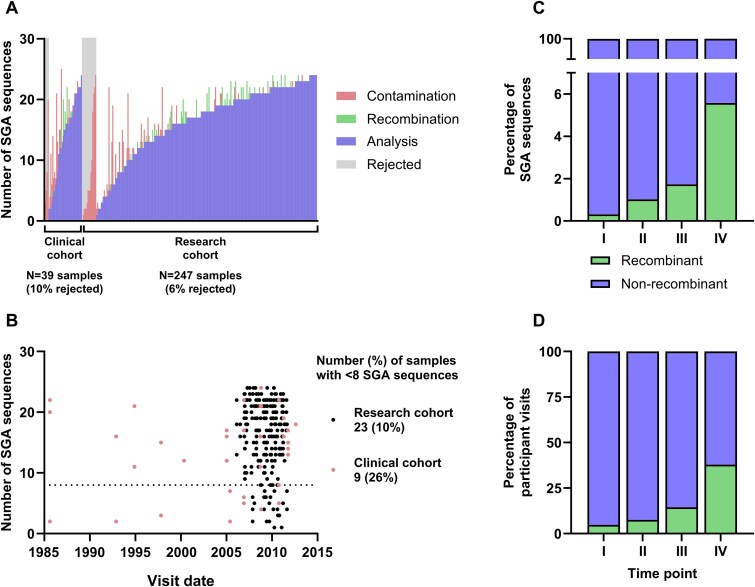 Figure 1
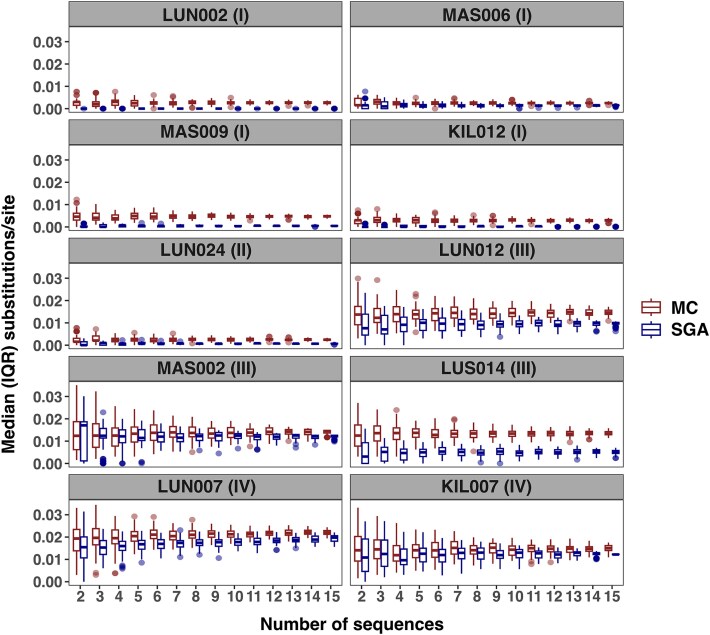 Figure 2
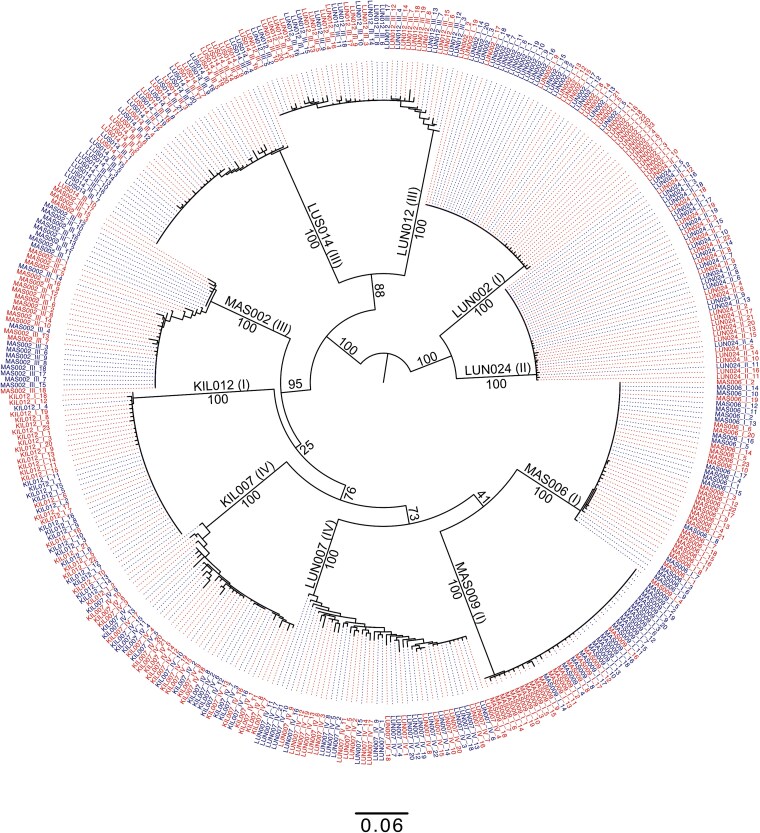 Figure 3
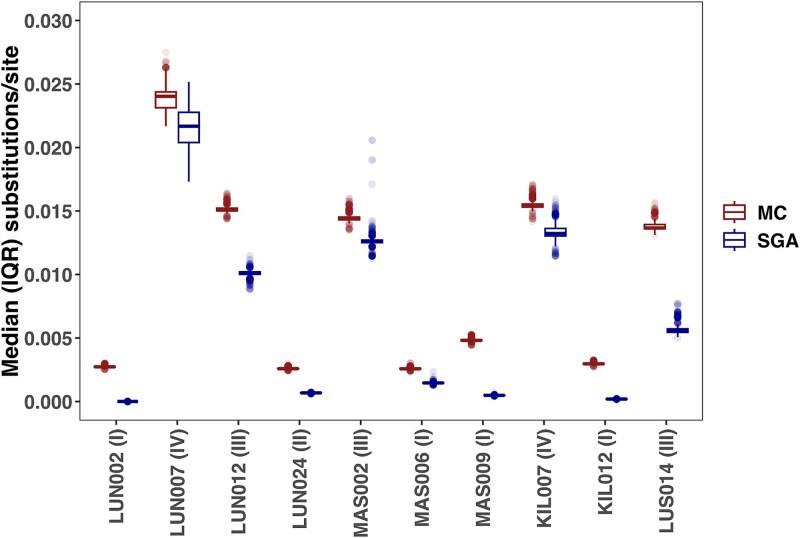 Figure 4
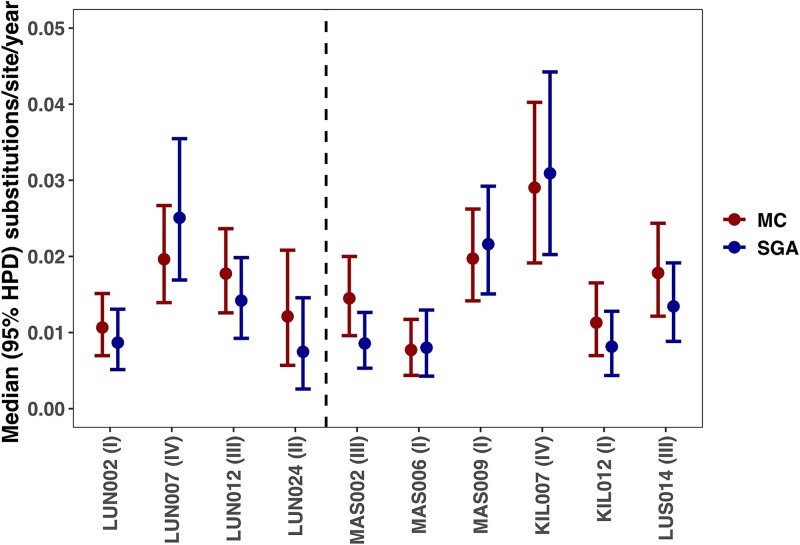 Figure 5
Peer Reviews
No public reviews on file for this paper yet. If you reviewed it on a platform where reviews are public (OpenReview, ICLR, NeurIPS, ICML), you can paste yours below so the community can read it here.
Videos
No videos yet. Explain this paper in a talk, walkthrough, or lecture? Add one.
Taxonomy
TopicsHIV Research and Treatment · HIV/AIDS drug development and treatment · Genomics and Phylogenetic Studies