How to design decision-support tools for primary healthcare using a human-centred design approach: the processes and experience of PHISICC in three Sub-Saharan countries
Damaris Rodriguez Franco, Datte Atta K Sébastien, Christian Auer, Meike-Kathrin Zuske, Angela Oyo-Ita, Artur Muloliwa, Richard B Yapi, Salimata Berté, Mamadou Samba, Abdullahi Bulama Garba, Anthonia Ngozi Njepuome, Nnette Ekpenyong, Graça Matsinhe, David Brown, L Kendall Krause

TL;DR
This paper describes how to design healthcare tools using human-centered design in three Sub-Saharan countries to improve frontline workers' decision-making.
Contribution
The study introduces a human-centred design process for creating responsive health information systems in primary healthcare.
Findings
A human-centred design approach was successfully applied to develop paper-based health tools in Côte d’Ivoire, Mozambique, and Nigeria.
Iterative user testing and feedback improved the design of health information systems for frontline workers.
Multidisciplinary collaboration and user involvement are critical for effective health system design.
Abstract
Healthcare delivery should be based on evidence-informed decisions in the clinical, public health, managerial and policy domains. Data are gathered at the point of care via routine health information systems (RHIS). The Paper-based Health Information Systems in Comprehensive Care (PHISICC) project shifted the paradigm from data collection to decision-making, especially decision-making at the point of care by the frontline health workers. We used a human-centred design (HCD) approach to re-design a RHIS that is responsive to the needs of frontline health workers. The PHISICC research programme took place in Côte d’Ivoire, Mozambique and Nigeria and included the design and testing of a suite of paper-based RHIS tools. We report here the results of the HCD process. This was structured into three phases: (1) setup of co-creation group, (2) concept exploration and (3) detailed design phase.…
Genes, proteins, chemicals, diseases, species, mutations and cell lines named across the full text — each resolved to its canonical identifier and authoritative record.
Click any figure to enlarge with its caption.
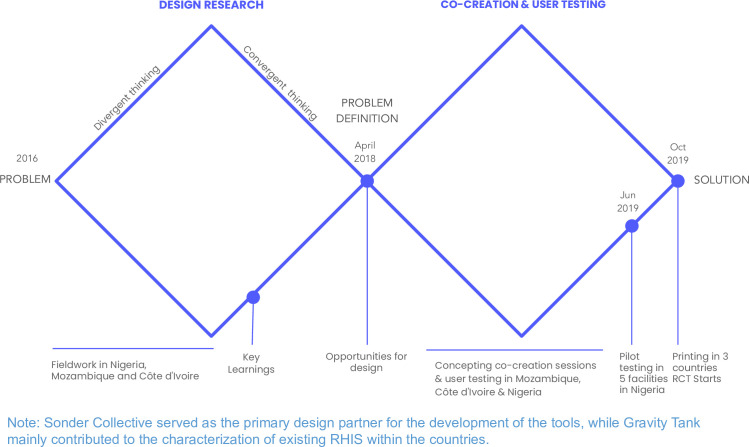 Figure 1
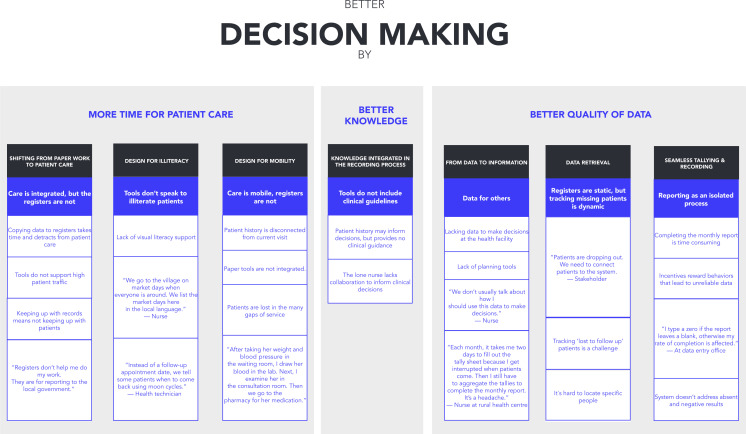 Figure 2
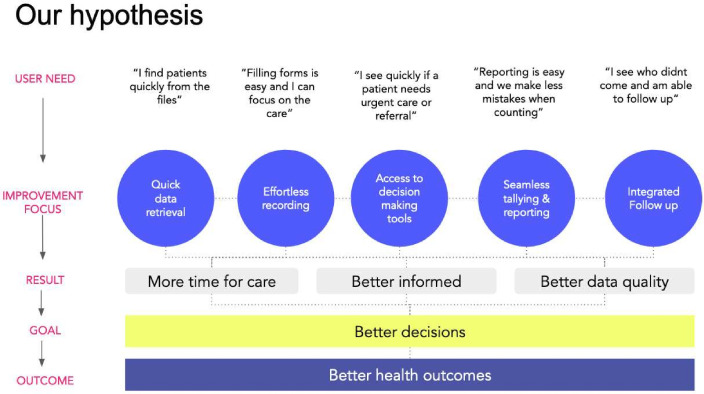 Figure 3
 Figure 4
Peer Reviews
No public reviews on file for this paper yet. If you reviewed it on a platform where reviews are public (OpenReview, ICLR, NeurIPS, ICML), you can paste yours below so the community can read it here.
Videos
No videos yet. Explain this paper in a talk, walkthrough, or lecture? Add one.
Taxonomy
TopicsMobile Health and mHealth Applications · Electronic Health Records Systems · ICT in Developing Communities