Readiness to deliver integrated cardiovascular, kidney and metabolic care in primary healthcare: phase II of HEARTS 2.0 in 26 countries in the Americas
Pedro Ordunez, Andres Rosende, Jeffrey Brettler, Esteban Londono, Patrick Van der Stuyft, Ramon Martinez-Piedra, Libardo Rodriguez, Mariana Lisbeth Rodriguez de la Cerda, Kerry-Ann Renaud-Thomas, Vicente Aleixandre Benites-Zapata, Yadexy Carbay, Maria Clapperton

TL;DR
This study assesses the readiness of 26 countries in the Americas to implement integrated care for cardiovascular, kidney, and metabolic conditions through the HEARTS 2.0 initiative.
Contribution
The study provides a cross-country assessment of feasibility and barriers for implementing 45 evidence-based interventions in primary healthcare.
Findings
Many interventions are considered feasible, but availability is limited due to shortages of diagnostics, medicines, and infrastructure.
18 countries plan to implement over 30 of the 45 interventions within the next 3 years.
Primary health systems in most countries are not yet ready for integrated care, but HEARTS 2.0 offers a strong opportunity for progress.
Abstract
WHO’s Global HEARTS is the largest worldwide effort to improve hypertension control through standardised care. HEARTS in the Americas is its regional adaptation. To address the rising burden of cardiovascular, kidney and metabolic conditions, the initiative launched HEARTS 2.0, aiming to promote integrated care, reduce fragmentation and improve quality, access and health outcomes. In phase I, an expert-led consensus identified 45 evidence-based interventions for inclusion in an expanded Clinical Pathway. This report presents findings from phase II on the readiness of 26 Latin American and Caribbean countries to implement these interventions. We used a cross-sectional design and a structured, self-administered questionnaire completed by national implementation teams. It systematically assessed the availability, feasibility, time required and key barriers for each proposed intervention.…
Genes, proteins, chemicals, diseases, species, mutations and cell lines named across the full text — each resolved to its canonical identifier and authoritative record.
Click any figure to enlarge with its caption.
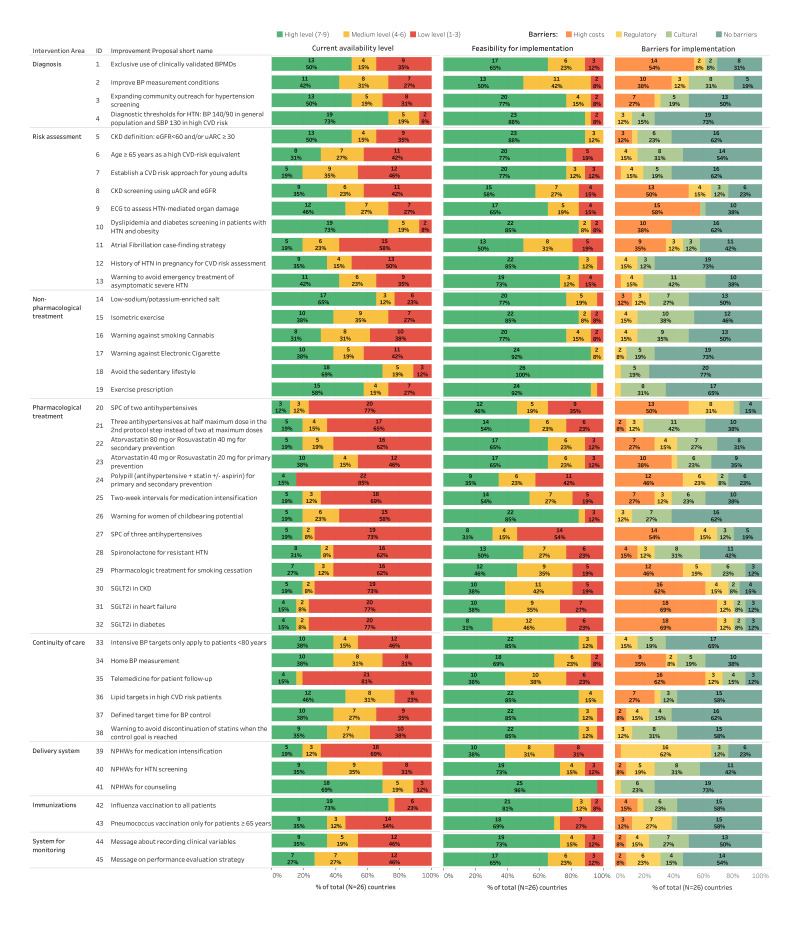 Figure 1
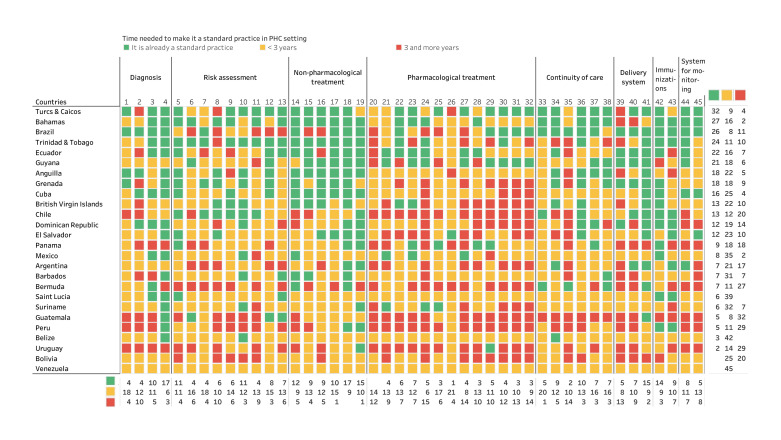 Figure 2
Peer Reviews
No public reviews on file for this paper yet. If you reviewed it on a platform where reviews are public (OpenReview, ICLR, NeurIPS, ICML), you can paste yours below so the community can read it here.
Videos
No videos yet. Explain this paper in a talk, walkthrough, or lecture? Add one.
Taxonomy
TopicsGlobal Public Health Policies and Epidemiology · Primary Care and Health Outcomes · Chronic Disease Management Strategies